If your favourite part of visiting the hairdresser is the head massage, then Salão Olga should be on your radar. Stepping into Olga Santos’ salon feels more like entering a tranquil spa than a traditional hair studio. With nearly three decades of hairdressing experience, Olga has redefined her craft, focusing on enhancing natural beauty through holistic, chemical-free treatments.
After rebranding to embrace a fully natural approach, Olga has committed to celebrating the beauty you already have. Her techniques prioritise the health and vitality of your natural hair, avoiding chemical dyes and instead emphasising nourishing treatments. Her Revive Treatments are nothing short of universal – whether your hair is natural, coloured, or somewhere in between, her salon promises to restore and rejuvenate. The focus is on deep hydration and repair, using ingredients sourced directly from nature.
Olga’s passion for natural haircare has deep roots. Growing up on a farm in Madeira, she learned from her father about the cosmetic and medicinal properties of plants. This knowledge, passed down and refined over generations, forms the foundation of her handmade, 100% natural products.
The experience itself was pure bliss. After a consultation surrounding my hair’s needs, Olga recommended a treatment to restore moisture from roots to ends. Over the next two hours, I was treated to a luxurious combination of a head, neck, and shoulder massage, complete with scalp exfoliation, cleansing and conditioning. Imagine the sensation of a wire head massager, but better. I honestly could have melted into the bed.
True to her philosophy of celebrating natural beauty, Olga incorporates flowers and leaves tailored to your hair type. She dries them to accentuate their vitamins and minerals, before infusing her signature hair oils into them. These botanical blends are applied to your hair while a domed water shower gently distributes their nutrients. It’s a sensory experience as much as it is a transformative one, which left my hair feeling soft, nourished and alive.
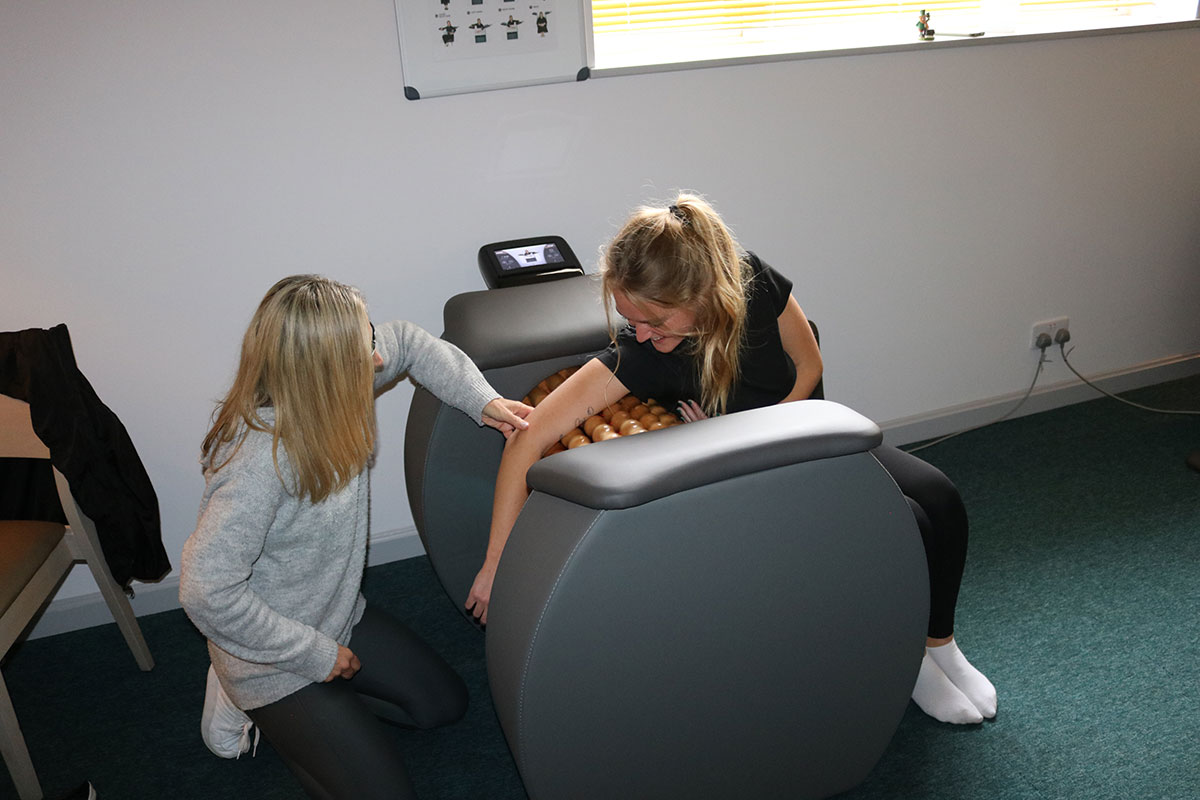
If you were to try and explain to people what a body roller machine is, the best description I’ve arrived at is ‘an armchair without a back and, instead of the seat, a turning cylinder of bulbous wooden poles rotating above an infrared light’. That’s a pretty accurate description, but we’ve included some pictures, just in case.
Jeanine started Rollshape Studio at the Merton Hotel, as the first of its kind in Jersey. The roller machines have captivated the attention of fitness enthusiasts worldwide, with benefits beyond just muscle gain and fitness. Through focusing on lymphatic drainage, the machines work towards rejuvenating the immune system, revitalising deep muscle tissues and promoting overall wellbeing. To put it simply, it’s a full body massage that is great for your health, without the post aggressive massage pain from being pummelled to a pulp.
When we got there, Jeanine made us feel comfortable and ran us through the basics. There’s a variety of different levels to suit both first timers and regulars, and Jeanine helps you get in the correct positions to make sure you are hitting all the muscle groups. A whole session is around 45 minutes, addresses all parts of the body, and leaves you with a sublime feeling of bliss and relaxation that lasts the length of the day (not much got done in the office after this).
The session finishes with the machine up against your back, which is just about one of the best feelings you could imagine. Ben had more goes than he should have, and each time looked like he was practically reaching Nirvana. Whether you’re after wellness, weight loss, sports recovery or beauty benefits, a set of sessions at Rollshape Studio will surely get you sorted.
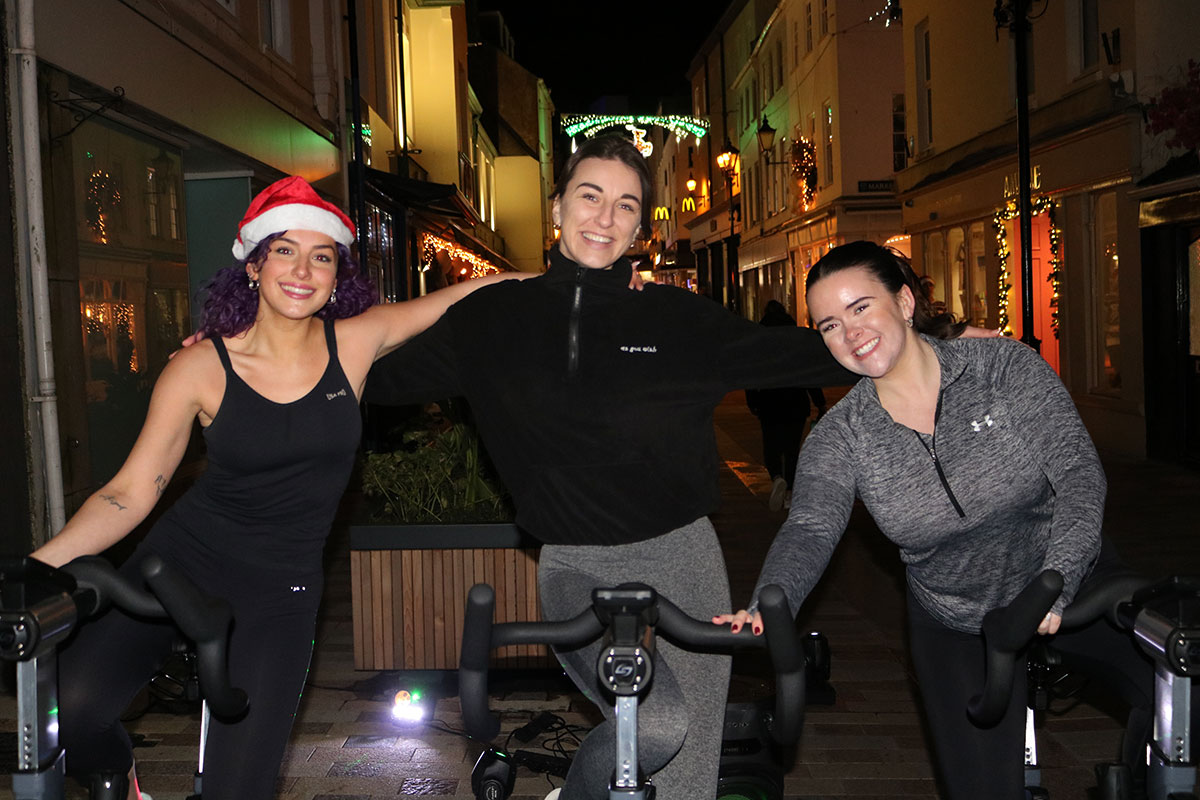
Marta Szyman from Spin and Fit Jersey hosted her first charity spin this month, taking place on Halkett Street outside One Motivation Gym. Twenty participants pushed through the cold and pulled a shift that managed to raise over £700 for Kezia’s Fund. As always, Marta came in clutch with the tunes, providing a club worthy remix of ‘All I Want for Christmas for You’. Keep an eye out for her and her team come Spring on King Street, for another fundraiser in April to raise money for animals.
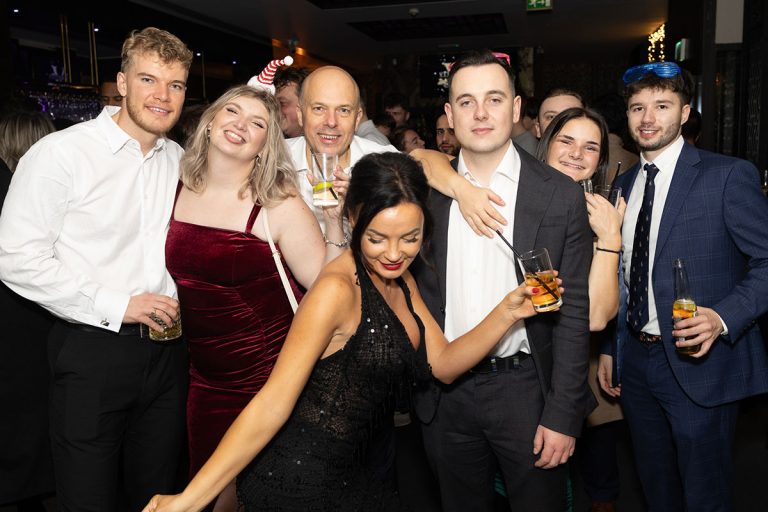
Private & Public welcomed us to their gallery for Christmas Drinks amongst the work of Amy Bourbon, David Henley and Derek Tristram. Friends, clients and artists joined together to clink champagne glasses and celebrate all the success the year had seen. The evening provided the perfect atmosphere to reminisce on the highlights of 2024, whilst sharing laughs, memories and Christmas board game recommendations with familiar faces. It was a great exhibition to end a great year.
Master Farms, a mixed dairy and vegetable farm, has been in the south-east corner of Jersey since 1841 and Phil Le Maistre (left) is the seventh generation of the family to run it, you might know him from the seasonal events he and his family hold on the farm, like The Pumpkin Patch and now their Christmas Fest (you can find tickets on Eventbrite here). The Le Maistre’s farm consists of around 900 vergées (that’s just over 160 hectares and according to Google around 1261 football pitches!) of land where they grow a wide range of vegetable crops with the main one being the Jersey Royal potato and they also have a 400 head pedigree Jersey herd.
Can you tell us a bit more about the crops you grow and what we should be looking out for to add to our seasonal tables?
We grow a range of vegetables organically and conventionally for the local and export market. Currently in season are our cauliflowers, cabbages, squash and maincrop potatoes. We also grow Jersey Royals, Asparagus, Courgettes, Tomatoes. We also cant forget our amazing Jersey Cows who provide us with the tasty Jersey milk we all know and love!
Do you get to have any time off around the festive period?
The farm never stops and the cows always need looking after and milking, but yes we do. We have a great team and we all work together to ensure that everyone has their fair share of time off over the Christmas period. We are very lucky to have great guys and girls who without, we would never be able to do what we do.
What makes it onto the Le Maistre family dinner table for the big day?
A big Turkey, with as many Master Farms vegetables as possible! Usually accompanied by Didier and Christine’s Helio’s vegetables to make up for the ones we don’t grow!
Will we see any Jersey Royals appearing this festive season?
No, we believe they are a seasonal vegetable, personally you can’t beat roast potatoes with a festive dinner. We aim to start harvesting our Royals in early spring time.
We’ve loved seeing the seasonal events you host at the Farm, what inspires them?
Just taking on ideas we see from other farms around the world! The pumpkin event has mainly come from American farms where Halloween is celebrated nearly as much as Christmas! The Summer spectacular and Christmas event have just followed on from the success of The Pumpkin Patch.
And how have the public reacted to them?
It’s been brilliant having people on the farm and getting the chance to show them where their food comes from. With there being less and less farms on the island there are now less people associated with farming. It’s our job, I believe, as farmers to ensure people stay connected. However they can only do this if the opportunity is available to them, so that’s kind of how the idea of the farm events was born. Having children being able to stroke a baby calf or physically get their hands dirty picking up a Jersey Royal is a great thing to see! At one of our first pumpkin patches we had people asking us “what are those brown balls of mud on the floor”, they were potatoes and they were muddy due to the wet ground! They explained they had never seen potatoes not washed and in a packet! This highlights how important it is to show people food doesn’t come from a supermarket shelf, it’s grown in a field!
You guys are very active on social media, but can you tell us about your recently added Master Farms YouTube channel?
We started it to compliment the Facebook and Instagram pages. YouTube allows us to post longer videos and provide more detail about life on the farm which is our big aim to show people what goes on day to day. That being said it takes a lot longer than I first thought filming and editing the videos! Slowly picking up the hang of it and hopefully it will evolve and grow nicely into 2025. See some of the Master Farm content below;
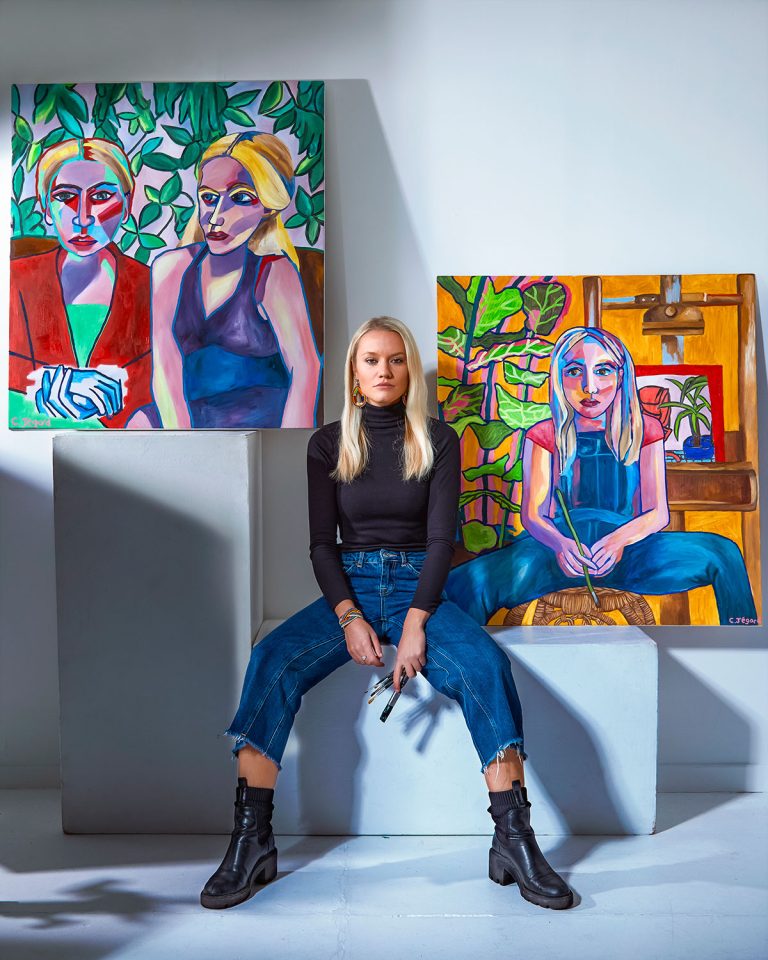
Cristabelle Jégard is a Jersey-based artist seeing the island in a different way. Inspired by the expressionism of Ernst Ludwig Kirchner, she boldly experiments with abstract shapes filled with contrasting colours.
This approach to landscapes initially emerged in Ischgl, Austria, in a small hotel room overlooking the mountains. “You could see everything, and I just started drawing the opposite hotel against the peaks in oil pastels. I used yellow, red, I painted the trees pink, I did all kinds of stuff.” It stemmed from Kirchner’s Swiss landscapes – a love for the way he painted with electrifying colours. “I studied him for ages in art school,” Cristabelle said, “I fell in love with his art instantly. I went to an exhibition in Germany, which had loads of his artwork, and I sat there the whole day, drawing them and copying the bold colours and outlines.”
For Cristabelle, colours have a sensory meaning. They are alive, with tastes and emotions. When she’s drawing someone, she sees it as a way of portraying their inner emotions, using her interpretation to create a visual depiction of her subject’s inner world. “I’m good at reading people,” Cristabelle said, “I would never do a portrait from a photo, because you miss the intimacy of the moment. When you capture a person from life, you can build a rapport with them, and open a window where you can understand what they’re like.”
The shapes she chooses to contain these subconscious interpretations within are by and large inspired by the historic Moai sculptures on Easter Island. Carved by the Rapa Nui people in eastern Polynesia between 1250-1500, the monolithic human figures feature overly large heads, and are admired across the world for their size and mystery. “I used to spend hours at the British Museum in London, drawing the Easter Island head they have there,” Cristabelle said, “whilst I believe the statue should be returned to its rightful place, I was lucky to have the opportunity to draw them. A lot of the facial expressions in my portraits were inspired by the sculptures at the time, and depicted quite sullen and emotionless figures.” Cristabelle would contrast these facial expressions with the vibrance of bright colours, painting in emotions between the lines. Her unique artistic style, fuelled by her social intuition, visually presents the dichotomy between personal interior worlds and exterior appearances.
In the absence of a subject, Cristabelle’s landscapes draw meaning from her personal relationship with the environment. A lot of the locations in her paintings are out East – places that are familiar or that have prominent childhood memories. “When I moved to Gorey, I spent a lot of time swimming behind Gorey castle,” she said, “I think that’s why I love it so much. It’s where I feel most happy and at home.” Places she loves out West feature in her artwork too: “I’ve created pieces at Beauport and Portelet – I have some amazing memories there.”
Many of Cristabelle’s landscapes focus by and large on coastal locations, capturing some of the island’s most beautiful seascapes. They featured in JARO Gallery as part of their exhibition ’Hidden Depths’. Sharing the stage with the work of Nicholas Romeril, Cristabelle’s paintings reflect her deep and long standing connection with the ocean. “Every single beach I’m painting at the moment has been a part of my life growing up,” Cristabelle said, “I was always in the sea and I wouldn’t have had it any other way.” For her, the ocean is a form of therapy, and between surfing and swimming she’s underwater pretty much all year round. “When I go under the surface it’s my moment away from everything,” she added, “apart from the waves crashing you can’t hear anything, it’s the most beautiful feeling in the world. Everyone has their own idea of why they love the ocean so much. That’s mine.”
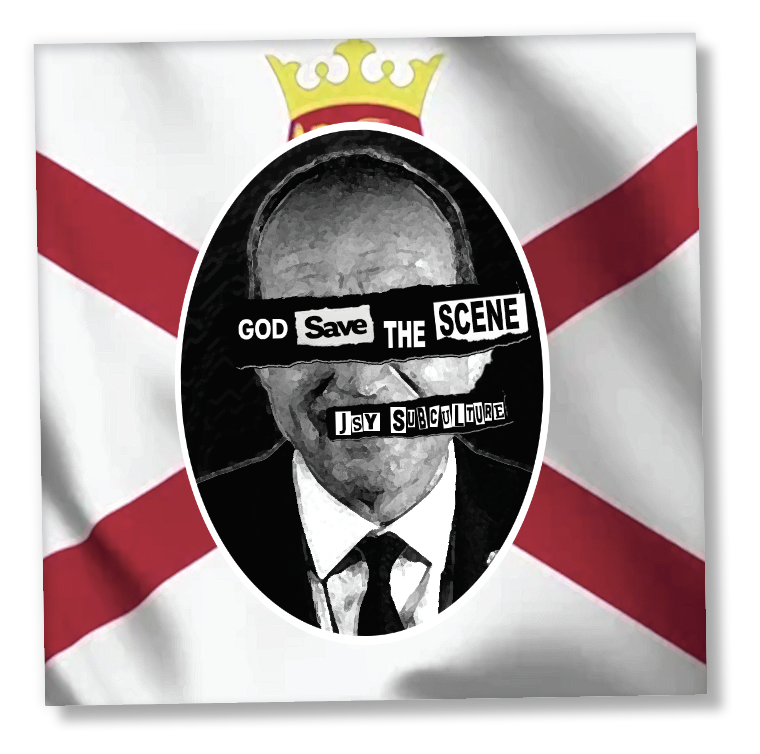
In recent years the world hasn’t just embraced individuality—it’s stuck it in neon lights, blasted it on a “ sonos roam” and handed it a pair of oversized sunglasses. Thanks to woke culture, Gen Z flair, and the internet’s knack for being louder than your mum’s rampant rabbit during EastEnders, the message is clear: it’s cool to be different. Social media took that message and turned the volume up to 11, plastering timelines with freak flags waving higher than a cheerleader at sports day—complete with glitter and the occasional existential crisis.
But here’s the plot twist: being different isn’t some TikTok-era invention. Nope. Long before influencers and edgy vloggers, the idea thrived in scrappy places like music scenes, charity shops, and coffee houses that look like they were decorated by your nan and a mid-century design intern… after a night of karaoke at the office. These quirky spots, with their mismatched chairs and oddly specific teapot collections, have always been the OG hideouts for misfits, dreamers, and oat milk evangelists who secretly wish their barista would acknowledge their band’s SoundCloud.
Subcultures, bless their chaotic little hearts, have always been the underdogs of self-expression. Whether it’s the estates of Manchester, the punk mecca of King’s Road, or even the Bauhaus school in the 1920s, these movements have been havens for the creatively inclined. Bauhaus wasn’t just about minimalist furniture and clean lines; it welcomed women into its ranks and birthed a vibe so effortlessly cool that old photos of its students look like the next post-punk band about to headline Glastonbury. Honestly, give them a synth and some mood lighting, and they could probably sell out Camden’s Roundhouse next weekend.
For angsty teens dodging algebra and awkward small talk with relatives, these scenes are salvation—a place where you can find your people, whether you’re into black eyeliner, loud tartan, or Bauhaus-inspired monochrome. Subcultures are the rebellion soundtracks for those bored stiff by the mainstream, the “fcuk this” of young hearts searching for a spark. They’re the kind of movements where the weird kid who wore a trench coat in July becomes a legend, not a cautionary tale.
Meanwhile, traditional education? Oh, it’s there—awkwardly trying to clap along but hopelessly off-beat, like someone’s dad at a school disco. Schools reward correct answers but side-eye creativity like it’s a kid drawing dragons in the margins of their test paper. Slowly, though, there’s a shift, like someone dusting off their parents’ old Britpop records and realising they still slap. The world is waking up to the fact that creativity isn’t just the cherry on top; it’s the whole cake. Pink Floyd called this out ages ago with “We don’t need no education,” a line that might make your English teacher cry into their marking, but hey—it’s a banger.
True learning? That’s not confined to fluorescent classrooms with that one flickering light that gives everyone a headache. It happens in garages echoing with out-of-tune guitars, in charity shops where every jumper smells faintly of nostalgia and mothballs, and in cosy coffee houses like The Merchants, where cappuccinos flow as freely as the inspiration. The Merchants isn’t just a caffeine pit stop; it’s a haven for journal scribblers, doodlers, and anyone debating if Van Gogh was a misunderstood genius or just someone who couldn’t handle a bad haircut.
Take Jersey, for example. Sure, it’s not exactly London or Manchester, but it punches above its weight in quirky, creative hangouts. There’s Seedee John’s for the vinyl diggers (because Spotify just isn’t vintage enough), Chaos for the offbeat fashionistas, and Island Music, run by the ever-enthusiastic Paul Sharkey. Island Music isn’t just a shop; it’s a sanctuary for anyone who knows the difference between a Stratocaster and their nan’s cheese grater.
These places are the beating heart of local culture—where you can pick up your first guitar, stumble upon rare records, or get into a heated debate about whether The Smiths are overrated (spoiler: they’re not although I think we can all agree Morissery is a dick ). They’re judgement-free zones, where nobody cares if you’re goth, punk, a Directioner, or someone who insists Oasis was better than The Stone Roses (wrong, by the way).
So, rock those sequins, embrace the studs, or sip your flat white while arguing about existentialism—or whether a flat white is just a fancy latte in disguise. Whatever your flavour of weird, own it. Celebrate the quirks, the chaos, and the loud and quiet ways you stand out. And if you find yourself in a music shop, a journal club, or staring at a Bauhaus photo that looks like a Joy Division album cover, let your curiosity guide you. Just one rule: don’t play the forbidden riff.
Words: Damien Philpott. Photography: Oliver Doran Hair: Damien Philpott. Models Savannah, Piper and Lauma. With thanks to Island Music.
Rathbones Investment Management International has welcomed two new Investment Directors, Rob Broughton, and Marc Nightingale, who bring extensive expertise in managing multi-asset discretionary portfolios for private clients. Their appointments reflect Rathbones’ ongoing commitment to delivering high-quality, tailored investment services in the Channel Islands.
Rob Broughton joins with a wealth of experience. Rob started his career at HSBC Asset Management before a secondment to HSBC Private Bank in Dubai. Returning to Jersey in 2009, Rob joined UBS Wealth Management, rising to Executive Director and Senior Client Advisor, managing relationships with high-net-worth individuals and family offices, primarily in the Channel Islands.
Rob said: “Joining Rathbones is an exciting new chapter and I am looking forward to delivering bespoke solutions and helping clients achieve their financial aspirations.”
Marc Nightingale also brings significant experience to his new role. Marc began his career at Lloyds Private Bank and later joined UBS AG in 2010, where he served as an Executive Director and Senior Client Advisor. Marc manages a variety of local private clients and family office portfolios.
Marc commented: “I’m delighted to join such a highly regarded and multi-award-winning company. Rathbones are renowned for their client-focused approach, and I’m excited to be part of the team’s continued success.”
Jonathan Giles, Managing Director at Rathbones Investment Management International, said: “Rob and Marc are fantastic additions to our team as we continue to evolve our private client proposition. Their professionalism, skills and dedication to the highest quality client service will further enhance our ability to provide exceptional investment management solutions. We are delighted to welcome them both.”
I ran into a friend recently – a local Jersey guy who has done incredibly well. In the seemingly short time since I last saw him, he’s built a tech business that now employs 100 staff and turns over tens of millions of pounds a year. In Jersey business terms, he’s done incredibly well, a poster child for success, and he’s still in his early thirties.
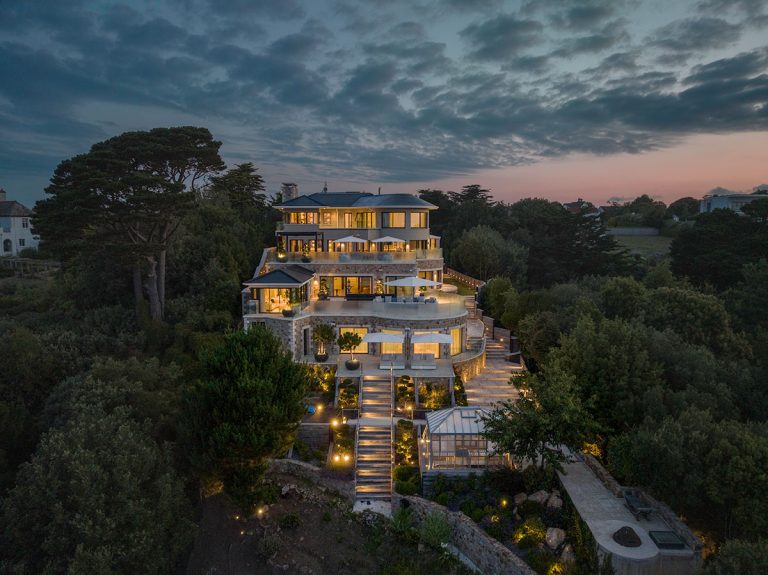
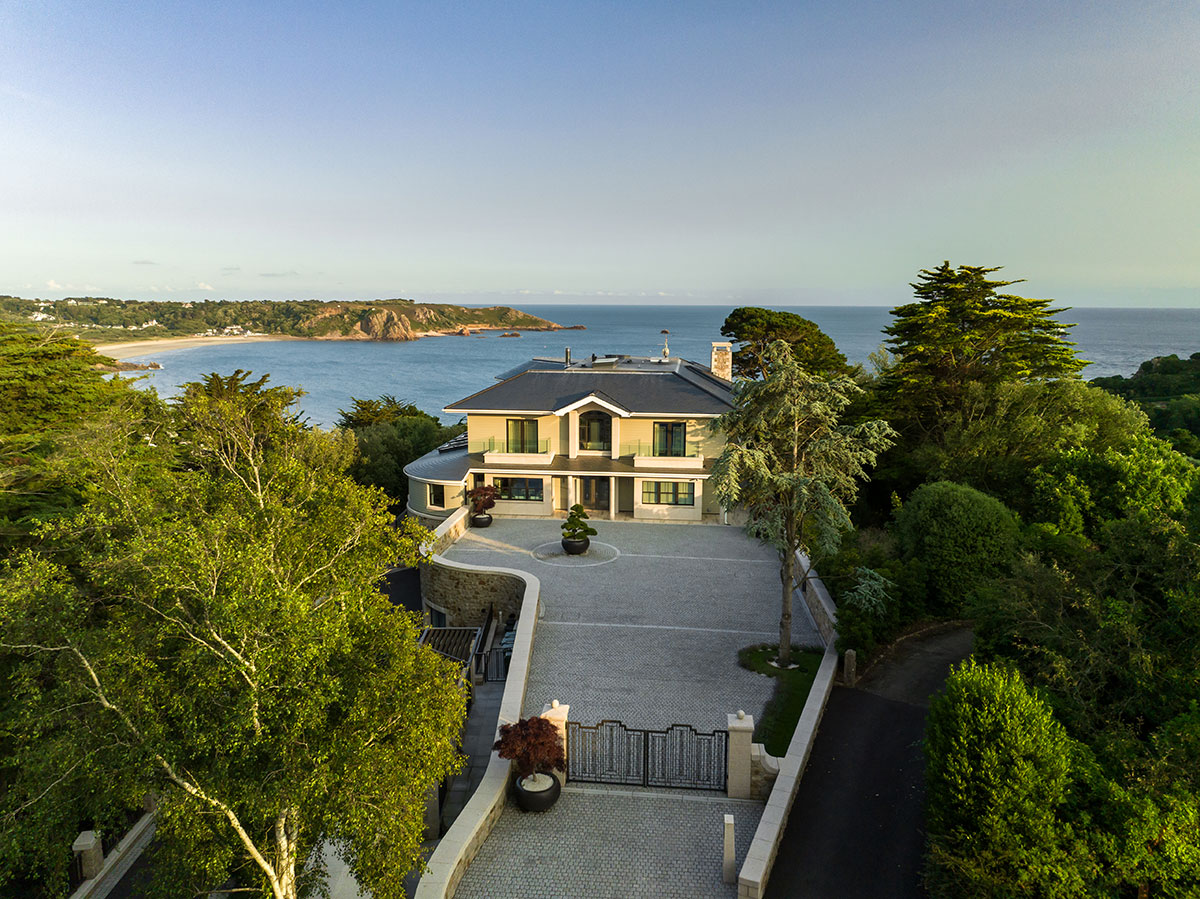
He shared with me his vision and the plans he has for the business and the potential exit that could see him join the ranks of those that can afford just about any house, including this one, Colline de Lavande. This is a BIG house, but he’s a big guy, so the scale would suit. In my mind, I’d love to think a house like this could be one for someone like him, a dream house for a local boy done good.
An FOI request submitted this year asked about income bands for Jersey residents. The response showed that in 2022 there are only 20 single people and 80 couples that earn over £500,000 per year in Jersey. Even with a six-times earnings multiple, the threshold for property value for people hitting this band of earnings is £3m. If you wanted to make a cheeky offer on Colline de Lavande, you’d need to be 10x-ing that level of earning. So, bottom line, if you like the look of this amazing house… start saving!
The more realistic scenario is that this is snapped up by someone who is relocating to Jersey and bringing their wealth with them, having made some big bucks in the big wide world. The island is full of people who love to hate those that choose to come and make Jersey their home. I’m not one of them. Sure, they sometimes pay tradespeople over the odds and drive up the prices for those of us that want some help with carpentry, but they’re great for the economy, and, ultimately, we need more people like that to make the island work. If any of us had had the sort of success that would allow us to be a HNWI (High Net Worth Individual) on the HVR (High Value Resident) programme, then surely a home like Colline de Lavande would be about the best you could find in Jersey.
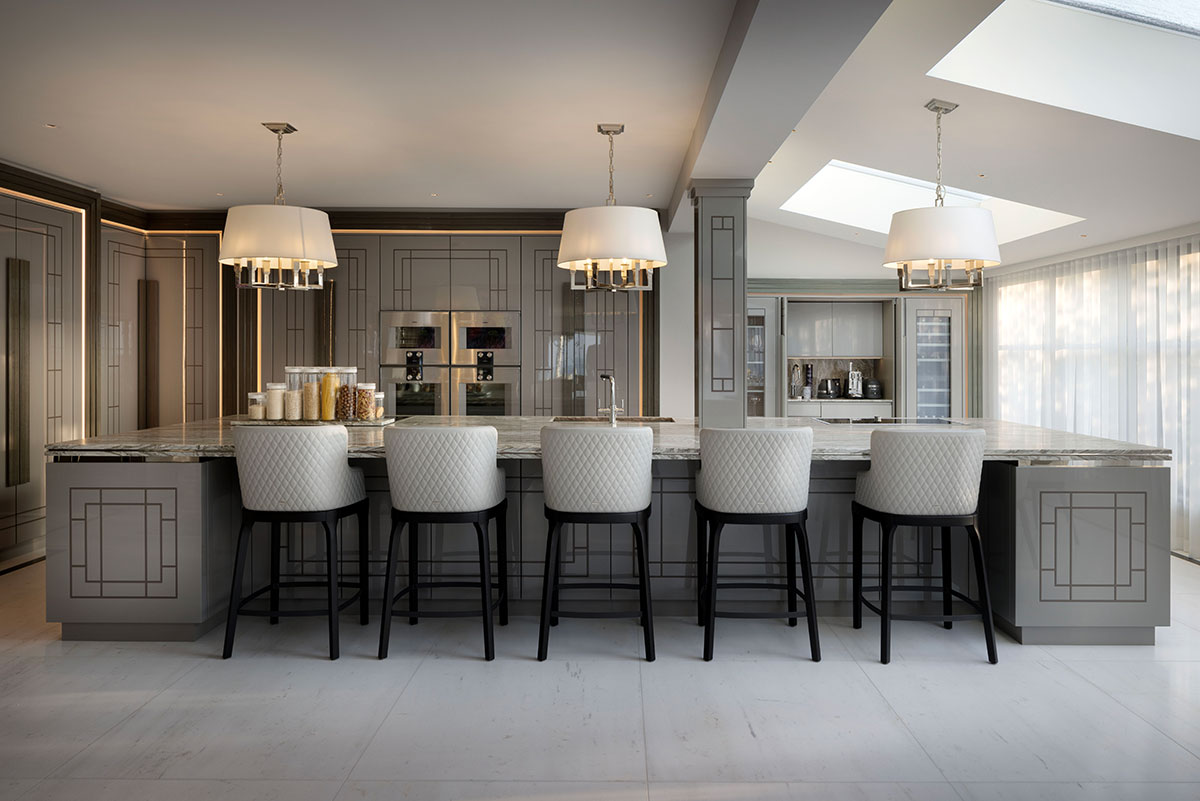
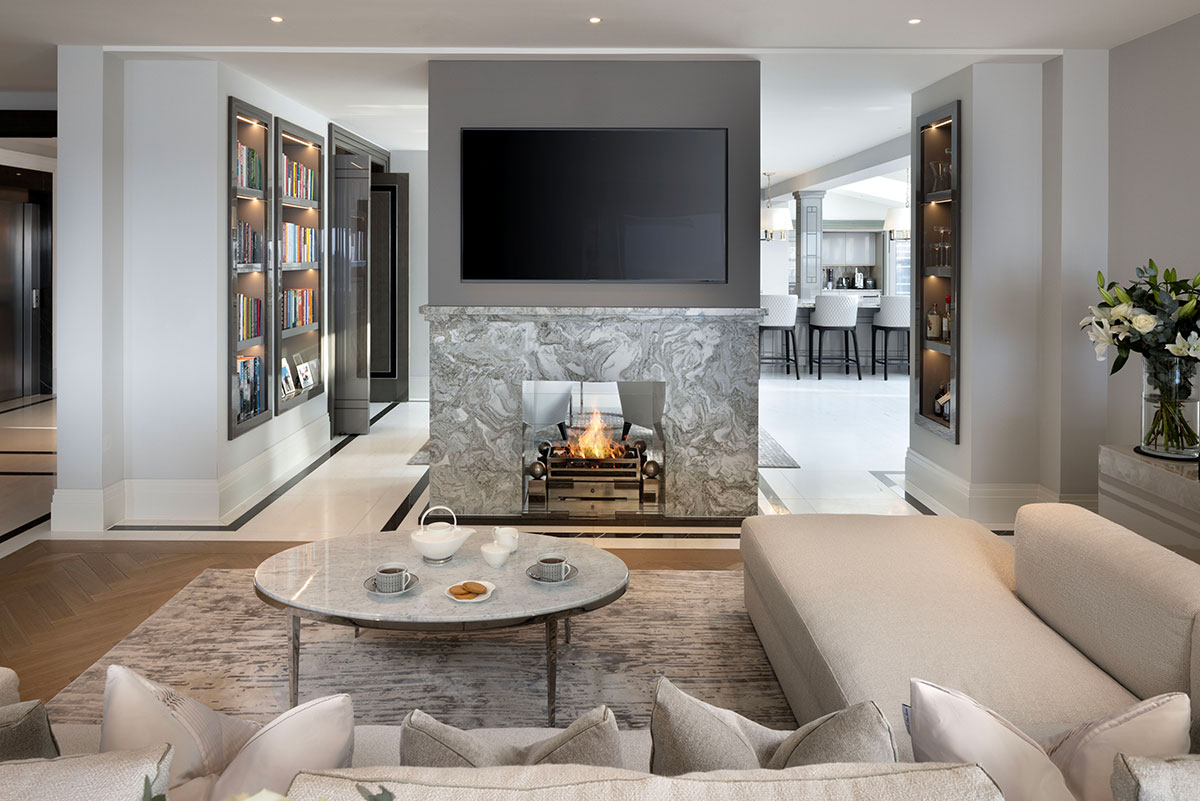
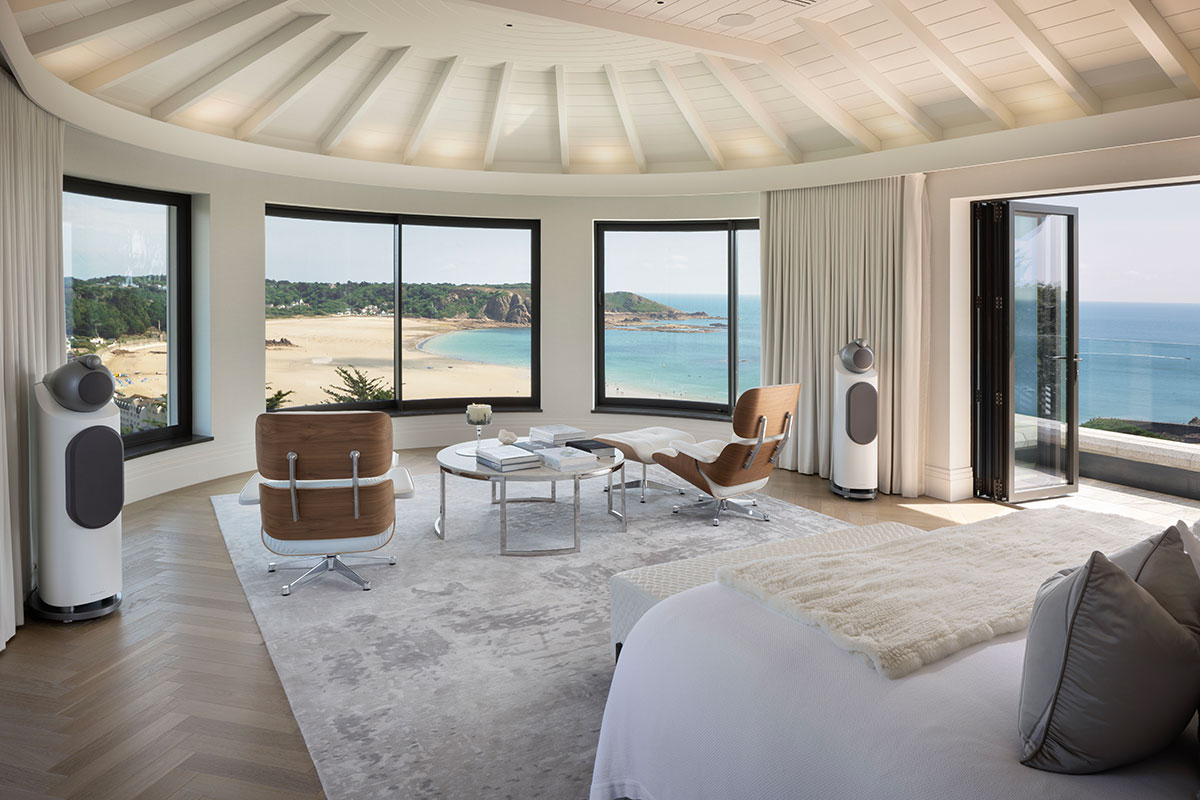
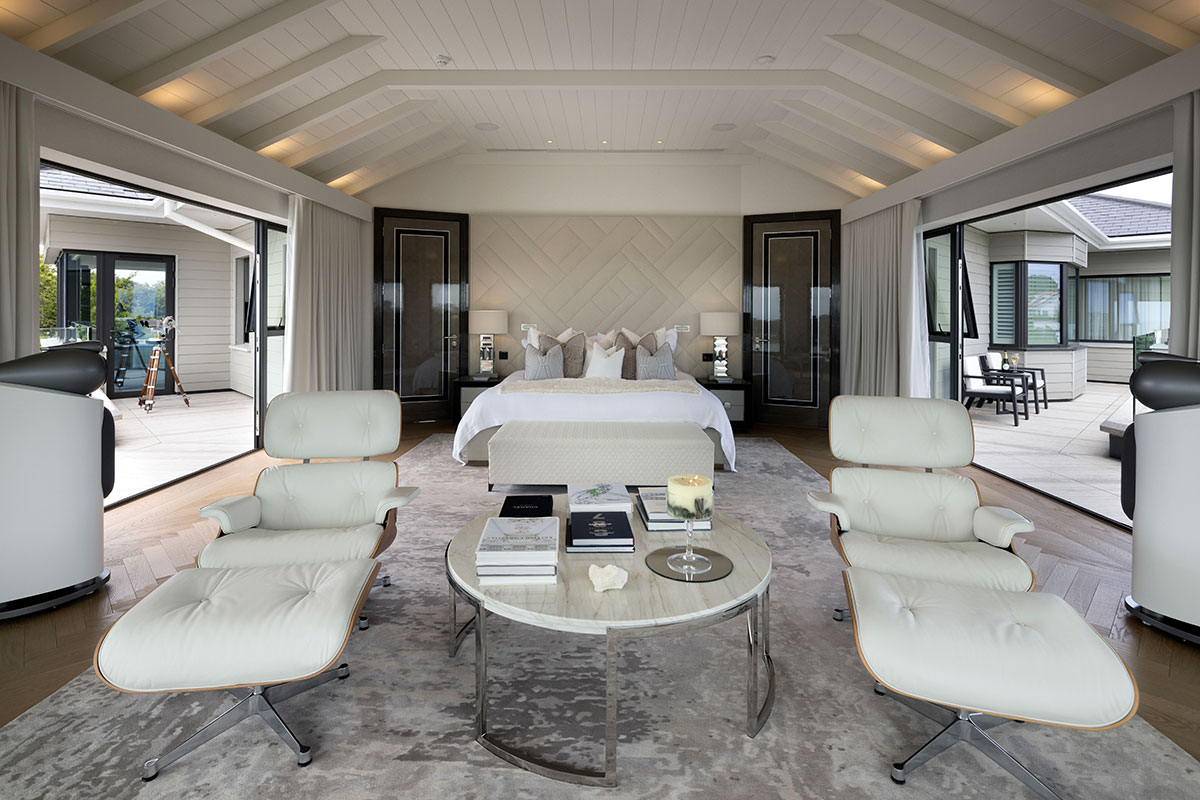
People buying a home at this level are looking for more than that elusive extra spare room a lot of us need. There’s a list – a long list of extras at this level – and Colline de Lavande is a property that ensures everything is easily ticked off. Sure, there are five bedroom suites, with the master benefiting from his-and-hers walk-in wardrobes, two bathrooms, a kitchen, a snug/study, and two terraces. And that’s just the master. The floor that houses just the master suite and one outer bedroom is almost 3000 sq ft. There are three more bedrooms, all with en-suites and all with access to the sort of views that can only be enjoyed by a property perched in a perfect position above St. Brelade’s Bay.
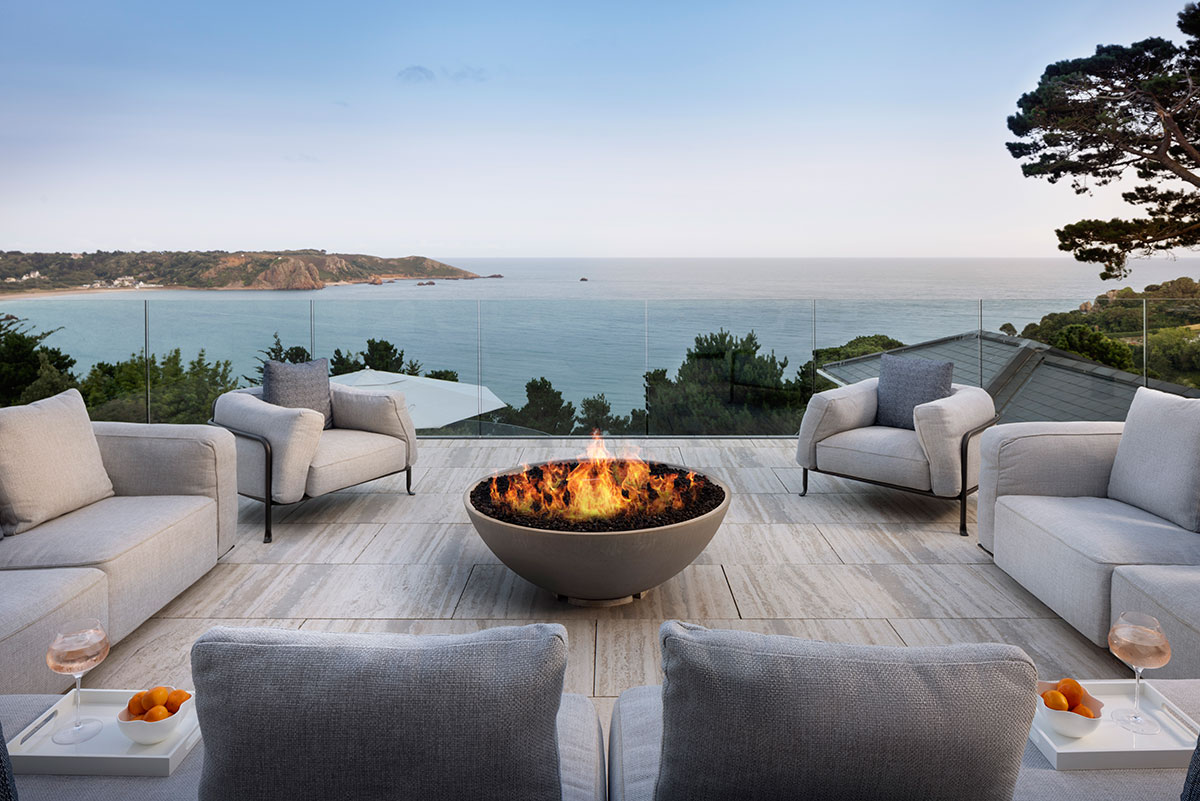
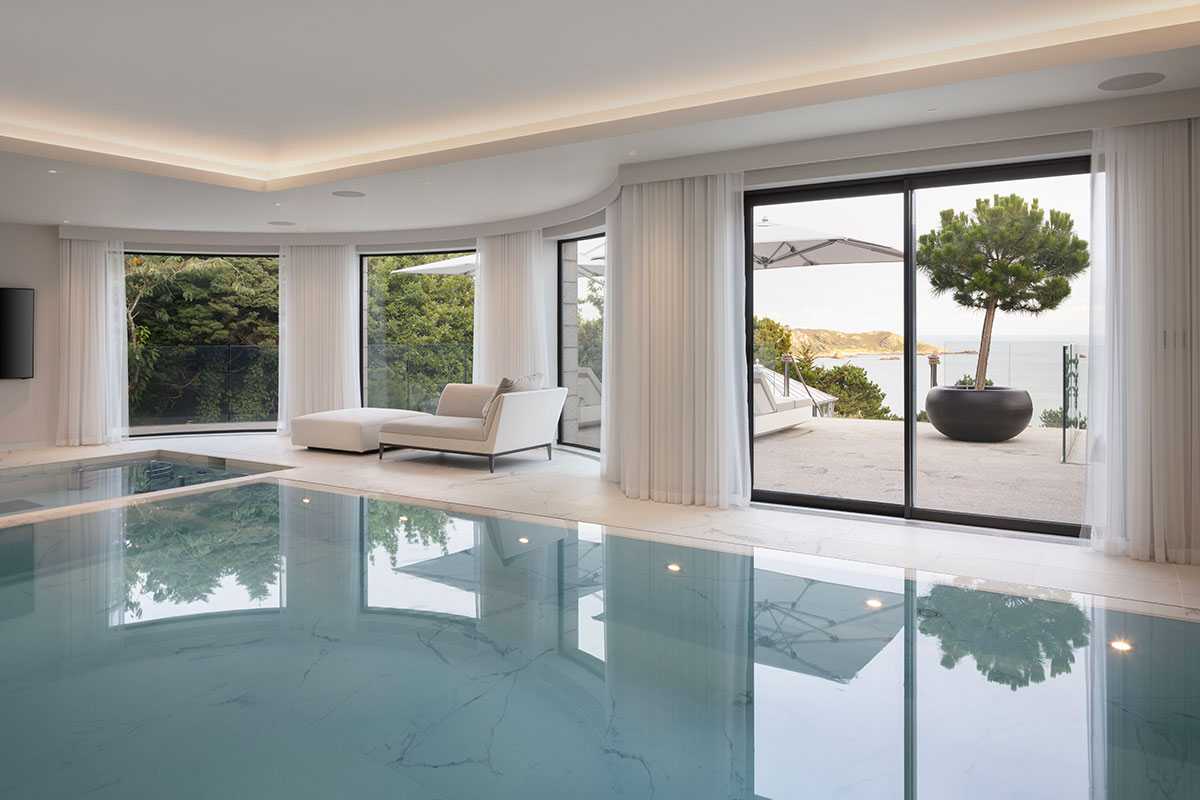
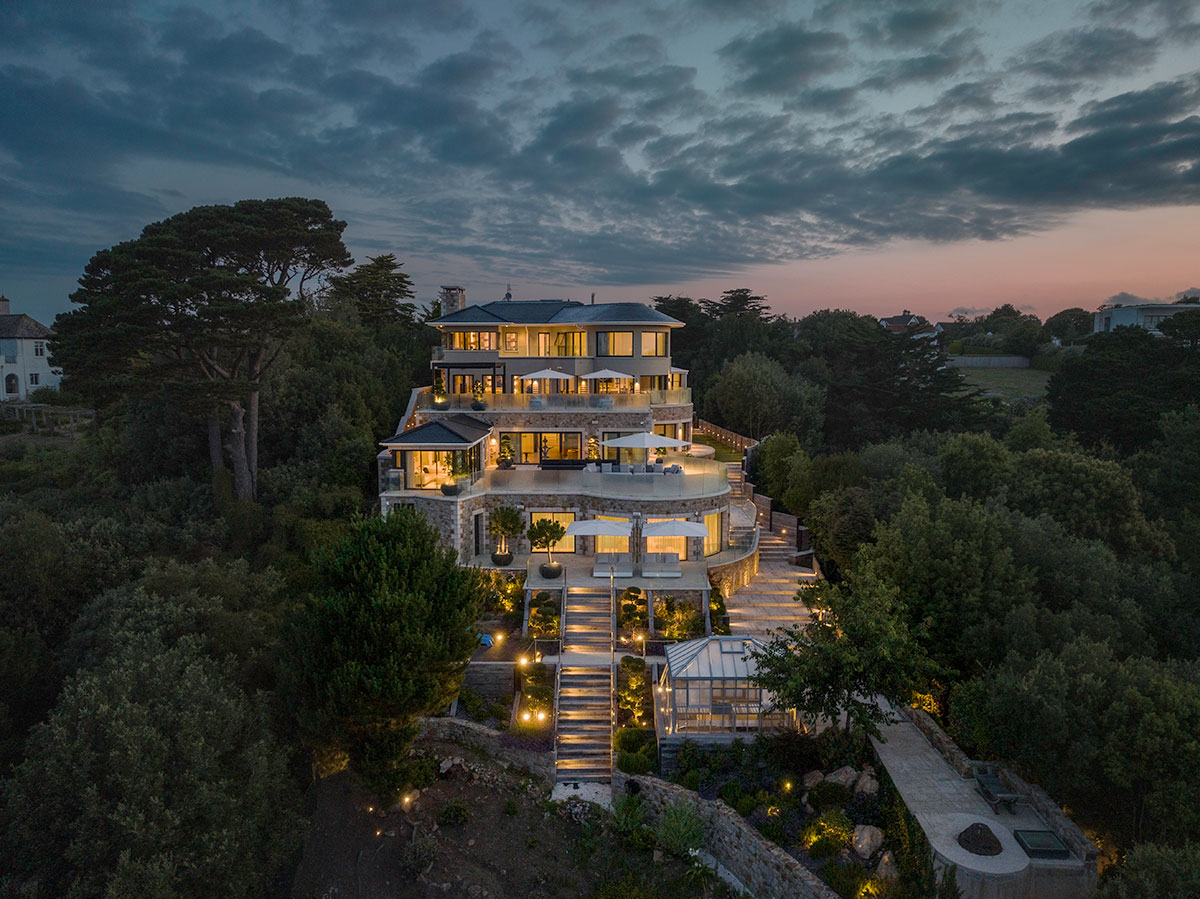
The whole property is designed to maximise the enjoyment of this incredible location. While cosily nested amongst the trees, the whole house enjoys the panoramic views toward the coast from inside and out. The large kitchen diner, numerous seating areas, and the pool all access out onto expansive terracing with enough seating areas that filming the sort of open house they have in selling sunset wouldn’t be a problem. The outdoor entertainment spaces total 4000 sq ft. Fancy seeing the view from a pool? OK. How about for the kids play area? Check. What about the putting green? Yes, no problem.
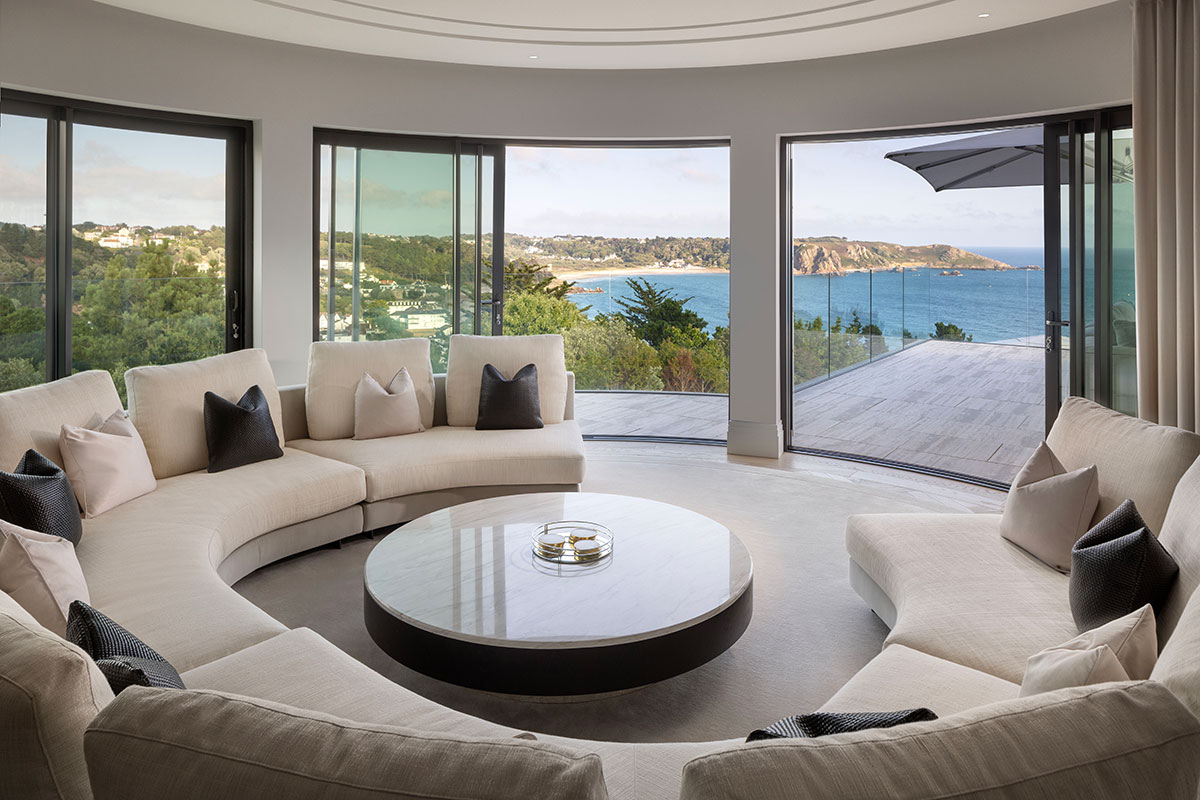
The ground floor ups the ante, with another 4000 square feet of living space, a bedroom suite, and a staff room with prep kitchen. The ‘family’ room features not only a separete space to relax, away from the large lounge across the hall, but also a rotunda of curved glass and a James Bond lair circular sofa to add a third area in which to lounge.
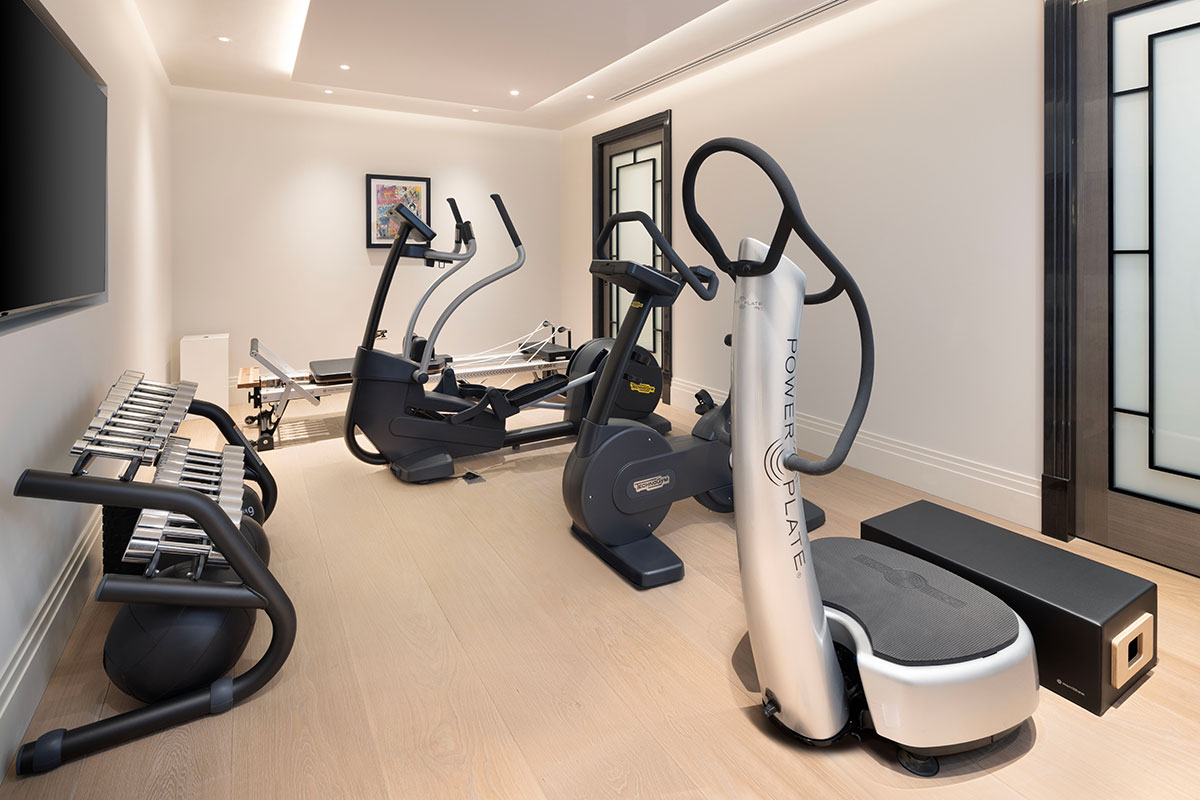
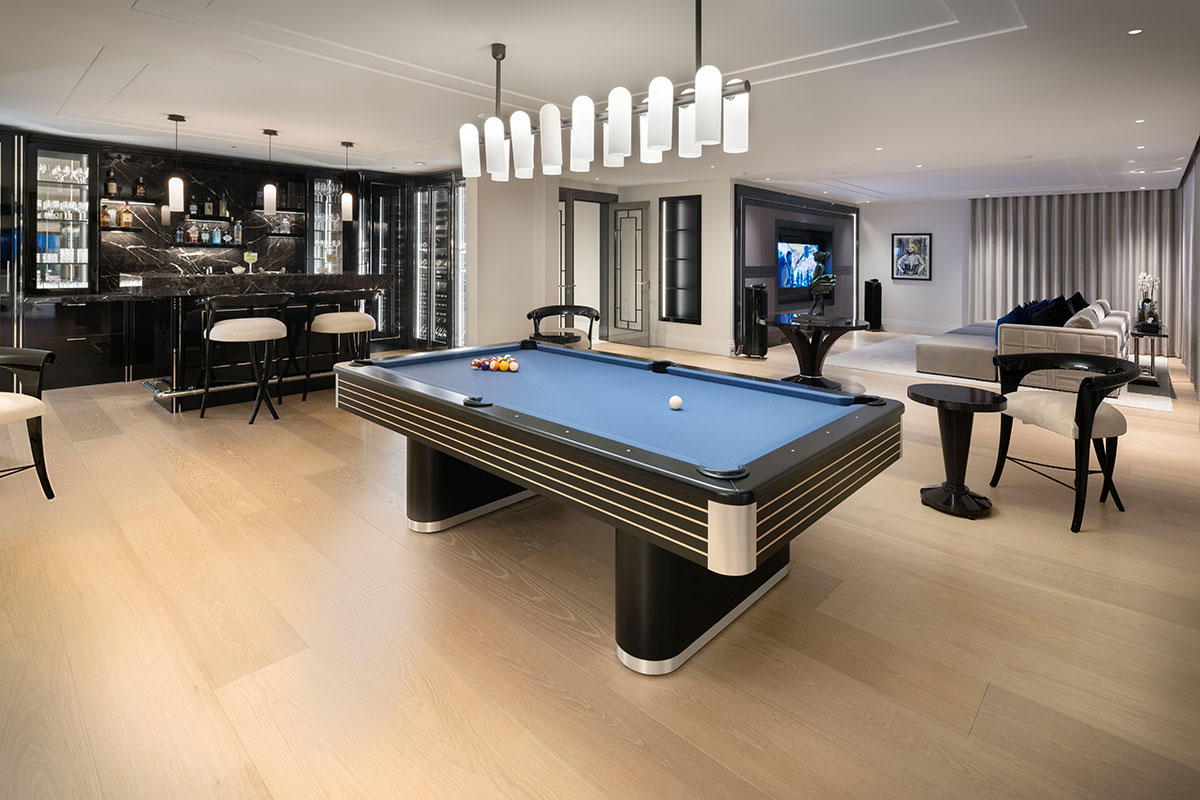
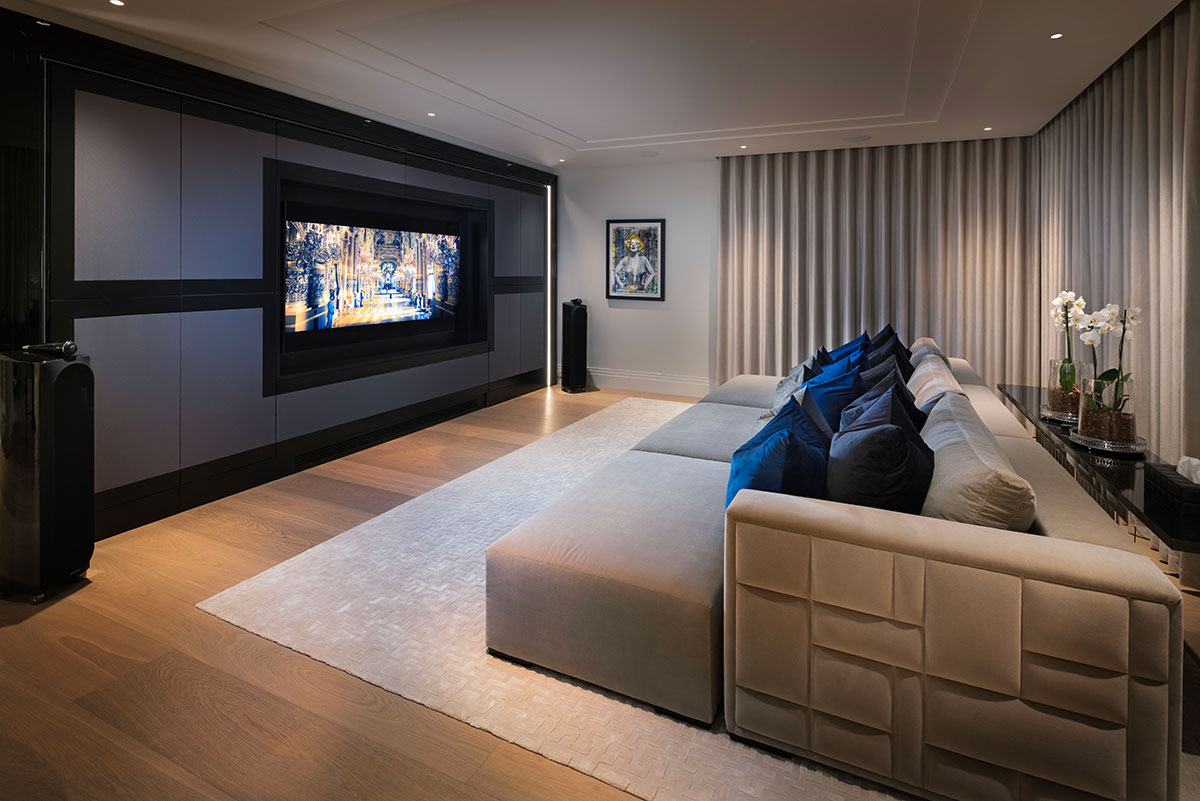
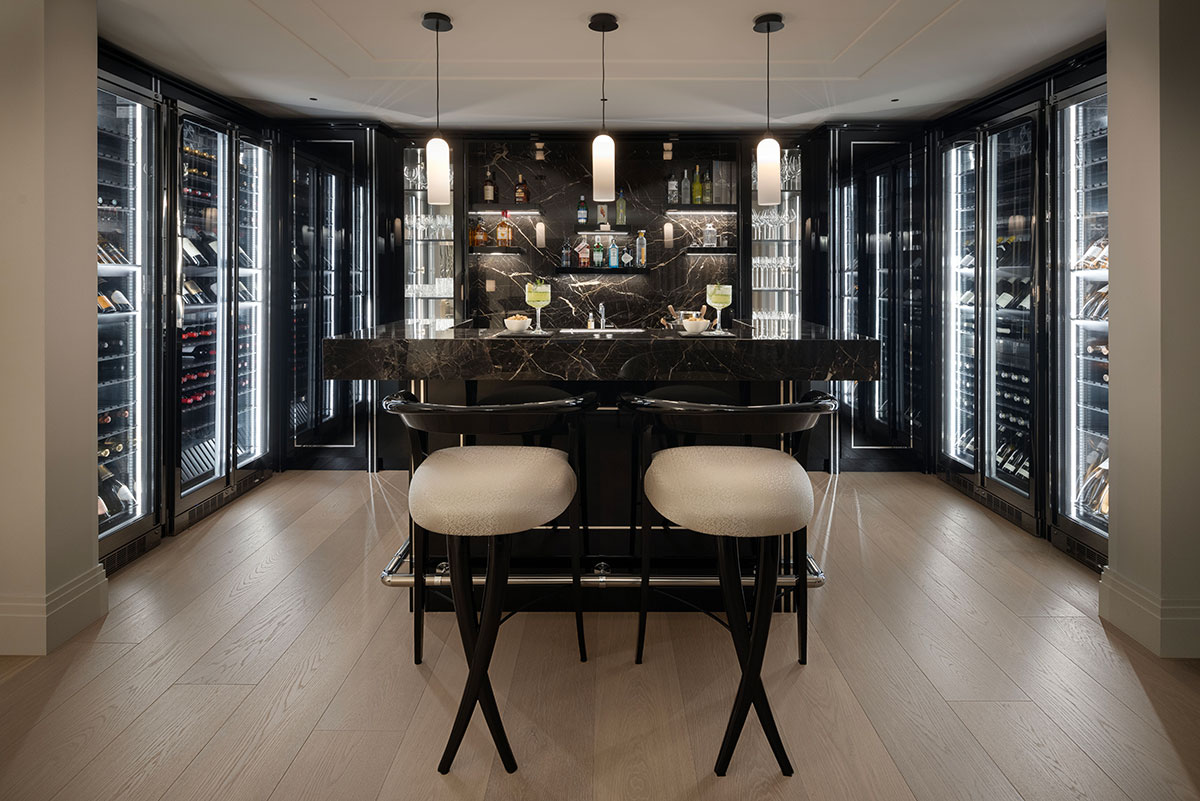
If all that lounging gets too much, you can go all Aerosmith and live it up while you’re going down. Well, after you’ve done down at least, with the lower ground floor offering up not just two more bedroom suites but also a dedicated office (that could be converted into a separate annex) and an adult play area. By that, we’re talking a full bar/’club room’, a cinema, and a gym, complete with massage facilities. You can access a terrace down here too, with a sunroom that offers the final decent to the pool level. As I said previously, there’s not much left to put on that ticklist.
Colline de Lavande is not so much a house as a private luxury hotel. No matter where you’ve found success in the world, it’s amazing to think that Jersey can offer the sort of living environment that warrants building a house of this nature. Sure, the stamp duty bill (£3.6m) is more than the cost of most houses the rest of us will never afford, but that’s a lot of money getting put back into the public purse for other services. So welcome to Jersey; thanks for coming. And if you’re a local in a market for a house like this. Well, go you.