Home Blog Page 198

Bags of Charm

0

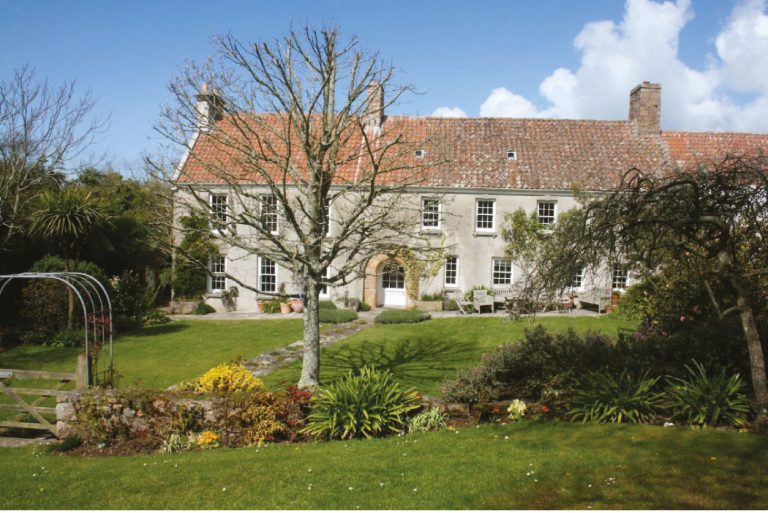
propertymay1 From the original timeworn bell system, once used to summon servants to their ports of call, to the quaint arched ivy-clad doorway, you’ll find an abundance of delightful features within the thick walls of this historic granite property. Furthermore, one of La Chenaie’s many bedrooms plays host to one of the oldest fireplaces in Jersey. So ancient in fact, it’s referenced in the Joan Stevens book of Old Jersey Houses.

From the somewhat mysterious dilapidated outbuildings to the magical sunny south facing woodland garden, and the masses of bright airy space, this chocolate-box household is the perfect setting for an idyllic family home.

Emphasised by the surrounding agricultural fields and leafy tree-lined driveway, vintage scenery and an easy-care lifestyle are in plentiful supply here. However, despite offering somewhat of a secluded feel, its enviable location is one of its single biggest draws and La Chenaie des Bois is just a short hop from the picturesque harbour town of Gorey

Almost every room in the household boasts a view, and from the original sash windows (all of which have been reinstated and double glazed), the tree lined garden looms large: a jumble of sculptural branches, grey-blue skies and avid blooms – it’s clear that the surroundings play a prominent role in the property’s interior design. Using the epic views, La Chenaie des Bois brings a little of the outdoors in, endowing it with a gentle spirit.

propertymay2

The house comprises a number of whimsical living areas, including a generous eat-in kitchen, outbuildings big enough for both an exercise space and a pool, (for which plans have already been passed) and various nooks and crannies easily capable of accommodating a small army.

La Chenaie des Bois has been lovingly restored in an obsessively detail-oriented fashion. Personality is paramount here and the Paul Haslam kitchen isn’t the only room to boast oodles of it. This is a space that wears its beauty nonchalantly and with a wink. From the traditional Belfast sink to the ample utility store, which could easily be fashioned into a wine cave, this spacious farmhouse kitchen, with its original beams, AGA and stone flooring is the perfect place in which to entertain a handful of guests. In fact, it’s as much a place for evening soirees as it is for a game of charades.

Adjacent to the kitchen is the rear entrance lobby (or the boot room) – a handy, yet unusual area featuring exposed granite walls, masses of space and ample storage –the perfect home to wellies, football boots and winter coats.

The drawing room works largely with a muted palette and appears to have taken inspiration from the landscape outside. It offers the right combination of sophistication and subtlety. It’s also an extremely versatile room – come summer, the entire area will appear drenched in a blanket of natural sunlight, and in the winter – the traditional open fireplace is sure to be put to good use, allowing for a cosy and welcoming ambience.

The quaint study leads out onto a secret garden, whilst the remainder of the lower floor plays host to a cutesy cloakroom, perfectly in tune with La Chenaie’s country chic décor.

Sympathetically restored yet imbued with a new sense of identity, the many upstairs bedrooms are decked out in a similar style. The family bathroom showcases an impressive freestanding bath complete with floor to ceiling views of the garden and beyond, whilst the master suite comprises a walk-in dressing room, exposed granite walls and a cohesively decorated ensuite.

It’s here that grand elegance meets traditional style in this picture-perfect, chocolate box granite farmhouse – an ideal investment for those searching for an idyllic family home.

La Chenaie des Bois 

La Rue du Guilleaume et d’Anneville
St Martin
£1,900,000 Freehold
Red properties
Call 01534 710710 or visit www.Redproperties.Je  

Features:
Pretty, chocolate box granite farm house
Luxurious appointed spacious accommodation
Plans to create a 3-bedroom cottage
6 bedrooms and 3 bathrooms
Barn, large outbuilding, garage and store rooms
Sunny south facing garden to the front, secret garden to the rear

A deeper appreciation

0

SHARKI find myself sitting on top of a submersible cage 30ft below the hull of a 90 ft live aboard vessel in the middle of the pacific ocean, surrounded by sharks… 

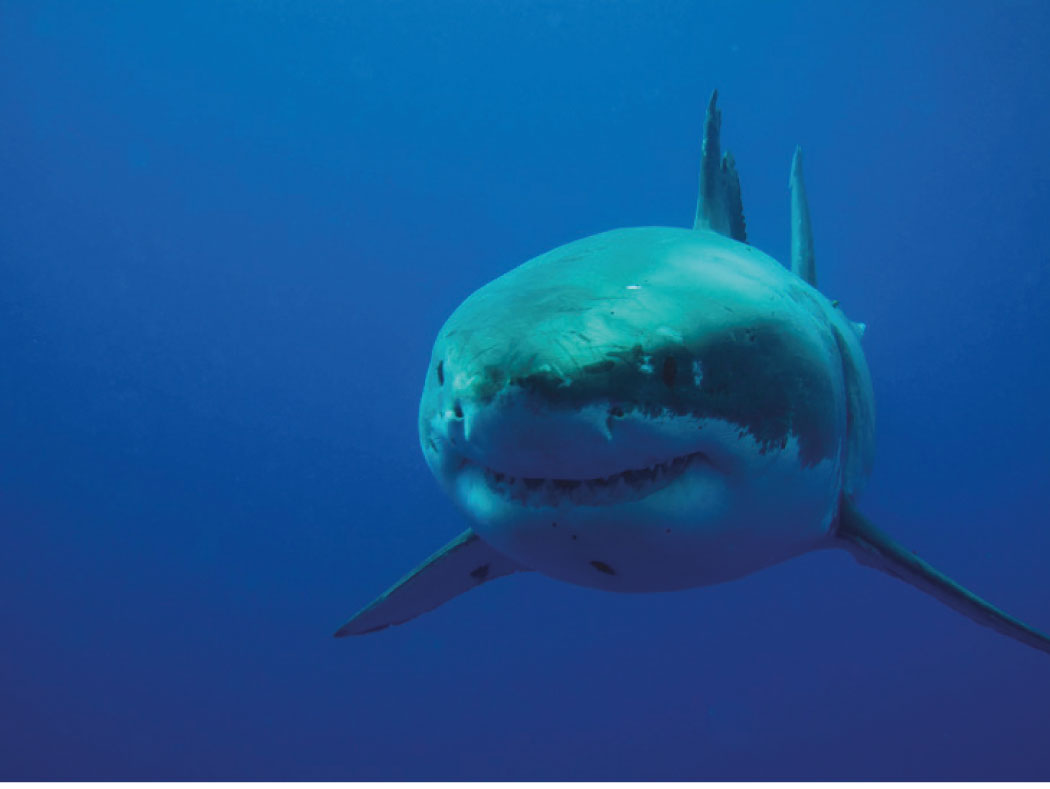
I catch a reflection in my mask lens and swiftly turn around to see an 18ft great white shark (known to me as “Shredder”) just meters away looking straight back at me! For most people this scenario may sound like a nightmare but for me it is a lifelong dream that has become a reality and just happens to be another day at the office.

Every year from September to December I run five day trips 220 miles off the coast of California to a uninhabited island made famous by its high numbers of great white sharks. The high numbers of visitors that I accompany confirms that I am not the only one who has a great passion for these animals as each year our daily trips are sold out, often with many guests retuning again and again to see these majestic creatures up close.

Many people ask “how did a guy from Jersey end up suspended underwater face to face with one of natures most feared predators?” Well this was not my first “job” with sharks. Prior to my most recent adventures I have worked all over the world as a scuba diving instructor and guide. I’ve done everything from taking people diving daily in Sydney aquarium, to conducting snorkel tours with the worlds largest fish, the whale shark. It seems I was always destined for a life on (and in) the water, I guess coming from an island this was inevitable. I also spend five months each year working in South Africa onboard a shark boat showing people the “breaching” great white sharks down there.

Im not an adrenaline junkie,in fact I’m terrified of heights and veer away from these types of activities. However, it became apparent to me early on that being around sharks is not at all scary or terrifying, but in actual fact very calming and for me it’s almost spiritual. Most of what people know about sharks they have read about in the media, or watched in films, I mean who hasn’t seen Jaws? The truth about these complex animals is very different and far more fascinating than anything you’ve read or seen, which you soon discover when you get to spend time around them.

Over the past five years myself and the rest of the crew have got to know these sharks very well and have became very fond of certain individuals. Whether it’s  “Bruce”, “Shredder”, “Bella”, “Lucy”, “Mystery” or the aptly named “Biteface”, when a shark swims past the boat we  know them like you know your pet dog or cat. They all display individual characteristics just like us. They can have mood swings and can display a number of different behaviours. Most people will tell you sharks are unpredictable, but this is only true for people that have never met one. They have some tricks up their sleeves but even these can be identified whilst in the water with them, through displaying complex and subtle body languages.

It is knowing these animals so well that allows us to safely run the trips with no accidents. It also allows us to work closely with film crews, including the BBC and Discovery channel. Where we have even been free-diving outside of the cages in a controlled situation. In fact, one of my greatest memories was free swimming with a 12ft great white (I later named her “Livvy” after one of my nieces)  for a French production company. In the time spent with her she never showed myself or the rest of the team any aggression  and allowed us to get some incredible images.

When you spend so much time around an animal that is so often perceived in a negative way I see it as a duty to help stand up for them and give them the full credit they deserve. The truth is like the majority of marine life, these sharks have much more to fear from us than we have of them and they behave in ways very similar to many animals on the planet that society cherishes and protects.

As humans we like to categorise animals into two sections. In one section we put all the animals we think have the “good” human traits, these animals include Elephants, Hippos (both species that kill far more people each year than sharks) and in the other section we put all the animals with the “bad” human traits, these include Spiders, snakes and the sharks. This is all based on our perception, much of which is influenced by what we read and watch. Most of these animals are just doing what they do in order to survive, they don’t kill for revenge or fun and are by no means evil.

I have been privileged to have an inside and more in depth knowledge than most would have about sharks and to help stand up for them is the least I could do given how much they have given me in my life. We need these types of animals on the planet to make it the fascinating place it is today. It seems that many people have lost their sense of wonder and all that they see of the world is through their technology, iPad, internet or even the latest phone gizmos.

The trips we carry out are simply incredible and to call them a “once in a lifetime” is an understatement. We depart from San diego, spend five days at sea showing our guests the sharks before returning back to land and doing it all over again the following day. Living on a boat for three months can take its toll but the rewards of experiencing so many incredible encounters with the wildlife is well worth it. Even though the trips are specifically for great white sharks we often see many species of marine life from literally thousands of common dolphin riding the bow wave of the boat to blue whales feeding of shoals of plankton on the open water crossing to the Island itself.

Many people begin the trip with a certain apprehension and preconceived ideas of an animal they have never met. By the end of the trip we have changed that, given the guests one hell of a holiday and they leave the boat never looking at sharks the same way again. I see that as my job being done.

So, when I turned around to see “Shredder” looking and swimming straight towards me I knew from his body language exactly what “kind” of mood he was in. Instead of panicking and making a a dash for the confines of the cage suspended below me, I calmly (so as not to scare him) picked up my camera , held my breath (to not deter him with the bubbles from my scuba regulator) and we faced each other, within touching distance, for a split second, before he turned away and continued on his way. Not hyped, not “almost eaten” but exhilarating and a moment never to be forgotten.


The gift of Ubuntu

0

When Jersey woman Helen Sayers first stumbled upon ‘Ubuntu’, she couldn’t possibly have predicted the far-reaching impact it would create. But it seems likely it’s been weaving an invisible thread throughout her life, prompting her to soul-search for understanding and ultimately unearthing the passion for what she calls “a gift to the world”.

So what exactly is Ubuntu (pronounced oo-BOON-too)? Is it a Linux operating system*? An African term? Or a way of life? Actually, it’s all three, but more on the OS connection later…

Ubuntu – a Nguni Bantu word with other tribal language variations – encompasses the human values that lead to a happier existence for us all as individuals as well as for our communities, comprising: sharing, compassion, respect, trust, politeness, etc. and surprise, surprise, it has nothing to do with material wealth.

One of Helen’s role models is someone who epitomised the spirit of Ubuntu, the late Nelson Mandela. At Mandela’s memorial service, US President Obama acknowledged: “There is a word in South Africa – Ubuntu – a word that captures Mandela’s greatest gift: his recognition that we are all bound together in ways that are invisible to the eye; that there is a oneness to humanity; that we achieve ourselves by sharing ourselves with others, and caring for those around us … He not only embodied Ubuntu, he taught millions to find that truth within themselves.”

In exploring this truth within herself, Helen was inspired to write a book about Ubuntu, which she has dedicated to Nelson Mandela. Helen’s book is a training manual for educators and the basis for her many workshops worldwide. Entitled, UBUNTU! The Spirit of Humanity, it has already been translated into several languages.

So how did Helen become an ambassador for Ubuntu? And, as a life-skills trainer, how does the softly-spoken Helen find herself in the position of facilitating workshops internationally as well as locally in the Sultanate of Oman, where she has been based for the past six years?

Moreover, how can we actually live the principles of Ubuntu in a modern world that’s increasingly me, me, me?

Helen admits it isn’t easy to live the values of Ubuntu 100% of the time, confessing: “At moments when I let myself down – for example, instances of unkindness on my part – I say to myself, ‘That’s not Ubuntu!’. Keeping Ubuntu in mind, it becomes a mirror for self-transformation.”

But let’s go back to an early turning point in Helen’s life, to a time when the ‘invisible thread’ presented her with a rather intriguing dilemma.

It was during the ‘90s, while Helen was teaching a science lesson in the UK that she began to reflect upon the responsibilities of educators toward their pupils. It seemed that the focus was increasingly geared toward the achievement of academic success and less toward the development of positive character traits.

Strangely enough, this was demonstrated rather well during an experiment with hot soup! Using different fabrics to insulate beakers of their own soups, the pupils were experimenting with the optimum material for heat retention. When the question arose as to how they might share their hot soup with a neighbour in need, some students were baffled as to why they should even care.  And Helen asked herself – even if these students achieved ‘A’ grades, would I have succeeded as a teacher if I had not helped them to discover their capacity to care?

Helen knew there was an increasing need for a more integrated approach to education and felt a natural connection with the values-based education system developed by an international team of like-minded teachers, Living Values Education, for which Helen remains a strong supporter to this day.

Over the decades, Helen’s career took her to some rather exotic places and she spent many years teaching in Kenya and Swaziland. She says she was left with an “incurable nostalgia” that kept pulling her back to the African continent. She pondered, was it “the stunning scenery, the unforgettable sunsets, or the incredible wildlife?”

“All of these were part of it, yet there was still something much stronger and deeper,” she clarifies, “something connected with the soul, but it remained a mystery till many years later.”

It was in 2001, at the beginning of her eight-year stint in Geneva, Switzerland, that Helen discovered the answer: Ubuntu.  While preparing with colleagues for the UN World Conference against Racism, hosted in Durban, South Africa, Helen met Mxolisi, a friendly young man from Soweto, and a member of the discussion group.

Helen explains: “He suggested we organize a workshop on the theme: Ubuntu – a Force for Living Together and went on to explain the meaning of Ubuntu – an African code of ethics and noble way of living that has held families and communities together and built bridges across nations over centuries.

“What he expressed resonated totally with ‘that thing’ that had touched my heart so deeply during my time in Africa! It was to do with the sense of belonging that I had felt, of being interconnected with others and with the natural world, and it was about the African way of sharing – not only what you have, but also what you are.”

Now living in sunny Oman, Helen is in demand as a training consultant at a large oil and gas company – guiding Omani engineers and designers through their training programmes as well as running her own freelance workshops in life-skills for personal/professional development – including team-building, values education and of course, Ubuntu.

She says she finds it a joy to explore Ubuntu with the locals particularly as there are parallels in the Omani culture. The Sultan of Oman is an example of “Ubuntu leadership values”, she says. “He connects closely with his people with care and affection, earning their love, trust and loyalty”.

She continues: “The way of greeting one another in Oman reminds me very much of the African way – through a series of exchanges enquiring about each other’s well-being, family, work and more … putting each other at ease and generating a bond of friendship.”

Helen was recently interviewed by Omani local radio to answer questions on values education … and so the invisible thread continues. (bit.ly/Q0V79z)

So what does well-travelled Helen miss from the island of Jersey? The closeness of her large extended family, friends and wonderful scenery, plus, she says, the familiarity of a place that is ultimately “home”.

*The world’s most popular free computer operating system shared by over 20 million people and so-named because of its “Ubuntu” nature, explained by the late, great Nelson Mandela in a 2006 video clip made for its launch.

The Heart of Apple

0

We love all things Apple. Their hardware forms the lifeblood of the creative industries. The relationship is almost irrational. Perfect form, articulate and engaging software and that wow factor. They have, however, in recent times lost market share and ground to Samsung, Google and other progressive tech brands and apps. Does this mean the Apple lovers are considering the other fruits more worthy? Some think so. To recognise this Oi, one of the Channel Islands’ most progressive marketing communications agencies, has sent an imaginative direct mail piece to the Board of Apple encouraging them to run another ‘Think different’ advertising campaign.

Many people will remember Apple’s 1997 ‘Think different’ advertising campaign, especially the ‘Crazy Ones’, which were one-minute television commercials featuring black-and-white footage of seventeen iconic 20th century personalities – Albert Einstein, Bob Dylan, Martin Luther King, Jr., Richard Branson, John Lennon (with Yoko Ono), Buckminster Fuller, Thomas Edison, Muhammad Ali, Ted Turner, Maria Callas, Mahatma Gandhi, Amelia Earhart, Alfred Hitchcock, Martha Graham, Jim Henson (with Kermit the Frog), Frank Lloyd Wright and Pablo Picasso.

Another early example of Apple’s ‘Think different’ advertising was in 1998, months before taking the colours out of the logo, where a commercial aired with a snail carrying an Intel Pentium II chip on its back moving slowly, as the Power Macintosh G3 claimed that it was twice as fast as Intel’s Pentium II Processor.

The team at Oi felt Apple needed to bring back a strong brand positioning campaign, so decided to create a direct mail piece to send to the Board of Apple – to see if they would take note. They sourced 8 of the original RAM chips used in the Apple I computer, then instructed a specialist company to produce large, square glass paper weights – each with one of the chips suspended inside. The agency had the Apple logo engraved on it with the words ‘Think different’ below.

The Oi team, headed by Senior Creative James Carter and including Managing Director Peter Grange (pictured above), then designed a white, matt laminated box packaging (the same as Apple packaging) with the Apple logo embossed in silver and the words ‘iRemember’ below. This housed the glass paperweight and went inside a white padded package. Labels were attached with the names and addresses of Apple’s Board including CEO Tim Cook, President of Design Sir Jonathan Ive, Al Gore Chairman of the Board as well as the Marketing Director.

‘We have a strong view on this and wanted to see if we could share our thoughts using a smart thinking direct marketing campaign,’ said Peter Grange, Oi Managing Director.

The leaflet inside the packaging, designed to mirror the current Apple welcome/instruction guides is personalised for each team member.  The message to Tim Cook reads as follows…

iRemember 1997. The square pegs. The round holes. Apple’s first ‘Think different’ advertising campaign was bold, brave and empowered people. It was a masterpiece in showing how challenger brands should behave. It changed everything.

Design is beautiful but we believe people who now buy Apple products also love how you think differently to other technology companies to provide a unique, interconnected-digital-ecosystem. A creative, beautifully designed, innovative eco-system that provides people with endless possibilities and opportunities.

Your marketing campaigns have become very product focused and we believe it is time for another great Apple brand positioning campaign. A campaign that reinforces your founding philosophy and helps you move away from the ongoing marketing battles with competitors over design, price and patent activity. We believe it is time to tell the world about the core of Apple.

The ‘Think different’ advertising campaign idea could show the world why Apple really is different and use your URL www.thinkdifferent.com to reinforce how with Apple you can have a more fulfilling life. You can embrace it, change it, improve it, make your mark upon it. Once you experience an Apple, you’ll never be the same again.

The copy ends with a call to action.

Oi recently sent out the direct mail items by recorded delivery.

‘Hopefully our thinking will get to the influencers and decision makers at Apple. Maybe they’ll take note. Maybe they won’t. Time will tell. It’s been fun working on the mini-campaign. And if people are reading this then we’ve got some good PR in doing so,’ added Mr Grange.

Need help with a direct marketing or advertising campaign, contact Oi in Jersey on 01534 888186 or Guernsey on 01481 716606.

New Royals a go go…

0

We were wandering around after a walk in St Catherine’s Wood this month and noticed a patch at the side of the road that had been ravaged for Royals. Sensibly the area was just out of reach of the road. It turns out that this small patch on the East of the Island was planted before Christmas and has benefitted from the particularly mild winter, and has grown very well. It is a good sample with a high number of potatoes per plant, which bodes well for the rest of the season. The heavy rain in early February did impact on our sequential planting programme, and ultimately means that we are unlikely to have quite so many potatoes ready to dig at the start of May, meaning that the lead in to the main promotion period may be slightly longer. All in all though, The Jersey Royal Company are fairly upbeat and hopeful of a much better season than last year which was blighted by an early heavy snowfall and frost! Mmm.

Guinea Pigs

0

HorizonExperimenting on the human body is a familiar thing. For most of us, our daily routines include the ingestion of caffeine, tobacco and various foodstuffs that we know are bad for us.
Cue identical twins, christopher & xand van tulleken, who have been investigating the effects of diet, medicine and exposure to nasty things for some time. They travel constantly; have filmed a string of successful television shows and experiment whenever possible in a bid to examine different aspects of global health and treatment.

What makes them the ideal candidates?
They sport an identical genetic make-up making them the perfect walking petri dish.Dr chris took time out of his busy schedule to talk to gallery magazine and discuss the great sugar debate and of course, judgement…

Name?
Dr christopher van tulleken

Occupation?
Registrar in infectious diseases and medical research council research fellow at ucl (for hiv studies)

Where did you receive your education?
I did my medical degree in oxford (as did my twin brother) and i trained as a doctor in london – i’ve been a doctor now for 11 years.

Who’s the oldest? You or your twin brother xand?
Xand is 7 minutes older than me.

What do you like to do in your spare time?
I get to go on lots of expeditions and research tropical medicines. I also go to places like the arctic a lot – and because i do the tv work it soaks up all of my hobby time. It can involve mountaineering, going to the rainforests – i get to see wildlife too. There isn’t really any time to do normal hobby things like…jigsaw puzzles? Do people still do them

You’ve been involved in numerous bbc science documentaries – which one has been your favourite and why?
I couldn’t possibly decide on a favourite. The children’s work for cbbc is really fun to make because it’s such clean television. We always say that the show (operation ouch!) Can be watched by any doctor in the country and they will learn at least one thing. But there’s something special about being sent all over the world so it’s all pretty good fun. I really enjoy being able to work for the bbc too – it’s an absolute pleasure. I’m a big fan of the old license fee and generally keeping the old bbc up and running.

Have you ever been in a situation where you had to make a judgement call?
Yes many times. That’s the hardest thing about being a doctor on television because your pride means you don’t want to say “i don’t know”. But of course in a hospital staff and other doctors provide a support network. You have this enormous structure of specialists who all get together and discuss complicated problems or medical issues. And so to be on your own with just your twin brother in a jungle…the biggest decisions were always “do something or do nothing.” That’s not a thing we allow in the western world – but people do have perfectly good immune systems and people recover in ways that we never allow to happen in a modern hospital.

Recently you filmed a documentary for the bbc flagship science programme – horizon. What made you embark on the fat vs sugar experiment?
I’d been to the arctic in 2008 with bruce parry and lost more than four stone and returned to the uk weighing little more than nine stone. During the expedition, xand (my twin brother) went to america and put on approximately five stone. He was almost double my weight! We both experienced enormous fluctuations. So we started researching nutrition, which we’ve always done to an extent as doctor’s with patients, but we realised that we just don’t know the answers to some very basic questions. Our programme investigated a simple question and it appealed to us because we could use ourselves to answer it. That always makes good television. The absolute zeitgeist at the moment is the “great sugar debate” – that it’s the new toxin or that it’s worse for you than crack cocaine and it’s terribly addictive. So it was a way for us to address something that seemed to be misrepresented in the media.

What was the biggest challenge you faced when conducting the experiment?
Being on a diet, no matter how benign it is, can be very difficult. I find it very difficult to have restrictions put on my lifestyle externally – and so to have a diet that removes the flavour and joy of eating, like a low fat diet, is a real task. I have great sympathy now for people who are dieting. It can be psychologically dreadful. Food for most of us is a very certain point of joy in all of our lives. Whatever is going on in our relationships, whatever is going on in our jobs, we can eat a nice meal and immediately get some pleasure out of it.
The hardest thing about doing the programme was trying to find something responsible and factual in an area of science and medicine that is so confused and involved, intricately, with an ‘industrial argument’.

What do you mean by ‘industrial argument’?
There a lot of people with immensely vested interests on both sides of this debate – in the manufacturing, health and fitness trade. It’s incredibly difficult to sort it all out. So finding a solution was key and the bbc drafted in the best and most qualified researchers in the world to work with us to ensure we got a clear message. It’s a very important health message that we didn’t want to get wrong.

Weren’t your findings predictable? More sugar results in a higher risk of diabetes? More fat in the diet results in weight gain?
In reality what happened was something very different. Xand, on his very low sugar diet, started to produce less insulin and be less sensitive to it – which is the opposite of what you’d expect on a low carbohydrate diet, whereas the tests of my insulin function were much better. It was very unexpected. Xand appeared to become closer to becoming a diabetic than i did on a high sugar diet. At the moment in the press, there is a tendency to say “sugar is the new fat” and “avoid at all costs”.
I generally agree that lots of sugar, especially refined sugar, is bad for you, but to simply believe that you will solve the obesity problem by restricting carbohydrate intake is a bit misguided.
I need to stress the relevance of this – we are only two people. Not exactly a broad research spectrum. But what it did backup, from the evidence we gathered, which is that the modern thinking, that sugar is very toxic, is not exactly right.
It is the mixture of fat and carbs that makes food so troublesome.
Take-away food is the perfect example of this. You can eat your bodyweight in chinese food. You keep eating long after you are full. You can eat almost to the point of vomiting! That’s because the food ‘tastes’ so good. It’s that mixture of fat and sugar. The same reaction-areas in your brain light up in exactly the same way as when you introduce certain narcotics to the body.

What is the best advice for people who are dieting or attempting to live a healthier lifestyle?
Do your best to select a diet where you restrict your intake of processed food. If you buy fish from your local fishmonger, meat from the butchers, fruit and veg from the grocers and you assemble it at home using oil and spices and salt and pepper, you will find that you will regulate your calorie intake. By eating a normal diet of stuff that your grandmother recognised as food – that will help you lose weight.
Our programme wasn’t a weight loss documentary. It was about fat and sugar. Our moderate conclusion was that when you combine the two, food is so delicious that you can’t stop eating it. That’s essentially the sole message – it’s not fat and it’s not sugar but when you mix the little devils, that’s when you start seeing problems.

What advice would you give to people trying to lose weight?
If you are someone that wants or needs to lose weight you have to do several different things at once.
You have to increase your activity, which means making sure that you’re not injured. Changing the structure of your life and creating more time is essential. You have to eliminate processed foods which means asking friends or colleagues not to include you in cake runs and allow for more time to cook for yourself; eat out less and drink less alcohol, which means socialising in a different way. You have to attack the problem from all angles and accept that it is a multi faceted solution.

Gallery would like to thank the bbc and dr christopher van tulleken for their time.

Miso cod, cucumber & sea vegetables With wakame dusted jersey royals

0

fishforblushIngredients
For the cod…
200G piece of cod loin (per portion)
60G white miso paste
25Ml mirin
25Ml lemon juice
Butter

Sea vegetables & cucumber…
20G wakame seaweed
60G samphire or land seaweed (okahijiki)
1/2 Cucumber
1Tsp miso marinade
Butter
Black pepper

For the jr’s…
20G wakame seaweed
100G jersey royal potatoes (per portion)
Butter

For the cod…
Mix the white miso, lemon juice & mirin into a smooth paste, spread on top of each cod portion about 2mm thick, place on a non-stick tray and into the fridge for 2 hrs. (Or as long as you have, even if it’s just 20 mins)
To cook place in a pre-heated oven at 185°c with a knob of butter on each of cod pieces for around 8-10 minutes.

For the sea vegetables & cucumber
Cover the dried wakame with warm water to re-hydrate, remove and discard any thicker, tough stems from the wakame, once rehydrated strain off the water keeping about 100ml of it to mix with the 1 tsp of miso marinade to make a stock and set aside, with the cucumber peel off the skin and discard, continue peeling the paler flesh to create delicate ribbons, stop when you start to see the seedy centre. Now picking samphire, like when trimming the stalks off asparagus to leave only the tender tips, you need to pick through the samphire in a similar way to remove the most tender parts (it can be a little woody at the base) once ready set aside with the cucumber ribbons, wakame, miso stock and butter.

For the potatoes…
Blitz the dried wakame to a powder (removing any stalks if you see any), pass through a fine sieve and set aside for dusting over your buttered potatoes. Steam the washed jersey royals until tender and toss in butter.

Bring it together…
With only 2 minutes to go until your cod loin and potatoes are ready prepare your warm salad, in a medium hot sauté pan place the samphire and half the miso stock to steam it, add more if required (you do not want the samphire to dry out but also you do not want too much liquid either) sauté for about a minute until tender then add a good knob of butter, the wakame and cucumber ribbons and a few turns of black pepper, bring together until the butter has created an emulsion with the pan juice and the seaweed and cucumber have warmed through.

You are ready to plate up and enjoy!

A relaxing retreat

0

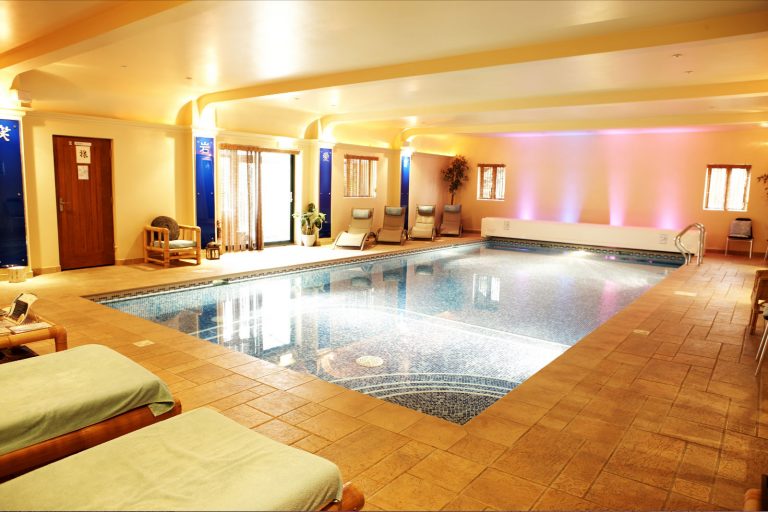
march_105_guinea_pig_Les_Roches_Indoor_heated_poolThere’s nothing quite like indulging in a luxury spa treatment when the weather is cold and dismal outside. Needless to say, I jumped at the chance when I was asked to review the latest Mother’s Day pampering package at Les Roches Spa.
Surrounded by a picturesque summer spa garden and nestled at the end of a winding country road, this intimate spa certainly stands out from the crowd. From the hot tub, which offers unblemished views of the gardens outside, to the soothing sauna and the plush loungers that surround the spacious indoor heated pool, everything about Les Roches Spa radiates relaxation.
I arrive for my treatment at 10.15am and almost instantly find myself ensconced in a fluffy robe. Quite content, I lie by the waterside perusing the spa’s ample collection of reading material. After a quick dip in the pool, I decide to try out the Jacuzzi and sauna. Feeling suitably relaxed, I’m ready for my first treatment to begin.
Moments later I’m cocooned in the blissful serenity of one of the idyllic treatment rooms, the hustle and bustle of the outside world seems a million miles away. And by cocooned, I mean literally. A typical spa journey usually begins with a massage; my treatment however, begins with a ‘Cocooning Capsule’ relaxation session.
Once encased inside the capsule, I’m greeted with a mixture of sweet scents, tranquil music and pleasant vibrations. Minutes later and I feel a little like I’m floating – and as if my magic – all my tensions are beginning to melt away.
Back in the comforting arms of the plush poolside lounger, I’m informed my next treatment is to be the Terre & Mer Organic Facial. This truly relaxing ritual combines marine ingredients with Mediterranean plants, and unlike the average facial, includes with a welcoming back massage. As the sweet smells of lavender oil fill the room, I’m instantly transported to another world. Organic concentrates, creams and serums (all of which are effective, sensorial and safe) are applied to my skin, shortly followed by a face, neck and shoulder massage. Although I wish I could prolong this spa experience forever, I know it must come to an end, but not before concluding with an equally relaxing Le Remedi handcare treatment.
After my treatment, I’m beckoned to the poolside, where a flute of bubbles and a bowl brimming with strawberries awaits my arrival – the perfect end to an already idyllic few hours.
My skin feels nourished and appears naturally radiant, and I can’t say I’m surprised. With an impressive menu of restorative and organic ingredients, Les Roches Spa have definitely opted for the healing, nurturing and intuitive approach. I leave the spa a more luminous, polished version of my former self with the sweet smells of the ocean still lingering on my face.
The Mother’s Day Excellence package boasts the perfect combination of natural beauty and relaxation and is an ideal gift for that special somebody.

£89 per person or £172 for two. Call 487856 to book.
www.lesroches.co.uk


Dream Destination: March

0

Would your dream destination have anything to do with cycling, Andy?
Yes! It’s Whistler Mountain in Canada. But during the summer time because it’s not for the snow; it’s for the biking.
Whistler has a reputation as the “Mecca” for mountain biking, so it’s a place a lot of mountain-bikers would dream of going to.

Have you been to Canada yet?
No, we’ve generally travelled around the eastern side of the world. It would be lovely to see the Canadian scenery though …

Would you take your own bikes?
Lots of ski resorts have bike-orientated activities in the summer and they’re equipped for it, so you can hire bikes there but it can be expensive.

Are there various levels of difficulty for biking routes?
Yes, the bike routes are generally graded in the same way as for skiing, with a blue or green route being easier than a red or black.  There are also cross-country routes for those who aren’t so experienced or for those with families, for example.  And then there are the full-on downhill routes – with more of the serious stuff!

Which would you opt for?
Probably both! But I won’t confess to being able to do what they’d class as “difficult” in Canada!

What else makes for a “difficult” classification?
Generally it will be steeper and when it gets to the black runs – I think they even have double black diamond runs – then the track will state that you’ve got to be prepared for a “gap”.

A gap?
Yes – you’ve got to be confident enough to jump the gap otherwise you could get yourself pretty hurt!

SterlingLorence16sm

Mind over matter or kamikaze?
Just experience … and much more than I have! You must be completely confident for the terrain. I’ve been riding mountain bikes for 15 to 20 years but only got into it more seriously in the past ten years, since I’ve been working in the shop.

Have you been on any overseas biking trips yet?
Yes, my partner Fi and I have been biking in Lefkada – one of the Greek islands – and also at Morzine in the Alps. And I went to Alpe d’Huez with mates in 2010 for the Megavalanche event. It’s a well-known downhill enduro event that starts at the top of a ski black run on a glacier at 3,200 metres. A fun experience!  Last summer, Fi and I went to Wales. We stayed in a lovely self-catering cottage within minutes of the marked trails and bike centres. The Forestry Commission receives grants to make proper marked routes, encouraging tourism. The village pub certainly benefits!

What about when it’s lashing down with rain, Andy? Are you still gung ho about cycling?
Most of the time, yes! Over here, races usually go ahead whatever the weather. But sometimes they have to change the venue if it’s too, too muddy.

How do you feel about wearing helmets?
I’m 100% for it! From experience! I came off my bike and fractured my neck and wearing a helmet definitely saved me. Another time last summer, I fell off the bike off-roading and I probably would have had a few other injuries to deal with if I hadn’t had the helmet on.  It’s good to wear gloves too, even for normal riding, so your skin is protected if you do have a fall. For mountain-biking you can also get knee and elbow pads – depending on the level of seriousness.

Do you get a real buzz from biking?
Yes, it’s nice to be out in the fresh air and it’s great exercise; it really makes you feel good.  Sometimes at the end of a race, when you’re absolutely … how can I say it … “kaput?” – there’s a feeling you’ve really earned that big breakfast at the Watersplash. And that makes it all worthwhile!