Home Blog Page 162

Differences of Opinion

0

Sometimes, I imagine, it’s tough to be a part of the Jersey government. Our island is made up of such a diverse population, packed into such a small place, that there is literally no way to please everyone. At each and every turn, you are faced with backlash from one group, and support from another. Democracy, as much as it is probably the most fair and representative way to run a government, is unfortunately constantly marred by the fact that the voting public is made up on the whole by, to put it lightly, imbeciles.

For god’s sake let’s look at America, the country that has literally (that’s a loose use of that word) started wars to bring Democracy to the world. In a study by ITS OWN GOVERNMENT, it was found that 32 million U.S adults cannot read. At all. That’s 14% of the population. That doesn’t seem low to you? Well, when you consider 21% of the adult population, which is 66,000,000 people by the way, 14 million more than the population of the UK, can’t read above a fifth grade level, the statistics become scary. I’m not saying that the U.S.A is a fair comparison with Jersey, that would be insulting for all of us, but my point is this; we are putting the decisions that dictate our lives in the hands of people who can’t read The Very Hungry Caterpillar to their children. As much as I’m all for fair representation, when I stop and think about who is shaping my future, the thought of autonomous dictatorship doesn’t sound too bad.

If dictatorship sounds appealing to me, an irresponsible and self-confessed naive student, I cannot imagine how close the men and women pioneering the island’s newest financial institution have come to going what I like to call “Full Tse Tung” on the public. The Jersey International Finance Centre has been a point of contention from the moment the Esplanade Quarter Masterplan was announced in 2008. Without including the proposed park and the new underground parking structure, the plans consist of six new office buildings to be built in the Esplanade car park, combining to provide a staggering 470,000 square feet of ‘Grade A’ office space for prospective tenants to come and expand the booming financial industry in Jersey. Through the maintenance of public land and a complicated process that involves the use of, but not the control of, private investors, the JDC are projecting returns from this project of roughly £50 million before rental income, which will go back to the public rather than into private pockets. Along with the business offices, the JDC are extremely keen to promote the public spaces that the project will create. At the centre of this side of the development is the large public park that will be created in the middle of the quarter, which, along with improvements to the larger Esplanade area and improved pedestrian pathways into the existing town, will showcase the potential for renovated and natural areas in Jersey. So, to summarise, if all goes to plan we will have six new office buildings, an improved park and open space, better access to the existing town area, more parking, and £50 million pounds for public spending. Unfortunately, when something sounds too good to be true, it’s normally because it is.

Opposition to this project has been constant, vocal, and, unlike the work of most protesting masses, relatively logical. Like any dream, the Esplanade Quarter Masterplan has holes in its velour fabric. Nothing, unfortunately is perfect (except Kinder Buenos), and whilst we should all applaud the rhetoric used to get the States to give planning permission for this project, we should also be able to see through it. Perhaps the most glaring issue with the entire 6-building development is the assumption that it will actually be filled. Yes, there is only a limited amount of Grade A office space on the island currently, and yes the vacancy rate for this space is only 1%, but the JDC can only use its “progressive expansion” excuse for the fact there is only one building currently under construction for so long. You may be told that only Building four is under way because progressive, phased introduction will limit exposure and allow for the plan to be evolved and shaped around public and private need, but it might also have something to do with the fact that so far only one building has been let, and even then only 25% of it. That’s right, in this new structure designed to house and facilitate the expansion of the finance industry in Jersey, we’ve only managed to attract the attention of two banks, who both already had a base on the island. The announcement from the States that they have had “interest” from another potential client in 5,000 square feet of space doesn’t do much to dampen the disappointing sting of a plan unfulfilled, and dissatisfied islanders have made clear that a lack of information from the States, a disregard for procedural necessities, and a rush to start on a project that promises ambiguous long term return have left the project marred by the veil thrown on it by its own innovators.

Add into these the abstrusity of the dealings with money and ownership and you can begin to understand the opposition stance on the development plans. With changes to plans, namely allowing it to be completed in a piecemeal fashion rather than a single build meaning that promised returns can be altered depending on how much is actually completed, and a series of different companies being given control of the project, most notably the offer to Dandara being rejected in place of the SoJDC, the entire situation becomes marred by disingenuousness and half-empty promises of returns that may never be seen…allegedly.

Obviously I have to remain impartial in this, otherwise it would just be another one of my many, many pro-capitalist, anti-humanitarian rants, and in my final month here I’d like to prove myself as somewhat of a professional. However, as I began this introductory section with a brief discussion of my views on the flaws of democracy, it only seems fitting that I bring it full circle and once again discuss the possible utopia of a dictatorship (for the dictator and anyone on their side, of course). Ahead you will read some (and I must stress the some) of what I discussed with Sean Power and John Baker, the heads of the St. Helier Waterfront Action Group, or SWAG for short, when I met them this month. A former politician himself, Power understands the importance of an opposition in democratic process, and it is indeed opposition that his group provides. SWAG have campaigned tirelessly against the construction of the finance centre, even making it to headline news with their protests around the Esplanade car park, and it seems that, despite their efforts, in this instance they have become the symbol of a broken democratic process. But is that a bad thing? Do we need a functioning democracy? The reaction from the young generation to the Brexit outcome is evidence enough that, whilst there is something to say about fair representation of each generation, people under the age of 25 don’t seem to understand that the needs of one group may not necessarily be the best for others. The “older generation” (>40), who in 2011 made up 51.2% of the island’s population, have a pretty sizable majority when it comes to voting on public decisions, and it’s fair to say that the best outcome for a student may not be the best for a person nearing retirement. However, if there is indeed a dichotomy to be created here, to which side should the responsibility of the population’s future fall? Should it be the younger, inexperienced group who have seen as much of the world as getting high in university halls can show you and believe that disregarding and denouncing right-wing politics online will gain them the Facebook likes that they so misguidedly equate with respect? Or should it be entrusted to the group who have worked in the industries that will be so affected by any change made in politics, but haven’t to grow up in a time when international alliance and overseas opportunities are so prominent and important? My point is, before you start answering these rhetorical questions, that nobody is perfect. There’s no way to please everybody, at least not until we manage to overcome human nature and understand that we are not always right (but who wants that? Being right is great). And so, rather than disappointing a certain generation and making them feel as though their vote means nothing, why not just take away the vote? Give ultimate power to the one in charge, and then at least the anger of the disenfranchised can be directed at a singular target, rather than at a disseminated list of menial and inconsequential flaws in the voting process. Anyway, I digress. Here are John Baker and Sean Power.

To start off, can I just get a brief outline of what the St Helier Waterfront Action Group are aiming for concerning the Jersey International Finance Centre? We’ve seen the pictures of protests in the JEP, but what is it you’re actually trying to achieve?

We need to make it as clear as possible from the outset that we are not at all against the finance industry in Jersey. We understand and appreciate what that sector does for the island and its economy, and we wouldn’t want to halt the development of the industry itself. However, what we are against, and what we hope to expose and stop, is the way that the people of Jersey have been supplied with insufficient information on the extremely important finer details of the entire Esplanade Quarter Masterplan, and specifically the construction of the Jersey International Finance Centre. We believe that the people, who have become inextricably linked with the project through the use of and risk to public funds, deserve to know how their money is being spent, and who by.

So, is it the entire Esplanade Quarter Masterplan that your organisation opposes, or the JIFC in particular?

We’re fans of the Masterplan as a whole! The integration of the Waterfront and the Esplanade is, in our eyes, a great idea. The plans for the park and natural open space, as well as the underground car park, are viable and would certainly add to the area. Even the JIFC itself is not, in theory, a bad idea. What we are against is the way that the States of Jersey, and the SoJDC, have gone about the entire process involving their construction.

What do you say to the promises made by the Jersey Development Company concerning the massive potential for returns of roughly £50 million from the JIFC?

[extremely audible laughs] Well, how long have you got? To put it simply, that was just a matter of good marketing. The States used that figure to fool the public into believing in the project, but I think, through our work and through mistakes made in the development’s maturation, the confidence that was once there is being depleted. Quickly.

The promises made were based upon the assumption that the entire development would be incredibly desirable to international finance companies, and that leasing the space would be a matter of fighting off combatting bids. As we well know, this hasn’t been the case, and that’s why we’ve seen the project veiled by legally ambiguous activity and rushed into construction. The States allowing construction to start after leasing only 16,000 sq ft was just a small part of a larger system of questionable actions by senior ministers. Last minute changes to the plans made without consent and the rejection of incredibly high-profile contracts from Dandara only raise unwanted questions surrounding the companies and people leading the development, and that is what we here are trying to bring to the public’s attention.

Have we seen examples of this from the States before in Jersey? Is the JIFC the first building that you’ve been disappointed with?

We probably shouldn’t mention anything by name, but we can say that the States have certainly disappointed us before. Our problem is not so much with the developments themselves, but the decisions that lead to them. The Jersey Development Company have been infamously risk-averse in the past, and it has meant that potential developments that could be literally life-changing for islanders. These low-risk, low-return projects don’t particularly benefit the public, who they are technically working for, and so we see wasted potential in things like the failure of the plans to build a high-rise tower at the Waterfront, and specifically the inability to find a new area for the Hospital (the Esplanade wouldn’t have been a bad place…). The States aren’t particularly bad at the development side, but the decisions that determine the construction, planning and location of these developments are often questionable.

So, to finish off, what would you say is the ultimate solution to the problems you see in the development of the JIFC?

We may be too far into the process now to fix what has been broken, which should be the trust in the SoJDC and the ministers responsible for the entire process behind the development. However, we can, with the benefit of hindsight, give some relatively simply ideas for preventing these problems in the future. The big lesson to learn from this is that public money should not be played with. There isn’t another government in the world that provides public money for development, or indeed leads development projects like this. Every financial building project is privately developer led, and that’s the way this should have been done. As we mentioned before, Dandara rejected a substantial offer to take on this project, and it was then that the SoJDC took control and plans were unexpectedly changed and tampered with without the knowledge of the public. They can make all the promises they like, but what has happened here is that the States have bet on a risky hand with public funds, with the promise of return being slim and growing slimmer. This is what needs to be changed.
Oh I do like to be Beside the Quayside

0

Liberty Wharf is home to a great many fantastic shops and eateries, making a visit down to the converted abattoir essential when you’re looking for something new to buy or for a bite to eat.  

Well if you’ve shopped until you’re ready to drop you should consider heading up to Quayside restaurant, above Mimosa.  Most of us will be familiar with the nightclub and bar downstairs, but may not be quite as well versed with the menu of the excellent restaurant above it.

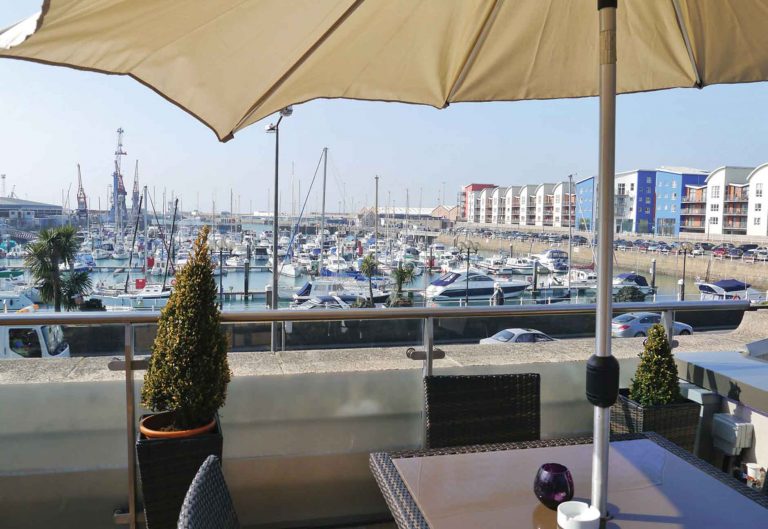
We sat down with head chef Graham Benn to talk about their recent new direction, which has seen them shift to a predominantly seafood led menu.  This has seen table bookings skyrocket and more and more happy customers heading to this light and bright restaurant with stunning views of the St Helier Marina for lunch and dinner, seven days a week.

Graham moved to the island four and a half years ago to take up the post of head chef at Quayside.  He’s brought his style of cooking, honed in his own bistro near Whitby to the restaurant menu, working with owner Martin Sayers to fine tune their offering.  Now you can choose from their wide menu which includes options that will keep seafood and meat lovers happy, whatever the occasion. Choose from the likes of a Fruit de Mer to share, scallops and belly pork or crab and avocado salad.  They have also just employed the skills of a new Sushi chef, which will mean their menu here will grow too.  Where possible Graham sources all of his ingredients locally and they have great relationships with Battricks who supply all their wet fish and several fishermen who keep them well stocked with fresh shellfish and scallops.

Quayside also have a fantastic al fresco offering, where you can choose from Mimosa’s lantern courtyard or enjoy panoramic views of St. Helier from the Old Harbour Wall Terrace. Or alternatively there is the restaurant’s extensive private terrace, which also has underfloor heating, not that you’ll need it in the summer!

Quayside and Mimosa also offer an excellent location for events and private parties.  They can host up 400 people for a BBQ or party, where they can cater for almost anything you’d like to provide your guests.  Most recently they’ve been the chosen venue for a number of large corporate summer parties, thanks to the versatility the areas offer.

Whether your appetite is for business or pleasure, lunch or dinner, you will find dishes to suit every palate at Quayside in Liberty Wharf.  Whilst booking isn’t essential, it is recommended.

Opening times:

Mon-thurs 12-2.30,  6-9pm.

Fri 12-2.30,6-9.30.

Sat 12-3 ,6-9.30.

Sun 12-3 ,6-9.

Telephone – 01534 877004

Time & Tide Wait for no Island

0

If I had a pound for every time I’ve heard or read ‘global warming’, I wouldn’t need to spend my terms at university living off ASDA own brand food. In fact, with the amount of times the government have attempted to cover it, and get people involved, I should now be an expert in the field of environmental issues. I do, however, know that as an island we have the ability to access a wide range of renewable energy sources. For instance, we live on an island that offers one of the largest tidal movements on earth. This should mean that Jersey is a prime location to harness tidal power as a clean, green, renewable energy source. To put the velocity into perspective, our tides rise and fall by an average of 40ft (12m) a day. That’s the height equivalent of one giraffe standing on another giraffe’s shoulders. Picture that if you will.

Back to tidal energy though. Ignore the giraffes.  In case you didn’t pay attention in your science lessons, tidal power is created by a tidal generator which converts the energy of tidal flows into electricity. Greater tidal variation and higher tidal current speeds can dramatically increase the potential of a site for tidal electricity generation. Tidal power is practically inexhaustible and classified as a renewable energy resource because the earth’s tides are ultimately due to gravitational interaction with the moon and the sun and earth’s rotation. So essentially, all we’d have to do is set up the equipment and let the sea do its thing.

The potential our island has for this kind of energy was uncovered during a detailed study carried out in 2010. The States spent £65,000 conducting the report, with the help of IT Power. The report included resource modelling, technology reviews, an environmental impact assessment scoping study, development of a commercialisation strategy for the realisation of tidal power in the area, and site survey work to verify flow data. Two people from the company took two weeks to carry out the study, and recognised good potential for offshore wind farming as well as tidal energy in Jersey. Yet six years later, we’re still buying our electricity from France. I know, I’m baffled too.

To cure my confusion, I spoke to Dr. Louise Magris, Director of Environmental Policy at the Environmental Department in Jersey. She told me that the study “Showed that we have reasonable tidal currents that could yield the energy equivalent to about half of the island’s annual electricity requirements.” However, this doesn’t mean that we have taken advantage of this fact.  She went on to say that “ To date, progress has been slower than anticipated and the technology has not yet progressed to arrays of commercial availability”

Since the initial report in 2010, there has been no further progress towards the island harnessing tidal energy. This is down to the tidal energy industry still being in the “enhanced research and development stage”. The fact of the matter is, Jersey would need a ‘farm’ of about 150 tidal turbines on the seabed, known as tidal stream technology, to generate enough power that could be used domestically or commercially. Right now, there is nowhere to buy 150 tidal turbines to plant into the ocean, because none of the prototypes have been deemed fit for commercial use.

This doesn’t mean that an efficient amount of tidal energy can only be made through tidal stream technology though.  La Rance Tidal Power Plant in France, just across the water from us, has been using tidal energy for years. It’s a Tidal Barrage, which is a dam-like structure used to capture the energy from masses of water moving in and out of a bay or river due to tidal forces. It has been operational since 1966, making it the world’s oldest and second biggest tidal power station. The plant has an annual generation capacity of 540GWh. Electricity is fed into the 225kV national transmission network serving the needs of approximately 130,000 households every year. Something like this wouldn’t be manageable here in Jersey, as we don’t have the capacity to build a dam of this proportion, but it shows that utilizing tidal energy isn’t limited to the kind of prototypes being tested now.

For Jersey to invest in anything on the market currently would cost millions, apparently. The states would be making a risky investment, purchasing a product that is still being developed that comes with no 100% guarantee that it will work and last long enough. Traditional energy such as coal and oil based fuel has a set cost, but if energy is being created with a prototype, it could cost up to three times more. Thankfully though, there are others who are investing in what is essentially the future of energy, who we can learn from.

“The States of Jersey works with the other Channel Islands, the UK and France in closely monitoring advancements in the tidal sector.” Dr. Magris said. “ Jersey is keen to monitor the progress of ongoing projects in the Alderney Race for example. We are keen to investigate the opportunities that early adoption of tidal technology could offer when the sector advances.”

This means that essentially, Jersey is now playing a waiting game, with places such as Alderney acting as their guinea pig. Alderney’s project, which plans to reach full scale development by 2020, has a potential annual energy output of up to 6 Terawatt hours, which equates to the annual demand of 1.8 million homes. So hopefully when their project becomes commercial enough for us to invest in, we can follow on and use the same thing.

Even though it is easy to see why Jersey is reluctant to invest in something that is not fully commercialised, it doesn’t mean that sitting on our hands waiting for tidal energy to play catch up will help our carbon emission.

The states published the ‘Pathway 2050: An energy plan for Jersey’ document on gov.je in 2014, which lays out their plans and policies to combat the island’s carbon footprint, both commercially and domestically. Predictions were made about how, if we continue as we are, our habits will affect our carbon emission. It showed a projected c.39% rise in energy demand by 2050 if nothing changes.

This is a situation where slow and steady does not win the race, because the longer we wait the more money we waste. A little bit of speed and urgency to utilise our resources efficiently is what is needed to better our carbon footprint, not a list of things for people to do which will be forgotten by the end of the week. Perhaps a faster paced approach is needed to save our planet; just a thought.

A Charming Family Home

0

Les Saint Germains is an utterly charming Georgian family home sitting in the middle of its own land in a peaceful lane in the parish of St Lawrence. 

The main house was built in 1694 by Philippe le Hardy and has benefitted over time from the influences of the Victorian era through the raising of the ceilings and roof, to make all of the rooms large and light, unlike many properties of a similar nature.  It has been owned by the current family for the last forty years and during this time a great deal of solid construction and development work has been done, all of it sympathetic and completed to such a high standard it is hard to distinguish the new from old.

Approached by a block paviour drive Les Saint Germains sits in the middle of 20 acres (45 vergees) of land, of which 8-10 acres are suitable for equine use.  It is a significant understatement to refer to this property as simply a house as it has so much more to offer the new purchasers.  Outside what would have traditionally been the front of the property, which has been rendered and painted, what would have been the carriageway is now a formal lawned garden, a beautiful spot to bask in the sunshine or the dappled light making its way through the large and mature trees.  Further to this garden there is a fantastic ‘shrubbery’ which has a less formal appearance and reminded me of Enid Blyton novels, a place you can imagine all sorts of great games being played by residents young and old.  Don’t be fooled by the name, this is also a huge space filled with mature planting and trees.

The gardens continue to the side and back of the property, but here they are home to a fantastic swimming pool, which comes complete with a standalone pool house.  This 525 sq.ft granite building comes complete with a kitchen, lounge area and also a separate changing room and shower.  Of course this provides an excellent function for the pool area, but could easily be converted in further guest accommodation, should you wish.  The pool is an excellent size and very well maintained.  It is overlooked by what is actually part of the western wing and the newly built part of the property.  The door here leads into what is currently used as guest accommodation.  Here again you’ll find a fantastic suite of rooms, a small kitchen and large lounge and dining room.  This can either be entered through the main house or from the pool area.

Onwards from the pool you will find the all weather surfaced tennis court, perfect for even the most novice of players, or of course if you have the next Wimbledon champion in your midst this would be the perfect place to get in some practice. Continuing round the property there are the former stables, which could be converted back to return to their former function.  A huge external storage area and what every traditional Jersey house should have, pig styes. They don’t currently house pigs, but I’m sure that could easily be remedied, should you wish.

There are multiple secondary accommodation options within the estate, These include a large well equipped two bedroom apartment, with a separate kitchen and lounge/dining room, situated above the large triple garages.  The garaging and flat are just under 2,000sq ft in total, comparable to many new build properties.  There is also a further separate large two bedroom apartment/suite.  Here you will once again be spoilt for space and storage, whether you wish to house multiple generations of even consider letting the properties as a high end holiday let facility.

The main house has 10,397 sq.ft of accommodation set over three floors.  This includes four bedrooms, three bathrooms (two en suite) and a magnificent master bedroom suite, complete with a large dressing room and two en-suites.  Each of these bedrooms is very large and well proportioned, with views from the front bedrooms on to the beautiful gardens. On the top floor there is a large floored loft area which is crying out to be used as a man den or perhaps a cinema.

Downstairs the reception rooms are almost endless.  Here you have three large functioning fireplaces.  A large entrance hall, leading you upstairs and on to the drawing room, formal dining room and on to the lounge, which takes you through to a further family room, a large study and a up to that internal guest suite.  There is also a billiards room which plays host to a handbuilt full sized table, which has plenty of room all around it and a huge fireplace at one end.  This really is a games room that will be the envy of your friends.  There is also a kitchen/breakfast room which leads onto a snug and further through to the conservatory, which leads you back to the lawned garden at the front of the house.

It would be remiss not to mention the further grounds which surround the house, these include a large mature orchard with a stream running through it and of course those fields which would make the perfect home to a whole host of horses.  Le Saint Germains is a well built, well maintained and extremely well equipped property, it is just waiting for someone to come and make their own mark on the internal decoration, which will make this the absolutely perfect family home for the next generation of owners.

Maillard’s Estates T: 737293 Price on Application

• An historic Georgian Estate

• 9 Bedrooms

• 9 Bathrooms

• Guest Suite (private entrance)

• Swimming pool

• Former stables

• Delightful grounds and gardens

• Orchard

• 20 acres of land

• 10 Parking

• Freehold

• Mains water, drainage and electricity.

• Oil Central Heating.

We Have a Winner…

0

Francesca Monticelli was announced as the winner of the Gallery Student Art Awards 2016, with a clean sweep of votes from the judging panel.  Having just completed her Foundation year at Central St Martins we caught up with her to find out more about her work so far and what the future holds as she’s about to embark on her degree course at the prestigious university.

Congratulations on being this year’s Gallery Student Art Awards winner. Has it sunk in yet?

It hasn’t really sunk in, I still can’t believe it. I wasn’t expecting to win at all, but was just pleased to get as far as showing my work at CCA! It was a wonderful surprise to win, as the entries this year were so strong, and I have such admiration for my fellow artists and their incredible work on show.


Could you explain the process involved behind your winning work?

My work goes through many processes. I enjoy using myself in my art as an expression of self as art rather than just a creator. Performance is a key starting element, allowing me to become my work. It is soon no longer a performance but a way of doing, moving and living in that moment, in the space. This work involved painting my body and creating a costume of plastic bags, before taking a trip around the island to photo shoot in different locations such as the beach, sea, and the muddy woods. My work in the CCA derived from the photographs taken in the woods, where I also created an installation of myself and plastic bags spread across the trees. I then used these photos to create a digital collage, representing an idea based on fantasy, contaminating spaces and multiplying clones of new species or creatures. Parts of this collage are shown in my screen prints at the CCA, which are actually my first attempts at screen printing. I am also passionate about painting and used my abstract painting and a light projector to project my collage onto the painting, before photographically documenting the process.

And what inspired it?

I am fascinated by colour, light and space, and developed this with my interest in psychedelic patterns, fantasy, cell mutation and biological modification and cloning. My favourite artist Janaina Tschäpe, along with Rachel Maclean and Stephen Bush have inspired me to explore techniques such as performance and digital collage in my work.

You feature within the work which you entered in to the awards, is there anyone else you’d like to have a starring role in a future project?

I think I will continue to use myself, as this is an important part of my work, transforming myself into something else, I can become another. In a dream world, I would very much like to work with the artist Janaina Tschäpe, as I feel that we share similar ways of thinking, it would be an honour to have her star in my work. However, I think artist Rachel Maclean would be fun due to her costumes, characters and unique performance style. I feel I would also learn a great deal about filming from her if she had the starring role in my work.

You’ve just completed your foundation year at Central Saint Martins, for those who don’t know, what does that mean?

My Foundation Diploma in Art and Design was a one year course which allowed me to explore and experiment with a range of different areas in art from fashion, textiles, design to performance, to mention a few. I learned new skills, techniques and discovered new ways of working such as collaging, screen printing and used different technologies such as light and slide projectors, which are featured processes in my work.

As art has such a broad range of pathways, foundation is preparation for a more specialised degree course. It really allowed me to discover want I was best at and what aspect of art I enjoyed the most. Often students go into a foundation thinking that they will do a degree in one area of the arts and actually specialize in something different.  I went into foundation thinking that I wouldn’t be interested in screen printing but it is a new found love.  Foundation has certainly broadened my ideas and makes one view and think about the world in a very different way. It had certainly changed my perspective anyway. I look at things not as they physically stand but as their possibilities – the colours and patterns, how things are positioned and composed. Foundation is very intense, but so far it has been one of the most fun and expressive years of my education.

Now you’re moving on to your degree course, do you think your style of work is likely to change?

I am enjoying creating in this style of work – with many processes and with a variety of media. Of course my work will change as I explore new avenues, technologies and media. Also my interests may change as I develop as a person as well as an upcoming artist.  Living most of the year in London, there is always something new to inspire me and drive different ideas, but this is what excites me! I can’t wait to see what the future holds and how I will develop. My work, currently at the CCA is certainly a very important foundation in which my ideas can grow.

How does an average day look for you?

In London, I start my day with yoga and going for a run, before visiting galleries and going to one of my favourite places – the studio at university! I spend so much time there, studying books, creating work and being with my friends. We are usually the last people to leave, the security guards always have to ask us to “Please go home!”. I come back to my halls and often continue working to the early hours of the next morning! I breathe, eat and sleep art!

Studying in London is a big change from being here in Jersey, what do you like most about living and studying in the city?

I have the best of both worlds, the crazy, chaotic London life and my little Jersey, which I am proud to call home! I feel really lucky to study in London, as there is always something to do and amazing opportunities to be had, such as helping out in London’s Fashion Week. I walk down the streets and feel buzzing with energy and inspiration, from the street art, the architecture, sights and the people. London is so culturally diverse. I have met many friends from all over the world, including China, Egypt, France, Abu Dhabi and of course London itself!  What I like the most though is visiting the hundreds of art galleries, exhibitions and museums that London has to offer, and finding those art spaces that only a few people know exist – this is the real London, far away from the tourist hustle and bustle. Another incredible part of London is studying at Central Saint Martins, which has the most energetic vibe, with the awesome fashion styles, everyone fuelled with unique ideas and busily making art. I have to pinch myself every time I walk through the gates!

What do you miss most about Jersey when you’re not here?

I love the sea and the beach. If you can’t find me painting or making art then I will be in the water! I really miss scuba diving (not so fun in the Thames), the walks on the beach where I can think and watching the sun going down at St Ouens with my friends.

What made you enter the awards?

I entered the awards because I thought it would be a wonderful opportunity to be a part of the creative community in Jersey, to meet new artists and to possibly experience showing my work in the CCA – now a dream come true.  May I also say thank you to Gallery and the CCA for this amazing opportunity to show my work, is has been a wonderful experience and an honour to be the winner of the Gallery Student Art Awards 2016.

Oh I do Like to be Beside the Seaside

0

We met local artist and photographer Jodie Spriggs whilst we were out exploring last months Skipton Open Studios.  Her glass installation ‘Ribbons de la Mer’ took up residence at The Elms for the duration of the west weekend, where its beauty and skill could be truly appreciated.  We wanted to find out more about the work that she does and what inspired her to create this fantastic piece of work. 

Tell us about where and when getting creative all started for you.

I have always been creative from a school age. Art was my favourite chosen subject for GCSE which led me to study Art & Design at Highlands College where I took an interest in glass and then further pursued this as a Glass making Degree at Wolverhampton University.

How would you describe your work and what you do.

The eight piece glass installation, which you can see in the photos, ‘Ribbons de la Mer’, is inspired by Jersey’s coastline. During a beach combing session for flotsam and jetsam, I took macro photographs of seaweed and pods. Back in the studio I experimented with metals and oxides within glass. I challenged myself to work on a large scale piece, incorporating different techniques and processes, much like building up a collage.

I enjoy layering and seeing depth within art works so this is present in my jewellery collection too, ‘Flotsam Footsteps’ which when viewed closely can look like mini worlds sitting upon your finger.

Depth is also a theme within some of my photography, whereby I am often drawn to quirky doorways and archways. Most of my photography series are taken whilst travelling, I like to capture a moment of daily life on the streets or a portrait shot of someone, where their face can tell a story.

What does an average day look like for you?

I am a full time nanny for a 19 month old boy. We are always exploring the island together. I am now incorporating my love of photography into my daily life. I have set myself a 30 day photo challenge. It is making me more mindful and aware of my familiar surroundings and seeing the beauty within them. I will often be snapping away on my walks and outings with the toddler.

Can you talk us through the process you went through to produce your glass installation.

The making process of ‘Ribbons de la Mer’ is a hot sand-casting technique. For each individual piece, eventually measuring just under a metre in length, I begin by pressing a plaster mould into a sand tray, I then remove it to create a shape to fill halfway with molten clear glass, gathered from a 1500 degrees C furnace. I have pre-formed a colourful glass sphere and lengths of glass cane, which are sitting in a kiln at the same temperature. These are set into the first layer of cast glass, and covered with another clear layer of the liquid glass to encase the forms.

Once the glass has cooled enough to be able to manipulate, myself and a partner attach an iron rod onto each end of the form and lift the glass out of the tray, brushing away most of the sand. We then pull the glass, twisting slightly into a more lengthened and organic form. The piece is then knocked off into a kiln to cool slowly for 24 hours.

Once cooled, I ‘cold-work’ the glass into smoother, elegant pieces by sanding them on different machines. Finally sandblasting selected areas to create a contrast against the clear gloss finish.

The final forms are suspended at one end, so that they are free to move, reflecting the motion of kelp-like seaweed in the seas current.

Do you have a favourite piece of work that you’ve kept, one that you loved so much you just couldn’t sell.

Yes, one of my ‘Rock Pool’ rings, which my boyfriends mum owns. I try not to be overly precious with my work or I would never let anything go! I love it because it represents a fond time experimenting with materials and also a lot of hard work and time spent hand polishing.

Do you have any particular artists that have inspired you throughout your career?

I admire the large scale glass waved sculptures of the glass artist Danny Lane and the photographer Henri Cartier Bresson, for his courage and rules in aesthetics with a realistic approach. He likened photography to an “instant drawing”, much like I prefer to leave my photographs unedited so what you see in my shots are the real colours.

What was your pathway to getting to this point in your career?

At Highlands College I was lucky to be taught by well known Jersey artists and especially encouraged by my tutor Glyn Burton, to work with glass and metal, he further suggested studying at Wolverhampton University for their range of facilities which would allow me to try out glass blowing and experiment deeper into the field of glass.

On returning from University, I took a silver class with Lisa Le Brocq and it is something I may continue with in the future, as it is much more feasible and accessible for me to pursue in Jersey.

Photography wise, my travels to Asia are what provided me with the great colourful photo opportunities and have shaped my style.

If you could own a single piece of work produced by one of the grandmasters, what would it be?

An original by Alphonse Mucha – ‘The Arts, Dance’ 1898, I love his intricate Art Nouveau style.

What work adorns your walls at home?

My sister once commented our bedroom is like an artists studio and I suppose it is half of the time! So I think what’s on the walls is important to be inspiring and reflect your interests or remind you of the place or person you may have bought it from, rather than just going for some generic print!

“Whether you enjoy using social media or not, it’s the most current form of communication for advertising and promoting yourself, so post regularly, even if it’s something personal and unrelated to your work, as it still means that your name is present in the mind of your audience. Find an upcoming event or exhibition space and work towards this as a personal deadline for creating a body of work to showcase.”

On our walls at home we have originals from local artists Lorna Blackmore and Glen Fox, for the mark making, colours and details. Also a brightly coloured illustrated poster we picked up at Glastonbury festival, some prints my boyfriend bought in Barcelona and one of his own pieces, an illustration drawn onto a skateboard deck.

If you had the keys to any museum, so you could come and go as you please, where would it be, we’ll throw in a private jet too?

The Science Museum in London, for the interactive qualities. I’m not overly keen on visiting art Museums, I recently went to the Guggenheim in New York and I was more fascinated with taking pictures of the shape of the building itself rather than what was exhibited!

Do you have any great career advice for people with an interest in pursuing a career as an artist?

Become part of the thriving art scene on our island. Immerse yourself in the regular events, attend exhibition private views, then have the confidence to mingle with fellow like-minded people for great networking opportunities. Whether you enjoy using social media or not, it’s the most current form of communication for advertising and promoting yourself, so post regularly, even if it’s something personal and unrelated to your work, as it still means that your name is present in the mind of your audience. Find an upcoming event or exhibition space and work towards this as a personal deadline for creating a body of work to showcase.

We know you exhibited last month as part of the Skipton Open Studios, but what’s coming up in the future, anything we should be keeping an eye out for?

My next aim is to have my glass installation installed permanently. I ideally imagine it to be suspended by a window, down a staircase, or in a grand entrance way for lots of people to see. In other areas of my creative interests, I would like to start experimenting with combining my photography with collaging, so watch this space!

Her website is jodiespriggs.com she is on Instagram and has an artists profile on Facebook, search her full name, Jodie Spriggs.

Life Moves too Fast

0

Modern life in a developed country, when compared to almost any other era of the human species, is extremely weird. It’s not so much the idea of reality television or the British electorate voting to leave the EU because they are worried about the shape of bananas, but the novel concept of a daily existence where extremes of danger and hunger are mostly absent.

Instead of war and sharp-toothed predators, many of us are just paddling about in a consumer economy that thrives by thinking up new, largely unnecessary, ways to spend our wages. For the first time in history, we have created so many non-essential things to buy or do that some humans are getting quite upset about not being able to do them all. 

Imagine trying to explain that concept to somebody born in the 19th Century. Throughout history our ancestors stayed busy raising children and growing food before they got bitten by scorpions, shot up with arrows or caught the bubonic plague, not suffering from anxiety attacks because they didn’t have enough time to catch up on box sets of The Walking Dead. Aside from a tiny number of kings, nobody in mediaeval Europe needed help deciding what to do on their one day off from digging turnips, but in today’s world you can’t move without being told what to do with every minute you aren’t earning money or sleeping.

Fail to plan, plan to fail?

Do we really need to plan this much? It is natural to prepare for the future, but if you take a good look at your life you might realise that much of our present unhappiness comes from diverting that instinct into the compulsion to acquire things and have experiences. It makes sense to prioritise some experiences to a certain extent, but you need to be very careful what starts to constitute a priority. Educating yourself and spending time with elderly relatives is probably quite important; watching every episode of The Big Bang Theory might prove to be less valuable in the long run. If you ever get worried about ticking enough items off your “bucket list”, remind yourself that you really will be okay if you reach retirement age without having visited every country who entered the Eurovision Song Contest, but perhaps less so if you forgot to save for a pension or look after your joints. Ideally you would manage to do both, but if not, you might need to just live with the satisfaction that you have fond memories of camp discos in Finland rather than any money to buy slippers or pay the gas bill.

How to juggle a family, a career, a creative hobby and learn five languages

Our angst over trying to do everything is made worse because we are also being pressured into life choices that are obviously incompatible with each other. There is a subliminal message throughout our society that you can’t possibly be happy unless you have a proper career, own a home and have at least a couple of children, whilst also finding time to educate yourself to postgraduate level, immerse yourself in foreign cultures and do enough exercise to look like a beachwear model. Congratulations if you do manage to juggle these things without having a nervous breakdown, but most people are going to have to choose a path that rules a few of these options out. If you have children young you could miss out on at least five years of a career, perhaps some music festivals or a few years backpacking, but by the time they’ve grown up a bit you can learn a second language and concentrate on earning enough money to age disgracefully. It’s equally fine to put breeding off to focus on your career (or music festivals, or backpacking), or just not to breed at all. You just need to recognise that you’ve made a choice for yourself, and that choosing one thing means not choosing several others. If life is like visiting a restaurant, then you should remember that if you attempt to try everything on the menu you’re probably going to spend the next morning stuck on the toilet.

Don’t let other people tell you what your priorities are

The most irritating manifestation of our anxiety about not being able to do everything, is that many people will try and justify their own choices to themselves by giving you advice on yours. This is most obvious on the part of those people who think the experience of raising a child makes them a universal expert on life, but exists to a lesser extent in anybody who gets a bit too smug about having narrowed down their own options. Sanctimonious parents are the absolute worst, but it’s common to receive the same passive aggressive lecture from people who think they’ve achieved enlightenment because they’ve “travelled the world” – which is just a coded way of saying they’ve been middle class tourists. It’s the same from people who’ve mastered some obscure aspect of culture, or those who don’t realise that talking about your gym routine is only slightly more interesting than telling people whether you wipe up or down.  I honestly don’t care if you think I’m missing out because I’ve never been skiing, have never seen The Phantom of the Opera, or haven’t planned my daily diet around kale enemas. It really doesn’t matter if I die before hearing the first Oasis album, or seeing the Grand Canyon. If these people were, deep down, satisfied with every choice they’ve made, it is unlikely they’d find the motivation to be so judgemental about somebody else’s decisions.

Instead of worrying, trying to fit too much in, and bullying other people with advice, it would be much healthier for our society if we spent more time being thankful for being able to make those choices at all. Most of our ancestors were preoccupied with eating, breeding and avoiding an untimely death, and in fact this is still the daily existence for a significant proportion of people living around the world. They don’t worry about what to do with their excess leisure time because they don’t have any, and there’s no time to stress about a fulfilling career when you’re lucky just to have enough of an income to provide food and shelter. We would probably be better off if we thought about how fortunate we are, and tried to remain thankful for the choices we can make. I admit this does sound like the kind of advice you get at the end of a yoga class, but in this instance the hippies have got a point. You’ll be much happier than people who try and do everything and end up enjoying nothing. Just live a good life, be happy you have a choice of things to put in a sandwich, and be grateful you haven’t been eaten by a grizzly bear.

Speed Demons

0

Car adverts are careful never to depict the everyday reality of driving, because unless you live on a long road in the middle of nowhere, the ad would just be depressing footage of your new motor idling in commuter traffic, maybe the odd action shot where you scrape some paint off in a car park. Jersey would be an especially grim pitch, as there are few places where the aspirations of vehicle ownership are so completely divorced from the realities of what it’s like to actually use the roads.

A map of our traffic network looks like a diseased lung; a tarmac pentagram of narrow, unlit lanes scattered with blind crossings and unpronounceable signs. The smooth lines of the ad-man’s fantasy autobahn are replaced by muddy squiggles winding towards dead ends, bordered by steep banks made from granite and cow excrement. Jersey driving is like a sadistic video game, where the difficulty swings at random between deadly fog mode and the boredom of the school traffic, and you can’t find the menu that determines whether your opponents will be angry businessmen, tractor-driving psychopaths or doddering grans who’ve left their glasses at the off-licence.

Not-so-Smart cars

If you’d credit us with enough sense to purchase appropriate vehicles, we should be pootling around in something designed for use in a Japanese city: a cute little two-seater, probably powered by renewable electricity and unicorn farts. It would have a top speed of 30 MPH and come pre-loaded with soothing ocean sounds and an air freshener that smells like kittens. Instead, our roads heave with gigantic 4x4s, chromed executive fantasy wangs and turbocharged rally cars driven by small men with thick necks. Even if you own a vehicle that isn’t actively murderous to other road users, our MOT-free second hand market means there’s a chance it’s a diesel powered rustbucket that coughs up more tar than an 80s darts player. Unlike advert fantasy world, few people drive for pleasure here – and in fact anybody who does is should probably be forced to take the bus to improve public safety for the rest of us.

The re-vengabus is coming

The fact that our morning traffic is terrible is that rare thing that everybody can agree on, whether they are Clarkson cultists in stone-washed denim or quinoa-powered vegan bicyclists. The problem is that none of us can really agree who is to blame, or whether they should personally do anything to make the situation any better. I’m well aware that it isn’t doing the planet any good when I commute to work on my own, but I live so far into St Ouen that walking back from the bus at night threatens to turn into a scene from Deliverance, even assuming I can find a night bus that travels further than the Parish border. By the time I’ve walked to the stop in the morning, dodging green lane death from distracted mums on the school run, I am definitely not in the mood to compress my kneecaps for the benefit of fellow passengers who smell of stewed onions and won’t let me open the window. After I’ve absorbed 45 minutes of their second hand music and inane phone conversations I’ve reached the point where you could power most of St Helier with my barely suppressed loathing for humanity. Consequently I think anybody who lives within safe distance of a bus stop should be forced, at gunpoint, to use them exclusively, whilst I am allowed to carry on driving with special dispensation for being a countryside-dwelling misanthrope. I also propose dealing with school traffic by fitting each bus with a treadmill and fining any parent who doesn’t let the bus company use their offspring as a source of cheap power.

Two wheels good; four wheels bad?

The obvious solution for somebody who loves the planet and hates the company of other humans is to switch to the bicycle, a form of transport which I (theoretically) support 100%. Cycling makes me slightly less fat, costs very little and allows me to look like a continental cool dude by wearing Lycra and waxing. The only air pollution generated from a bicycle comes from my armpits. The downside is that there are stretches of road where the traffic is so dangerous that I’ve had safer journeys going down cliff paths on my mountain bike, in the dark. If you can survive the blind corners and sudden narrowings of the Jersey roads, you’ll still have to deal with the active desire of other road users to murder you. I’ve had people open doors onto me, edge onto the white line so I can’t overtake their stationary vehicle, or just leap out of the car and run after me. I don’t get it. Although I loathe all other drivers (who unlike me are responsible for traffic), I don’t understand directing that rage at somebody who is getting to town slightly quicker because they’ve taken the risk of being rained on. This intolerant attitude is even adopted by some cyclists, those who think that owning a £5000 bike made out of space carbon allows them to treat people on lesser bikes like obstacles. I can see why people want to run those guys over, although as a driver I can honestly say that I’ve never killed a cyclist out of rage or carelessness – only because their magnificent thighs are delicious in a casserole. They have the advantage that most of the hair has already been removed, and unlike meat from the corner shop you can guarantee it’s free range.

Thinning the herd

I’ve considered walking, swimming to work or just moving slightly closer to town, but have come to the conclusion that my problem is not really the mode of transport but Jersey roads, and specifically the other people who are allowed to use them. I think that even if we were all forced to commute to work in hot-pink mobility scooters or the Fort Regent bumper cars, Jersey people would still find a way to be hostile about it. If we must accept this dickery as a fact of life, then I would propose we take a lead from a great little documentary I watched recently, called The Purge. It has some smart ideas about managing society. So, I suggest we deal with aggressive drivers by having an hour in the mornings and one after work where there are no traffic laws and you can drive as fast or dangerously as you like. We can encourage the Jag-driving macho men and vicious mums to stick to those times by dropping the speed limit to 15MPH the rest of the time, and offering TV coverage and a prize to whoever can achieve the highest speed going down Trinity Hill. The idiots would love it, and there would be a lot of spare car parts going around afterwards. It would be a tough, gory couple of months at first, but once we’ve unclogged the viscera from the drains and cleaned the people-jam off the avenue, natural selection would have done its work and Jersey would be a much nicer place. Green lanes = red lanes. You know it makes sense.

Outrun

0

Photography & Styling Danny Evans

Hair & Make up Jo Baran using Bobbi Brown

Ferrari 308 courtesy of Mike & Kate Taylor

Model Katie

Sex and the Surf

0

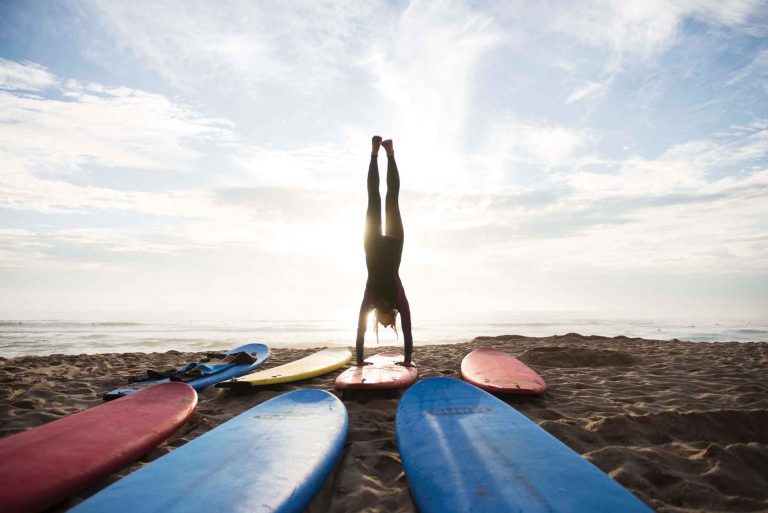
Jersey is an idyllic place to call home. Surrounded by some of the world’s most beautiful waters, islanders take every advantage to embrace the outdoors through a variety of water sports. But if you’re like me the idea of swimming in any sea, let alone Jersey, fills you with paralyzing fear. We may be rare, but ah bah crie, we land lubbers do exist in Jersey! It’s been close to 20 years since I ventured into the sea, so for my own good and the sake of my young son I booked onto a yoga and surf retreat to overcome my greatest fear.

The idea of the sea is very appealing; health benefits from swimming, spirituality from connecting with the ocean and, of course, who isn’t trying to recreate minimal effort surfer girl hair in the summer? I also hate to be beaten and consider myself Wonderwoman when it comes to most sporting challenges but the sea is definitely my kryptonite and perhaps in surfing I have finally met my match!

A fear of the sea is like any other and can be managed yourself through conditioning (associating the experience with a feel-good event to calm you in times of panic). Thinking of sex to overcome fear comes highly recommended. Doesn’t it always?! With experienced instructors at hand and sex therapy in mind, I was ready to take the plunge in the choppy waters of surf haven Ericeira, in Portugal.

A strong swell met us at our first session allowing some time to consider the task in hand. It was easy to conjure images of semi-naked men with exactly that parading before me; bronzed, toned, ruggedly handsome and dripping in sea water. When the waves finally died down, we took to the sea and after getting comfortable with the sensation of waves hitting me (a feeling as foreign as the language) I started to climatise and was ready for my board, thinking sexy thoughts!

Surfing itself was not the scary part. Good balance and a strong core enabled me to pop up on the board easily after a couple of attempts and having a skill to master distracted me from the elements. I found comfort in numbers, with a gaggle of girls flailing in the waters beside me who supported and cheered me on during our lesson. It was a rush when I emerged from the water thrilled that I’d finally conquered my fear.

By comparison, Stand Up Paddle-boarding was a much scarier beast. Deeper, murkier waters took away any kind of sense of achievement I thought I had earned and meant that I only made it onto my knees on the board after much persuasion not to turn around and head onshore after the first two minutes. Think sex! In a bed!! On dry land!!! At the end of a short session which seemed like an eternity I felt the tension melt away as we hit the shore and had to do my best to hold back from kissing the sand.

Following this knock back, further attempts to enter the surf were futile. With a stronger swell and talk of a pulling current, I felt an overwhelming sense of disappointment as I watched my friends tackle the waves through teary eyes clutching my board. Suddenly no amount of impure thoughts could coax me back into the sea.

SUP yoga was on the agenda the following day. “You do realise it’s only waist deep?” questioned the SUP instructor who sympathetically offered me a life jacket perhaps not quite understanding that my fear was not of drowning in clear shallow waters, but was just quite irrational. With terror grounding me to my board, my love of yoga allowed me to slowly relax and try some of the more difficult moves without worry of diving and in little time I found myself inverted and converted to the wonder of SUP yoga! My fears drifted away with the retreating tide, and I felt a sense of calm without even a thought of any carnal pleasures.

After a week of water based activities I’ve not returned to Jersey a mermaid and doubt that any prolonged period of exposure is going to make me a water babe. But I now know getting in the sea is manageable, something that requires work and what my limits are. You are unlikely to see me paddle-boarding across our shores, although I’m keen to hone my surf skills in calmer Jersey waves and would highly recommend the combination of yoga with sea to all long suffering thalassophobes. It was a fantastic, action-packed trip but I was ready to return home to the familiar beaches of Jersey and to my husband, feeling for some explicable reason extremely horny!