Words: Sophie Clarke, Photography: Lawrence Chay, Matthew Noel, Natalie Mayer
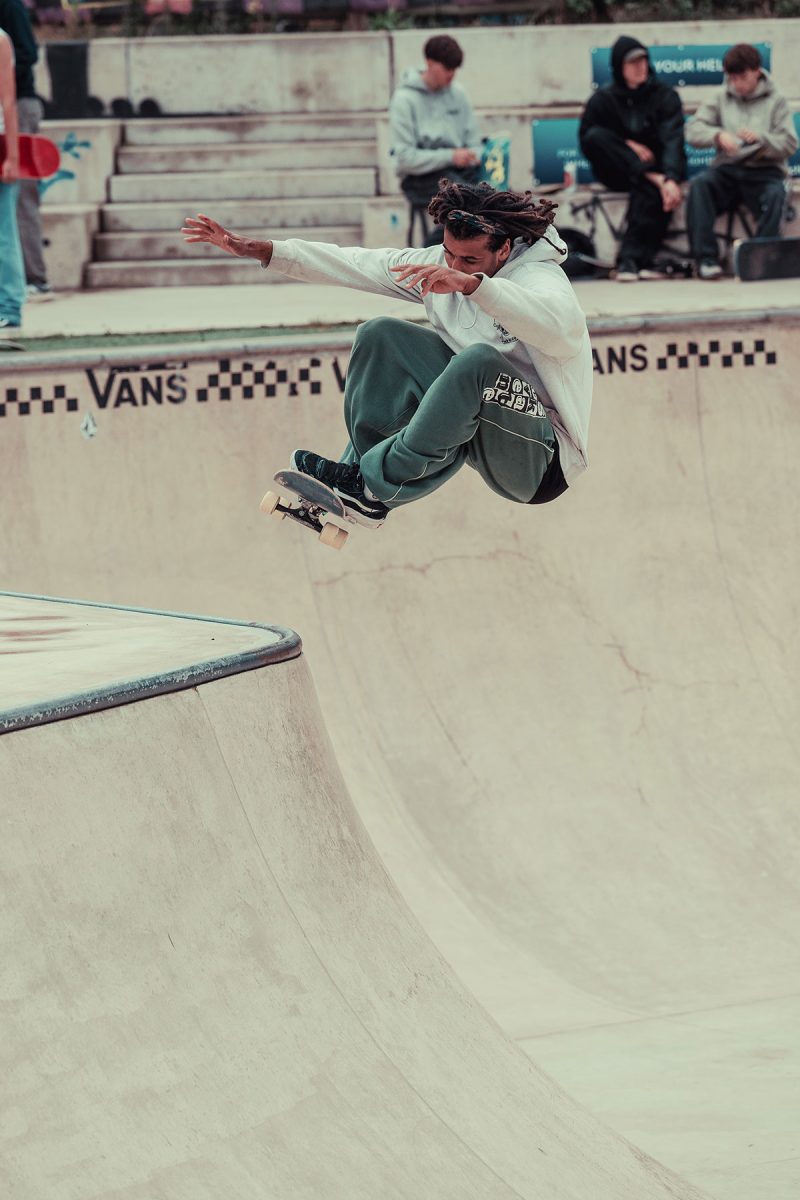
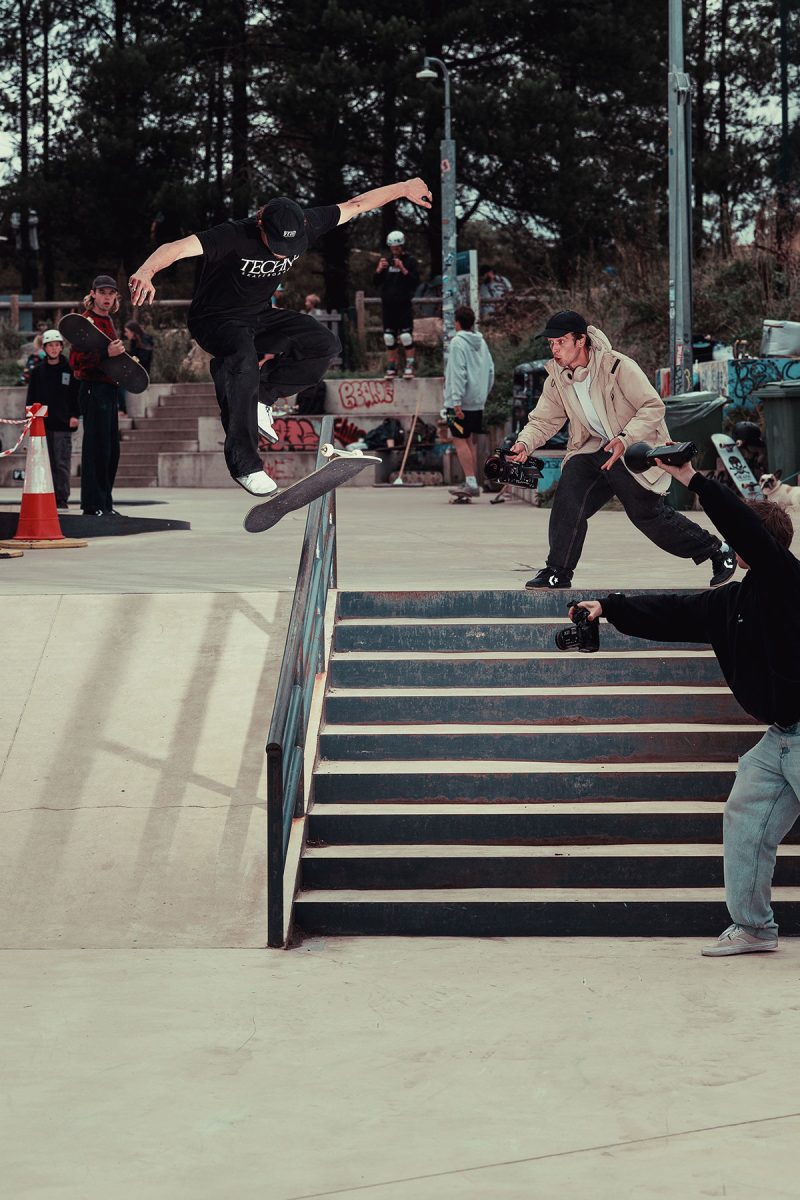
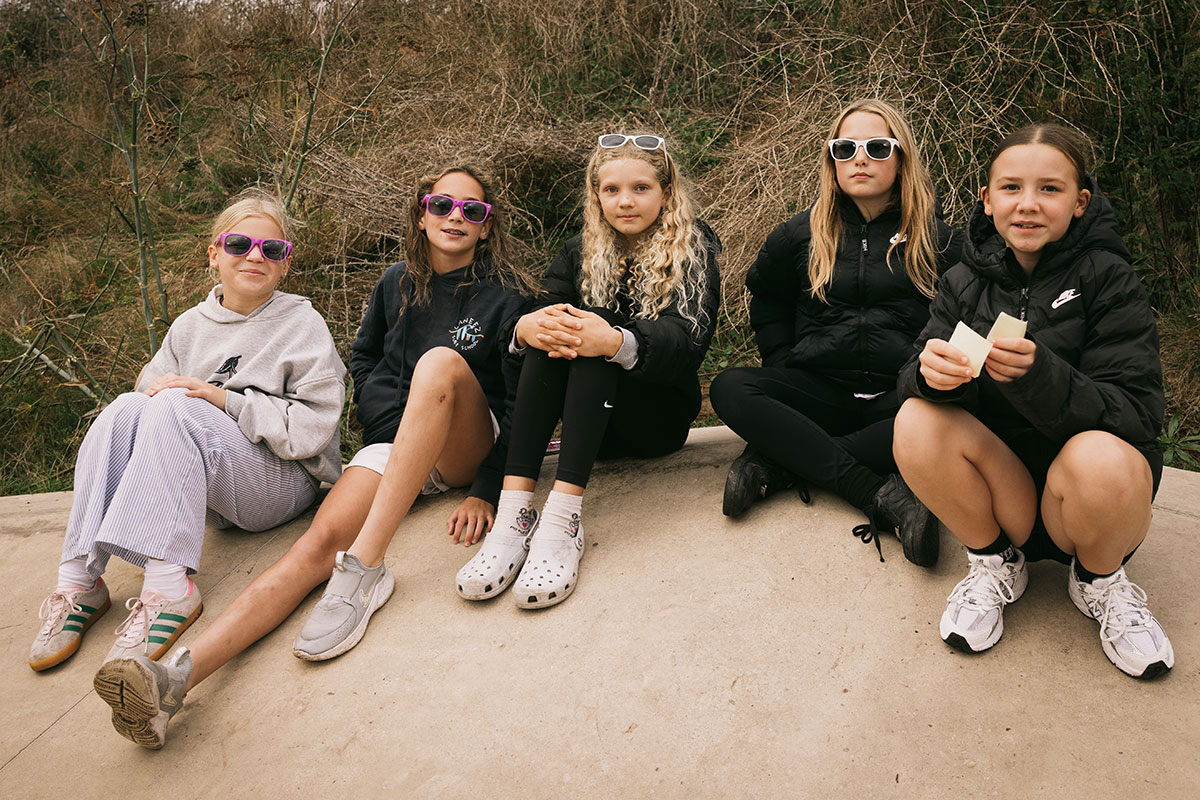
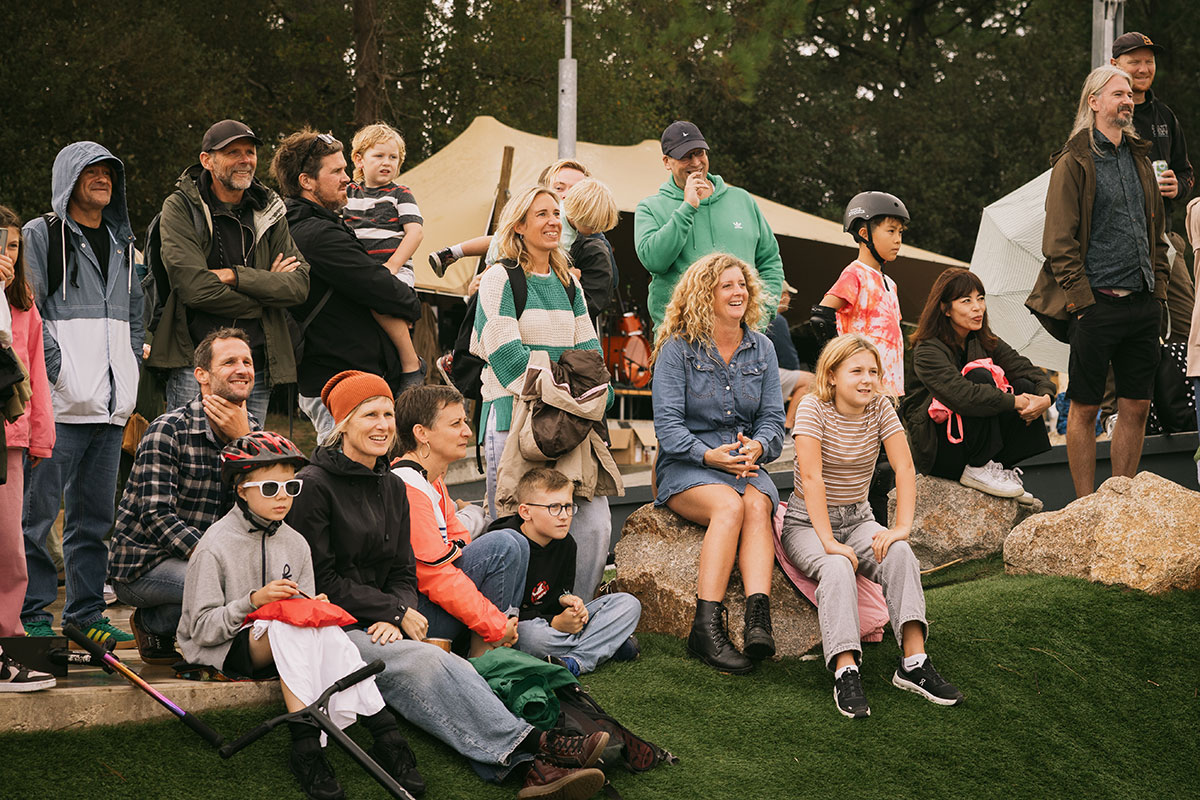
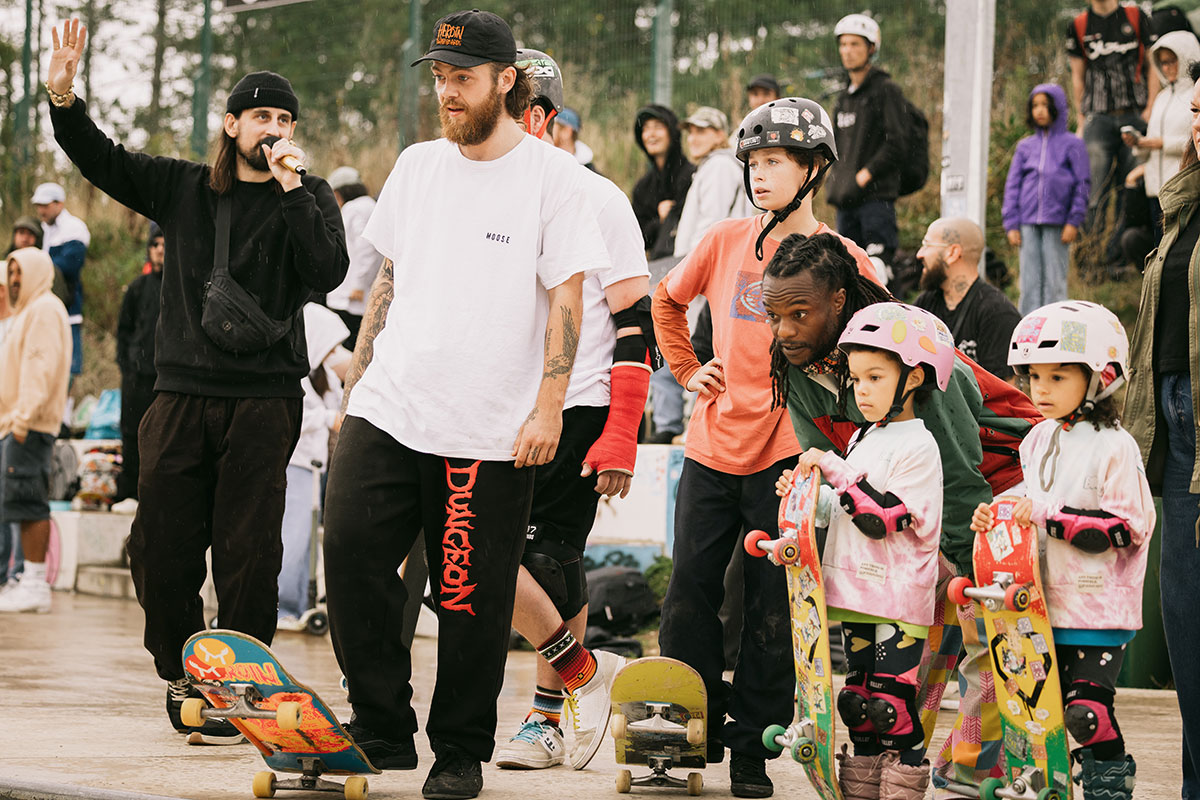
Jersey’s favorite community space was buzzing last month. Professional skateboarders, locals and musicians joined together for the second ever Bowl Ā Crock event organised by Skate Space, a local charity led by Natalie Mayer. Her approach is refreshingly straightforward: build mental health through community, catch people before they’re struggling, and nurture the kind of connections that stick. The event, in its preparation, build up and execution, captured the purpose perfectly.
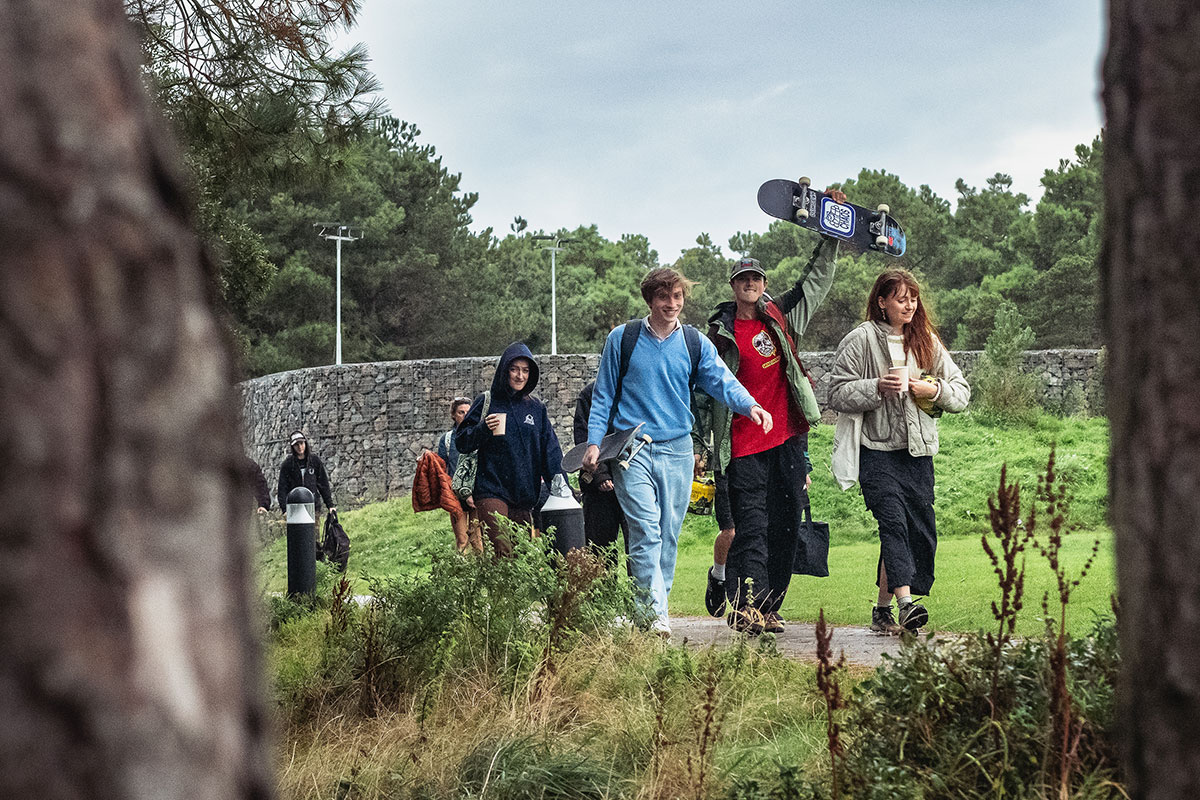
On the day, people walked or skated about the park, sharing a palpable sense of fun and anticipation. Rain clouds may have threatened (and delivered), but the crowds didn’t waiver. If anything, the tension made everything funnier, and the attendees more determined and ready for something extraordinary to unfold. The day opened with a special jam in the huge bowl (biggest in the UK), organised in memory of Danny Cram, a mate who sadly took his own life last year. After a poignant speech on the importance of friendship by Danny’s best friend and professional skateboarder Eduardo da Rocha, the sound of bagpipes cut through the park, a nod to Danny’s Scottish ancestry.
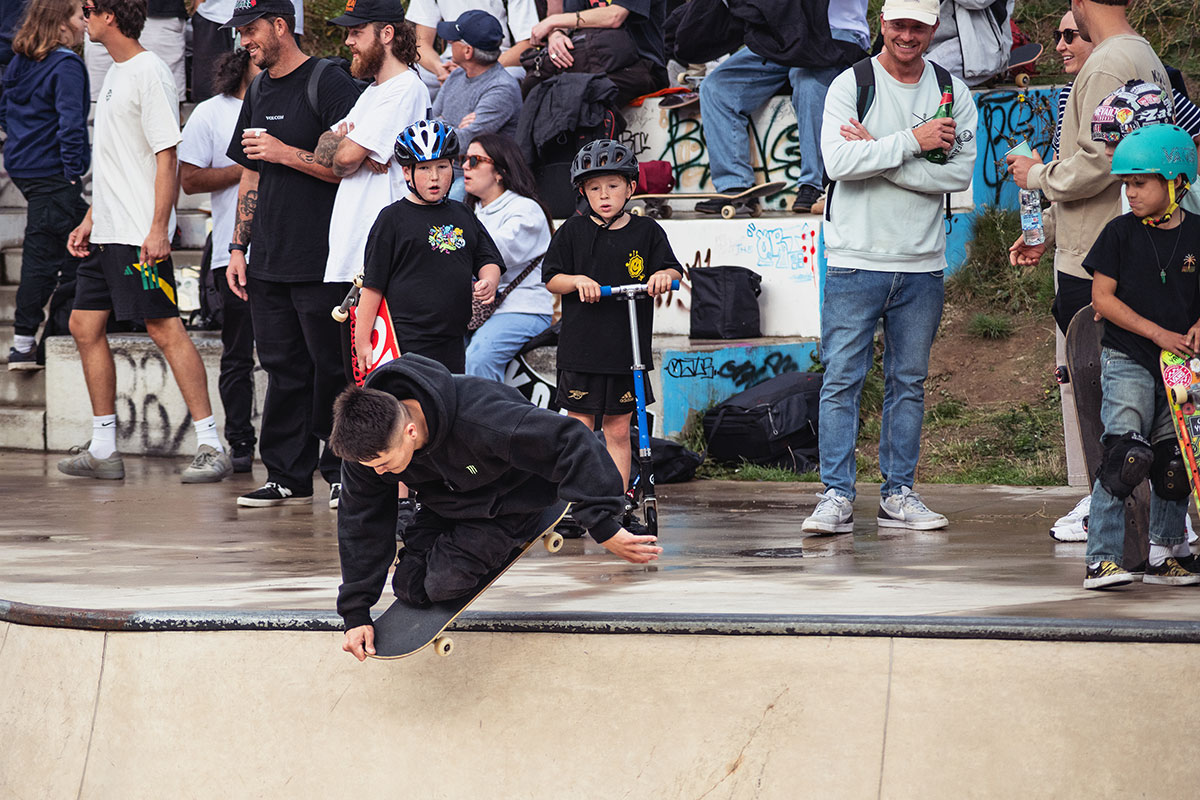
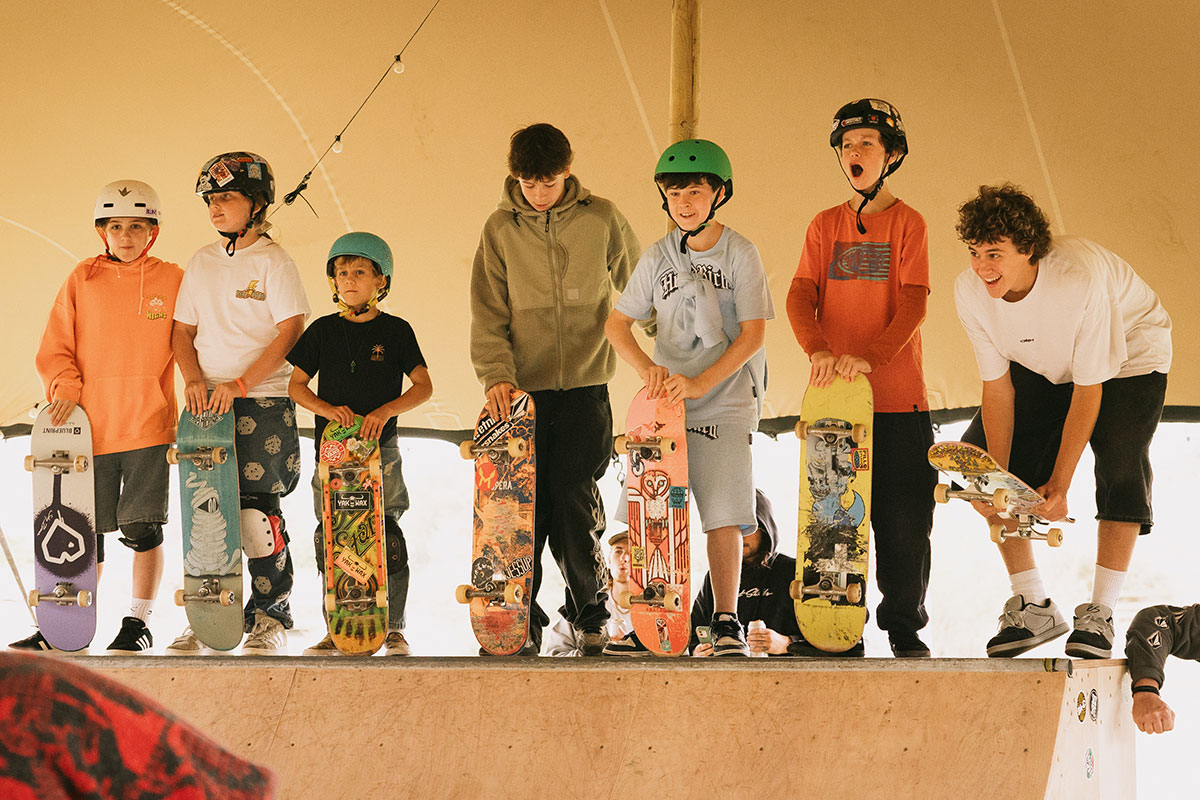
The bagpipes gradually faded into Danny’s favourite metal, and suddenly the whole atmosphere shifted. Nine-year-old Xavier Le Moignan was brave enough to drop in first, smashing out a run that would have done any skateboarder proud.
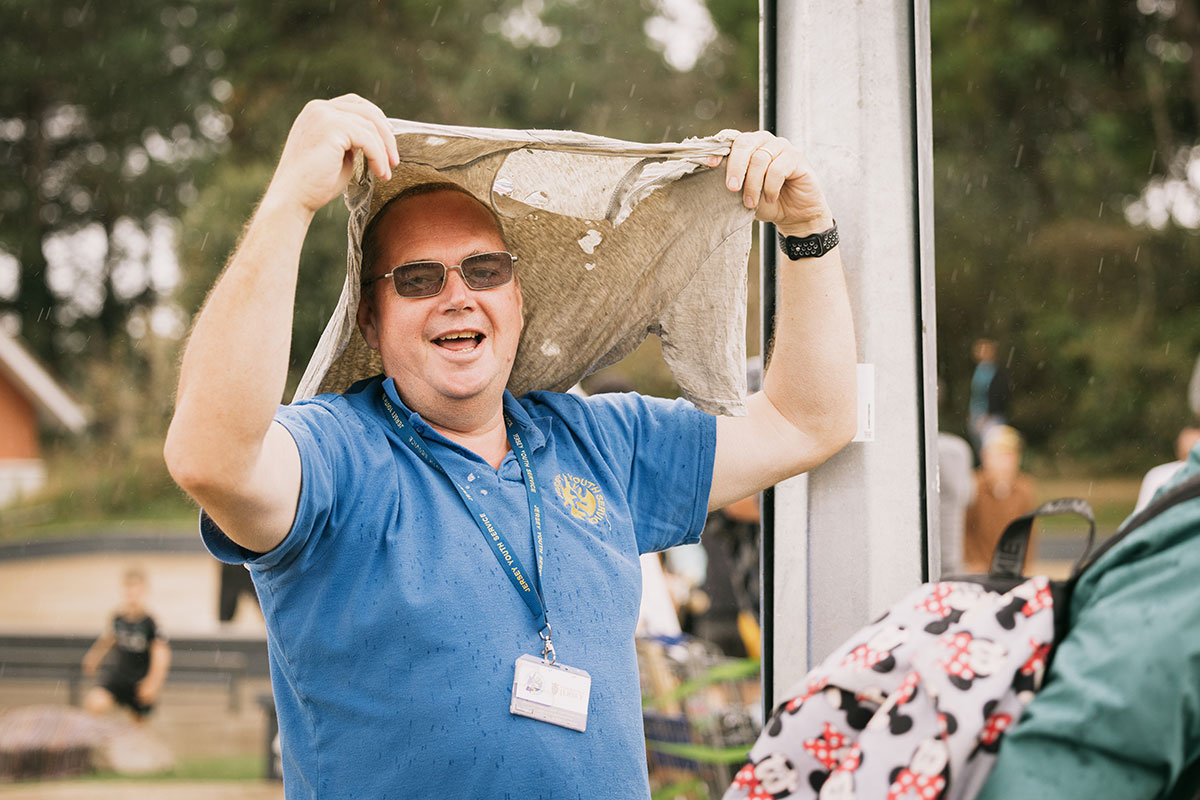
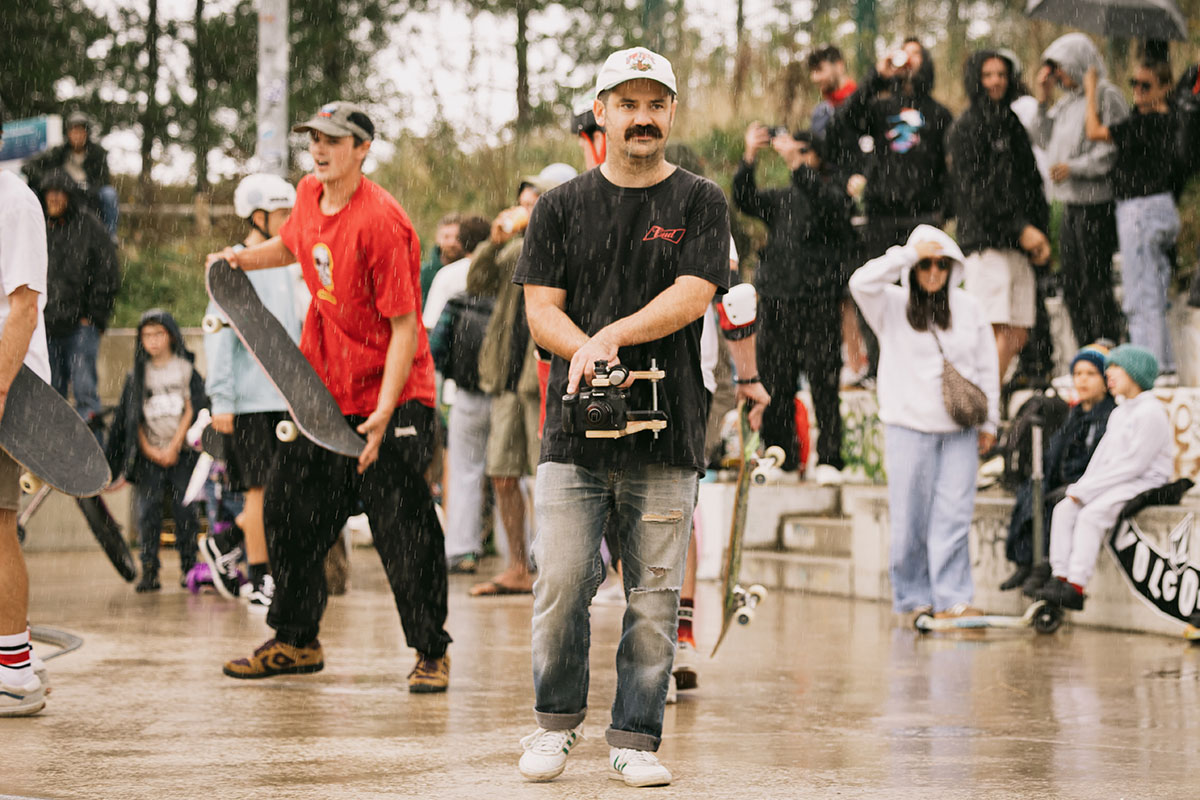
When the rain came, towels, squeegees, and brushes appeared, and everyone pitched in together to dry the ramps, optimistic for sunshine. With about 30 professionals waiting to shred, you could feel how badly everyone wanted this to work. Skateboarding can’t happen on a wet park, and in those wet moments it became clear: this event is as much about a community joining forces as it is about skill.
Felipe Nunes, a professional skateboarder from Brazil and double amputee, who manoeuvres his board with his hands, skated alongside the locals and other professionals. This international star travels the world and is a character in Tony Hawk’s pro skate game, but true to the grassroots nature of skateboarding, Felipe hung out in the park, signing boards and hanging with anyone that wanted to meet him.
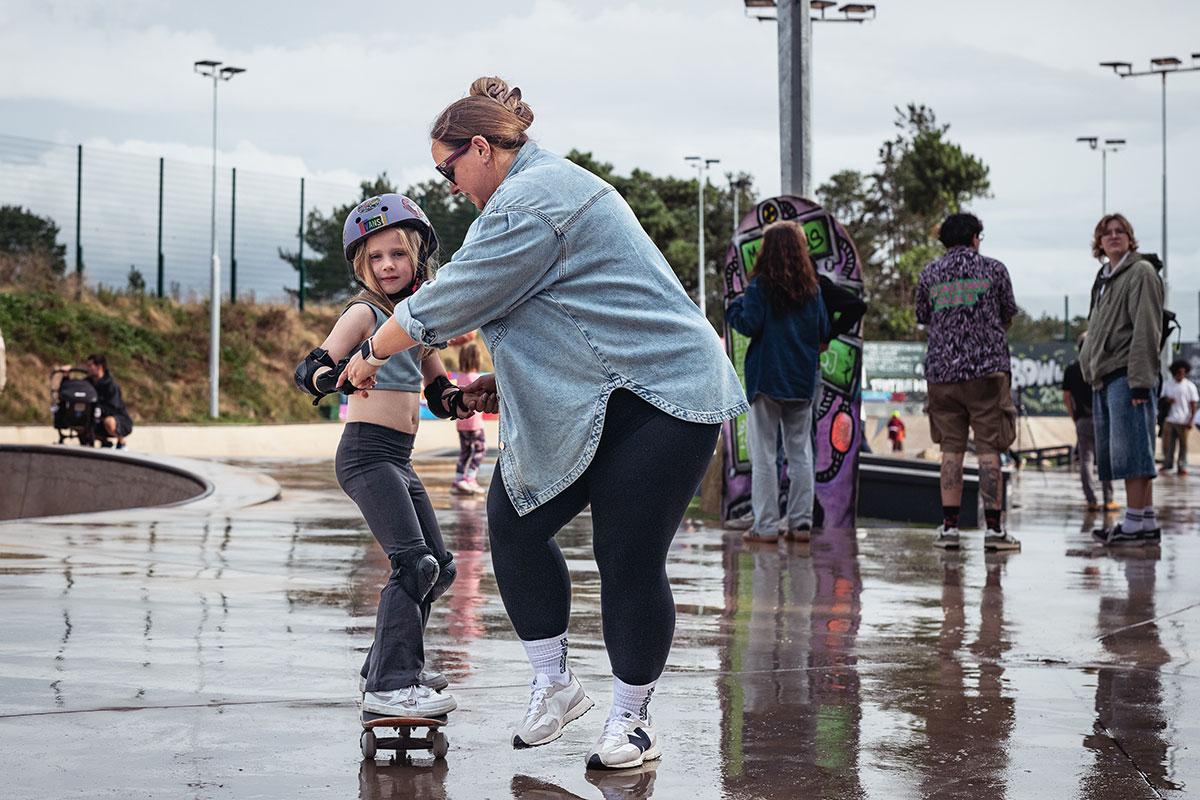
Tomas Woods, the 16-year-old triple world champion of WCMX, spun and flipped in his wheelchair, showing a kind of limitless potential to onlookers. And local girl Brontë Hollick made her debut on a brand new adaptive frame that allowed her to stand and roll alongside coaches at eye level, supported and smiling. The energy in the park was infectious and fun.
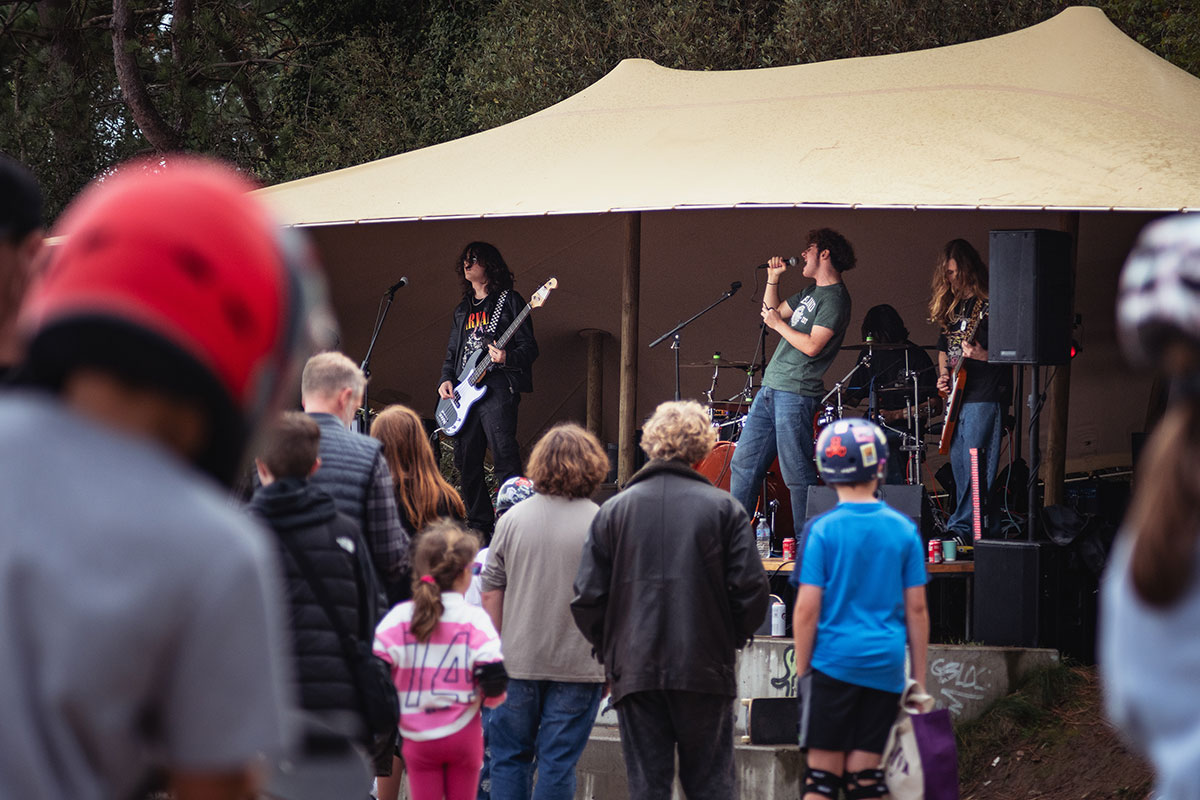
A stage hosted local bands throughout the day. Many were school-age kids performing live for the first time, and the energy of their music mirrored the excitement in the park.
The event may have paused three times for rain, but the crowds returned each time. People swept the park dry, and carried on – everyone working towards the same goal of fun on concrete. The day was full of technical skill and daring, but what stood out most was the spirit of the community, bringing people together across ages, abilities, and experiences. It shows what can happen when an island comes together to share space and find joy in sport and music. It’s the kind of thing we need so much more of.
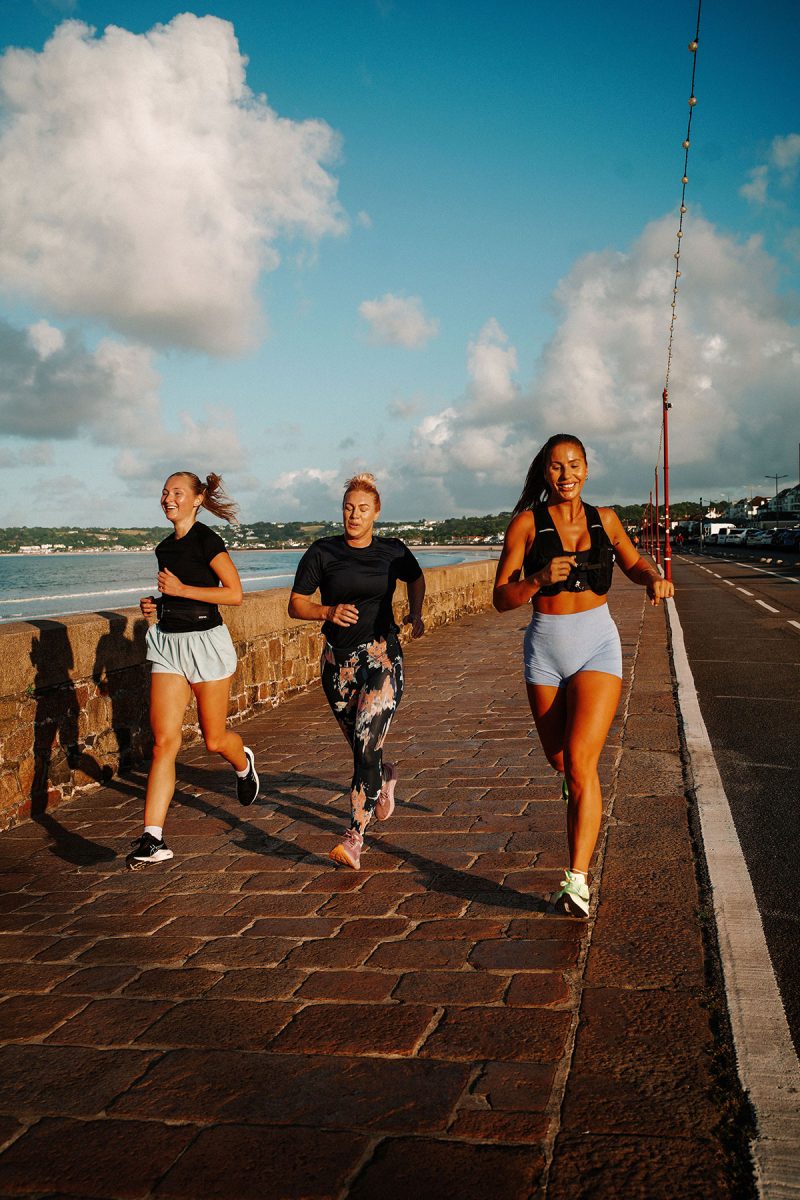
Part fitness, part friendship, part post-run coffee (or pint), they’ve become the new way to sweat and socialise. No longer just for “serious runners,” they’ve opened up into communities where pace matters less than participation.
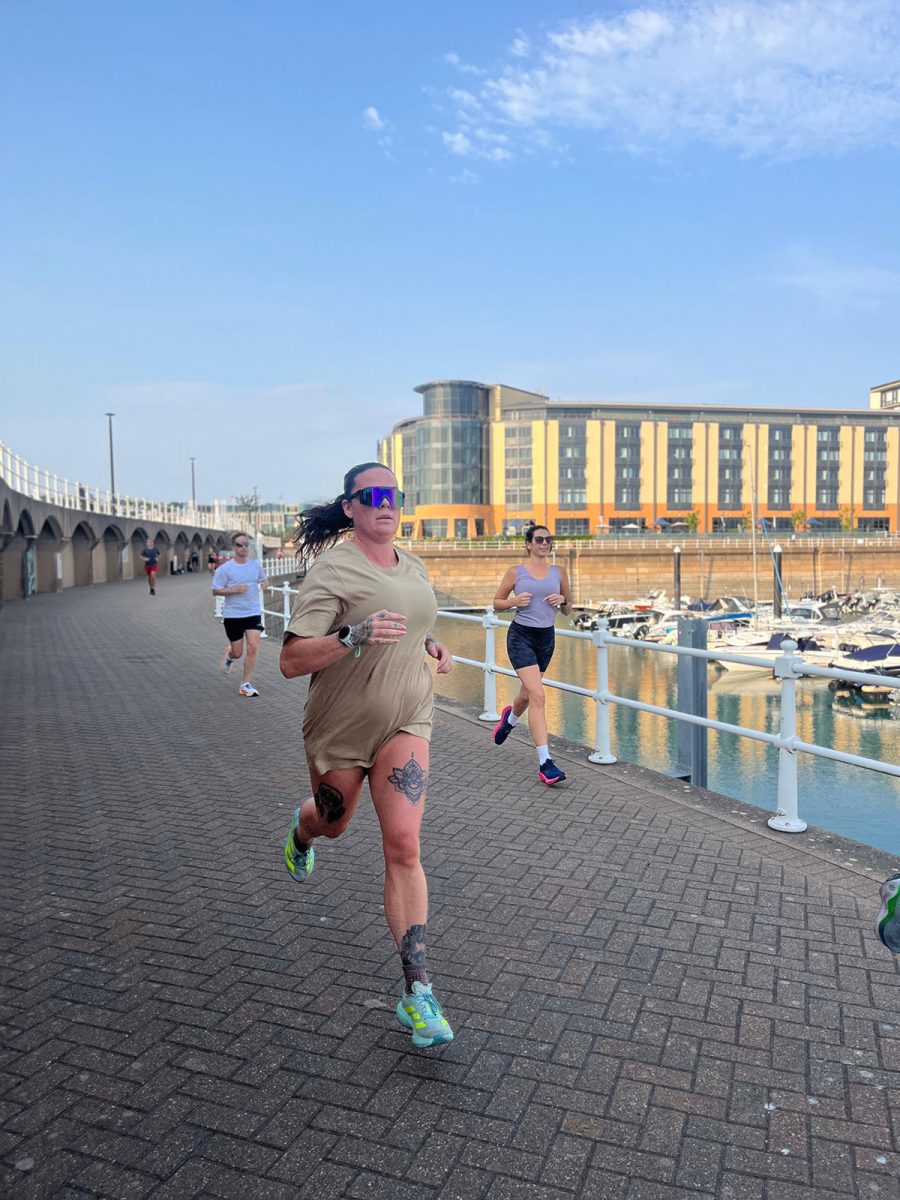
Jersey’s no exception. From waterfront loops to cliff paths, the island now has its own buzzing run club scene, drawing in everyone from couch-to-5k first-timers to sub-three-hour marathoners. Beginners worry about keeping up or fitting in; seasoned runners want to know about routes, structure, and PB potential.
I had my own questions too. Pilates had been my routine, with the occasional shaky treadmill 5k. But moving back to Jersey in May left me facing the roads, nerves and all, and in need of structure, motivation, and maybe a community. So, in the name of cardio, curiosity, and a cheaper hobby than Pilates, I signed up for four of Jersey’s run clubs.
Wolf Pack
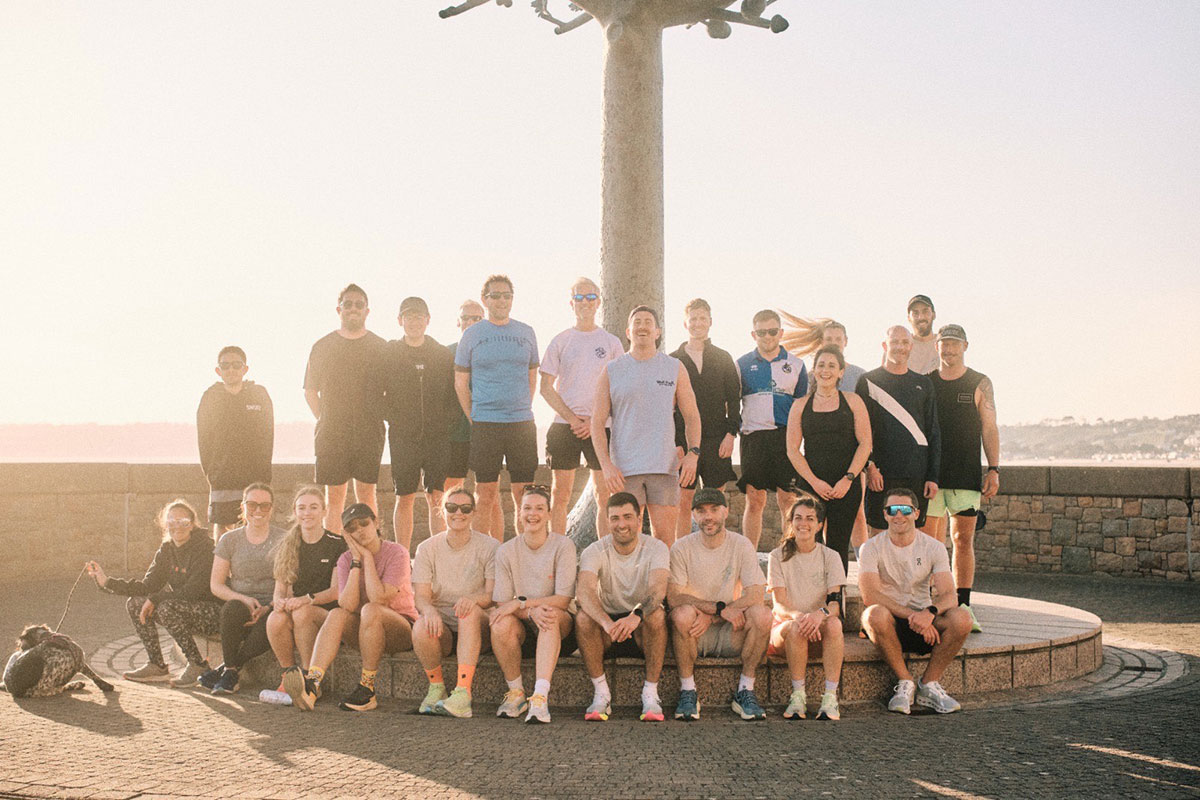
Wolf Pack is less a club, more a family. The ethos is simple: a safe space where running is about connection, not competition. Wednesday evenings bring interval sessions at the Freedom Tree, while Thursdays are a casual morning run from Trenton Square that ends with coffee. Everything is measured in time, not distance, so there’s no pressure to chase numbers. Add in monthly socials -padel, volleyball, darts, pétanque – and you have a crew that values people as much as pace.
The Rundown
When: Wednesdays (6 PM intervals), Thursdays (7 AM 30-min run + coffee)
Where: Freedom Tree & Trenton Square
Distance: Time-based
Pace: 5:00/km to 8:00/km, plus walk/jog options
Vibe: Friendly, sociable, inclusive
Training benefit: Builds consistency and confidence
My Take
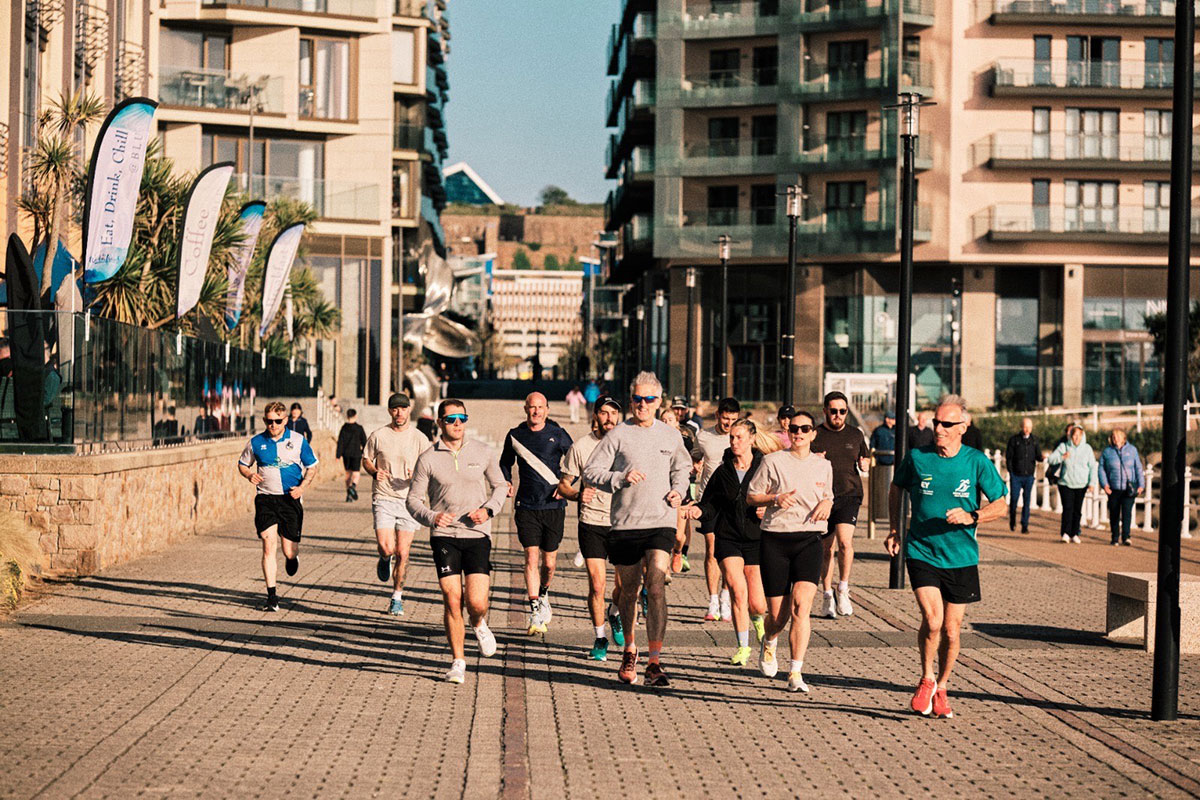
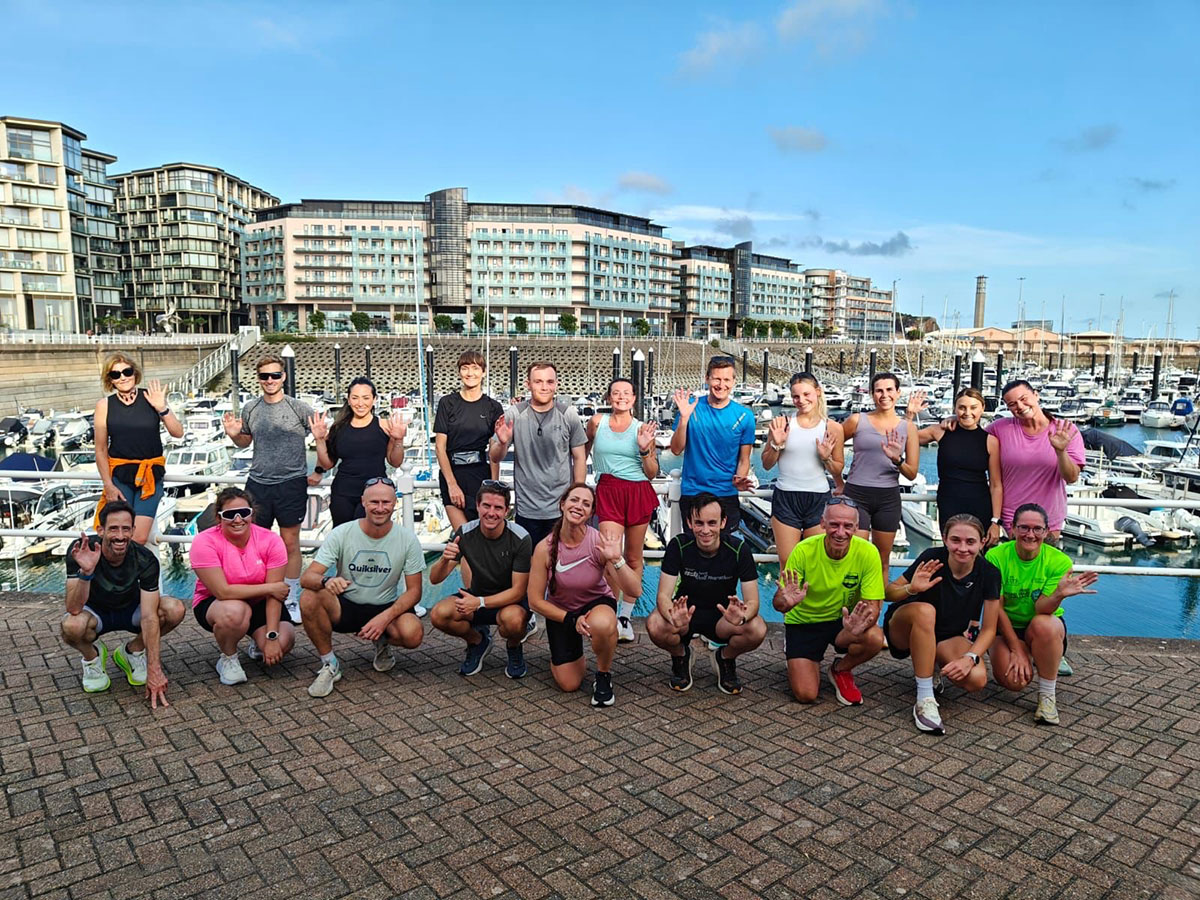
I joined Wolf Pack on a Thursday morning, with 20–30 runners buzzing before sunrise. The loop along the marina and piers was pre-set on Strava, so no one had to think about directions. Scott, the organiser, ran at the back to keep the group together, setting a relaxed, welcoming tone. Groups formed naturally, conversations carried the miles, and the whole thing felt more like a catch-up than training. It’s the kind of run that keeps your legs moving without feeling like “work.”
Want to join?
Visit wolfpackjsy.com or find them on Instagram at @wolfpackjsy
Jersey Run Club
Jersey Run Club brings structure backed by credentials. Free to join and run by UK Athletics qualified coaches, sessions have a professional edge without being intimidating. Mondays are for intervals at the Freedom Tree, or hill reps up Westmount, or beach sessions in summer. Weekends are looser, with members meeting for unofficial long runs or trails. The membership is diverse, from Couch to 5K graduates to marathoners, all encouraged to push themselves at their own level.
Where: Freedom Tree in winter, beaches & Westmount in summer
Distance: Around 40 minutes including warm-up and cool-down
Pace: Couch to 5K runners to seasoned marathoners
Vibe: Structured but welcoming
Training benefit: Speed and stamina
My Take
I dropped into their Monday interval session, where about 20 runners gathered with one goal: work hard. The coaches struck a balance of encouragement and intensity, leading us through two minutes at 80% effort, two minutes’ rest, repeated in a closed loop so no one slipped behind. The effort was tough but flexible, with rest meaning anything from walking to jogging, and the mix of marathoners and beginners made it clear everyone belonged. Conversation took a back seat mid-rep, but before and after, the group was warm and welcoming. It’s structured training done right – a proper workout that will make you faster.
Want to join?
Visit jerseyrunclub.je or find them on Instagram at @jerseyrunclub
Rock N Road
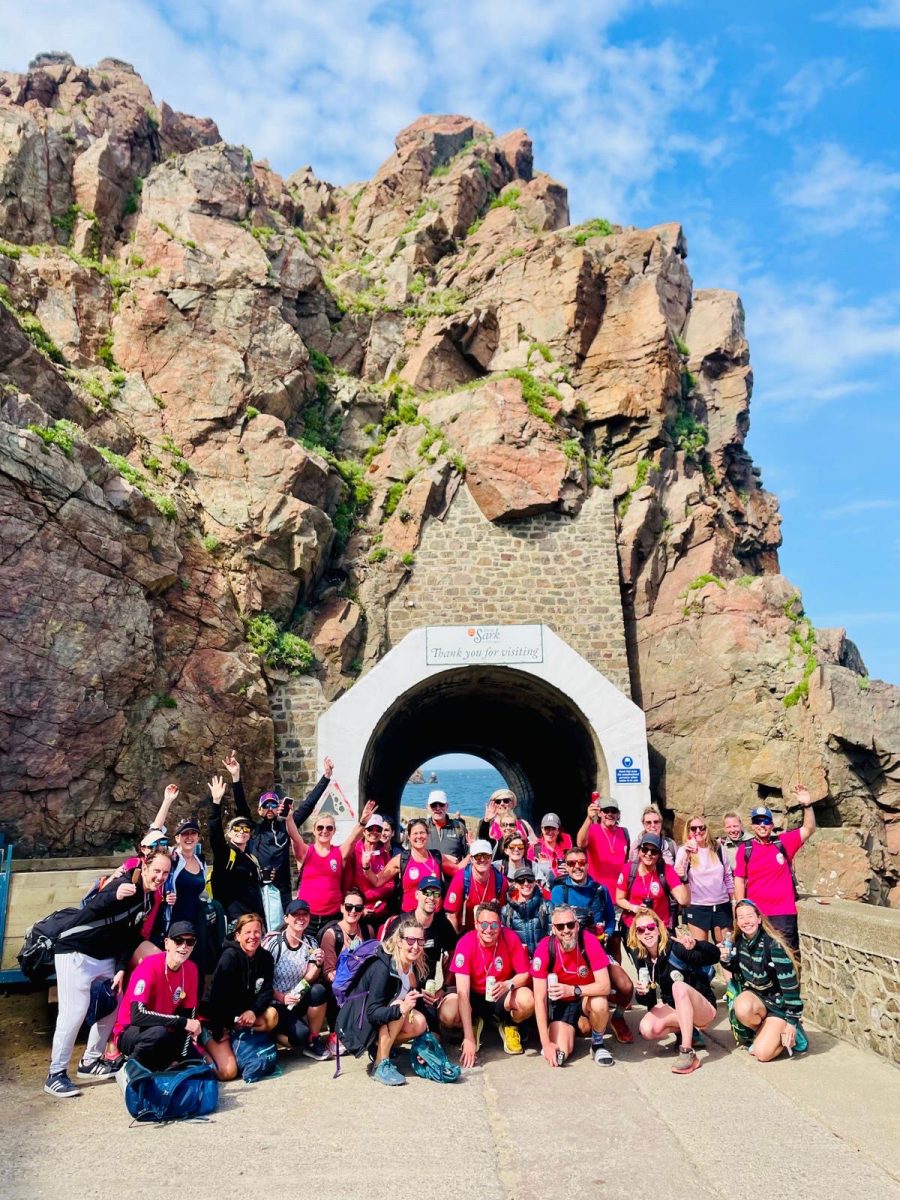
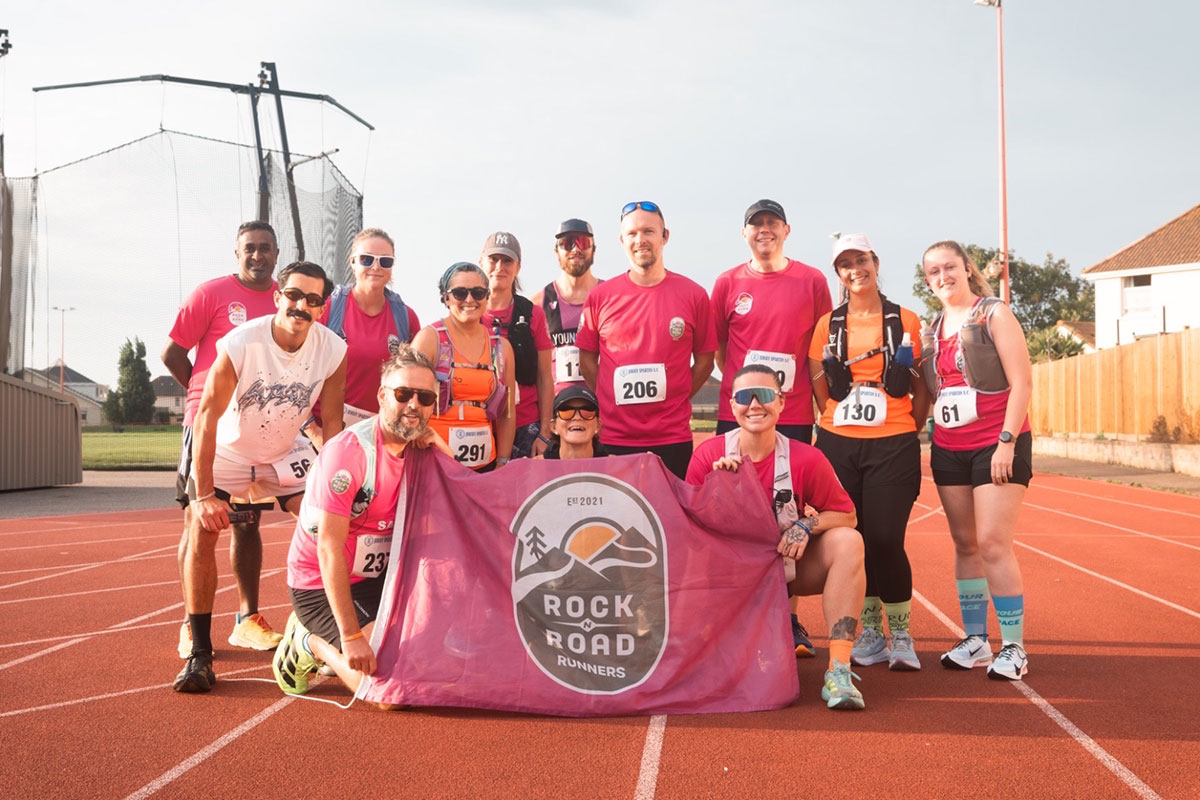
Rock N Road are a well-established part of Jersey’s running scene, with sessions for runners of every pace. Their ethos, “If you run, you’re a runner,” runs through everything they do. Thursdays are for intervals, Saturdays for scenic trails, Sundays for long road miles – and always coffee at the end.
The Rundown
When: Thursdays (6 PM intervals), Saturdays (8 AM trails), Sundays (9 AM road runs, 50 or 90 minutes)
Where: Freedom Tree on Thursdays, rotating trail locations on Saturdays, varied Sunday start points
Distance: Intervals vary; weekend runs 5k–20k
Pace: No prescribed pace – walk if you need, push if you want –-with lead, middle and tail runners
Vibe: Inclusive, lively, community-driven
Training benefit: Endurance and variety
My Take
I joined Rock n Road for a Sunday road run with around ten others, and their ethos was clear from the start. The group spread into natural packs, the climbs kept it challenging, and the downhill back into town felt earned. We ended at The Lookout with coffee and cake – a finish that balanced effort with community. The changing routes make long runs less repetitive, and running together makes them more motivating.
Want to join?
Visit rocknroad.je or find them on Instagram at @rocknroadrunners
Every Mile
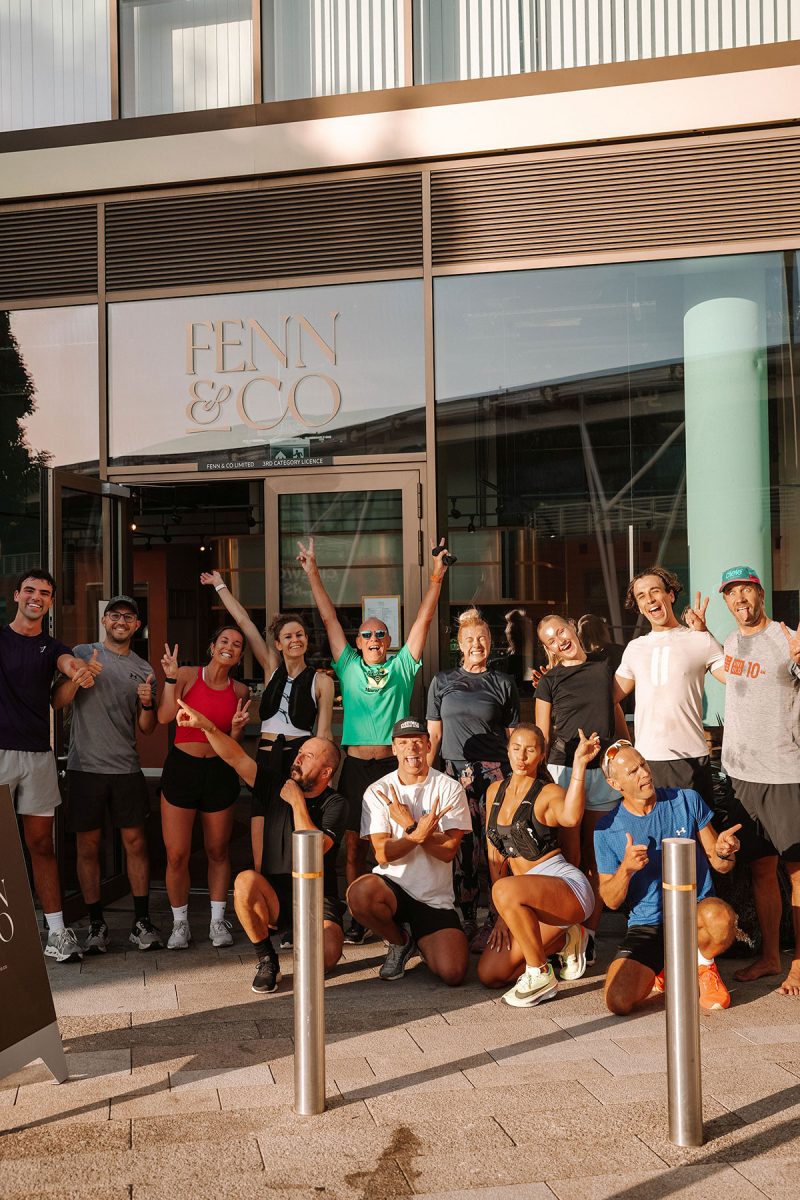
Every Mile makes running feel like a social plan rather than a training block. Trails on Wednesday evenings often finish in a pub, Fridays start with a 5k from Fenn & Co, and Saturdays bring conditioning sessions on the beach – sea swim optional. In summer, their Café Series came with a bespoke Rocket Fuel flat white; by autumn, sessions move indoors to Jersey CrossFit. Add in crossover events – surf days, pilates, even goat yoga – and you see why it’s as much about mates as miles.
The Rundown
When: Wednesdays (6:30 PM trails), Fridays (7:15 AM café 5k), Saturdays (9:30 AM workouts)
Where: Trails rotate weekly, Fenn & Co for café runs, beach workouts (indoors for winter)
Distance: 5k runs; 60-min workouts
Pace: Jog-walk to fast-but-chatty
Vibe: Social-first; coffee, pints, swims, extras
Training benefit: Variety and balance
My Take
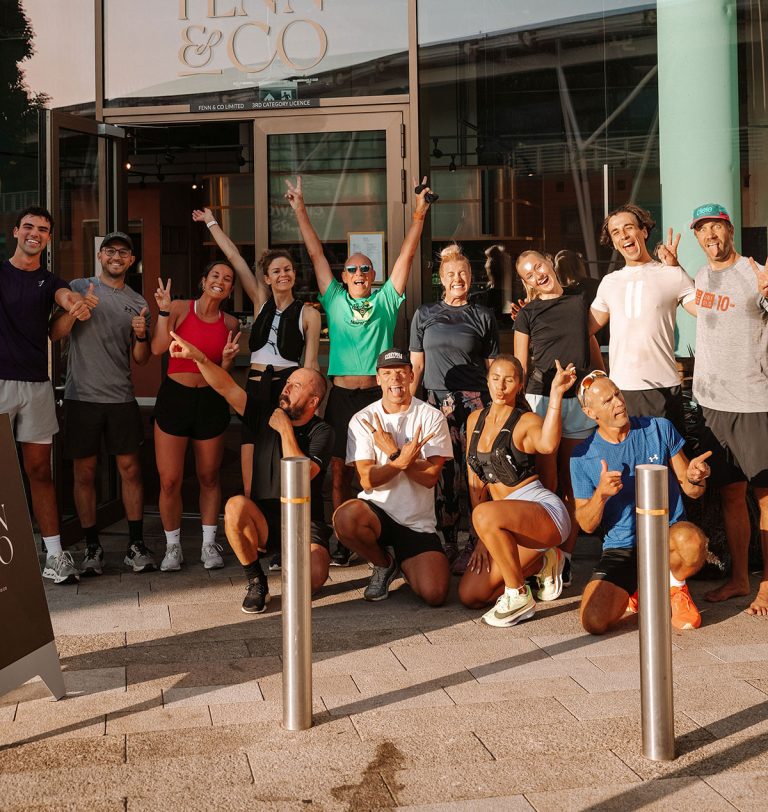
The 7 AM café run drew about 15 of us outside Fenn & Co with coffees waiting after. The route circled the marina, climbed Pier Road, then cut through town and back along the Esplanade – mostly flat, with just enough stairs to test the legs. The group naturally split into faster runners and a steadier bunch mixing in walk breaks, but no one was left behind. Coffee and conversation back at Fenn & Co made every step worthwhile. It’s a run that doubles as a reset button – good miles and the best way to start your Friday morning.
Want to join?
Visit everymile.komi.io or find them on Instagram at @everymilerunning
Conclusion
After a few weeks of run clubs, I realised what had been missing from running alone: motivation, structure, and people to share it with. Each club had its own personality, but the common theme was clear – running feels more enjoyable when it isn’t just you against the road. Jersey’s clubs have built easy-going communities out of strangers in trainers, where the miles matter, but the company often matters more. Either way, you end up turning up for more than just the miles.
Other Run Clubs to Try
Jersey’s running scene is bigger than you might think. If you want more options, check out: Parkrun Jersey, Trail Monkey, JSAC, Jersey Running Beans, Jersey Girls Run, See Her Run and The Lost Boys.
Run Club Extra: Lost Boys
Words: Ben Davies
Wolf Pack is less a club, more a family. The ethos is simple: a safe space where running is about connection, not competition. Wednesday evenings bring interval sessions at the Freedom Tree, while Thursdays are a casual morning run from Trenton Square that ends with coffee. Everything is measured in time, not distance, so there’s no pressure to chase numbers. Add in monthly socials -padel, volleyball, darts, pétanque – and you have a crew that values people as much as pace.
The Rundown
When: Wednesdays (6 PM intervals), Thursdays (7 AM 30-min run + coffee)
Where: Freedom Tree & Trenton Square
Distance: Time-based
Pace: 5:00/km to 8:00/km, plus walk/jog options
Vibe: Friendly, sociable, inclusive
Training benefit: Builds consistency and confidence
My Take
I joined Wolf Pack on a Thursday morning, with 20–30 runners buzzing before sunrise. The loop along the marina and piers was pre-set on Strava, so no one had to think about directions. Scott, the organiser, ran at the back to keep the group together, setting a relaxed, welcoming tone. Groups formed naturally, conversations carried the miles, and the whole thing felt more like a catch-up than training. It’s the kind of run that keeps your legs moving without feeling like “work.”
Want to join?
Visit wolfpackjsy.com or find them on Instagram at @wolfpackjsy
Run Club Extra: The Lost Boys
Words: Ben Davies
For years I hated the idea of running. My inner monologue would repeat, “Why are you running? Get on a bike, it’s quicker,” as I stamped my way around the bay. Then, unexpectedly, some post-lockdown treadmill time at the gym changed my habits. I found myself combining an hour-long run with a Netflix documentary and, in addition to the time flying by, I actually started enjoying the run itself. This weakening of my reticence, combined with my status as a “yes man” for a challenge, meant that when a friend asked me if I wanted to do the London Marathon next year, I had no choice but to become a (very amateur) runner.
As soon as Amelia started attending clubs, our office WhatsApp group became quite a run-centric chat, much to the chagrin of the non-runners. Every time she let us know that a run was planned, it made me feel guilty and I found myself going along. I’d been running on my own, but the boredom bug did creep in now and again, even with the most rousing of soundtracks. My first tentative attendance was the group run for all the clubs, next I was up at 7am for a casual 5km run with Every Mile, then came Wolf Pack. Suddenly, without realising it, I’d become someone who goes to run clubs.
I first heard about The Lost Boys while running with Wolf Pack, which sounds like I’m some sort of wannabe gang member in 1970s L.A. The whole description of their activities was a little mysterious—a club that’s not a club in the traditional sense—which piqued my interest. When I ran into one of the founding members, Max Burnett, he had heard we were reviewing run clubs and invited us along. My suggestion that Amelia attend was met with a bit of a tumbleweed moment. I wasn’t aware this was not a one-size-fits-all setup, and more of a mental and physical men’s support group. In the days of brands such as ReformHER, SheLikes and Eve, it’s not often you see groups oriented towards just the hairier of the sexes. Not wanting to leave them out, the only solution was for me to go along. “Sure, I’ll come,” I said, only to find out that the 7am starts I’d been getting used to were coffee time for Lost Boys. Max told me they meet at 6am. Bel Crout was the start point.
As I looked out over my pitch-black garden, a trail run in the dark at 6am seemed a bit intense. Reaching an eerily quiet Bel Crout and waiting for the others to arrive felt a bit like being on some clandestine mission, which I liked. Max arrived with his fellow founding member, Tom Le Lievre, and a small group of like-minded “boys.” I’d foreseen the need for coffee but I couldn’t find a headtorch. Thankfully Max was on hand with a selection. We set off with a warm-up up the hill before upping the pace and heading off on the trails towards Portelet Common. The pace was gentle and conversation was very much part of the run. Max was sporting a newly designed Lost Boys singlet marked with a MAKE SLOW RUNNING COOL AGAIN graphic.
As we ran, it was good to chat to the other guys and hear about the activities of the Lost Boys, which is a group set up for more than running. Designed more as a men’s wellness community, the group have been up at 6am running, surfing, doing bodyweight circuits, yin yoga—any activity that unites an active mindset with a commitment to early rising. Once back at Bel Crout after a 45-minute trail run, we were treated to a perfect sunrise as we beat the locals into the water for a post-run swim. The post-activity coffee is as much a part of the process as the run, and Max even shared around his new, all-organic protein smoothie recipe (forget the powders—eggs and banana alone make a damn fine pick-me-up).
When you’ve run, swum and coffeed by 7.30am, you can’t help but feel a bit smug that you’re winning at the day. As an eternal night owl, a 6am start seemed crazy, but I’ve found myself up pre-7am to do something active in the week since. As Max told me, it’s the discipline that’s half the battle. It’s Thursday and I’m setting my alarm for 5.30 tomorrow morning.
Being a lifestyle magazine with a theme like ‘change’ makes it hard not to think about the ways that technology has revolutionised the art scene. Whilst amateur Midjourney graphics may be the first thing that comes to mind when you think of the mix of technology and art, our island’s creatives have been exploring new worlds for years, working with 3D modelling, photoshop and even algorithms trained on their own photography.
To celebrate some of their work, we reached out to three creative islanders embracing technological changes in the art world. Flick through these pages to view a selection of ethereal work that feels like being immersed in a dreamscape.
Will Lakeman
“I’m Will Lakeman, a writer and photographer. I have autism which manifests itself as a special interest in colour, and in sneaking about in lonely places. I am obsessed with trying to explore the intense texture of dreams and am trying to make photographs that resemble those weird, hazy fantasies more closely than they do reality. You’ll be able to see large versions of these images, and loads more, at a show I’ll be doing at CCA Galleries in October this year. Meanwhile, everything I have is for sale. You can follow me on Instagram at @chairmanwill or see my work in higher quality at lakemanphoto.com”
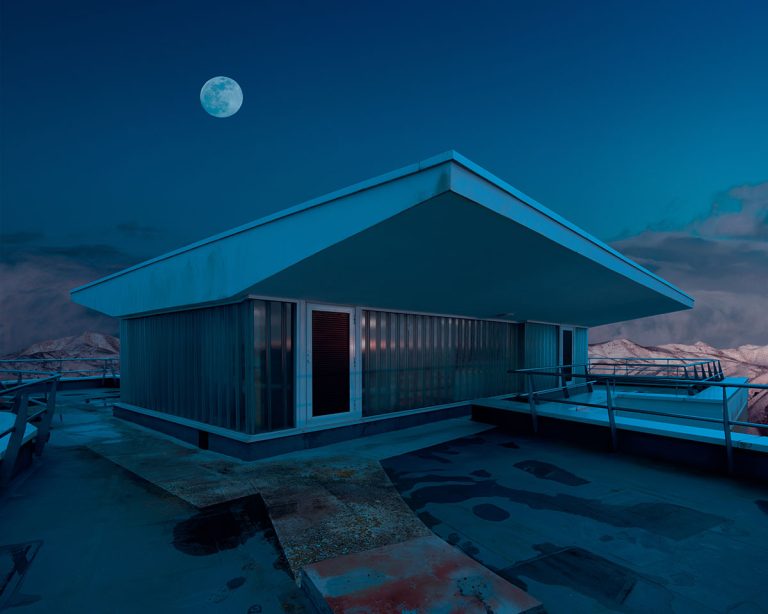
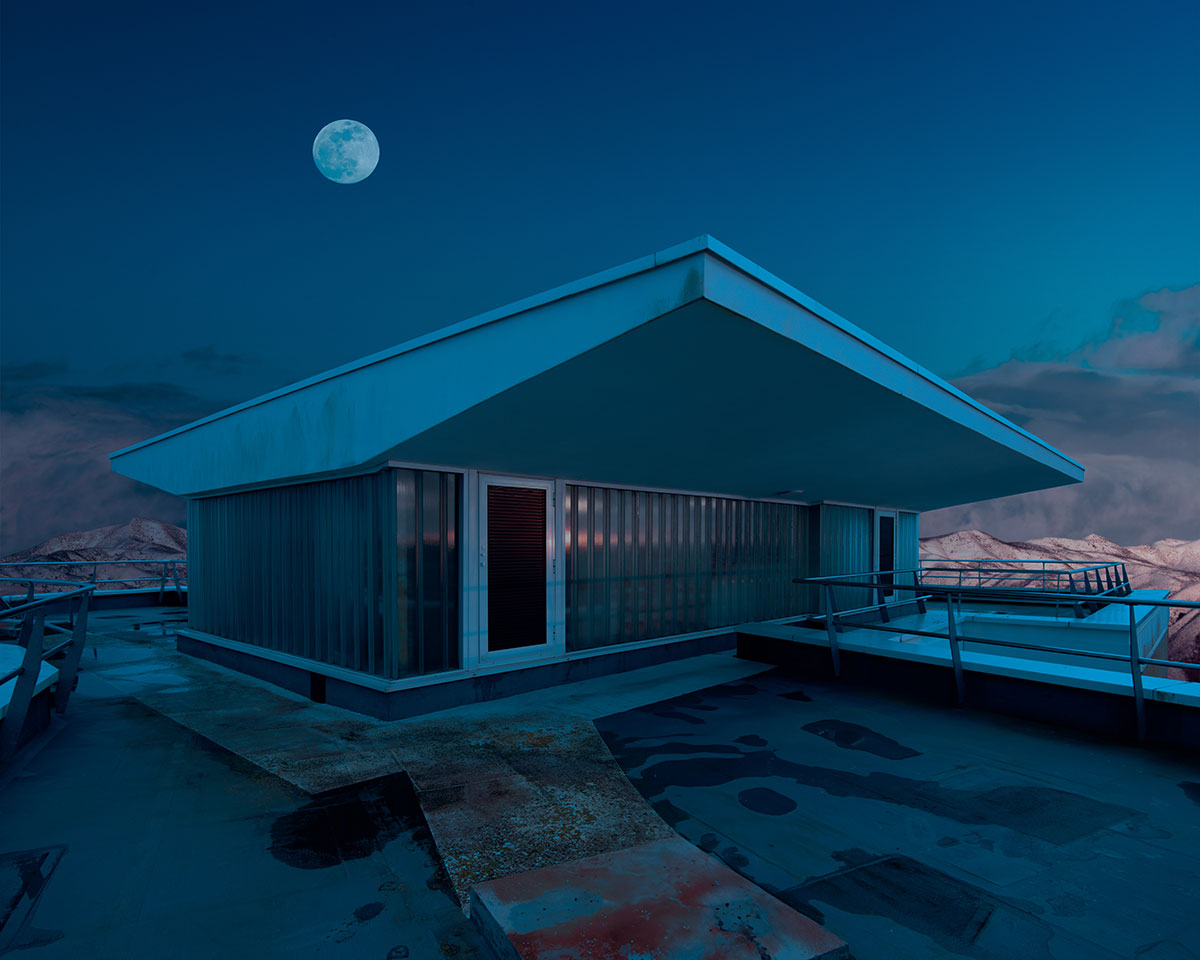
“This is the roof of La Collette flats, photographed with permission from Andium Homes. The more I looked at the beautiful frosted glass the more I wanted to remove the distractions of town. This led to me imagining a completely abandoned tower rising above a mountain range at dawn. I’m not sure how I would have gotten home afterwards, Jersey Lifts maybe.”
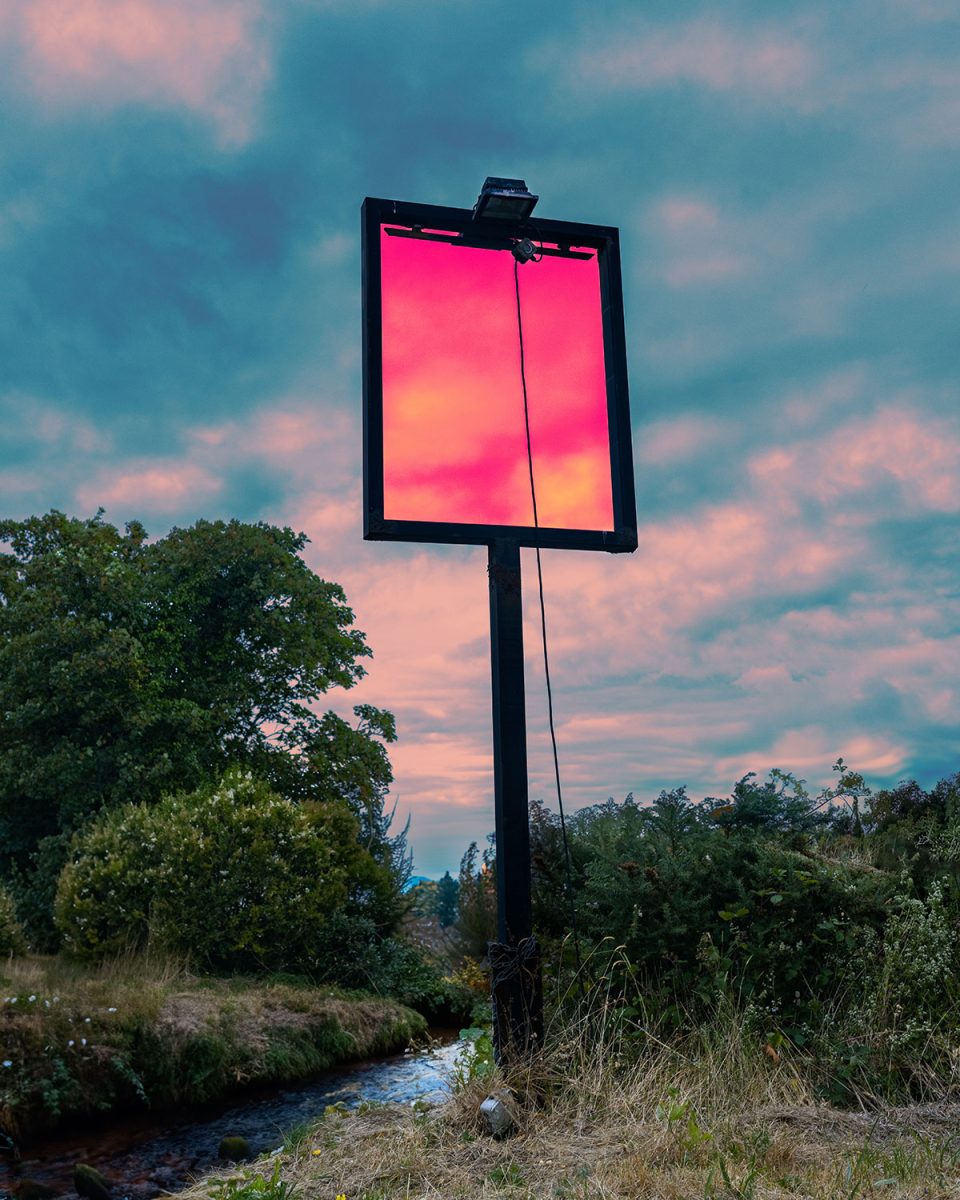
“I try to create images where a single scene or object occurs as if it’s in a dream, sometimes in the wrong place. This sign is near the airport and I think about it every time I go past. It would be nice to install one of my photographs in the hole, although I remember it once featuring a sexy mermaid; I doubt I have remembered that accurately.”
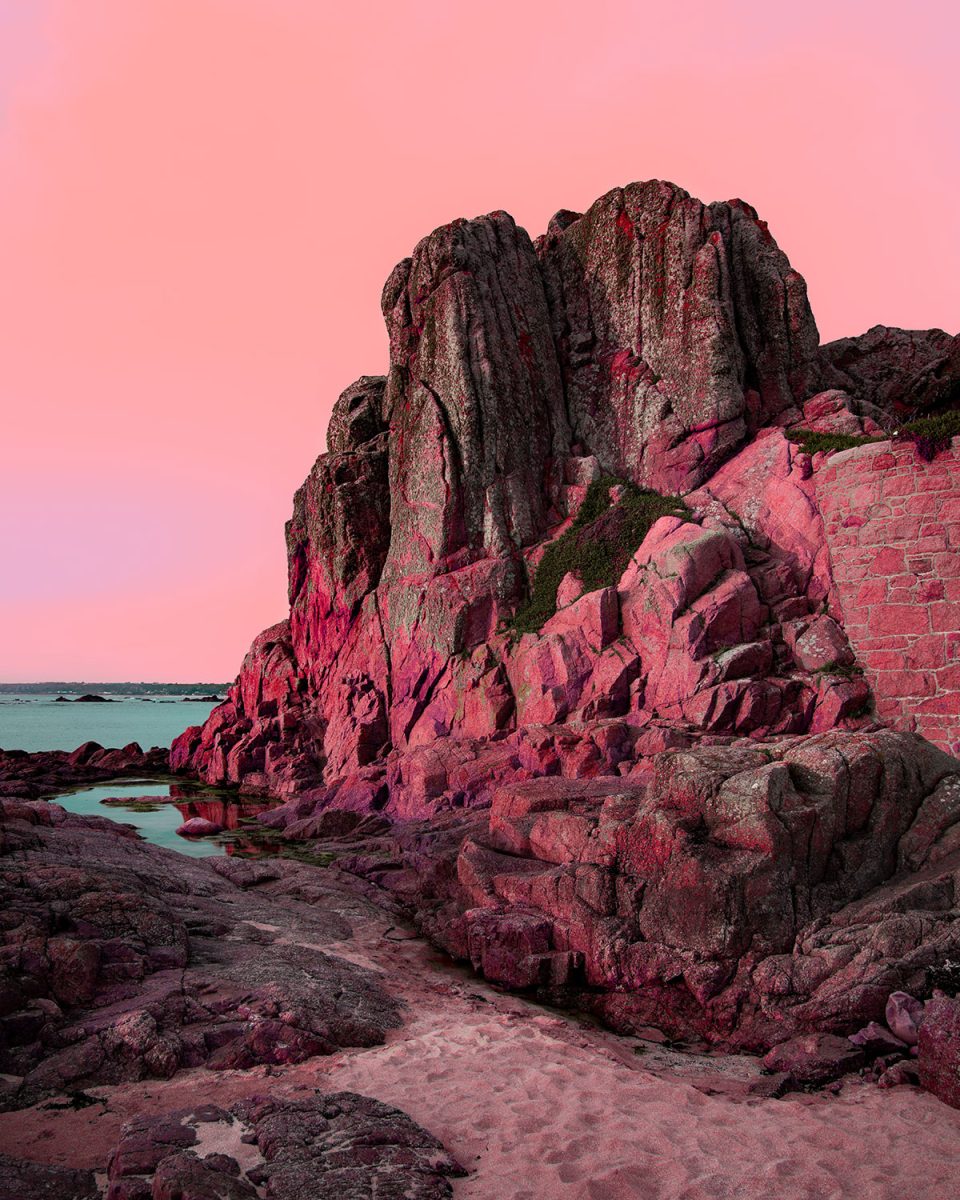
“I love the way that the rocks and sand of the west coast change colour according to the time of day. I kept manipulating the image until the colours resembled a strange planet. Sometimes I wonder if I was born there and whether I need to return.”
Emily Paranthoen
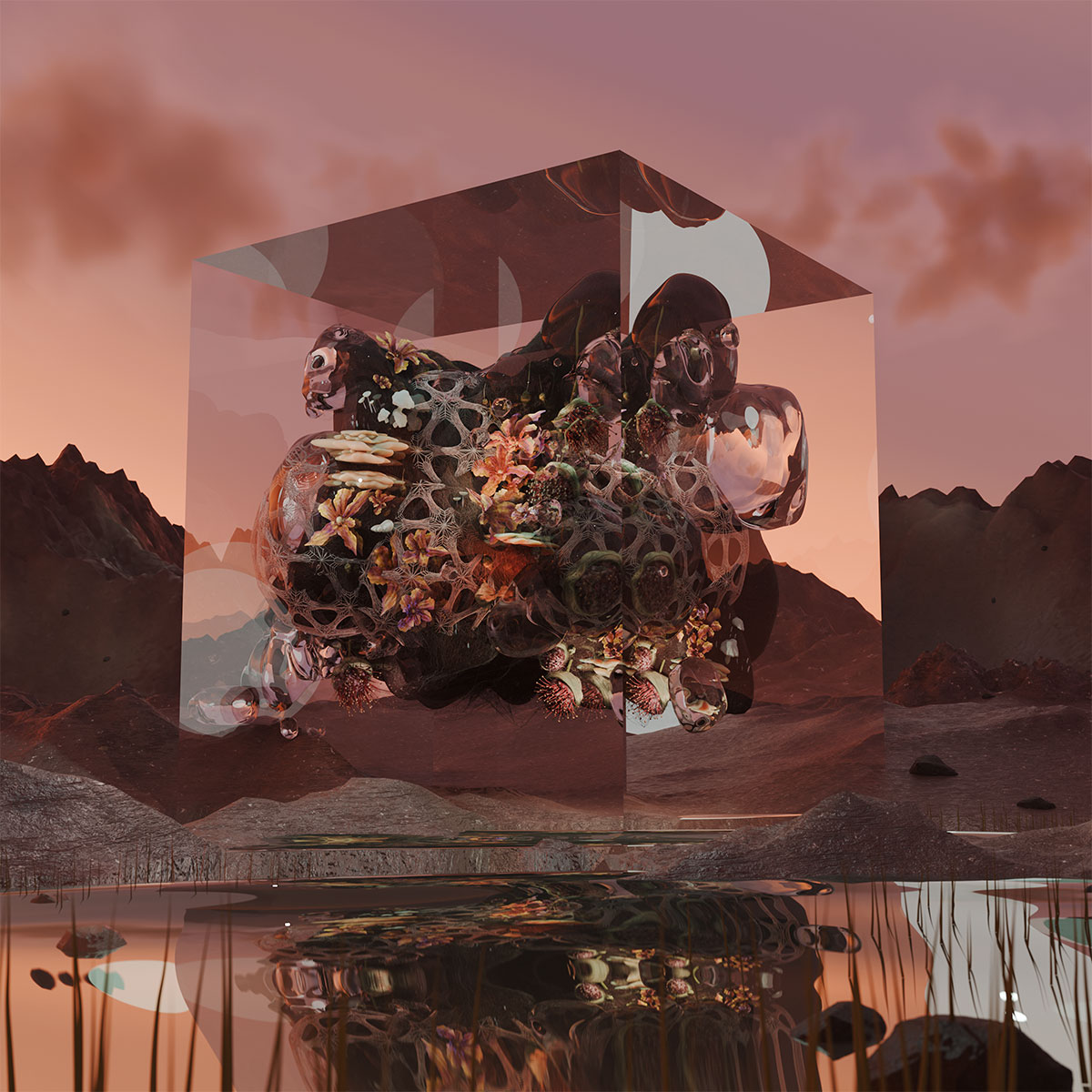
Emily Paranthoen, age 24, is a Jersey born and based artist. Graduating with a First Class Degree in Fine Art Painting from the University of Brighton in 2022, she explores themes of science fiction, technology, and the environment through the medium of 3D digital modelling and design. She constructs and explores fictional ecosystems and alternate environments, in-between spaces, and their potential inhabitants, producing otherworldly environments which emerge feeling tangible in their materiality. The digital produces a reflection of our own environment; paying attention to important global issues such as climate change, environmental degradation, and the rise of technology.
The Proteus Trilogy
“I draw a lot of inspiration from the natural environment within my work and often use narrative to discuss important global issues such as climate change and environmental degradation. ‘The Proteus Trilogy’ combines both my fascination with the natural world and my love of science fiction, constructing an otherworldly landscape forced to protect what’s left of its thriving ecosystem from the outside mutations which pose a threat. This was inspired by titles of Paul Huxley’s work ‘Proteus’ and ‘Mutations’ in response to a brief for CCA Gallery’s Art Clash exhibition. The trilogy consists of two macro perspectives of a microsystem referencing shapes and forms from the natural world, and the central image showing us an expanded view of the barren reality of the landscape in which this thriving ecosystem remains.”
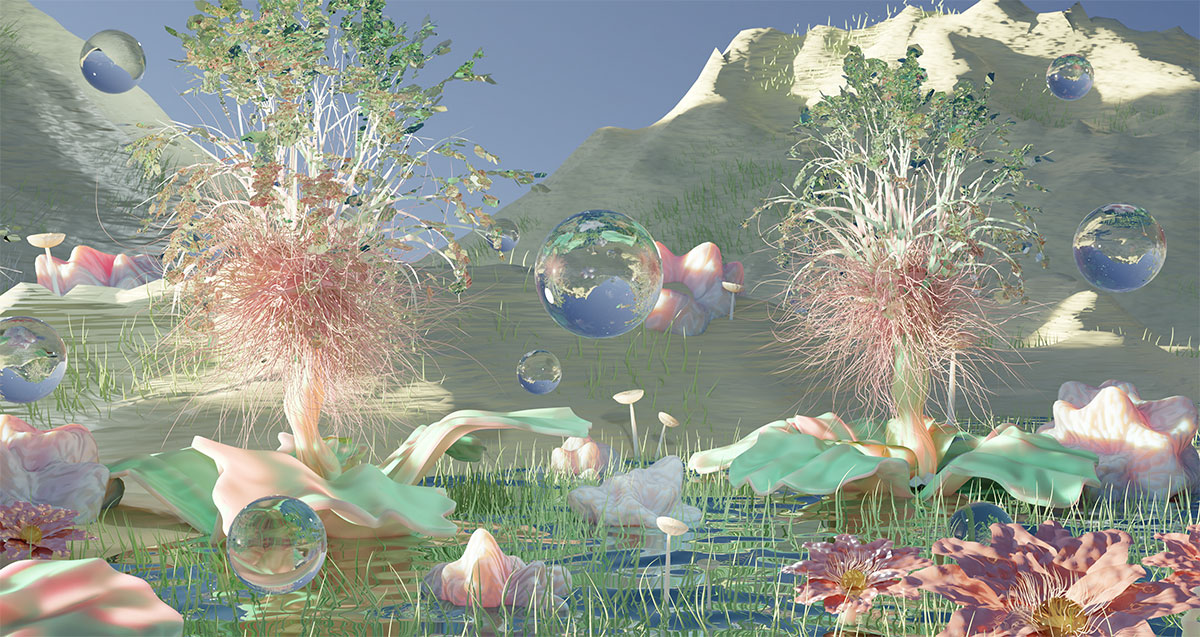
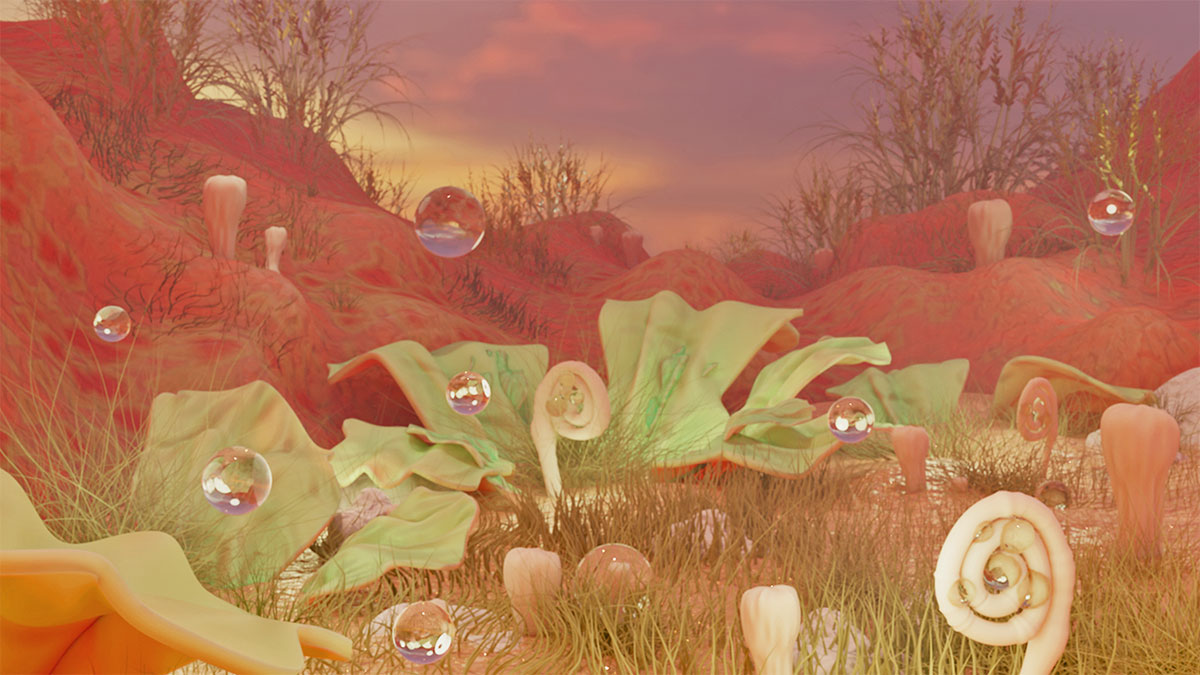
Systems of Hybridity
“‘Systems of Hybridity’, also inspired by science fiction, addresses climate change on a planet mirroring our own. Nibiru, the world imagined in this scene, has experienced a mass extinction; driven by the inhabitants finding advancement in the degradation of the planet. Millions of years after this event, nature regains dominance of the land. I was intrigued by how the world would respond if we were removed from it. Would it thrive? And would we even recognise the planet we once lived upon? I wanted to explore the contrasting perspective of the beauty and growth which you see in the works, with the neglectful advancement and destruction which came before it.”
James Thompson
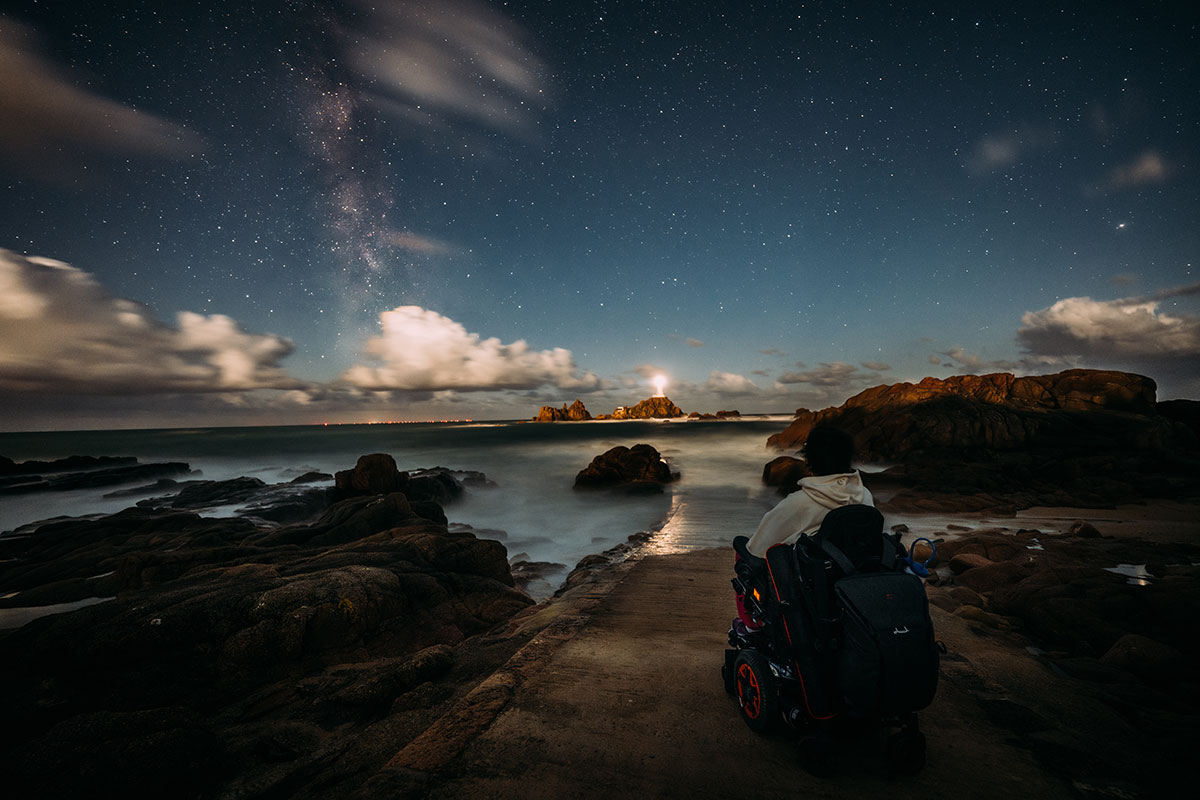
James Thompson is a photographer who became a C4/5 tetraplegic following a fluke skiing accident in 2020. Since his injury, he’s had to adapt how he shoots, using a remote trigger in his mouth to take shots. His photography is emotive, personal and captures each subject in a unique way. Despite difficulties with accessibility, James navigates rocky coastlines and rural areas across Jersey, maintaining his aim of photographing each subject in an environment that complements their individual personality. For James, photography has become a creative lifeline since his accident – bringing him back to himself when times get tough.
“Having worked with Georgi Mottram on a variety of shoots, I wanted to create a shot that encompassed a particular stage of her career: the Enchanted Voices production. I had a vision for something with more of a magical expression. I felt the best way to do this was to take her portrait beneath the centre of the Milky Way, that is visible from Jersey.”
“I wanted to capture a scene of how I feel being out at night under the stars. The calmness of it, how different it is from the busy days and how it still gives me space to be me.”
“The milky way core over La Rocque. Modern cameras are able to absorb more light than our eyes, so can capture the inside of our galaxy brighter than we see. This is what’s there.”
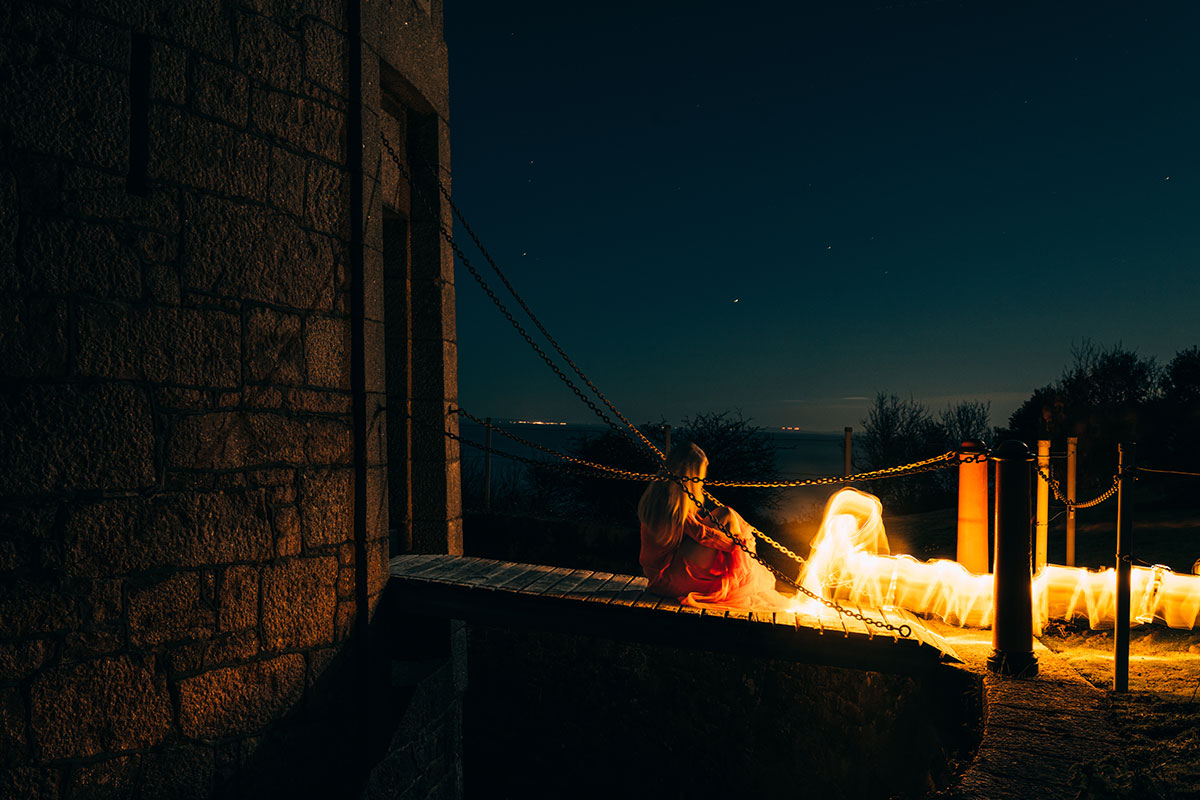
“This shot was part of a wider project that had a mental health theme. The light painting symbolises the parts of a person’s life you can’t see. Their spirit, soul, even demons that they see in front of them.”
“Using a drone to light up Victoria Tower at night, I created a spiral to extend the tower’s presence.”
It doesn’t take a rocket scientist to realise that Jersey is pretty limited in what it can offer to budding music artists. The 9-by-5 mile island is filled with just over 100k people, who mostly champion indie folk guitar balladeers or teenage boys with decks on a Splash night. I personally live out in the depths of St Ouen, where the locals at The Farmers are typically country folk rocking to Jug Bands – far from the urban dwellers filling stadiums to watch the newest emerging RnB artist. It shouldn’t come as a surprise, then, that those trying to make a name in more popular mainstream music would pick up sticks and test their luck on the mainland.
The decision is easier for some than others, but for one RnB/Pop artist, home will always be where the heart is. “When I introduce myself on stage, it always goes like this,” he said. “My name’s Harrison Mayo. Yes, Mayo like the sauce. And I’m from Jersey.” Explaining it’s a small island off of France, he asks the audience if anyone’s heard of it. There is a smattering of engagement from the crowd. But it’s enough for Harrison to start a conversation he has to remind himself to stop. “I have to catch myself sometimes and think, ‘you’ve got 30 minutes on the stage. This isn’t a tourism presentation.’”
Harrison is a fully independent artist, channeling a mix of 2000’s Justin Timberlake, Frank Ocean and Justin Bieber. His sound is a warm, RnB Pop, that has a cinematic nostalgia and catchy edge to it. Most of his tracks are within the realm of ‘feel good’ music, keeping an emotive tinge. “I do try to be as vulnerable as possible with my music, especially recently, where I’ve gone down the road of speaking about things I never normally speak about,” he explained.
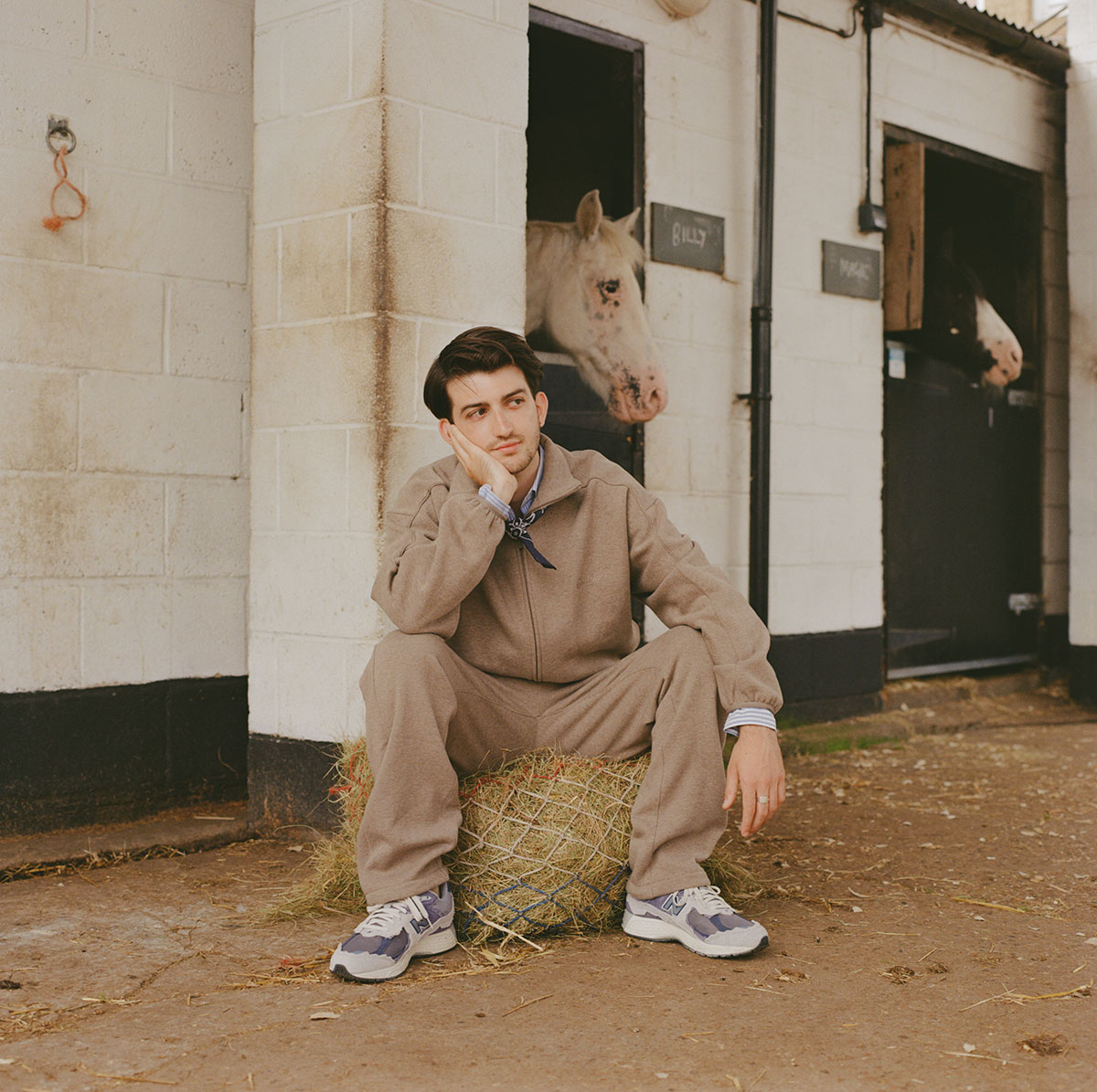
Based in North London between Camden and High Barnet, Harrison unintentionally based himself in an environment that reminds him of Jersey, without realising it. Half an hour from central, he’s surrounded by green trees, fields and a nearby nature reserve. There’s even a few barns and stables. It’s a testament to the way that his childhood on the island shaped him – “I think nature is always at the heart of my whole being,” he said. Before he went to performing arts secondary school, some of Harrison’s core memories took place at his childhood home in Rozel. “As soon as I was ready for school, I used to go down to the bay,” he said. “I’d wait for my mum to be ready to leave, and when she was, she literally had to pull me off the beach.”
The slower pace that goes hand in hand with island life remains a lifeline for Harrison when he needs clarity. “When I need a break, I tell myself, ‘leave the London brain here, and fly home and take a beat,’” he said. Despite this, it isn’t long before his feet begin to itch again. His life may be fast paced in the city, but only because he makes it that way. Driven by the surrounding hustle culture, he pounces on opportunities to reach new heights, bending the rules if he has to. “If someone says I have to do this before I do that – I don’t believe it. I will get what I want from being consistent and working hard,” he affirmed, before jokingly adding, “and also just hassling people online.”
This mentality has led to performance opportunities in places such as The Jazz Cafe in London, and festivals such as CarFest and the Big Feastival this summer. Topping the list was The Royal Albert Hall, that prior had a spot on the music artist’s bucket list. “It’s somewhere that you hear a lot about,” he said, reflecting on the experience. “It’s such a historic and special place, so to be able to perform there was incredible.” Next on the list is the Southbank Centre this October, which carries a particular nostalgic sentiment for Harrison. He used to head there with a bluetooth speaker and some friends when he was a teenager, rehearsing in the foyer despite the security guards’ indignations. “They weren’t happy with us,” Harrison remembered, smiling. “We used to get up to all sorts there, so to be able to go back and perform in a proper situation is going to be really special.”
It’s likely some songs from his latest EP will make it into the performance, which he released in August. The tracks that form ‘Mirage’ tell the story of a relationship, from first encounter to walking separate ways, and is uploaded on major streaming platforms such as Spotify. Harrison has seen success spreading his music in this way, amassing 2.25 million plays of his ‘most popular’ songs, whilst being featured on major editorial playlists such as “New Music Friday,” “Fresh Finds UK & IE,” which are followed by hundreds of thousands of listeners and amplifies his exposure.
In terms of music to come, Harrison is on a path of experimentation, getting into the studio with more producers, and different artists. “I want to try different things,” he revealed. “Tap into different sounds, maybe work with some more strings, or my friend who’s a trumpet player.” The ultimate aim is to experiment as much as possible: blending genres, and telling different stories.
We sat down with the wonderful Ben Banim to discuss his exciting new venture in the world of data. It turns out data is a lot less boring than I previously thought. Ben is showing just how powerful data can be, not only for businesses of all sizes but also for building community, supporting local success, and driving growth across our island.
Can you tell us a bit about your background and what led you to start your own company?
My journey into data started almost by accident. In my very first job I began teaching myself how to code, experimenting with ways to make repetitive tasks easier. What began as curiosity quickly became a passion, and I found myself genuinely enjoying the process of piecing together systems that made people’s lives simpler. There’s a unique satisfaction in watching someone’s face light up when a job that once took hours suddenly runs seamlessly in the background.
Over the last ten years, I’ve worked as a Data Consultant with organisations around the world, helping them to streamline processes, unlock insight, and get more from their technology. But I felt a pull to do something closer to home and to take all of that experience and apply it in a way that allows me to build direct, lasting relationships. That’s why I created Akasha Consulting: a business that’s not only about solving technical problems, but about becoming part of Jersey’s digital future.
Why have you called your company “Akasha” and what does it mean?
Akasha is a Sanskrit word that translates to “ether” or “sky.” In spiritual traditions, it’s often used to describe the invisible medium that connects everything in existence. I chose the name because it captures how I see the role of data in a business. Data is rarely the thing that customers see or notice, but it’s the connective tissue that holds everything together, from operations to customer service to decision-making.
Just as Akasha represents the subtle field that links the universe, a clear data strategy links the many parts of a business so they can move in harmony. When the right foundations are in place, suddenly the organisation feels less fragmented and more like one living, breathing system. That interconnectedness is what I help businesses achieve.
Can you describe what your company does in simple terms for someone who isn’t familiar with data automation?
The simplest way to picture it is like plumbing in a house. You don’t think about the pipes behind the walls, but when they’re connected properly, water flows exactly where it needs to, when you need it. If those pipes are leaking or disconnected, everything becomes harder and more stressful.
My role is to design and connect the “pipes” of information in a business. Instead of data sitting in silos like in spreadsheets, inboxes, or separate systems I help it flow to the right place automatically. That might mean automating a time-consuming manual task, creating visibility across departments, or ensuring that information reaches customers more quickly. As my client, you don’t have to understand every technical detail, you just feel the difference when everything flows as it should.
In one sentence, tell us why every business should care about data automation
Because it gives people back their most valuable resource, Time, freeing them to focus on growth, creativity, and the human side of running their business.
What’s a myth about data automation you want to debunk?
One of the biggest misconceptions is that automation is only for huge corporations with big budgets. That’s simply not true. In fact, small and mid-sized businesses often see the fastest impact because even modest improvements can make a dramatic difference to their workload and profitability.
Another myth is that automation is complex and intimidating. My job is to translate the technical into the practical, so business owners don’t need to get lost in jargon or detail. What seems overwhelming at first often turns out to be surprisingly straightforward once we map it out together.
What do you love most about working with local businesses?
It’s all about the relationships. When I work with local businesses, I get to sit down face-to-face, understand the nuances of how they operate, and craft solutions that feel personal rather than “off the shelf.” There’s something very rewarding about helping someone build a digital backbone that quietly supports them in the background, letting them put more energy into their craft, their customers, and their community.
Because Jersey is a tight-knit place, you also see the ripple effect. When one business runs more smoothly, it strengthens the wider network they’re part of. Knowing that my work contributes not only to an individual company but to the vibrancy of the island’s economy is a big motivator.
How do you see your company contributing to the community over time?
I see Akasha Consulting as more than a service provider. I want it to be a participant in Jersey’s digital ecosystem. That means sharing knowledge, collaborating with other local firms, and supporting events that raise the island’s digital confidence.
On a practical level, that might be through workshops that help small businesses embrace technology without fear, or through partnerships that bring advanced tools within reach of organisations that might otherwise feel left behind. Long term, my vision is for Akasha to stand for simplicity, clarity, and connection, not just in data, but in the way it strengthens the fabric of our community.
Talk to Ben Banim at Akasha Consulting to see what he can do for your data. Email: Ben@akasha.je, Phone: +44 7700 336394.
The day had arrived when I left Jersey on the red eye and made my way to Athens, ready to leave the ordinary behind for a week. I hopped in a taxi to Piraeus, chatting away, telling the driver all about the trip that was about to begin. In the distance, I spotted the tips of three strong masts peeking from behind the cliff. The driver and I exchanged a knowing glance that the ship was my destination. Dramatically, we pulled up, feeling like the scene from Mamma Mia when Colin Firth arrives, narrowly missing his ferry to Kalokairi.
Grandiose, elegant, imposing. A golden eagle jutted from the bow. Masses of rope and rigging sprawled across the deck, crew members delicately moving about in iconic sailor outfits. I was handed a cold lemon towel to mop my brow. My luggage was whisked away, a cup of cold water replaced quickly by a crisp glass of champagne.
Smiling faces guided me to my cabin. ‘Cabin’ hardly seemed adequate to describe what felt more like Queen Elizabeth’s stately home. Pure serotonin surged through me as I squealed, opening every cupboard, dancing in the walk-in wardrobe, and laughing at the sheer realness of it all. I ran a bath, changed into my robe, refilled my champagne, and sat looking out the window; very nonchalantly, of course.
Dinner was relaxed. Tired travelers lazily sipped wine while we got acquainted. The crew introduced themselves and shared what was planned for the week. I enjoyed a seafood buffet, gazing at the horizon as the crisp sea air embraced me. That night, I lay on the sundeck, spotting shooting stars and marveling at the Milky Way.
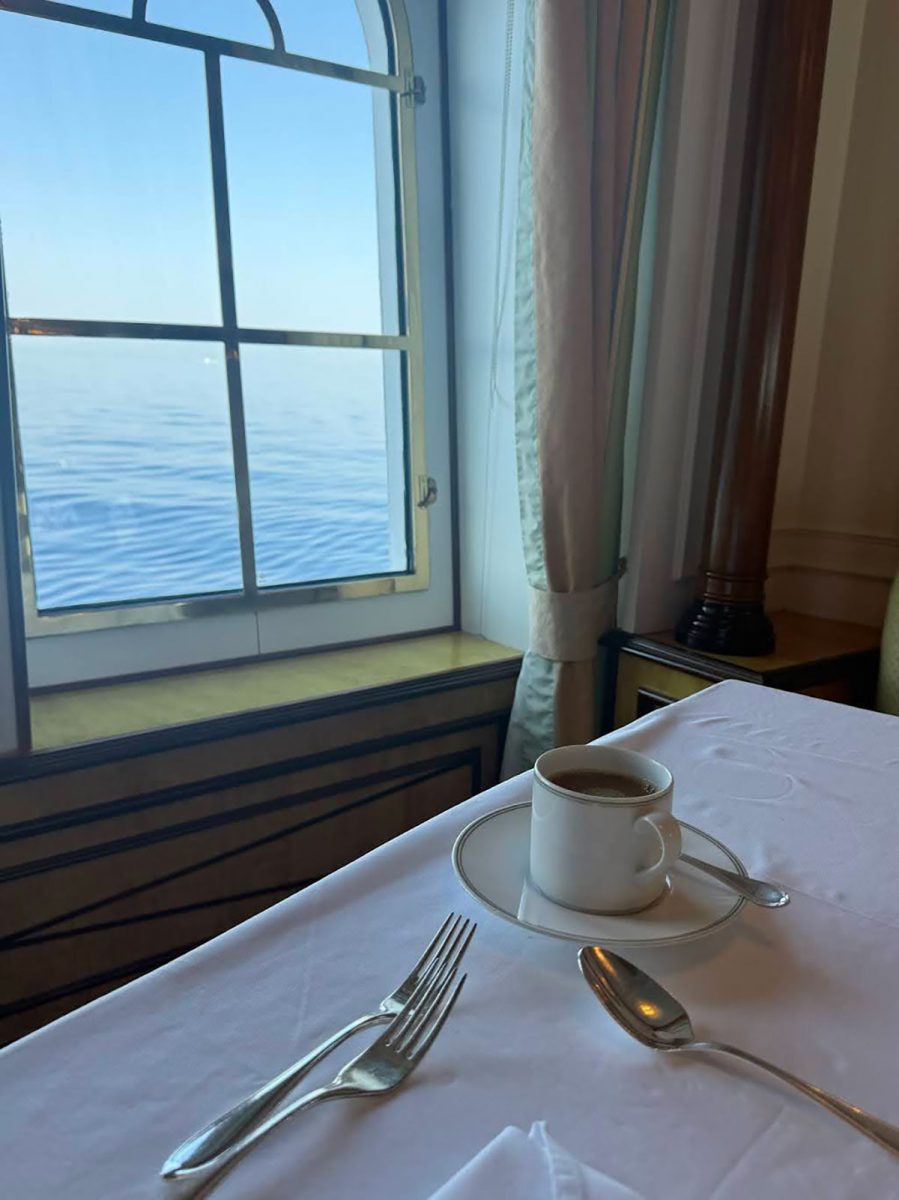
The next morning, I awoke to the sound of sails being hoisted. Thirty-two sails unfurled into the wind. We spent the day indulging at sea, it was a hard life of reading, sipping coffee, and tanning underneath the greek sun. That afternoon, the crew worked tirelessly to prepare for the first welcome dinner.
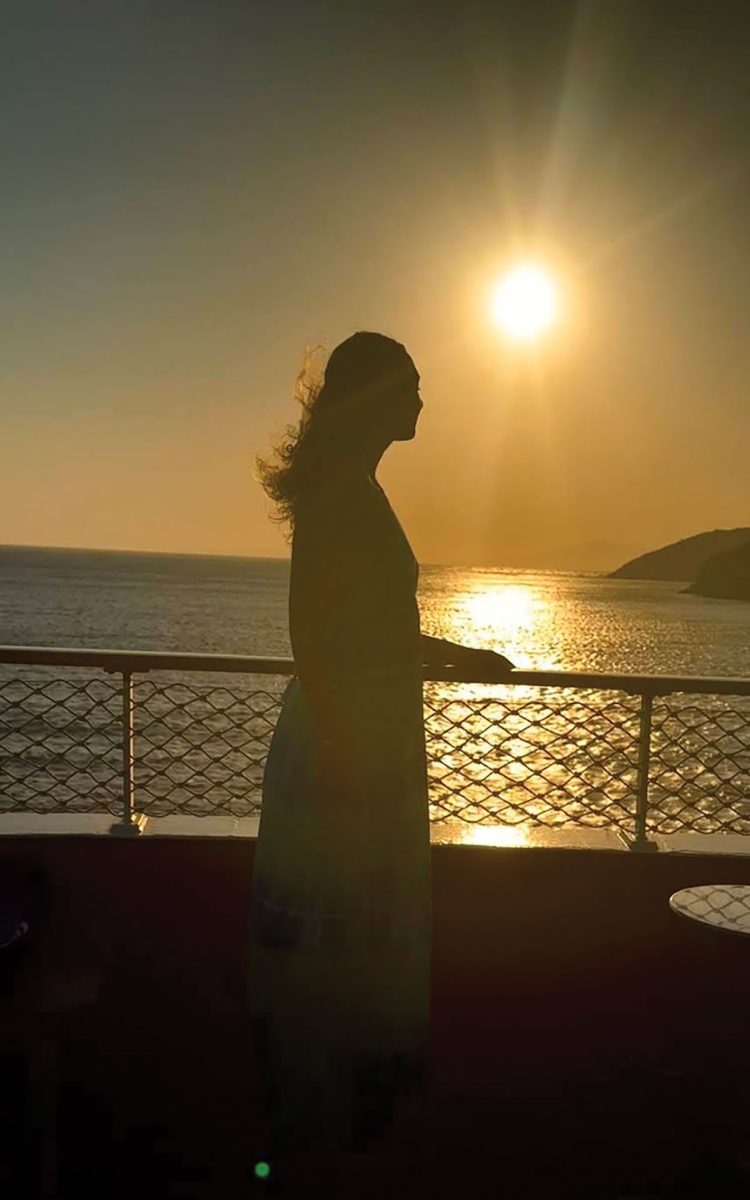
I dressed in a cream floral dress, curled my hair, and applied a pink lip. Stepping onto the deck, I was swept up in the glamour of the elegantly dressed guests; bow ties, suits, and clothes of every hue. The sun hung low, casting shadows of onyx across the boat. Wind danced through our hair as music played and the drinks flowed.
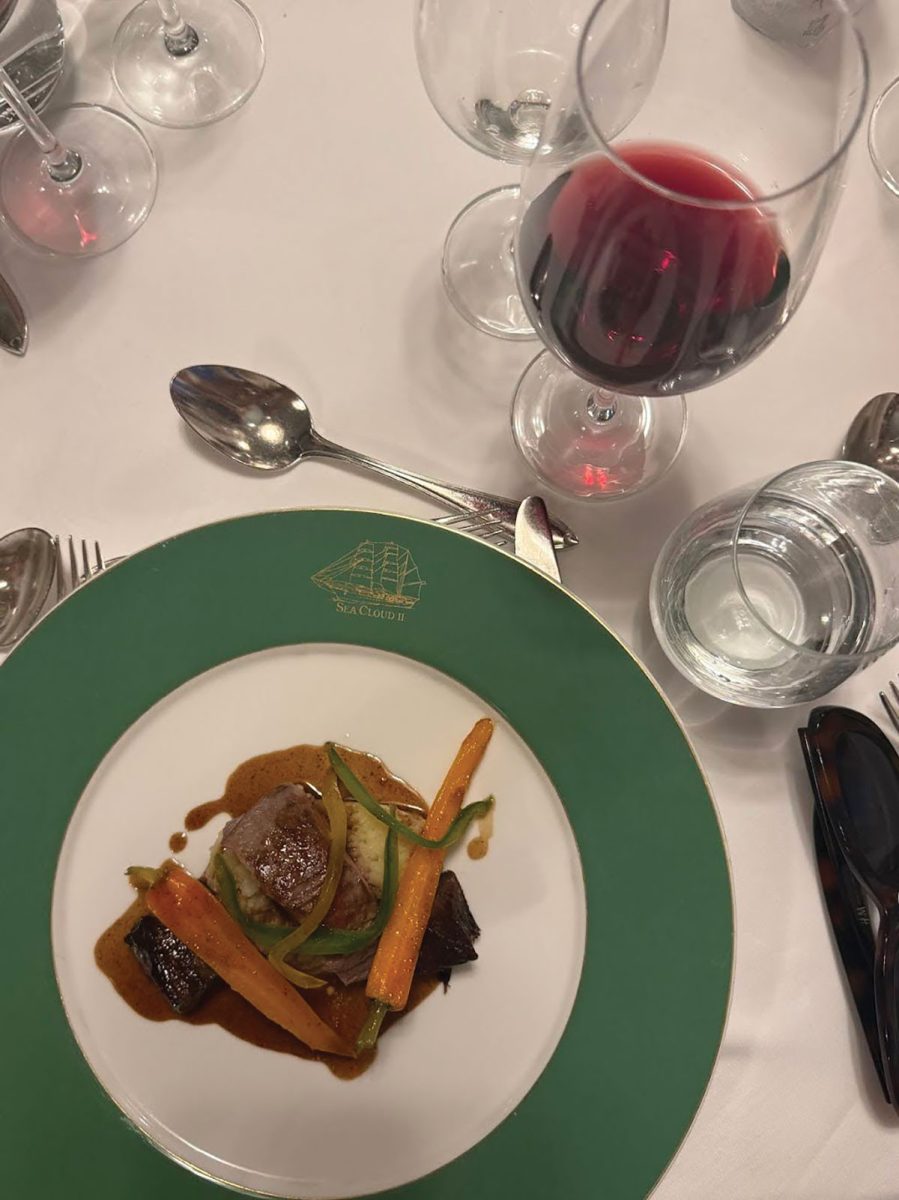
That night, I ate and ate. Courses of delicate culinary wonders appeared one after another: lobster bisque, crispy melting goat’s cheese, braised beef with rich, glossy gravy. Each course came with the perfect wine pairing. The crew tended to every need, every dietary request, every question. Nothing was overlooked. I ended the evening on the deck, sipping an Old Fashioned and puffing a cigarette. Returning to my cabin, I found my pajamas neatly laid out with a chocolate on the bed. I tumbled in, lulled to sleep by the rocking of the ship.
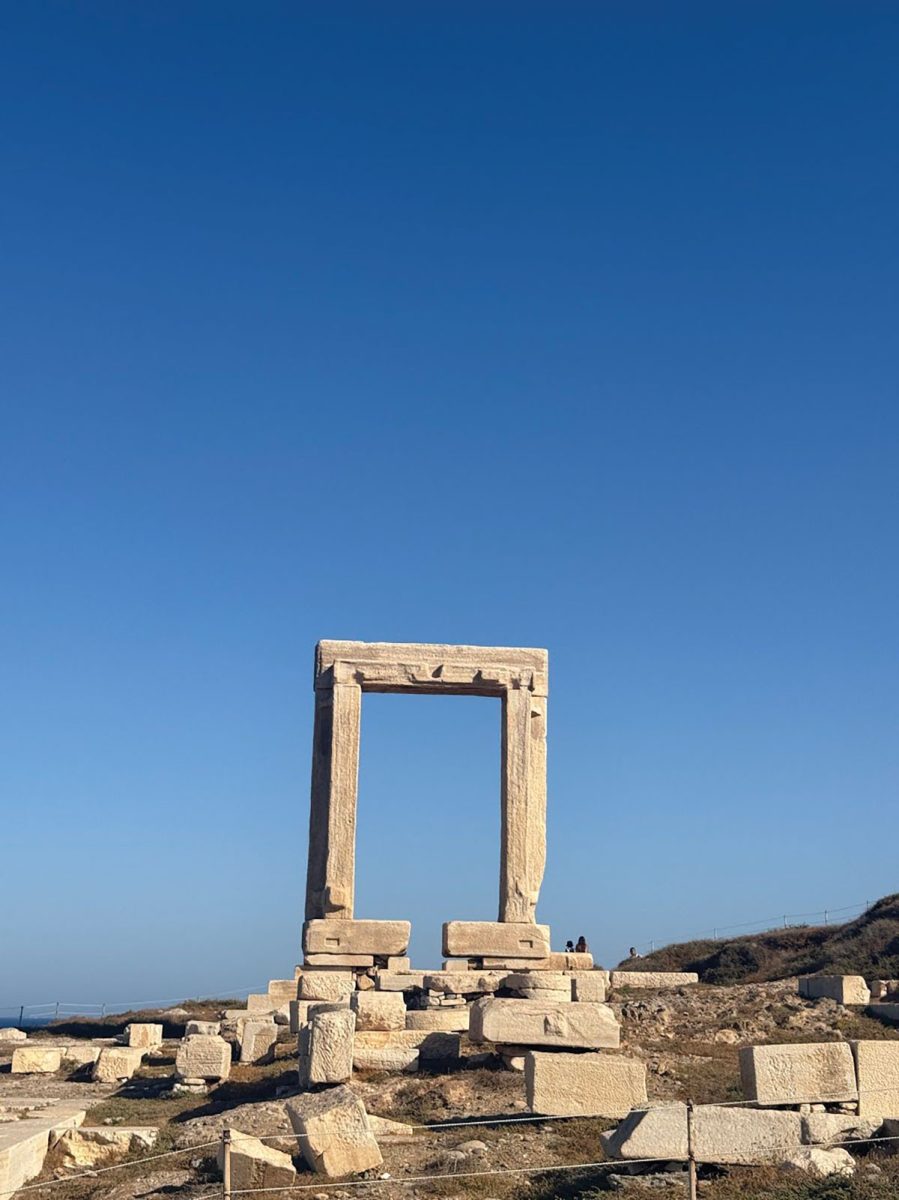
Our first island stop was Patmos, the home of John the Revelator. Exiled there, he reportedly received visions that became the Book of Revelations. The ship offered a lecture for the history enthusiasts. Our local guide led us to the monastery, a pilgrimage site for the devout. I observed, fascinated by the spiritual release others experienced. The Greek isles intertwine history across centuries, my favorite being the focus on ancient mythology where we were taken to Naxos to stand beneath the Gate of Apollo.
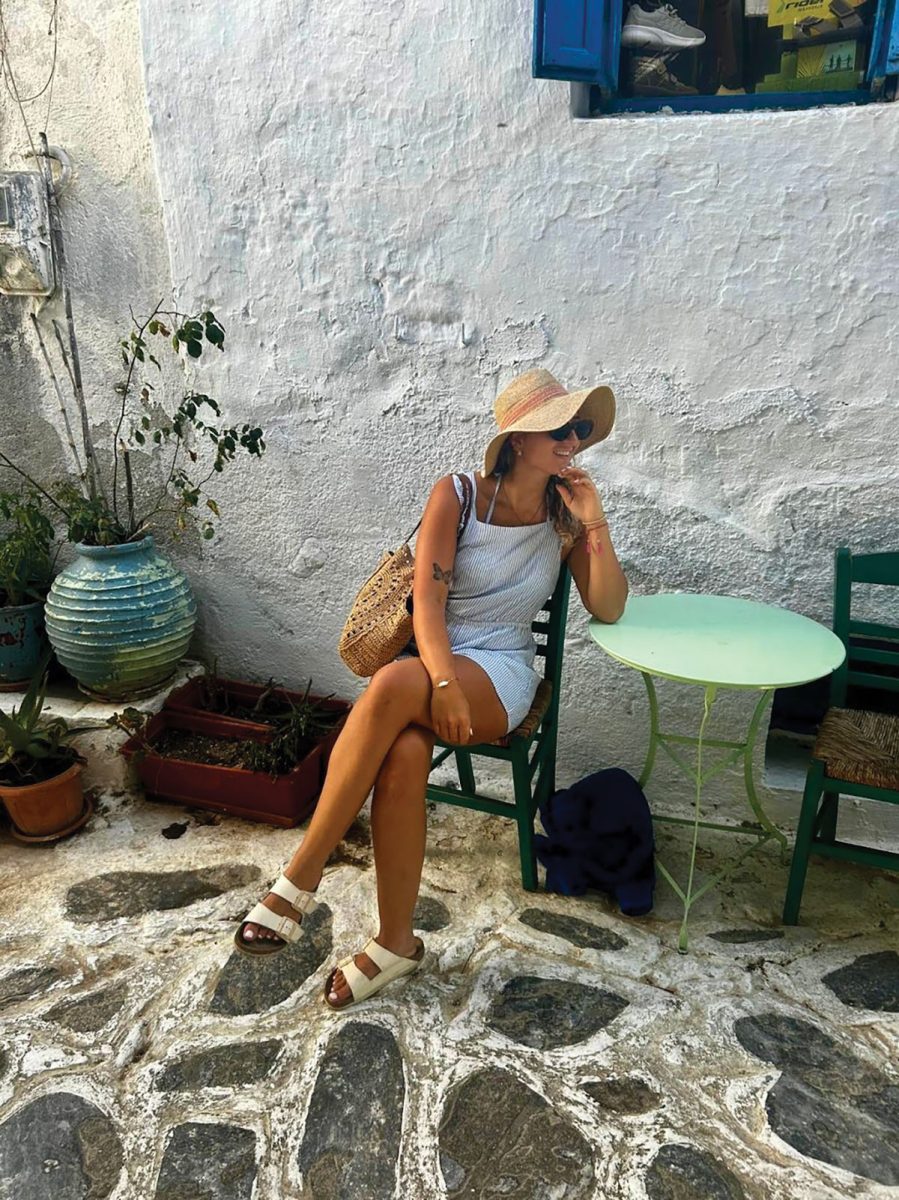
Though a self-proclaimed historyphile, my focus has always been the ocean. I struggle with heat, which makes it hard to concentrate on the classics when all I want is to jump headfirst into the water. To my joy, took us nicely on to our next island – Amorgos (my favorite island). The ocean was crystal clear, a turquoise plunge pool inviting me in. The crew laughed as I returned daily, soaked through, snorkel and flippers in hand, grinning from ear to ear.
Throughout the week, I got to know the crew, made friends with fellow guests, and began to feel at home. I learned my way around the ship. A week in, the yacht felt like home, yet watching boats head out from the port just to catch a closer glimpse reminded me how remarkable the vessel really was. As we approached Syros, the final port, I was utterly captivated by the city. It felt like stepping into King’s Landing, and I was Tyrion Lannister, contemplating my next move.
I write with a touch of fiction because this experience felt like a dream. Each day I stepped into a new character, living as a king, walking as an ancient being. My imagination reignited, I came alive with the force of nature, connection, and joy that exists aboard this ship.
Seacloud Cruises: Exclusive sailing experiences around the globe
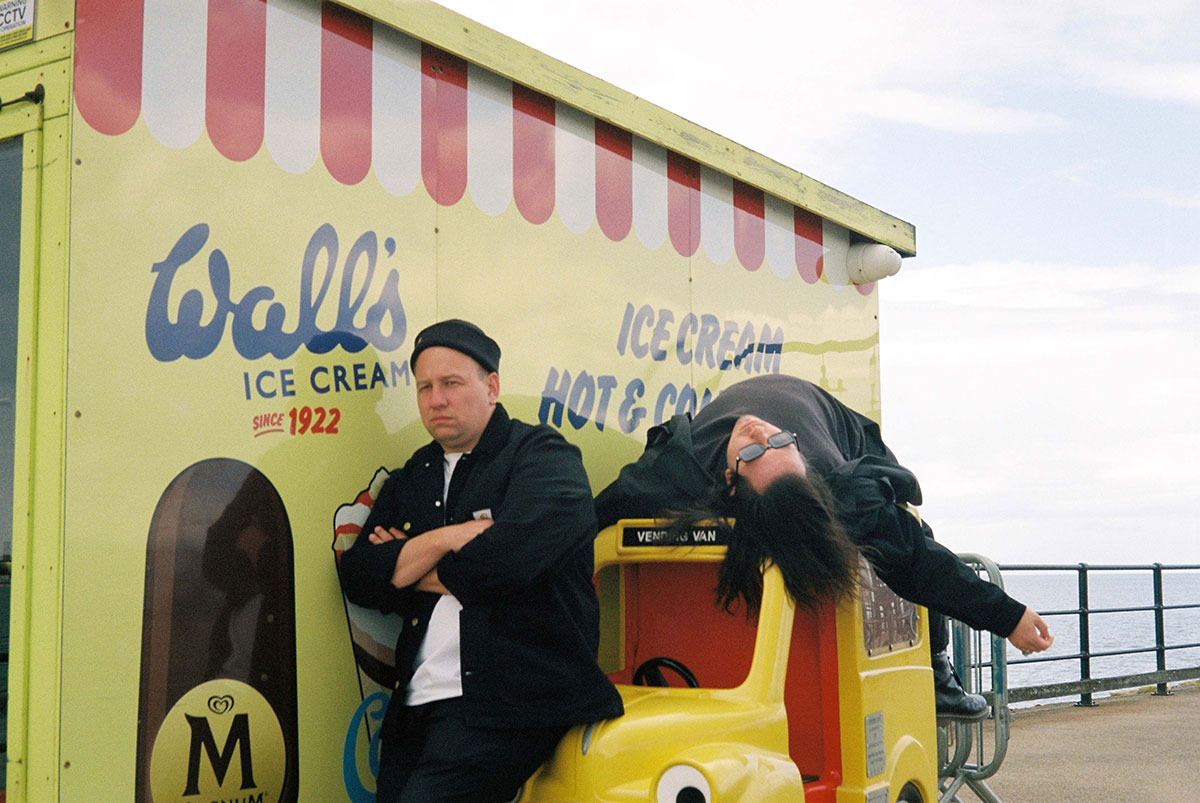
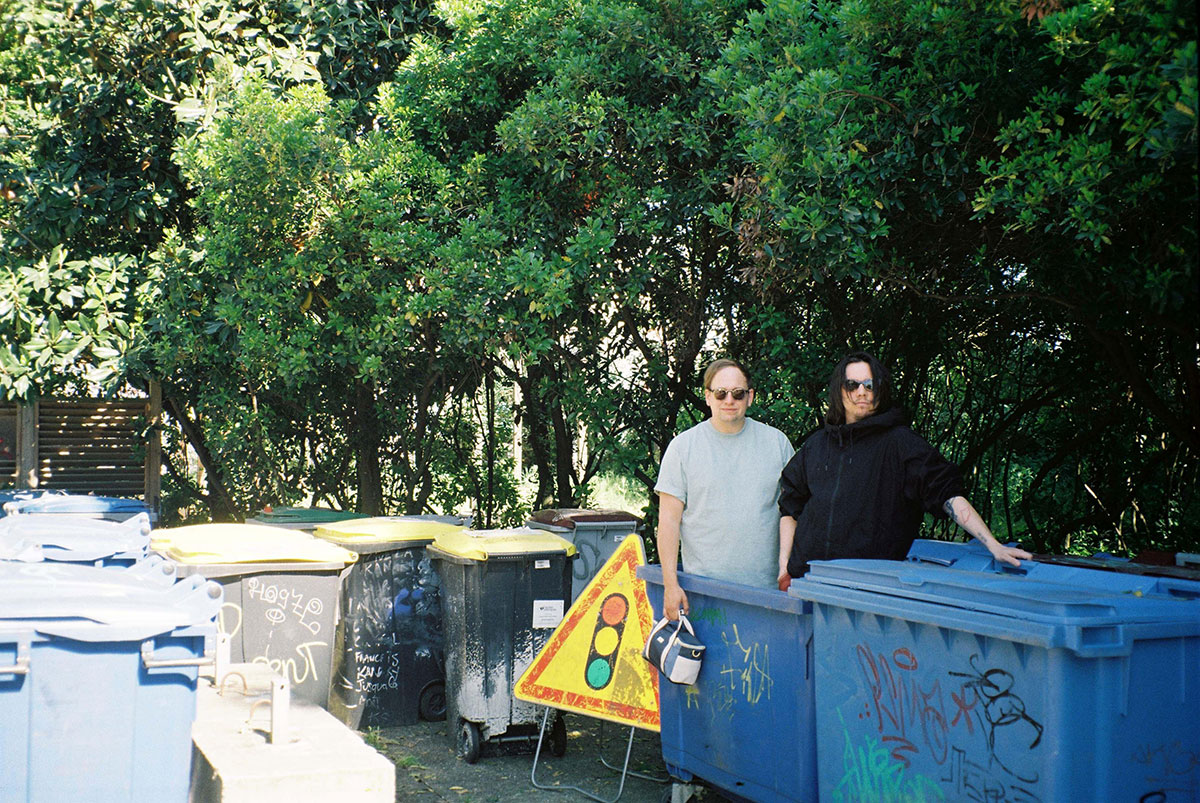
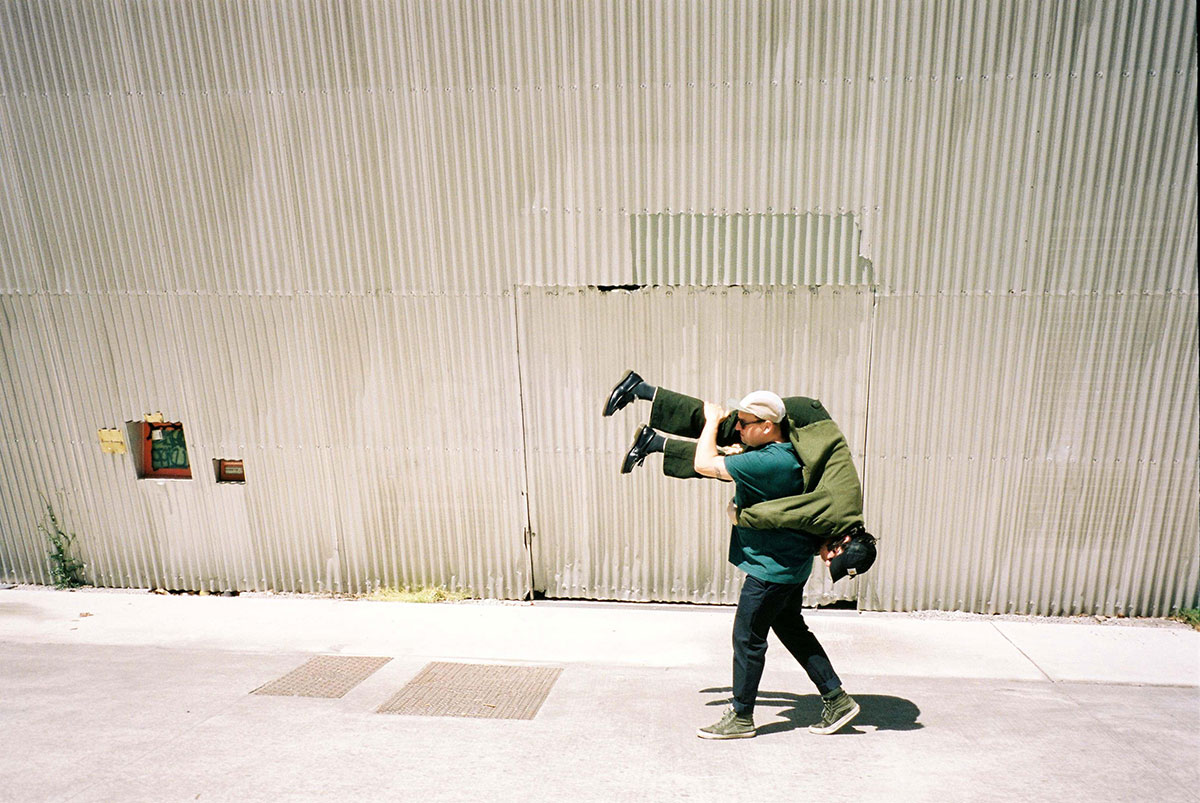
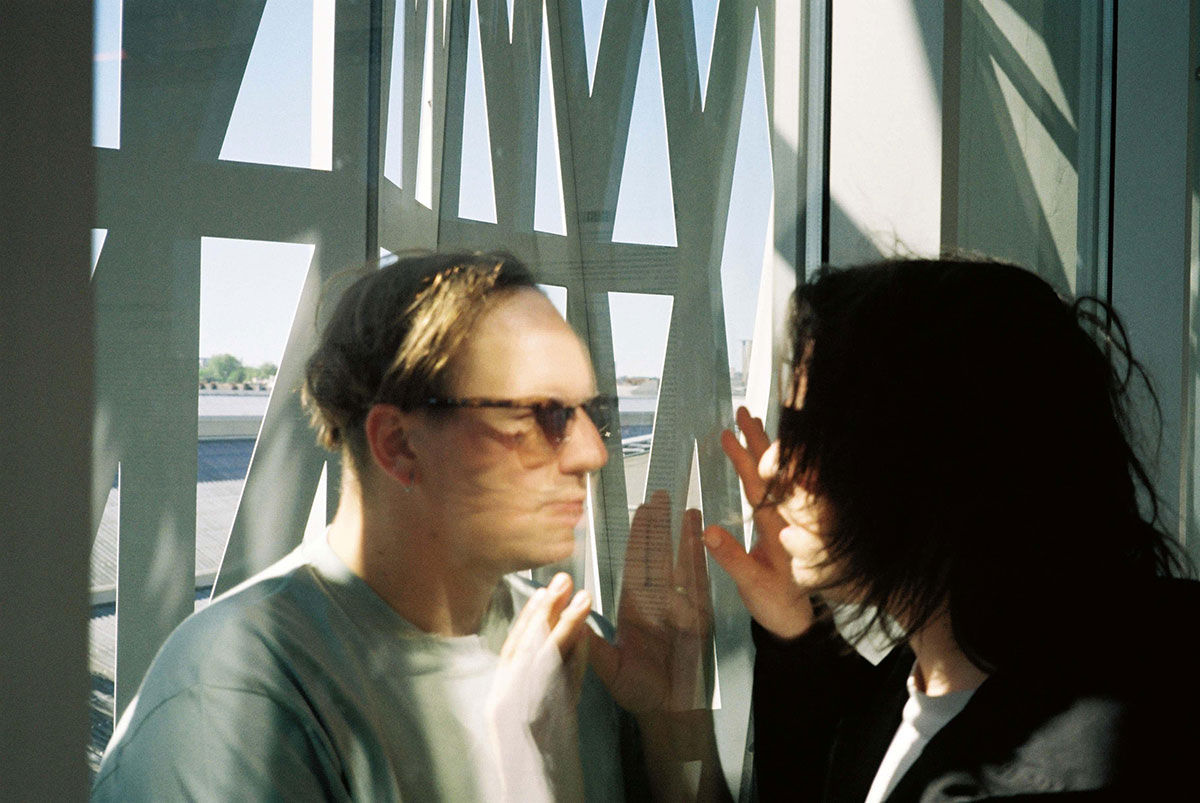
Four bright red walls frame the studio of Samuel Sprent and Simon Quénéa, PAMELA’s “full time” members. Synths, drums, guitars and amps crowd the backdrop, feeding into a central computer that’s always recording. In between musical projects that take them further afield, the pair flock back to this familiar space to touch base on experiences they’ve gathered on the road. When inspiration hits, Simon crafts the instrumentals, and Sam responds with the topline. Most artists and bands can take days, months or even years to conjure up a track they want to release into the world. For this Franco-British duo, spontaneity is their sweet spot, bashing out thirty demos across thirty days.
Their sound is instinctive, bringing to mind a blend of LCD Soundsystem and The Cure, and each track needs only a few sessions before it’s ready to cruise into the French music scene. Their raw feel and idiosyncratic textures point towards a duo that strives for authenticity over perfection, resulting in a sound underscored by the gritty nature of human life.
It’s rare for a band to see success like PAMELA’s so early in their days. It’s likely due to a combination of the pair operating like clockwork, complimented by decades immersed in the music industry. Jersey-born Sam grew up in rural France from the age of ten, spending most of his early teens in a place where pastimes were limited to football and drinking. It was here he found a friend with a guitar and took up singing, before starting his own indie rock band at fifteen. The next decade was spent touring France and Europe – as did Simon, separately, in his electronic dance band.
A series of ad hoc events brought the two together, culminating in PAMELA’s take off. Simon, who knew of Sam through the wider music social scene, was feeling at a loss with some more personal tracks that didn’t gel with his band. That phone call to Sam – asking him to collaborate on a new style of music – began an electric bond, blending both their specialities into the niche sound of PAMELA.
The duo took off faster than either expected. Within a year of touring they were selling out shows and playing at prominent French festivals such as the Festival les Vieilles Charrues in Brittany and the Rock en Seine in Paris. They landed several opening slots for Zaho de Sagazan – a sensation in the French music scene, winning awards and performing at major events such as the Paris Olympics last year. These arena tours, across France and overseas, were either sold out, or completely rammed.
Performing in front of these crowds was an adrenaline-fuelled dream come true. Simon, his eyes bright, described the sensation as pure happiness. Even after years of touring with other bands, Sam revealed that performing in front of these crowds every night was an entirely new kettle of fish. “I love having everything to prove,” he vocalised. “We’re a new band, lots of people don’t know us. We have the job of opening up for a big act, making people dance, and getting the party started.” Just like the process of creating their tracks, performing seems equally instinctive, and PAMELA seamlessly charges up crowds with their electrifying sets.
Offstage, there’s plenty happening behind the scenes. Each track goes through the hands of their producer, Pierre Cheguillaume, the mastermind at the helm of Zaho de Sagazan’s sound. “I’d say he’s the third member of PAMELA,” Sam explained. “He’s not into photos or playing live, but he’s a really important part of the project.” Guillaume Ménard is considered the fourth member, bringing the band to life with tongue-in-cheek visuals. Sam chuckled as he described his unique character. “He’s ten years younger than us,” he said, “and he can act his age. But he can also act like an old, old man.” His crazy creative projects have led him down rabbit holes, such as painting PAMELA into dog form for the ‘On the Chin’ album cover, or carving miniature synthesisers that appear in the ‘Focused’ music video, complete with keys, buttons, knobs and sliders.
Light-hearted humour and emotion characterise the band that are taking France by storm. The excitement that carries them from place to place is as contagious in conversation as it is on stage. Now established on the mainland, they hope to spread their sound further afield, to a place where their music “touches people’s hearts as well as their feet.” Having played at UK festivals such as The Great Escape in Brighton and the LIDO Festival in London this summer, PAMELA are keen to hit up some more English-speaking venues next year, Jersey’s music scene included. “We love festivals, and our music goes down really well,” Sam affirmed. “They’re just full of people who want to dance.”
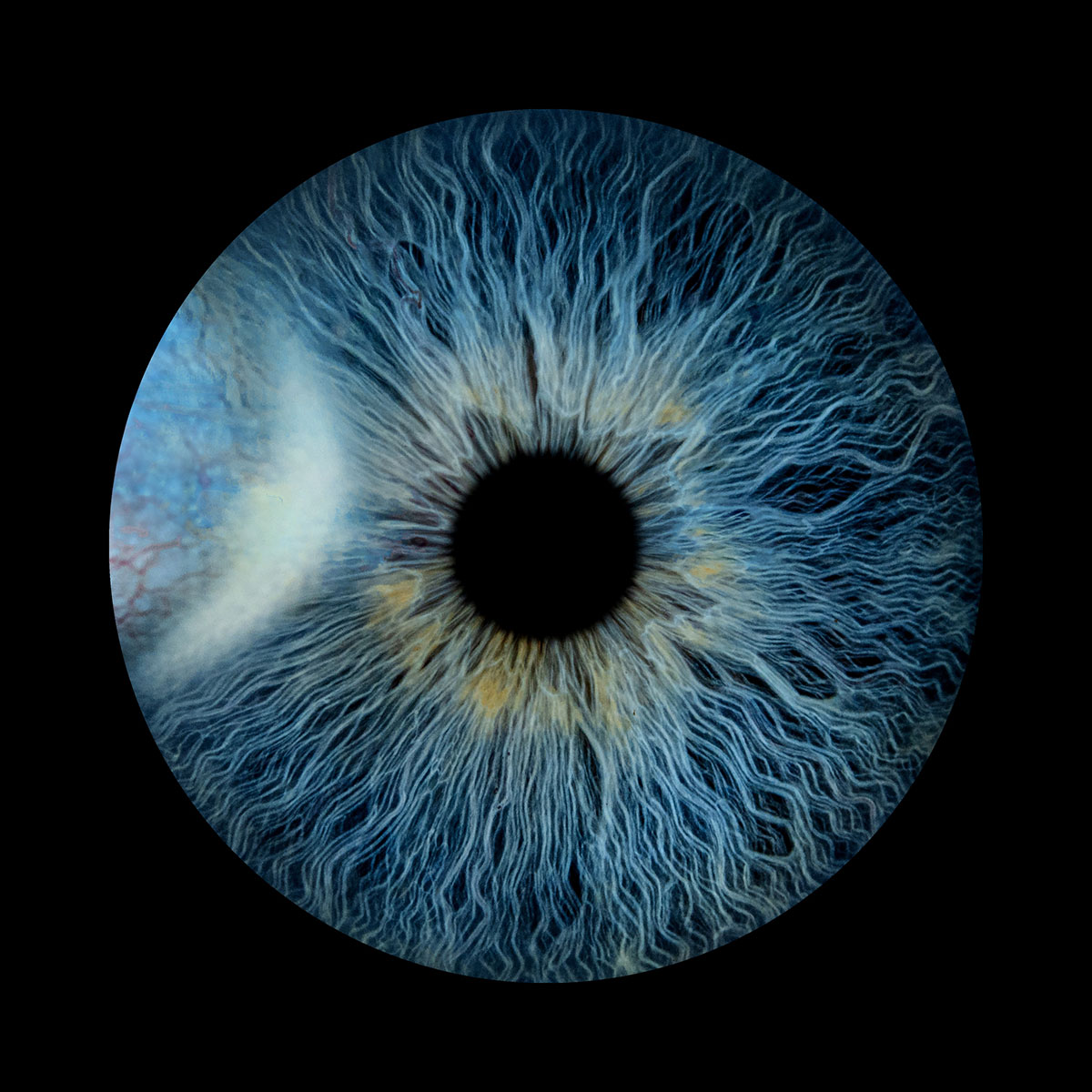
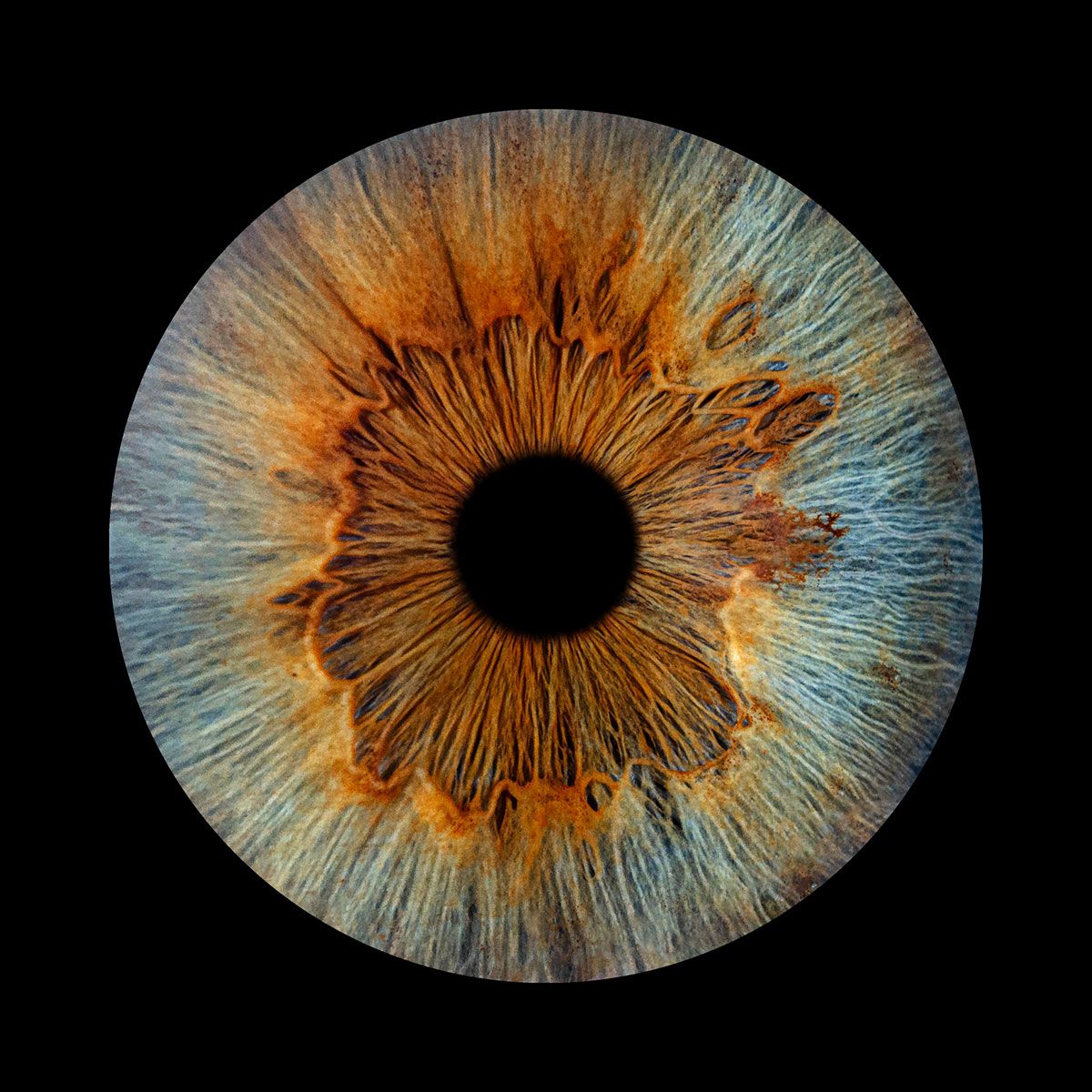
Iris Galerie is hard to ignore. Perched at the top of Halkett Street, the display windows stare into your soul. It’s giving minor discomfort mixed with a prevailing feeling of awe. ‘Do my eyes really look like that?’ you wonder, staring into electric blue orbs that look ready to fuel a nuclear power plant, or deep brown craters that resemble a birds eye view of a volcano.
For those who venture in, the fascination only increases. Either Ivo – the director – or Dan – the photographer – walks you through the process of capturing your own iris, advising you to check out small details otherwise unnoticed through a magnified mirror. Those who enjoy flicking through a good coffee table book will be directed to Vision: Master Minds of Our Time by Francis Giacobetti – a stunning compilation of portraits of famous visionaries of our time, alongside detailed photos of their irises. The result is dazzling – and founder Emeric Wehbeh set up Iris Galerie so that the general public could embark on self discovery of the same fashion.
You may be thinking, ‘what’s special about my eyes?’ Or, ‘I’m not Nelson Mandela, the Dalai Lama or Stephen Hawking, why would anyone care?’ Maybe the only people who’ve ever complimented them have been disingenuous, fleeting lovers. I went to try out the experience fully aware that my irises were completely devoid of interesting details such as heterochromia, nevi or the stem cells of an absorbed twin in the womb (see above). I still found it fascinating. Ivo and Dan enlightened me on each of the minute details photographed, explaining the intricacies of how my eyes work, and became the way they are. If nothing else, it’s an experience.
Bev Corston-Petrie
This eye is so rare that it is estimated less than one in five million people share her condition. She has fetus in fetu (FIF), an uncommon developmental anomaly where a malformed, parasitic twin is found within the body of its host twin. Whilst typically found in the abdomen – hence the, “I ate my twin in the womb,” comment – FIF can occur in other locations, including the intracranial space. Bev is one of a tiny handful of people to carry her twin as stem cells in her eye.
Louisa Newman
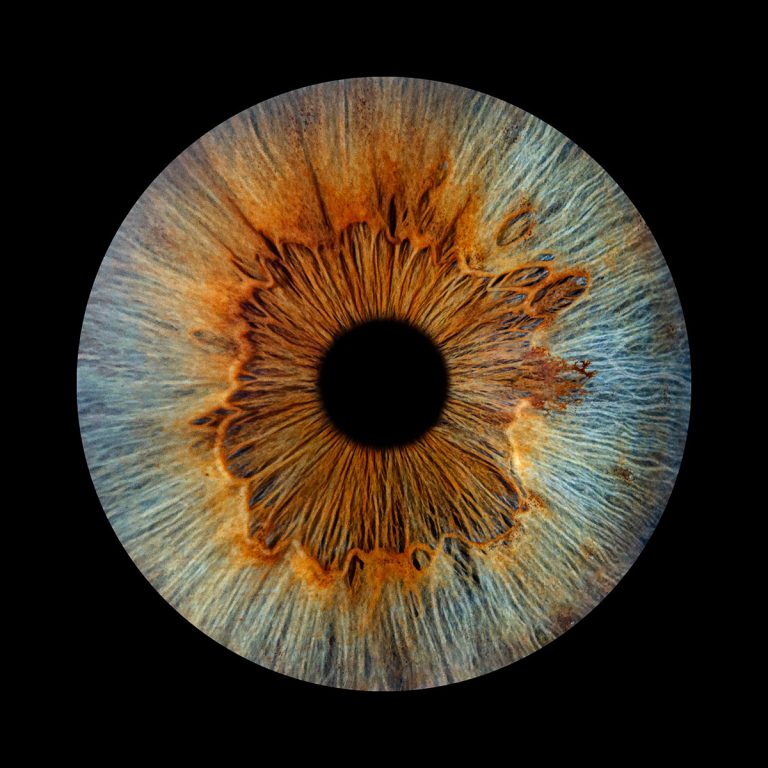
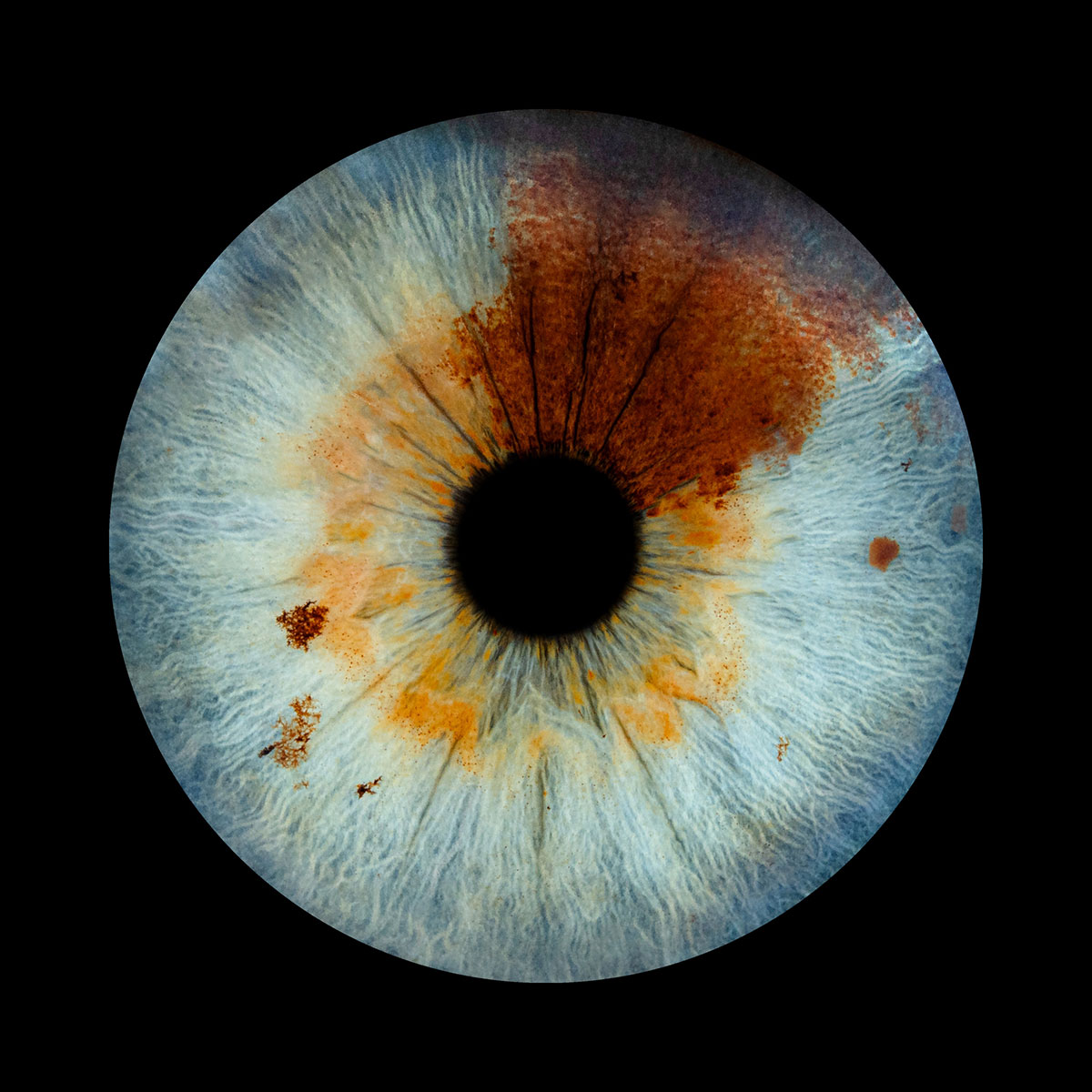
Melanin can take different forms within the iris – here, several concentrated spots called nevi combine with an amber watercolour wash that tops the blue collagen strands.
Myles Dyer
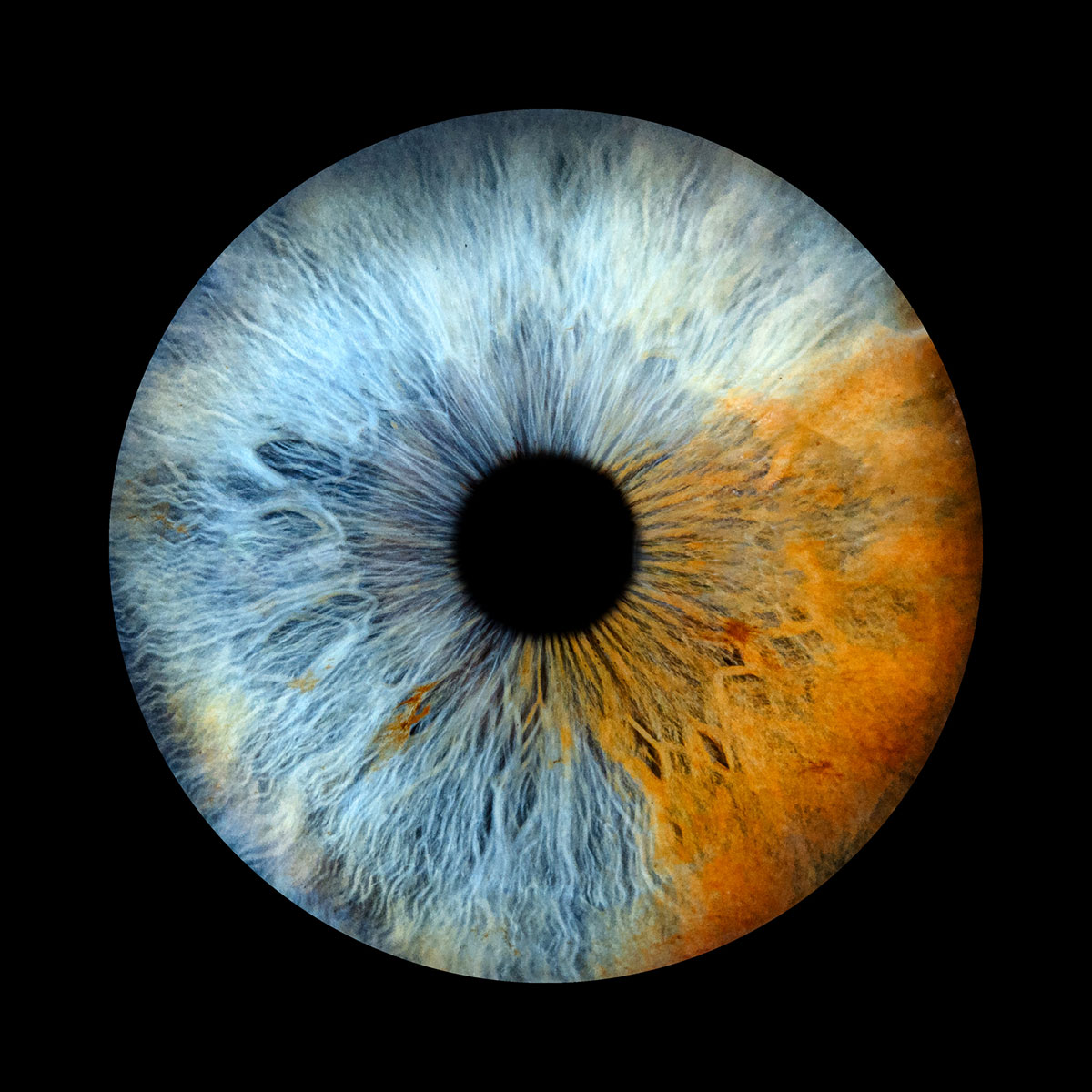
An example of partial or sectorial heterochromia – a condition where a segment of the iris has a different pigmentation.
Raymond Douieb
This pair of eyes combines both full and partial heterochromia, with two irises of completely different colours – the lighter showing a sectoral stripe and several nevi. The darker iris is a great example of how an increase of melanin in the eyes doesn’t just impact its colour, but its texture as well.
Sam George
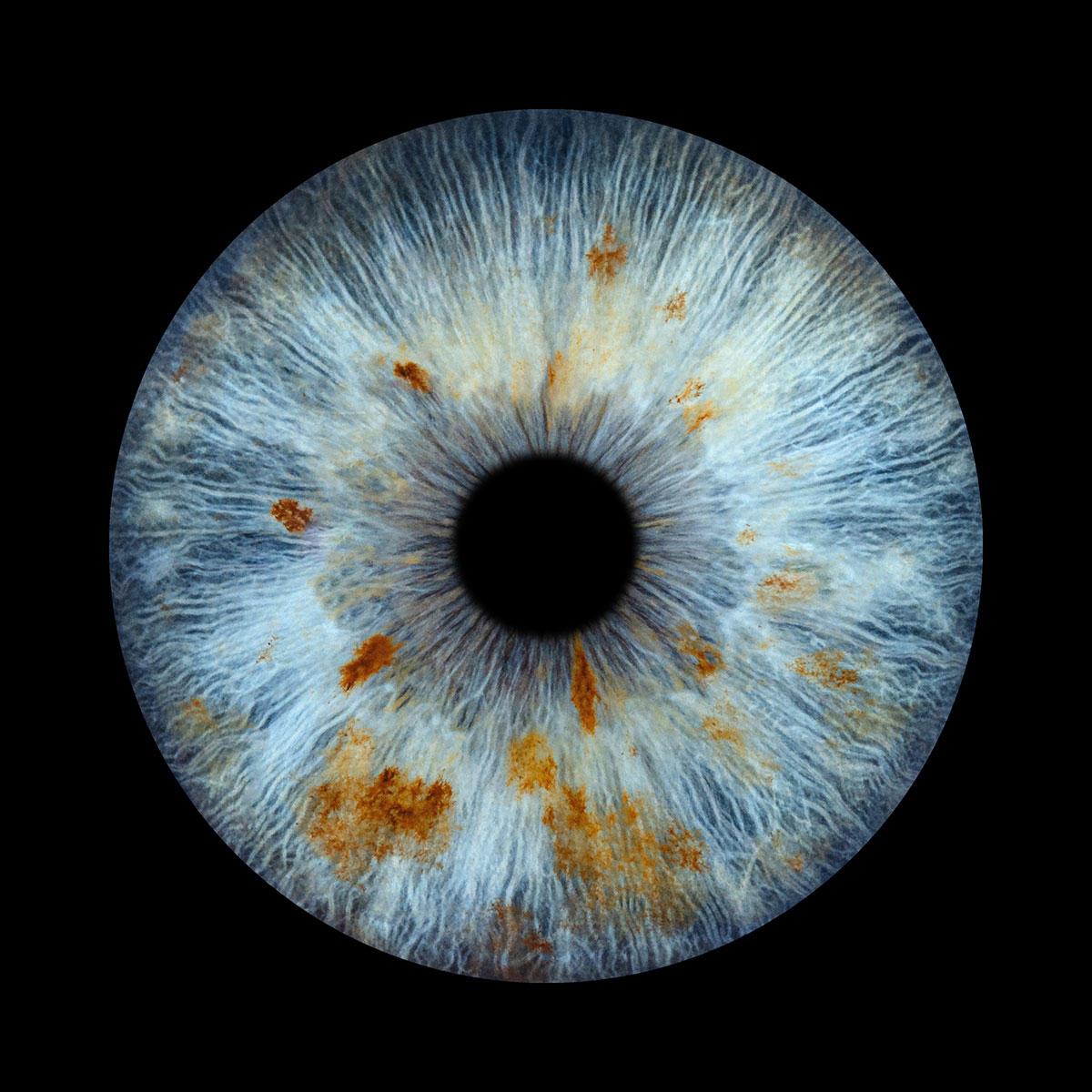
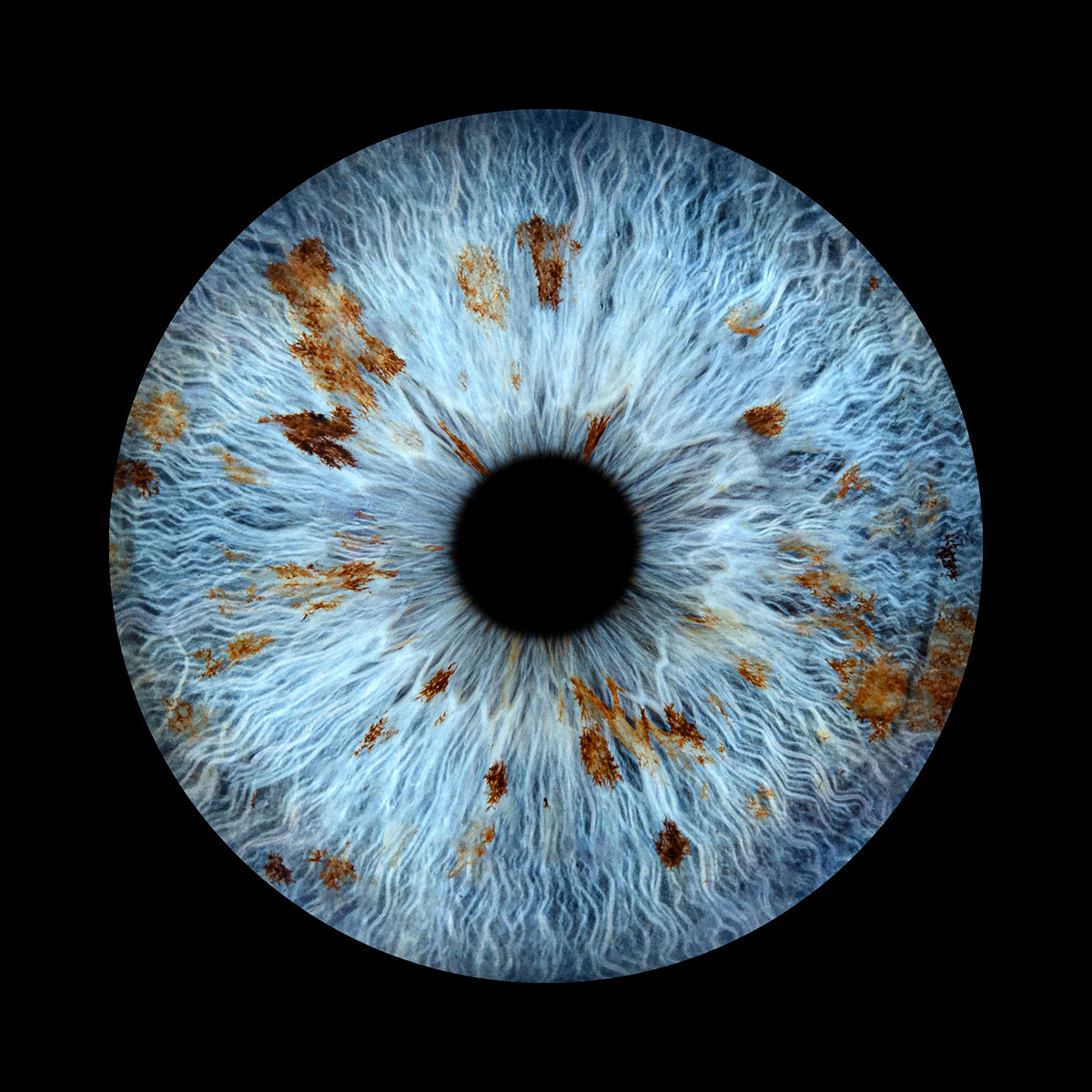
The freckle-like parts of this iris are known as Iris Nevi – caused by localised areas of melanin-producing cells which increase iris pigmentation. A nevus is a darker spot on the iris, similar to how freckles are formed on the skin.
Connor Spence
Iris Nevi caused by localised areas of melanin-producing cells which increase iris pigmentation. A nevus is a darker spot on the iris, similar to how freckles are formed on the skin. It’s usually more noticeable in lighter eyes, however can still be seen in some darker irises as well.
Sarah Brewster
An example of central heterochromia – a type of partial heterochromia where the centre of the iris is a different colour to the outside of the iris.
Shaun East
Another example of central heterochromia, but this time with the addition of nevi. They are both rare conditions – the former is responsible for the different colour at the centre of the iris, whilst the latter is responsible for the darker spots around the edge of the central “flower”.
Sophie Mercier
A great example of partial/sectoral heterochromia, showing how melanin doesn’t just change the colour of the iris, but also the texture.
Stacey Sarre
Here the tissue from the iris covers a part of the pupil – a congenital condition called persistent pupillary membrane. Most commonly seen in babies, PPM strands usually disappear within the first year, however can sometimes persist if it becomes attached to the lens or cornea.
Emma Gray
Another example of partial/sectoral heterochromia, combined with several large Crypts (places where the blue collagen strands have fused together for extra strength when opening the pupil, creating holes in the top layer of collagen and making it possible to see the layers underneath).
David Nuth
A very rare combination of sectoral and central heterochromia, including several Nevi around the lighter sections of the iris.
Words: Barry Faudemer, Chief Executive, Baker & Partners Regulatory Team
Baker & Partners is no stranger to complexity. Founded in Jersey and with offices in London, the BVI and the Cayman Islands, this law firm has built a reputation for taking on the toughest of disputes from global asset recovery for governments and sovereign states; high-stakes corporate and criminal litigation; and trust advice to prevent tomorrow’s issues. The Baker Regulatory team tackles an array of tough compliance, risk, corporate governance and financial crime issues for clients.
Now the firm is taking its problem-solving skills out of the courtroom and into the wild and shining a light on corruption and wildlife crime at large.
2 men, 1 chimp, 9 hours on a plane
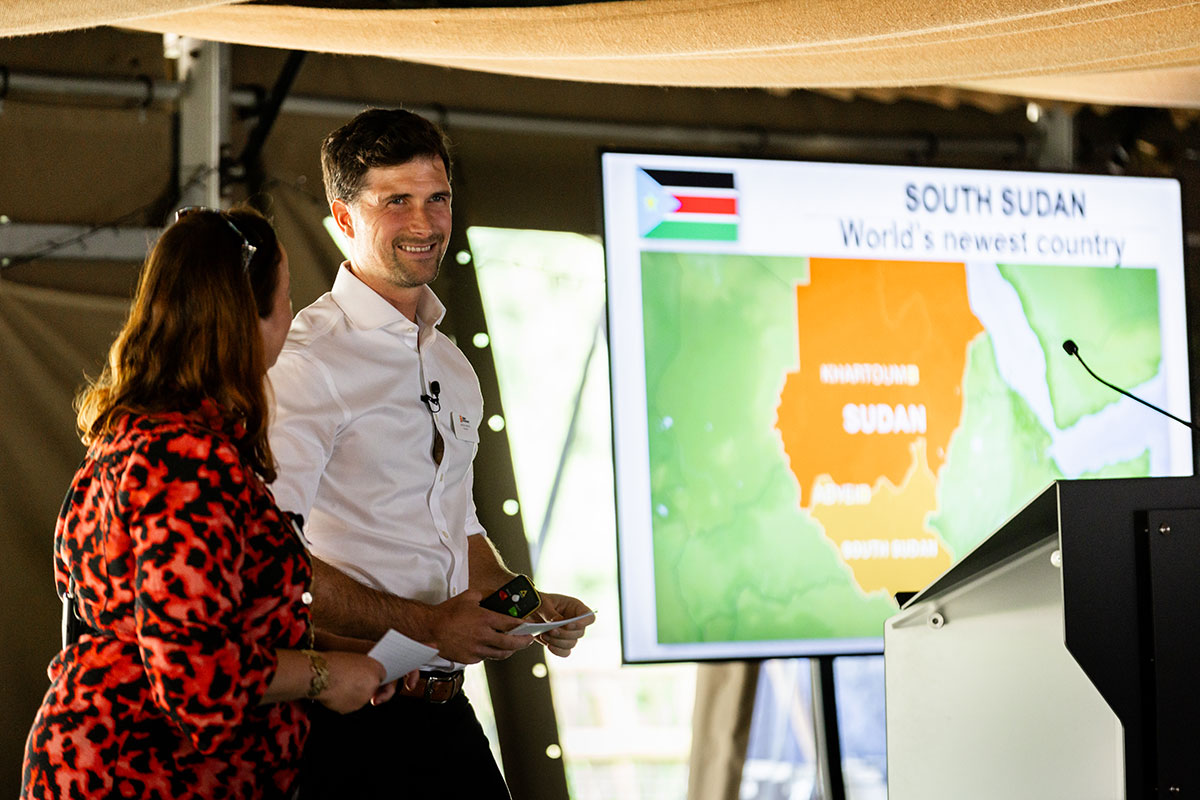
The best collaborations often begin by chance. Barry Faudemer, Chief Executive of Baker Regulatory, boarded his flight home after delivering financial investigation training to Kenyan Law Enforcement and Prosecutors. Sitting next to him on the plane was the award-winning wildlife director of photography, Justin Purefoy. Justin was returning from South Sudan, where he had been researching for his latest documentary on the journey to find trafficked chimpanzee Juba he met 20 years ago. Over the nine-hour flight they discussed everything from their passion for wildlife to the underlying desperation that often drives people to crime. Crime that starts with a supply chain of illegally procured wildlife, facilitated by corruption and ends with billions in profit for those at the top.
Barry has spent his career unravelling crime and corruption and training others to prevent it. Barry was mobilised to make sure that Jersey, as an International Finance Centre, could and would play its part to help prevent wildlife crime. The story of one chimp, as Justin hoped it would, inspired Barry to take action.
“Stories like Juba’s touch your heart and they make you want to act. I think it’s incredible that from our desks in Jersey we can contribute to saving species in the wild such as chimpanzees, pangolins, tigers and more. The challenge is that in comparison to crimes like drugs and human trafficking, wildlife crime is massively underreported and the penalties can be considerably lower. A lack of awareness and understanding of wildlife trafficking means it’s easier for the proceeds of this crime to slip through the cracks, especially in a legal and regulatory system that was never designed to catch them.
The launch of Jersey’s Sustainable Finance Action Plan sets out plans for greater reporting powers for environmental crime, reinforcing the tools necessary for identification and reporting. It’s a good time to be a part of raising awareness and addressing Jersey’s potential exposure to this global issue.”
Does wildlife crime affect Jersey?
Evidently, wildlife crime isn’t occurring in Jersey. But as a leading international finance centre, Jersey’s exposure to illegal wildlife crime lies where associated funds could be laundered through the island.
The money could be hidden within company structures ultimately owned in Jersey, especially those with underlying high-risk or vulnerable foreign businesses. It could be unknowingly held by banks and wealth managers handling high-value transactions where the rationale, or source of wealth, is opaque. It might be hidden by seemingly legitimate clients that have a footprint in vulnerable regions where wildlife is sourced or sold as well as in transport hubs.
By applying careful oversight, particularly for transactions or businesses connected to regions vulnerable to wildlife crime, Jersey can help identify and seize illicit assets. In short, whilst Jersey isn’t part of the problem, it has the expertise, frameworks and commitment to be part of the solution.
Can Jersey make a difference?
Here in Jersey, it might feel like the plight of chimps like Juba is a world away, but even from Jersey, action matters. Reporting the suspicion of a wildlife crime might be what sparks an investigation or starts the detangling of an organised crime group.
Practical ways to help
If you work in the financial services sector, as roughly 1/5 of Jersey’s workforce does, clients with the following connections, may pose a higher risk to your business:
Wildlife-linked industries (uncertified and illegal zoos, safari parks, exotic pet shops and breeders).
International trade sectors (timber, plastics, frozen food, transportation, pharmaceuticals).
Transportation businesses, especially on known trading routes.
PEPs and government officials in forestry, customs, or environmental roles.
Did you know
Most ‘know your client’ online checks do not incorporate wildlife crime data. If you see something that correlates with one of the above and your system hasn’t flagged it, make sure you raise it.
Uniting across industries to create real change
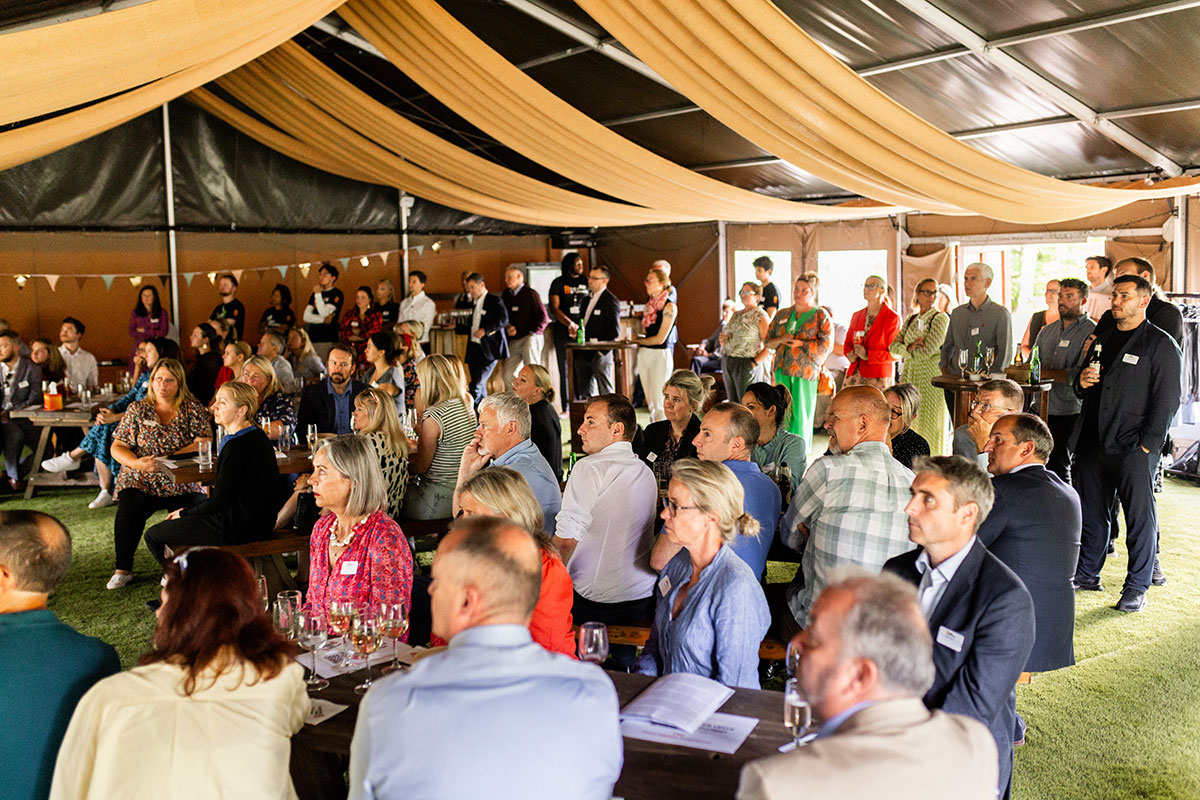
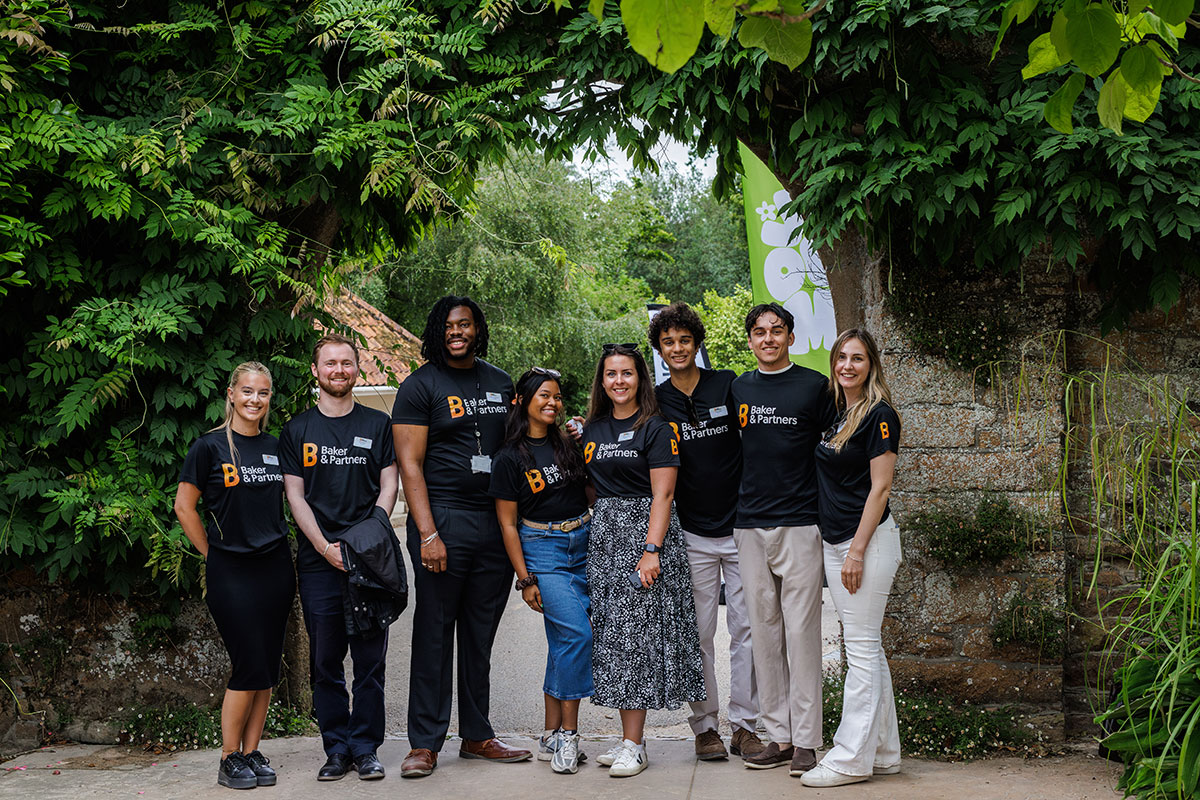
After Barry’s chance encounter with Justin, Baker & Partners invited Justin Purefoy and executive producer Jackie Savery at Maramedia to present at a Combatting Wildlife Crime event at Jersey Zoo. Speaking to a cross-section of finance professionals, conservationists, legal professionals and law enforcement, Managing Director of Baker Regulatory, Zoe Dixon-Smith, galvanised Jersey’s finance industry to stand up for wildlife. Justin brought the event to life by sharing how he’s creating a film retracing Juba’s journey across Africa. Working with wildlife crime investigators, Justin is following both the emotional journey and the money to highlight the true impact of wildlife trafficking. (Watch this space as the filmmakers will be announcing the film shortly and Justin has promised to return to Jersey for a special screening of the documentary once complete!)
The inaugural combatting wildlife crime event in numbers:
15 staff from Baker & Partners involved in the event
70+ registrants from the compliance and financial services industry
1 chimp called Juba who stole the show
Wildlife Crime: The Numbers
4,000 species of plants and animals were trafficked between 2015 – 2021
Between 2015 – 2021 illegal wildlife seizures occurred in 162 countries confiscating 13 million items
Nature generates $44 trillion annually to the global economy
Environmental crime, which includes illegal logging, waste trafficking, illicit mining, unregulated fishing, the illegal wildlife trade and more, is worth between $275 billion and $481 billion annually
Illegal wildlife trade alone is worth over $23 billion annually
The natural world needs us as its protectors.
If you’d like to learn more about how your team can spot and report the proceeds of wildlife crime and save more animals like Juba, reach out to Zoe Dixon-Smith zoedixonsmith@bakerregulatory.com
At Park, recruitment has always been about more than filling vacancies. It’s about people, opportunities, and equipping businesses with the right tools to make confident, strategic decisions. With this in mind, Park is proud to launch the Park Salary & Market Trends Report.
What is it?
In short, knowledge and insight. One of the biggest challenges for employers today is knowing where to position themselves in the market. Offer too much and budgets are stretched; offer too little and great talent is lost to competitors. Striking the right balance is critical – and that’s where Park steps in.
Why Park?
Backed by over 45 years of recruitment expertise in Jersey, Park is uniquely placed to provide insights that go beyond the numbers. The team engages with businesses across every sector on a daily basis. Their data isn’t just compiled, it’s informed by real conversations, long-standing relationships, and a deep understanding of the island’s employment landscape.
What’s inside the report?
Comprehensive, board-ready insights into the Jersey market
Salary and skills benchmarking across key service lines in financial services
Sector-specific trends and highlights
A detailed look at the executive recruitment landscape
Analysis of competitor hiring and retention strategies
Insights into flexible working patterns, benefit packages, and the cultural factors driving employee priorities
Why it matters
For employers, this means being able to make smarter, evidence-based decisions. The report shows how salary packages compare with the market, highlights where adjustments may be needed, and reveals how overall offers stack up against competitors.
The content is kept clear, concise, and practical – no endless spreadsheets or heavy jargon. Just accessible insights that can be taken straight into meetings, boardrooms, or planning sessions.
Always up to date
Because the market doesn’t stand still, every purchase includes a two-page mid-year update released each January. This ensures employers always have the latest intelligence at their fingertips – without the need to commission additional research.
The launch of this report marks more than a new service for Park, it reflects the company’s commitment to sharing knowledge and strengthening partnerships built over decades. By providing access to reliable, real-time data, Park helps businesses make confident decisions and create workplaces where people choose to stay and grow.
The Park Salary & Market Trends Report is a one-stop resource for staying competitive and forward-looking. Whether aimed at HR professionals, business owners, or line managers, it is designed to support both business growth and long-term employee retention.
Curious about how this could benefit your business? The Park team would be happy to chat.