Home Blog Page 165

The journey to coachella

0

The country lanes in Jersey have nothing on America’s six lane freeways, (astonishingly) we decide to skip the plane and drive instead of fly. Some 60 minutes later, and the somewhat ‘lax’ Satnav finally points us in the right direction – the long stretch of tarmac between LA and Indio, a right of passage for many a cocktail caressing Californian or in this case, four friends about to embark on the trip of a lifetime.

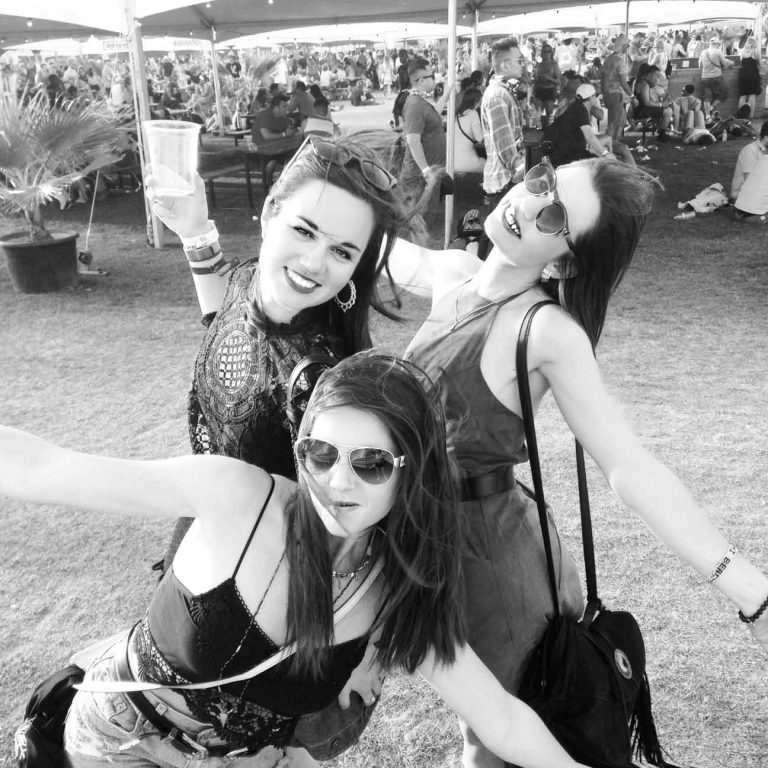
With a lengthy journey ahead of us, we decide to make it more of an adventure and less of a race. The windows are down, the DJ has been appointed and we’re all singing (albeit a little off tune) to a mix of rock, punk, pop, hip-hop and indie. Where are we heading? None other than Coachella Valley Music & Arts Festival, a celebration as diverse as it is demographic, and an event we’ve all been dying to tick off our bucket list since the age of 21.

Rock reunions and desert dance parties

For two weekends every year, Indio, a small Southern California town, is transformed into the centre of the music world… after what seems like several weeks of planning, we’re now at the heart of it!

Checking into the JW Marriott on the eve of the festival, we spend the next few hours exploring the hotel’s vast grounds in a golf buggy, topping up our tans by the palm-lined pool (this hotel has three, some of which require a gondola to cross) and sipping on organic cocktails by the fire pit. We wake up refreshed and raring to go. Several outfit changes later and we’re ready to hit the desert in style.

Coachella can only be described as ‘a Californian desert extravaganza’ and one that is peppered with more stages, surprise guests and rising upstarts than you dare to imagine. With gourmet festival food and exclusive cocktail bars galore, you can dine on top nosh from over 40 different traders, not to mention three fine-dining restaurants and some unique pop-ups along the way. In three days, we sample everything from soya-stacked sushi to five bean tacos, to broccolini and goat’s cheese pizzas, coconut-infused juices and moreish margaritas — whether you’re a no-nonsense vegan, a gluten-free goddess or a meat-feasting music fanatic, we soon discover there is something for all.

The music

Calvin Harris found love with Rihanna, Diplo teamed up with Major Lazer and Jack Ü, Guns N’ Roses transformed the desert into a jungle, and Sia’s squad included none other than Kristen Wiig, Tig Notaro, Maddie Zieglar and Paul Dano. Needless to say we danced until daylight, inhaled our own body weight in dust and sang our hearts out until our voices were no more.

Los Angeles

Next stop on our road trip? Los Angeles. We soon came to realise this happening place has two very different personalities! The old Hollywood history and glamour, vegan attitude and white-sand beaches certainly make up for the claustrophobia-heavy crowds, dubious superheroes, tattoo parlours, gift shops and ragtag lingerie stores. All however make for the experience of a lifetime…

Where we ate…

Café Gratitude boasts a positive, flower-child ambiance – think Disneyland gone vegan. The food (21 dishes between the four of us) was inventive, delightful and wholesome, with each offering brandishing a self-affirming name, guaranteed to brighten up even the dullest of days…although, as we soon discover, there aren’t many of these in L.A.

As our server saddles up to our table in all his vegan glory, we order various fanciful titled dishes, brandishing names including ‘I Am Elated’ (enchiladas), ‘I am Thriving’ (butternut squash chipotle soup), and ‘I Am Transformed’ (corn tacos).

Before wandering off to the open plan kitchen, he gives us a question to ponder over whilst we wait for our food – ‘what are you thankful for?’ This question changes every day and is all part of the restaurant’s positivity campaign.

Our favourite hangout…

Having a friend who has a friend who is best friends with a magician is sometimes all you need to embark on a (excuse the pun) magical evening…

The Magic Castle, with its labyrinth of rooms and old school glamour, is surreal, intriguing and opulent all at the same time. It’s also outrageously exclusive; entry is permitted solely to members and their guests through ushering the words ‘open sesame’ to a bookcase hidden in the wall.

Once inside we breathe in the rare memorabilia and magnificent posters; and soon discover magic shows that are more like miracles and full stage illusions that are all the rage. There’s even a piano that plays itself, or rather plays anything you ask it to…

Vegas

Excited to start our next adventure, we pack up our worldly belongings and begin our journey to the top of Cajon Pass, just west of Interstate 15 and a short hop from Old Route 66 – a dirt track that wouldn’t go a miss in a classic country and western film. We pass old diners, an antique shop, an ostrich farm, the oldest meteorite in the world and what my trusty guidebook describes as, ‘the diamond of the road’ – the Bottletree Ranch – a jumble of metal trees dressed with ancient glass bottles. Our detour may have added an hour or two to the journey, yet it was certainly worth it for the photo opportunities.

Once in Vegas, we check into what appears to be a small city, which is in fact one of the smaller hotels on the strip. The next few days pass by like a whirlwind, we dine at all hours (think waffles oozing with maple syrup at 4am), spend our days soaking up the sun listening to the hot sounds of Avicii at one of Vegas’ most renowned pool parties, and our nights watching RiRi perform in the flesh. Two days later, we pack up our bags once again and head for the airport. Next stop…Miami.

Miami Beach EDITION – A Next Generation Urban Resort

They say that once you step inside the Miami Beach EDITION, there’s no need to leave. What they say is true. 24 hours later, we’re still firmly ensconced in our new (somewhat elegant) home. In fact, we may have forgotten what the outside world looks like.

Landscaped gardens inspired by the legendary 1950’s Tropicana Nightclub, two pools and private members beach encompass a well-dressed vibe. Inside, you’ll discover two restaurants (one – Jean-Georges’ newest venture), a sophisticated spa, boutique shop, bowling alley and basement nightclub – with custom-made lightscape and state-of-the-art sound system. And that’s not all; this lower level is also home to a 2,000 square-foot ice rink brandishing a Patrick Woodroffe-orchestrated LED show and a backdrop of Collins Av… what’s not to love about this lavishly lush, urban resort?

The hotel presents a meticulous renovation of the prestigious Seville Hotel, which was for many years, a global playground for the rich and famous. It’s kitschy, catchy, unconventional and engaging all at the same time. The staff not only look the part in their elegant crisp white ensembles, they act the part too, and are every bit as welcoming as you’d expect.

The Miami Beach EDITION’s magnificent features take inspiration from Donald Judd and Aldo Rossi; all pay homage to the original Seville establishment. 24-karat glass gold mosaic columns dominate the lobby, a mass of tropical custom-lit palm trees create an elegant glow, whilst oversized silk rugs, bleached rift-cut white oak and a diverse range of antiques add a vintage edge.

With its avant-garde façade – described by many as one of Miami Beach’s most distinguishing architectural delights – it is here well-designed simplicity encounters a dramatic pizazz. Everything about the EDITION oozes old-school glamour.

Going home

Finally time to say goodbye, we reluctantly pack up our things and board the ‘faster than lightening’ shuttle to the airport. Six plane journeys later, thousands of miles travelled and many memories made, it’s back to reality. Would I do it again? I’m already looking into options as we speak…

Geo-Metry 101

0

Photography: Danny Evans

Model: Toni

Set creation: Danny & Toni

New Direction

0

Sasha Gibb has recently taken up the post of gallery director at CCA Galleries International. Before to moving to the Gallery at 10 Hill St in March, she was the visual arts officer for Jersey Arts Trust. At JAT Sasha set up and ran public art events such as the Skipton Open Studios, Jersey Projection Gallery and Les P’tits Faitchieaux. We asked her to talk to us about her new role and what we can expect to see over the coming months.

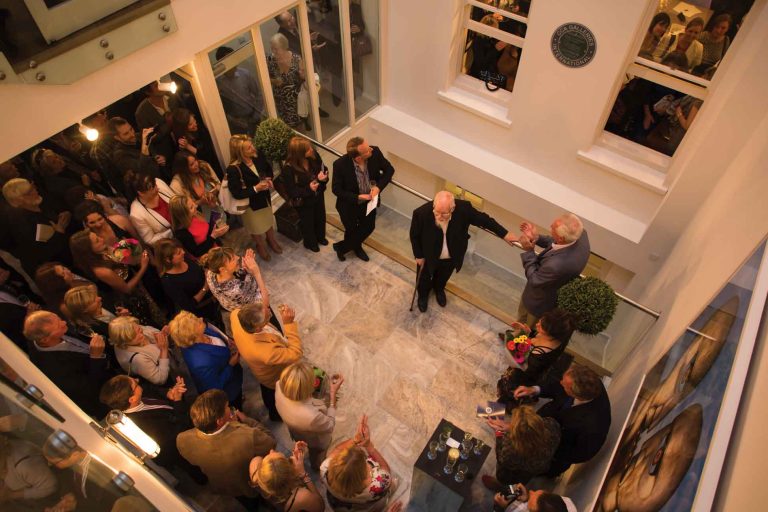
‘There is no doubt in my mind that we are lucky to have a resource such as CCA Galleries International in Jersey. The Gallery was opened by Sir Peter Blake three years ago and we’re celebrating this anniversary in June with an evening with Sir Peter and his new work.

CCA Galleries International shares common ownership with CCA Galleries in the UK and is consequently linked to Worton Hall Studios, in West London. The building was originally part of the Isleworth film studios and is now where all our publications are made. The studio houses three renowned printing studios: Coriander Studio, The Curwen Studio and Huguenot Editions. The advantage of original prints is that it enables handmade work, made from scratch by extremely accomplished artists, to be accessible to a wider public. The work comes in limited editions and often combines a number of print techniques, as well as collage. Worton Hall Studios is unique as it offers expertise in all print forms together under one roof, including lenticular, 3D, digital and holographic art. The Jersey-based film company ‘Little River Pictures’ are currently making a film about Worton Hall which we shall be launching at this year’s Skipton Open Studios 17 June – 3 July.

The Jersey Gallery is open 10am – 5pm, Monday – Friday. However, with a little warning we can generally arrange an appointment for a visit outside these times if necessary. Currently the gallery is hung with Sir Peter Blake and Bruce McLean on the ground floor, facing up and emerging artists such as Dan Baldwin (Paolo Nutini’s latest album cover), Lucy Farley (fantastic seascapes reminiscent of St Ives), Tom Phillips (always unpredictable), Joe Webb (icon collages with a slightly surreal edge), Jersey sculptor David Ormsby and cabinet maker Alasdair Healy. On the first floor we have oils and original prints by 20th century masters such as Sir Terry Frost, Donald Hamilton Fraser, John Hoyland and Sandra Blow. The top floor showcases original prints by Damien Hirst. In the atrium is the incredible ‘Horse at Water’ by Nic Fiddian-Green – a digital print in an edition of only 10 and the result of his 20 year study of the horse. A bronze version of this is currently at Marble Arch, London.

Miranda Moncreiffe’s exhibition in April marked the start of a program of temporary exhibitions, talks and discussions in the more intimate ‘painted rooms’ off the atrium. I’m in discussion with professional local artists from Jersey and France regarding a program of events and exhibitions to sit alongside exhibitions by the international artists we publish and represent.

As well as the permanent and temporary exhibitions, CCAI offers both a corporate and domestic Art Loan Service. We also provide Wedding and Birthday Lists, Art Vouchers and advice on framing, hanging, buying and collecting.”

VOLUNTEERING IN TANZANIA

0

Living on an island 9×5 miles gives us locals itchy feet. If there’s one true thing about people from Jersey, it is that we do love to travel. I’ve always been a fan of back-packing and living on a shoestring whilst discovering beach huts and historic ruins, but I also feel a strong moral responsibility to give back to the cultures and communities I visit.

Working for local charities for eight years, I wanted to broaden my horizons and gain experience working for an international charity. After some late night research for job opportunities around the globe, I discovered Raleigh International. The youth development charity operates in some of the poorest countries in the world including Nicaragua, Nepal and Tanzania. Young people work with local communities to improve sanitation, health and the environment, finding sustainable solutions through education and innovation.

Many international volunteering programmes charge large fees to fund and cover the cost of projects on the ground. In partnership with Raleigh, International Citizen Service (ICS) is an overseas volunteering program for 18-25 year olds, funded by the UK Government’s Department for International Development. To volunteer you don’t need cash, skills or qualifications – just the ambition to make a difference. Mostly encouraging young people to contribute to long-term development projects, it also appeals for ‘older’ experienced Team Leaders to manage and deliver programmes in rural communities.

Following an interview and training in London, I was offered the role as Team Leader in Tanzania on the ICS Entrepreneur Programme, starting in January 2016. I was ready to give up my job and home and be brave, exchanging my western luxuries for the experience of living life simply and helping global issues which extend beyond our shoreline – poverty, ill health, inequality, global warming. Although I was escaping the Jersey winter, I was under no illusion that this was not going to be a holiday and it would prove challenging and rewarding in equal measure.

Tanzania is one of the poorest economies in the world. Around 70% of Tanzanians live in rural areas where there is very little opportunity for economic growth. These areas typically have poor access to education and healthcare, and with the population often lacking good training and skills, there are few job prospects. The Entrepreneur programme, in partnership with East African Dairy Development (partly funded by the Bill and Melinda Gates Foundation), aims to increase youth employment, and provide knowledge on opportunities within the dairy industry. It aims to do this while also teaching universal business skills, achieving gender equality, and improving access to capital.

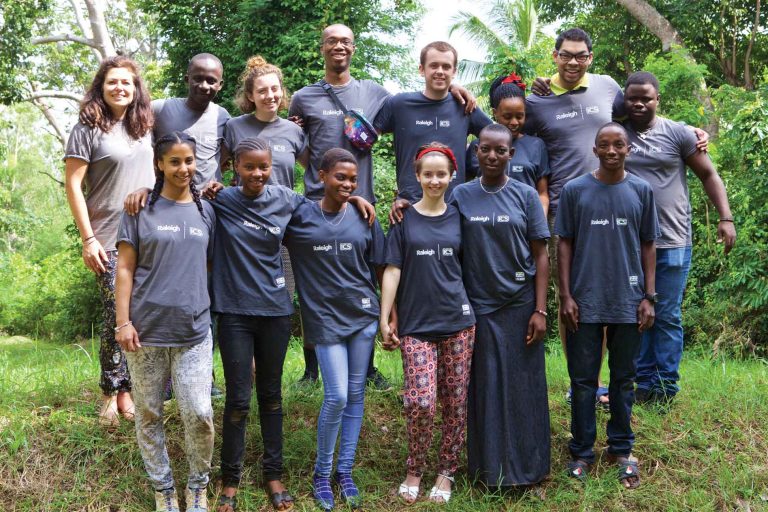
An important element of the ICS project is that it works by linking UK volunteers with in-country volunteers to ensure community integration and the sustainability of each project. On arrival at ‘Field Base’ in Tanzania, our group of Team Leaders (from both the UK and Tanzania) were immediately immersed in a training program to provide us with the skills we would need to lead a team of young people to deliver our programme objectives in remote locations. I was ‘matched’ with Novatus, a brewery manager from Kilimanjaro, who became my lifeline to living in the community, my Swahili translator and good friend. United, we would lead a group of 12 multicultural volunteers, living in home-stays and working together for three months in a remote village location.

Our Team, Echo 2, was one of five entrepreneur projects based in the Njombe Region in the southern highlands of Tanzania. Home of the Bena people and dominated by agriculture, it is the coldest region in the country. The landscape was interwoven with fields of maize and tree plantations, with wide vistas over hills seeming to roll endlessly into the horizon. Most villagers lived in homes without electricity, no running water, an outside toilet and washroom. All water was collected from a well or rainfall, and cooking took place on open fires. The average income for a family is below £2 a week.

Our project was dedicated to helping the community of Nyombo Village to increase their livelihoods. Working in partnership to provide education and skills, we targeted equal numbers of women and men aged 18-35. Our 12-week Entrepreneur Programme was delivered daily by our team of volunteers, and included sessions on subjects from business generation to pitching for funding. We also reached out to the wider community through a nutrition programme and Action Days, including the celebration of International Women’s Day and Mother Earth Day. We also helped to promote gender equality and raise awareness of global issues within the village, as well as planting trees and improving sanitation facilities. We regularly attended the local primary school, increasing awareness of the UN Sustainable Development ‘Global Goals’ and teaching lessons including English, hygiene and equality.

I am proud to share our achievements from our small village, which exceeded our targets:

• 40 people attended educational sessions.

 20 young people in our village were awarded certificates for completing the Entrepreneur Training.

• 10 entrepreneurs pitched for funding and 7 individuals successfully secured loans to start up their aspiring businesses.

• Increased awareness of the benefits of good nutrition and hygiene.

• We championed youth development, helping the next generation of young people in Nyombo to become pioneers and leaders.

Each of the volunteers in our team, made up of people aged 18-22 from different regions of both the UK and Tanzania, lived together with host families and immersed themselves in the village culture. They took turns as weekly leaders, delivering sessions and planning projects. The ethos of the ICS Programme gives volunteers the opportunity for personal development, providing a stepping-stone to future careers and a chance to make your world a better place. The experience helped build independence, confidence, resilience, language skills plus cultural and global understanding.

It was tough eating beans and rice every day, washing clothes by hand, and living without power and technology, but it was a privilege to be part of improving the community we lived in, and to see individuals inspired to change their own lives. As the proverb states – Give a man a fish, and you feed him for a day. Teach a man to fish, and you feed him for a lifetime.

Is it possible to be creative in your day job?

0

As you get older, there are a lot of questions you need to ask yourself about what you do for a living. Is it legal? Can it support a family? Will you eventually be replaced by a sentient robot, euthanised and your body recycled into the protein-rich slurry that feeds a ruling class of shapeshifting lizards? Keep asking these (sensible) questions and eventually some of you will get down to asking whether your job does enough to satisfy your creative urges. This is a tough one, because if this matters to you and you’ve chosen to remain in Jersey then your chances of finding employment as a conceptual artist or silent film director are somewhat limited. If you want to get paid to be creative, you’ll probably need to be very creative about what that idea means to you.

Your appointment with the crusher of dreams

Of all the teachers I helped hasten towards early retirement I often feel most sorry for the one in charge of careers advice. A good teacher is a wise, thoughtful individual who spends decades fine-tuning a sense of the likely paths that a child might take through life, and ideally guiding them along the ones that will best lead to happiness. The careers advisor meets precocious oddities who dream of making movies and singing songs and must gently suggest that if they want to remain in the island of their birth they should expect to fund these activities with a working life doing something dull behind a desk. Many of these children go off to university, obtain an unusual haircut and never come back, many more return home and bury their creative dreams deep down in the inbox of life, or ferment them into the reservoir of misanthropy I possess instead of a personality. Each year the careers advisor must preside over a funeral of creative dreams, his soul gradually hardening like the leather patches on the elbows of his cardigan.

That’s what it is, for most creative people. A dream. The reality is that unless you’re super talented, very lucky, or just rich, you’ll end up being grateful that you even have the opportunity to be creative in your spare time. Working an office job may not be as fulfilling as conducting an orchestra, but unlike a Chinese factory worker you are paid enough to afford violin lessons on the weekend. Unlike the Sudanese farmer who dreams of writing poetry you have time to write poetry at night, and militias won’t attack your cattle if it doesn’t rhyme. This is a reward of sorts, but also a social pressure valve in a capitalist economy – to prevent thousands of frustrated watercolour painters from rising up like bolsheviks, killing their bosses and remaking our society in the image of a sunlit vase of daffodils.

According to this perspective, your day job is a means to an end and the deal is that you should abandon all creative thoughts the minute you clock on. The problem with this arrangement is that the creative spirit is like a sleeping bag – impossible to put away properly once unwrapped, and often covered in mysterious stains. Sooner or later creativity is going to leak out, even at the dullest job – like suppressed flatulence at a church funeral.

So why not bring your creativity to the workplace?

Suggesting that you “bring creativity to the workplace” is the kind of offer made in a group email from middle management, usually limited to the options of decorating your work area with inoffensive personal kitsch or dressing up in cheesy #banter costume one day a month to raise money for charity. Unfortunately for the productivity slavedrivers who dream up these initiatives, doing spreadsheets whilst wearing a cowboy hat isn’t creative, and will only raise employee morale if your workforce is entirely made up of cretins who spend their evenings reposting Minion memes on Facebook. In fact the only thing less creative than employer-sanctioned wackiness is swanning around like you’re Steve Jobs or Philippe Starck because you work vaguely in the media, have an iMac on your desk or shoehorned the word “creative” into your job title. Writing a hot take on Boaty McBoatface does not make you Charlie Brooker, and you are not Don Draper just because you sold the client a desaturated stock image of some bubbles with their logo on it. I’m writing this on an iMac right now, and I can assure you that my creative fire is currently colder than Donald Trump’s welcome in Tijuana.

Most creative people are terrible at deadlines, easily distracted and prone to thinking about things in illogical and even nonsensical ways. Unless your boss is a super manager with the ability to harness them, these qualities basically have to be suppressed to make a productive employee, rather than championed as a source of marginally more entertaining PowerPoint slides. Therefore, it is highly likely that the creatively frustrated employee will come to perceive their working life in the form of a drawn-out guerrilla conflict against the forces of order and productivity. Their only weapons will be periods of daydreaming and small acts of rebellion, their only victories a piece of art made out of photocopier paper and Post-It notes, or a comedy wang drawn in marker on the toilet walls. 

Every act of creation is first of all an act of destruction – Pablo Picasso

This petty war against an enemy who doesn’t even know you exist can be disheartening, and occasionally self-destructive, but if you’re creatively inclined it might be the only thing that keeps you sane in the kind of society we live in. The reality of your struggle to express the sublime mysteries of the universe (via obscene doodles) will serve as a constant reminder that there are different ways of looking at ideas like success and fulfilment, and that living a good life will involve constantly reassessing what it is to reach a compromise with the systems we live inside. You might come to realise that your personal compromise means being creative in your spare time, aside from the odd bit of creativity left as a furtive present for polite society or your employer – like when your cat leaves you half a mangled thrush, or a pile of furry sick. You might reject the idea of subtlety and proudly court a disciplinary hearing by decorating your desk with naked etchings of Sir Bruce Forsyth, wearing a gimp mask on “crazy hats Friday!” and illustrating presentations on quarterly earnings with slides from The Human Centipede. Unlike me, you might be creative enough to recognise this trap before you fall in it, ignore the careers advisor and follow your dreams of becoming a post-modernist circus clown. Even if you don’t follow that dream, never lose sight of the scary, unpredictable clown you have inside of you. That’s advice you can live by whether you’re creative or not.

Nedbank’s charity given is up..

0

The staff at Nedbank Private Wealth and Nedgroup Trust (Nedbank Private Wealth’s trust division in Jersey and Guernsey) are proud to announce that £13,752.32 was raised across its offices over the past year for six staff-nominated charities. This amount is an impressive 23% increase on the sum raised the previous year and demonstrates the tremendous effort all the staff have put into fundraising, through social events, raffles and cake sales.


Janet Taylor, the chair of the companies’ charity committee, said: “We are delighted that our staff raised such a staggering amount and, once again, the company has kindly agreed to match the funds, pound for pound, allowing us an additional £13,752.32 to be allocated for charity initiatives throughout this year.  The first payment we made was to add £7,504 to the amount staff raised so we could donate a total of £21,256.96 to our six chosen charities.”


The six staff-nominated charities were AGE Isle of Man, CLIC Sargent Cancer Care for Children (Jersey), Diabetes Jersey, Guernsey Alzheimer’s Association, Hospice IOM and Send a Cow. While the first five charities do an outstanding job of supporting the local communities in Jersey, the Isle of Man and Guernsey, the latter charity provides African families with livestock and training in natural organic farming practices.


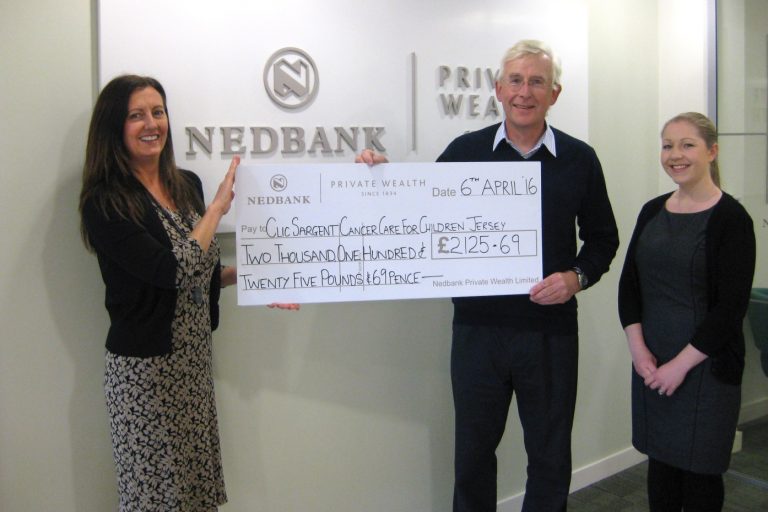
Sam Kemp and Kirsty Ogilvy from Nedbank Private Wealth presented Simon Bossey from Clic Sargent Cancer Care with the cheque on behalf of all the staff.

IOD Jersey Winners: The Dirty Dozen 2016

0


Twelve individuals in Jersey spanning the public, private and voluntary sectors were recognised for their outstanding achievements and leadership qualities as winners at a black tie awards event on Friday last week.

For just the second time in their seven-year history, the awards included a Lifetime Achievement Award which was presented to former chief executive of the Channel Television Group, former Chairman of Jersey Telecom, founder member of Jersey Finance and former Chairman of the Tourism Shadow Board John Henwood MBE. Accepting the award, he gave an inspiring talk calling on all Jersey organisations to focus on high quality leadership. Colin Powell is the only other recipient of an IoD Jersey Lifetime Achievement Award, presented with the accolade in 2013.

There were also awards for leaders of small, medium and large organisations as well as in the public and third sector, and awards to recognise academic achievement through the Chartered Director programme. The student winner of the IoD Work Shadowing Programme 2015 was also presented with an award. The full list of winners is:

Lifetime Achievement Award:
John Henwood MBE

Small Organisation Director of the Year:
Alex Morel, ALX Training

Medium Organisation Director of the Year:
Glenda Rivoallan, Healthhaus

Large Organisation Director of the Year:
Doug Bannister, Ports of Jersey

Young Director of the Year:
Richard Summerfield, JT Group

Public/Third Sector Director of the Year:
Lesley Harrison, Prison! Me! No Way!!!

‘Global Director of the Year:
Eamon Fenlon, Jersey Dairy

IoD Work Shadowing Programme Student Award:
Amy Vatcher

Chartered Director Awards:
Darragh McDermott, JT Group (Chartered Director Award 2015);
Mary Curtis, Calmera Consultancy (Chartered Director Award 2016)

The event was once again hosted by guest speaker, renowned writer, broadcaster, former MP, Government Whip and Jersey expert Gyles Brandreth. The judging panel for the Awards was chaired by Chris Clark, CEO, Prosperity 24.7 and also included Colin Macleod, CEO, Co-Op, Claire Boscq-Scott, CEO, The Busy Queen Bee, Dr Andrew Mitchell, Consultant Cardiologist, and Nigel Le Quesne, Group Chairman & CEO, JTC Group.

A total of 21 different senior professionals and directors had initially been shortlisted across all categories for the Awards, which are designed to celebrate the achievements of individuals and recognise excellence in the business community.

Michael Cushing, Jersey Managing Partner, Appleby, said: “Appleby has been a supporter of these awards since their inception in 2010. This year demonstrated once again that not only are there some exceptionally strong leaders in Jersey but also that the island benefits from genuine depth in top quality management. All of the finalists and ultimate winners this year are extremely talented individuals who have shown a commitment to success through determination and innovation, qualities that will be vital as Jersey continues to assert itself as a leading business centre internationally and also a fantastic place to live.”

Wendy Dorman, Chair, IoD Jersey, added: “Once again we had a fantastic turnout for our annual awards, emphasising that there is a real desire in Jersey to recognise inspirational leaders and celebrate their success. It was particularly pleasing to see such a broad cross-section of Jersey’s business, public and voluntary landscape recognised this year, whilst I am delighted that in John Henwood we have been able to recognise a remarkable individual who has helped shape Jersey life in so many ways. I would like to congratulate all the winners and those who were shortlisted, and thank our generous sponsors Appleby, Investec and PBS Media for helping to make this event such a success yet again.”

Here’s who they were up against….


DIRECTOR OF THE YEAR FOR A SMALL ORGANISATION
James Filleul, Bailiwick Publishing
Vicky Milner, Callington Chambers
Alex Morel, ALX Training

DIRECTOR OF THE YEAR FOR A MEDIUM ORGANISATION
Louise Bracken-Smith, Fairway Group
Glenda Rivoallan, Healthhaus
Phil Ruelle, Greenlight
Jon Trigg, Moore Management

DIRECTOR OF THE YEAR FOR A LARGE ORGANISATION
Doug Bannister, Ports of Jersey
Niall McClure, G4S Secure Solutions
Rob Leader, C5 Alliance Group
David Padfield, Jersey Electricity

YOUNG DIRECTOR OF THE YEAR
Richard Beaugie, JT Global
Christopher Marshall, Langham Hall
Richard Summerfield, JT Group

PUBLIC/THIRD SECTOR DIRECTOR OF THE YEAR
Brian Curtis, Community Savings
Lesley Harrison, Prison! Me! No Way!!!
Richard Rolfe, National Coding
Nicholas Winsor, Autism Jersey

GLOBAL DIRECTOR OF THE YEAR
Eamon Fenlon, Jersey Dairy
Neil Howlett, PwC
Andrew Scott-Miller, Race Nation

CUBA: A country on the Cusp

0

It was repeated to us many times before we went, “you’d better go soon before it changes.” Once we’d spent a few days navigating the humid streets of old Havana we knew we’d be repeating it like a mantra when we got back.
Obama had arrived just days before, he opened hearts and minds with his common touch and flew home leaving a vacuum of expectation. President Raoul Castro had spent the last eight years loosening the reins on his brother’s legacy, but barely had Airforce One lifted, when Fidel blasted the visit “We don’t need the empire to give us anything.” And so it goes…

Cuba is a land of contrasts. Caught between the storm laden Caribbean Sea and the cooler Atlantic Ocean. It has two seasons wet and dry. It feels like a film set full of facades. Beautiful buildings of colonial architecture accented against a backdrop of crumbling communistic concrete. A country caught in aspic.

With a poor economy quietly focused on tourism any remnant of the past is articulated to create attention. Images of the revolution, Korda’s Che, Fidel and their guerilla colleagues are to be found everywhere.

Hemingway’s haunts, from the bodegas and bars he sought refuge in as he hid from the world, their walls cluttered with black and white photos, their exteriors covered in graffiti, still peddle rum based cocktails that vary in authenticity.

The Cuba we all recognise is crumbling in so many ways. But their proud sense of stoicism and ingenuity is most evident in the masses of American automobiles that cruise along the freeways.
Beautifully preserved specimens or lumpy hand painted hulks, spewing clouds from oversized exhausts, their sheer existence is a marvel. With a lack of free trade they have re-engineered these coveted possessions to keep themselves and the economy moving and to lay claim to the odd tourist taxi ride.

An American alphabet of classic cars, the Chevys, Buicks, Fords, Pontiacs and Cadillacs that were on the streets in the winter of ’59 were never replaced with newer models, and the Cubans have had no choice but to keep the old cars running.

Then just as we had acclimatised to the heat, negotiated the currency, accepted the poor food, the music pouring out of everywhere, the friendly people, the mojito’s and daiquiris, the surprising lack of cigar smoking locals, the Stones arrived. All the better for being unplanned and unexpected it became a brilliant concert experience.

Along with 500,000 others we wandered through the hot night air into an old baseball stadium. Huge pristine screens scattered through the Ciudad Deportiva de la Habana illuminating the crowd. Ronnie and Keith struck the opening bars of “Jumping Jack Flash”, big smiles on dark faces, the noise rose and Mick with the opening line “Watch it. I was born in a crossfire hurricane”, strutted himself into the hearts of Cubans.

It was historic, symbolic and free. Cuba loved the Stones.

Obama and the Stones laid a calling card of hope, it will be interesting to see how quickly it gets picked up. There is no doubt that as the world turns Cuba will choose to reconnect on its own terms but the change is inevitable. Ask any Cuban. They are fiercely proud of their revolution and the part it played in the world’s history but the borderless Internet gives glimpses of endless opportunities and goods for their empty shops.

The beaches are clean, the waters warm and pelicans, those odd prehistoric survivors, skim along the waves, wheel up, fold themselves and dive into the surf oblivious to tourists. It’s lovely.

So, if you are thinking of going… You’d better go soon before it changes.

Tomorrow’s Technology Today

0

Forget 4K televisions and the latest iPhone, because the hottest technological sensation for 2016 is the launch of consumer-grade virtual reality goggles. Although you might remember being promised a similar revolution in the 1990s, then again in the mid 2000s, and then again about 18 months ago, virtual reality is really here this time.

Or at least VR is virtually here, as you’re going to need to carry out some preparation if you want to transform your living room into the holodeck from Star Trek: The Next Generation. In the interests of research, I’ve been living in the matrix for the last couple of months to discover what this bold new world means for the average non-cyborg. I’ve now returned to meatspace and changed into a clean pair of underpants to write this exclusive guide for you, a fully-interactive tour of the most exciting technology since 3DTV. If you are reading this via Gallery’s augmented reality experience (which the editor tells me will have launched by the time this issue is in print), then now is the time to put the electrodes in your mouth and increase the voltage to your crotch socket. Digitise … NOW >1101010100010000100111111

What is virtual reality? 
Virtual reality, or VR for short, is a way of replacing boring normal reality with a limitless world entirely simulated by technology. Once you invest at least £500, configure and strap on a giant bulky helmet, some headphones and a controller of some sort you will be plunged into a digitally-rendered alternate reality where you are free to go anywhere, see anything and even interact with things by poking them with a kind of floppy virtual hand. You’ll be able to use VR to consume media, have new experiences without leaving your couch, and also to watch hours of disorienting pornography whilst giving yourself a cluster headache. Imagine Ceefax, but better. The world will never be the same again.

That sounds like a video game. Is it like Wii Sports?
In the sense that VR will require you to remove breakable objects and children from your living room, yes. Unlike Wii Sports, VR will fully immerse you in the simulated HD golf-course environment, filling your view with artificial grass and oddly-repetitive water features wherever you turn your gaze. Like Wii Sports, anybody watching you will laugh at your stupid facial expressions, flailing limbs and inability to swing a virtual 9-iron without smacking yourself in the face. The main difference is that the illusion offered by today’s VR makes use of dramatically more powerful technology, so the thrilling realism of Wii Sports has been extended to simulate sitting in a spaceship, floating jerkily up a mountain or being one of those soldiers who flies drone strikes against goat farmers in Afghanistan.

I’m not interested in video games. Does it do anything else?
What doesn’t it do? It places you inside another world, like a View-Master, or like Knightmare but without being ordered around by a bunch of teenage nerds. Imagine watching Batman vs Superman from inside a crumbling skyscraper, being sat on top of a dragon in Game of Thrones, or staring into Sue Perkins’ hungry mouth from the perceptive of a slice of Victoria Sponge. The possibilities are limitless, at least until you start talking about other, less-important, senses, like taste, touch and smell. VR isn’t there yet, although anticipation for VR technology is so high that it can only be a matter of time before digital nose implants, tongue bluetooth and simulated fondle gloves reach the market.

VR may even transcend entertainment to become the future of the workplace. There is no point travelling to a physical office when you can jack in to a realistic virtual representation of an office, complete with simulated motivational posters and an artificial intelligence that provides regular performance reviews and flaccid workplace banter. You won’t need higher wages, because you’ll be content to live in a poxy cupboard as long as it has room for your VR helmet and a fridge full of Slimfast shakes.

Okay, I’m curious. What do I need to have virtual reality in my home? What do the different brands mean?
At the moment, there are three high-end manufacturers of VR helmets: the Facebook-backed Oculus Rift, the HTC Vive, and Sony’s Playstation VR. The aims of each corporation are expected to influence the user experience, and will subtly skew the type of reality that is simulated. For example, Facebook will use Oculus Rift to steal your personal information and immerse you in a virtual world of baby pictures and racist urban legends, whereas Playstation VR will cost less but will be more skewed towards games and therefore less likely to offer the experience of Springwatch from the perspective of a mistle thrush.  The Vive is marketed mainly at wealthy video-game obsessives, so it costs more but has far more realistic explosions.

The key thing to understand is that you’re going to need some sort of powerful computery box room to stretch out a great number of wires, and a lack of sharp objects in flailing range in your soon-to-be outdated physical reality. Also, despite the temptation to live the boring real world behind, you’re somehow going to need to maintain enough contact with genuine humans that somebody is willing to come and untangle you if you get too excited by a holographic simulation of Dancing on Ice and fall over.

I can’t afford all that. Is there a cheaper option, like those low-end smartphones that send all my credit card details to China?
Yes. For people who don’t necessarily have the budget to fill their house with high technology and fancy cables, there are also Samsung Gear and Google Cardboard, which offer a less-powerful VR experience simply by strapping your existing smartphone directly in front of your eyeballs and blocking out tedious distractions like children and traffic lights. Although this offers less realism than the high-end competitors, it does present a more realistic bridge between traditional and virtual reality by giving families a more immersive way to ignore each other whilst staring directly at Clash of Clans.

It’s a (Micro) wonderful World

0

Angels dancing on the head of a pin, a painting on a single hair, the Taj Mahal carved from a grain of rice. These aren’t things that have been surgically removed from Lady Gaga, but are some of the peculiar attractions that found a home in Jersey in the 1980s. Each of these minute works of art formed part of Micro World, an exhibition produced by the Spanish artist Manuel Ussa and first displayed to eye-watering effect at Fort Regent.
The launch of the attraction saw queues as far as Bonaparte’s, although this is less impressive when you remember that each diminutive exhibit could only be viewed at any one time by a single person, with the aid of a microscope, and even back then very few of our tourists were able to boast 20/20 vision. Micro World was unusual enough to be a modest success, but sooner or later the Fort needed the space to install more slot machines and like many retired things the miniature masterpieces found themselves unceremoniously dumped in the western parishes, installed at The Chateau in St Ouen’s Bay. Since the demolition of The Chateau nobody quite knows where they ended up, but Bergerac is unlikely to take up the case due to the fact that the entire collection could quite easily have been burgled by a miscreant with moderately deep pockets. Like a shrunken version of the Fantastic Tropical Gardens, Micro World will live on in a series of anecdotes guaranteed to either bore or weird out people under thirty – but in a strange way the rise and fall of this small yet perfectly formed attraction might offer a warning about the possible fate of our tourist industry as a whole.

SMALL, DELICATE AND BEAUTIFUL: THE RONNIE CORBETT OF HOLIDAY DESTINATIONS
One of the odder aspects of package tourism in Jersey was that the presence of a captive audience means that people were willing to chance some unpredictable ideas in order to attract floating visitors who still had pound notes to burn and who’d already done the Fort funfair and Jersey Zoo. Young readers might struggle to believe this but at one point we had so much holidaymaker cash flowing into the tills that Jersey could support multiple leisure centres, three or four games arcades and nightclubs in places where there aren’t even streetlights today. Supplementing these more conventional pleasures we then had places like the Micro World, the Shell Garden and the Butterfly Farm, where a giant moth once landed on my grandmother’s blue rinse and took a dump that glowed a radioactive green and must have represented easily 70% of its body weight. Gran was fine, although she has since lived entirely on daffodils and has a habit of repeatedly banging her head against the bathroom window any time the moon is out. 
If tourism was Jersey’s beating heart, then its body was kept alive through the slow circulation of its lifeblood: an endless, throbbing procession of pensioner coach parties, hire cars and the occasional German on a bicycle. Think of them as red and white blood cells, suspended in a plasma comprised of Mary Anne bitter and liquid scampi, carried to the vital organs of the tourist body. I think this metaphor means that Fort Regent was the brain, the Fantastic Tropical Gardens were the pancreas and small attractions like Micro World might have been some kind of appendix or a gallbladder – nice to have but ultimately the body limps on if they are removed and dumped in St Ouen. 

MICRO WORLD WRESTLING FEDERATION
Well, that is what we probably thought at the time. What has since become clear is that strange little curios like Micro World were part of the package that made a place like Jersey unique. Even before the aviation industry decided to slash long-haul prices in order to hasten humanity’s total extinction through climate change, Jersey was never going to be able to compete with destinations like Florida or Las Vegas. We were always a smaller, cleaner Blackpool, a sandy miniature of the larger British isles, perfectly preserved like a ship in a bottle. We offered shows, seafood restaurants and beaches, but also a destination where you never had to ride on a coach for too long to reach another odd, endearing little attraction. Although no visitor was likely to prioritise a repeat visit to get pooped on by a butterfly, or revisit a painting on the head of an ant, attractions like Micro World helped our economy because so many of our tourists would try them at least once – like Indian food, lawn bowls, or swinging. They should be seen as an important part of our history, and it is sad that so little evidence exists of locations like the witchcraft museum above the Relais De Mielle, the Shire Horse Farm, or Wee Jimmy Krankie’s Kinky Dungeon.

DOES JERSEY NEED A NEW MICRO WORLD? 
Joking aside, the answer to that is probably a no. Our main tourist priority is a ferry that works, but beyond that we are unlikely to tempt back visitors by offering an artistic rendering of Kim Kardashian on a bee’s tongue. What we do need to remember is that visitors continue to choose Jersey because we offer a unique scale, a small destination with surprises tucked away in unexpected spots. These don’t have to be weird museums or giant plastic dinosaurs, but can just be restaurants, boutique hotels and the many pleasures of our natural environment. In their own way, the tiny harbours that dot our coastline, the quirky buildings and tiny streets, are as unique as a diorama painstakingly etched into the eye of a needle. They also have the advantage that you don’t have to queue for 15 minutes behind a party from Bolton in order to look at them. Nonetheless, there is a danger that these subtle charms will be crowded out by the gradual expansion of UK chain restaurants and generic building projects, or suffocated under mounds of litter and sea lettuce. We should remember places like Micro World fondly, but also consider that if we aren’t careful their fate may ultimately await us all – dumped in the countryside, gathering dust and eventually bulldozed for another luxury house. Rest in peace, Micro World – you were easily the fifth best thing to do if it was too wet to play miniature golf and Belle Vue was full of teenagers.