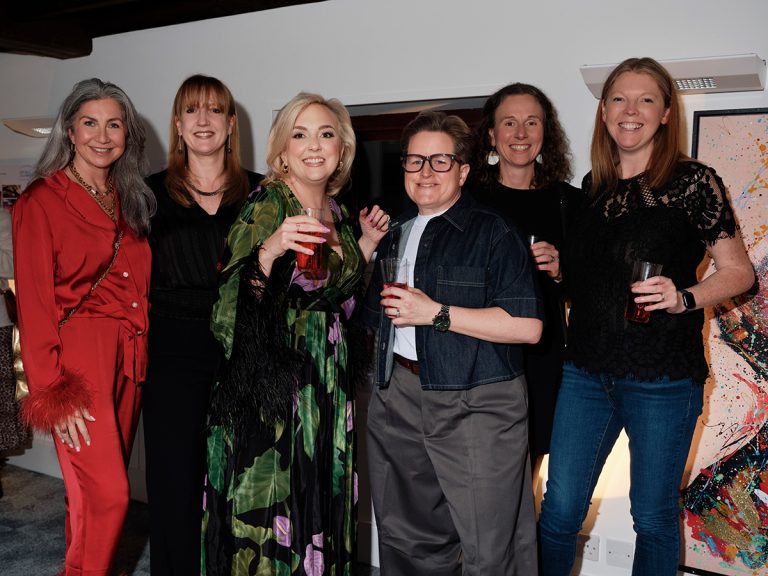
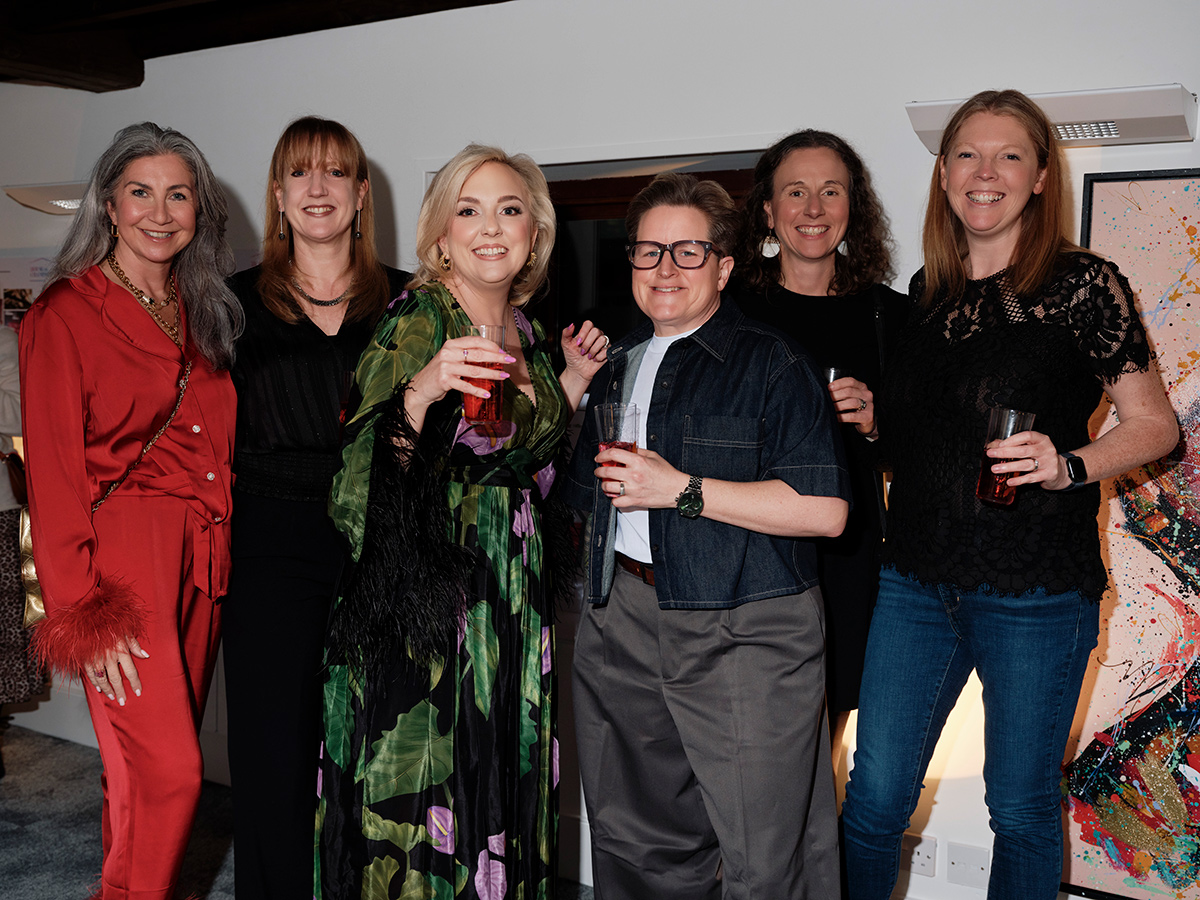
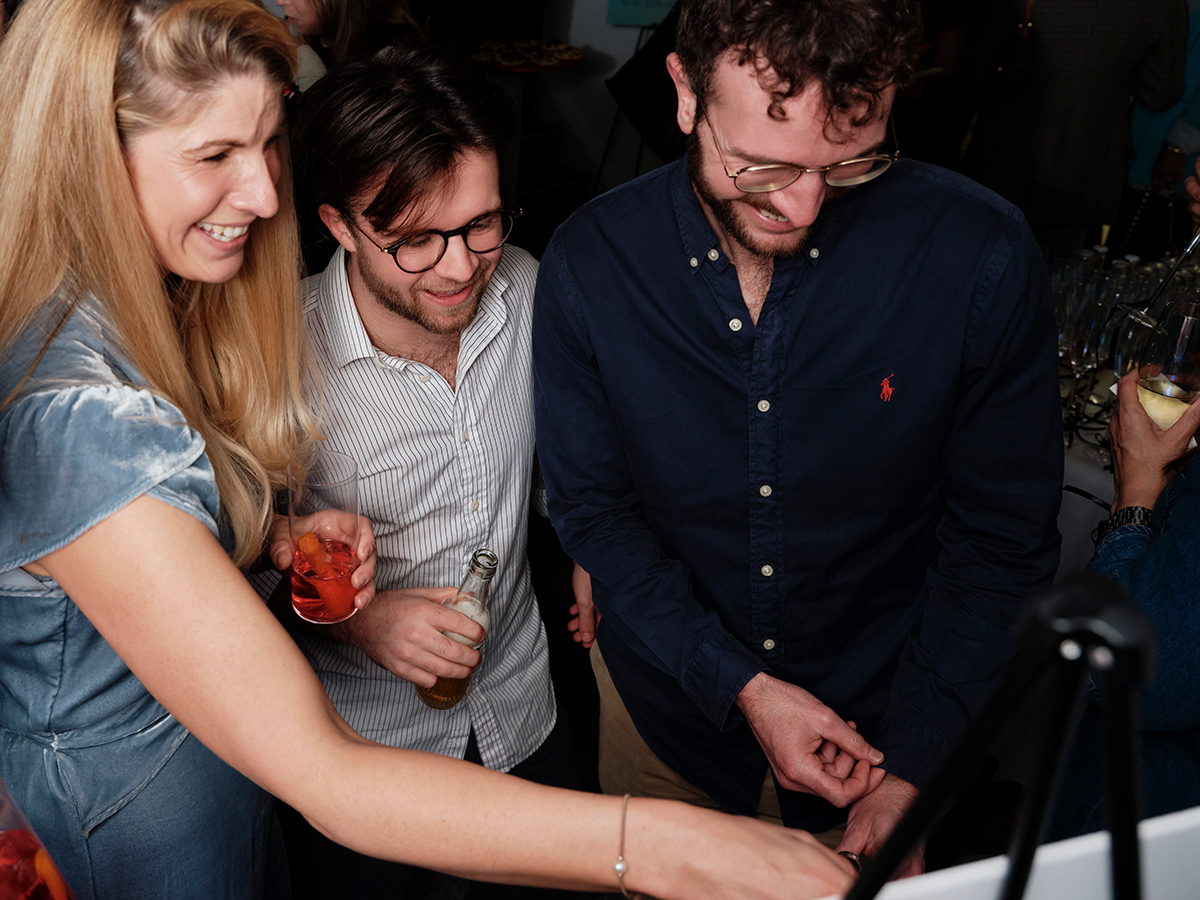
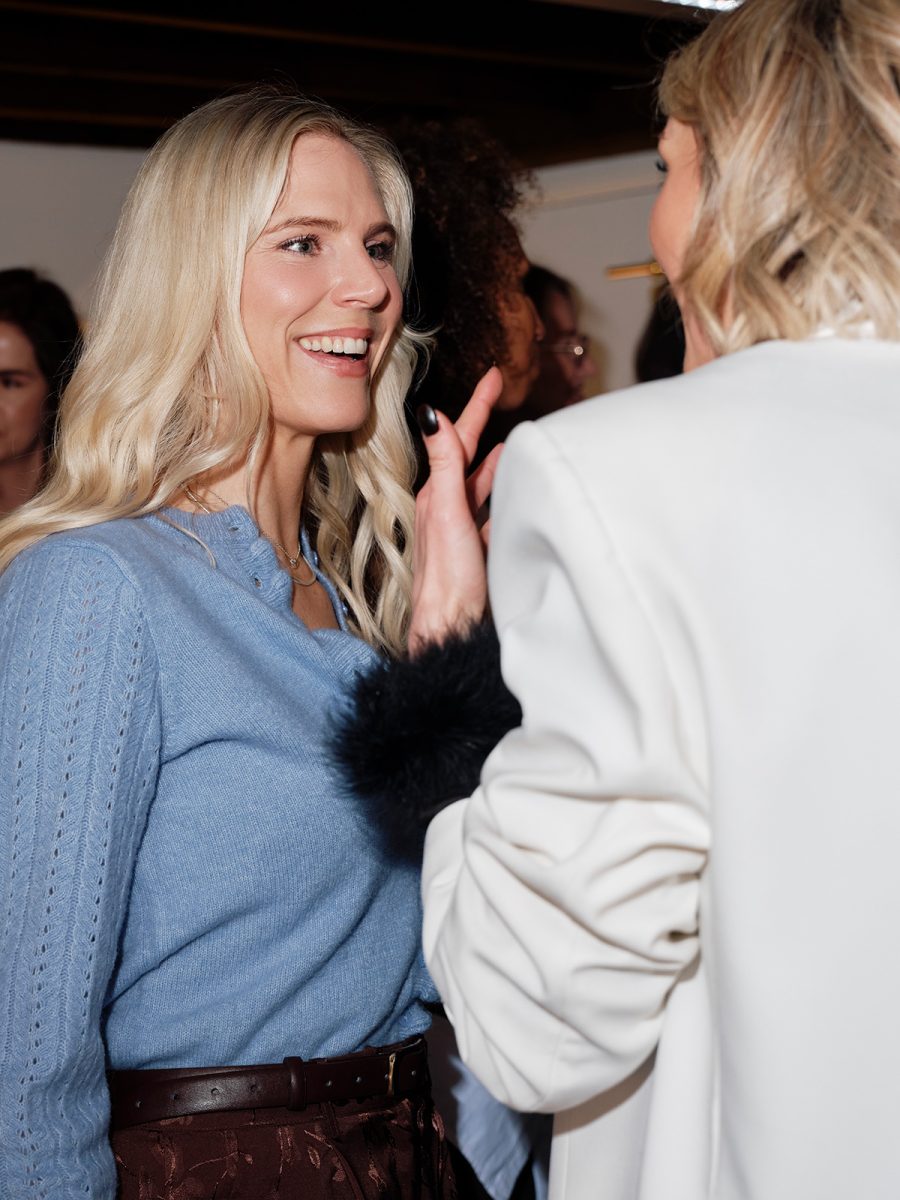
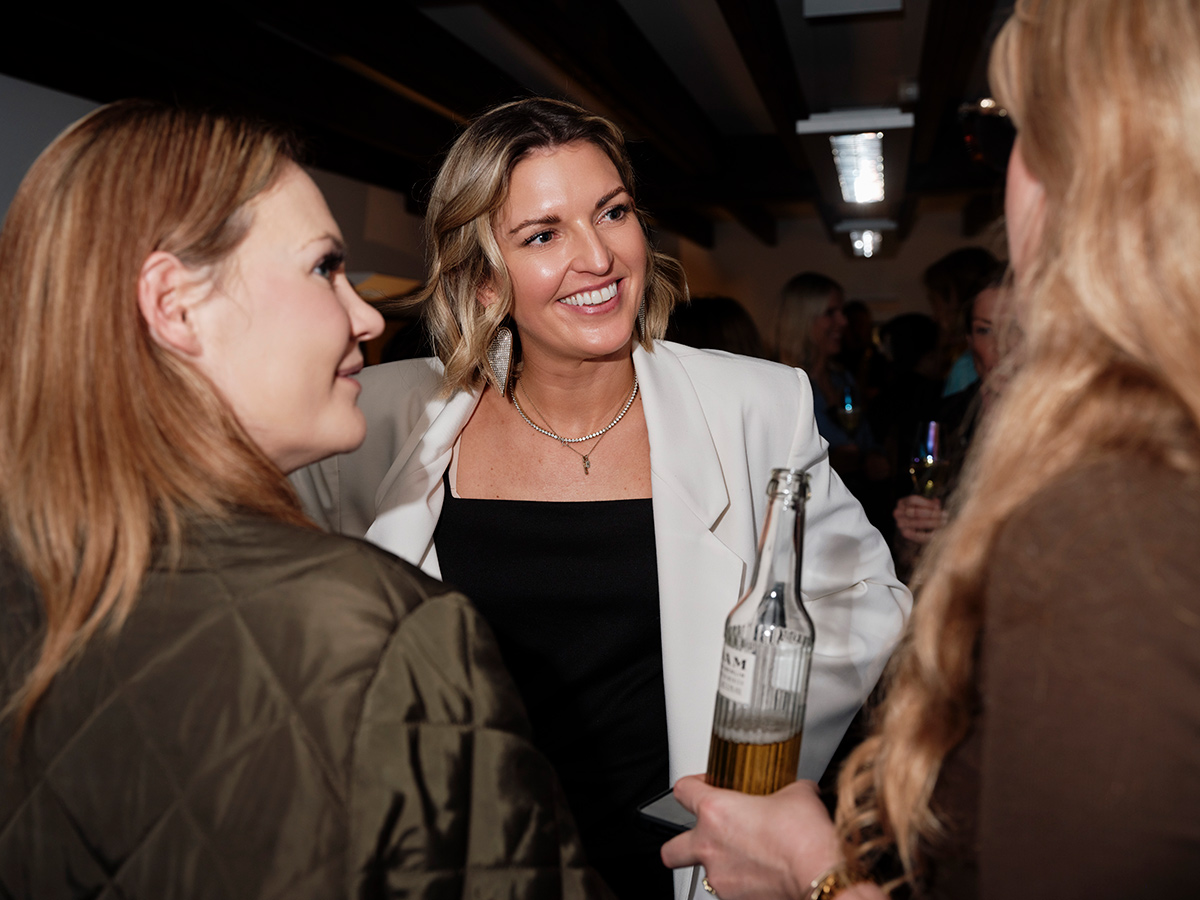
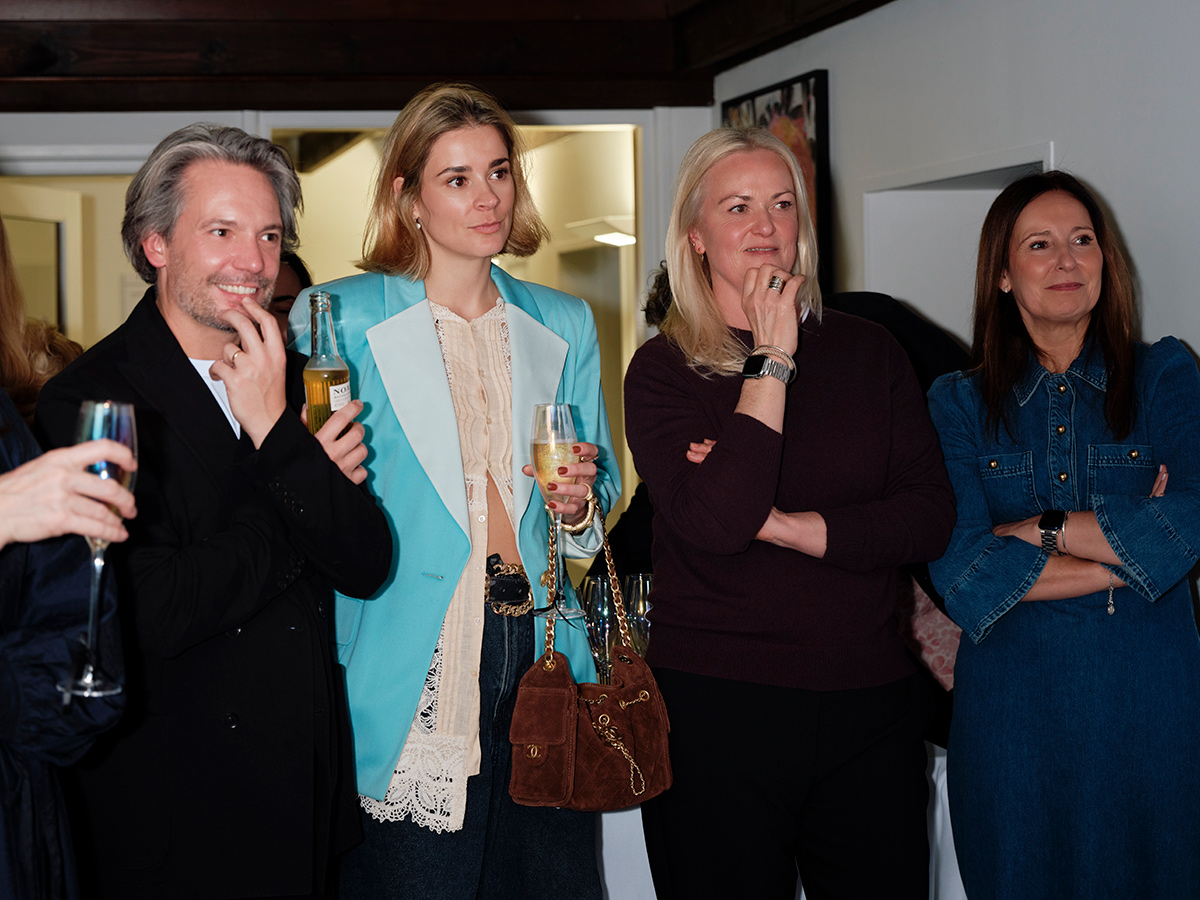
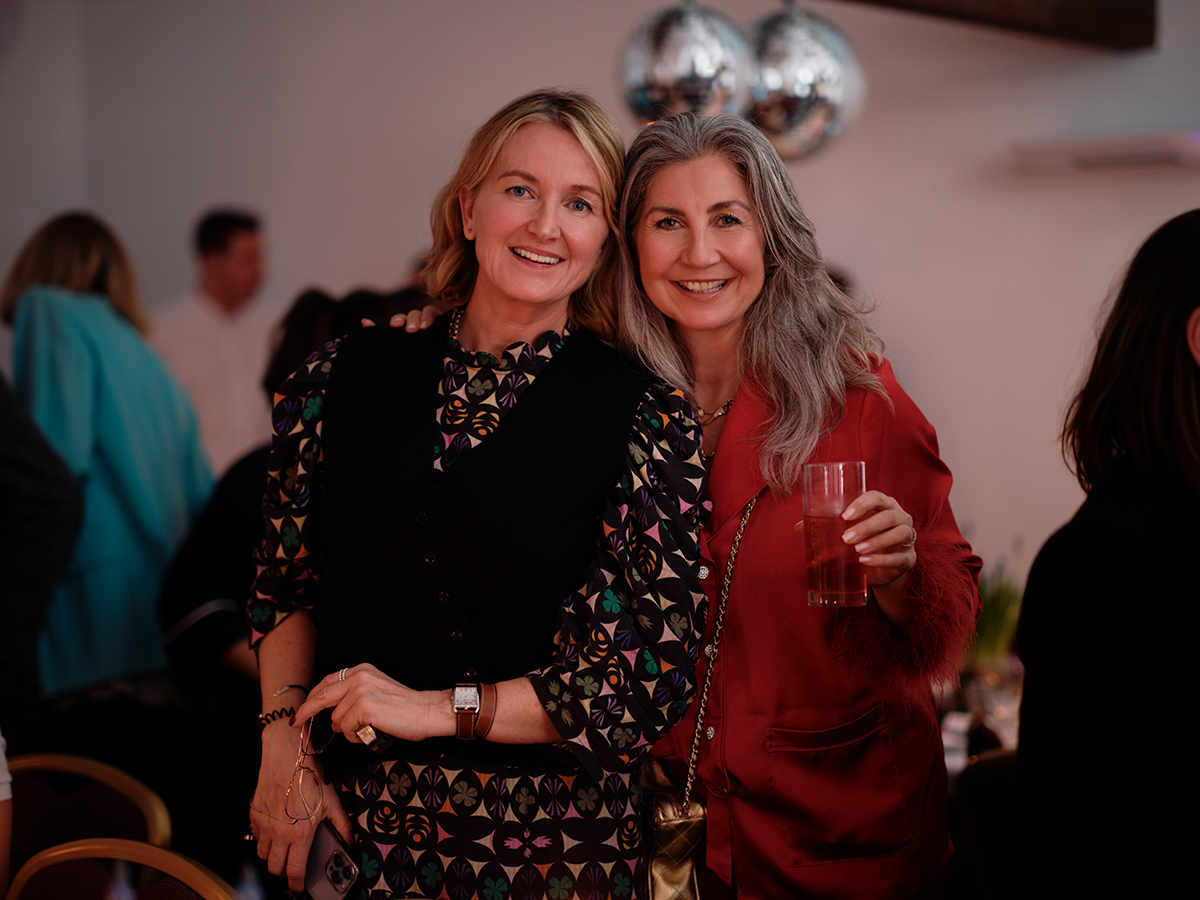
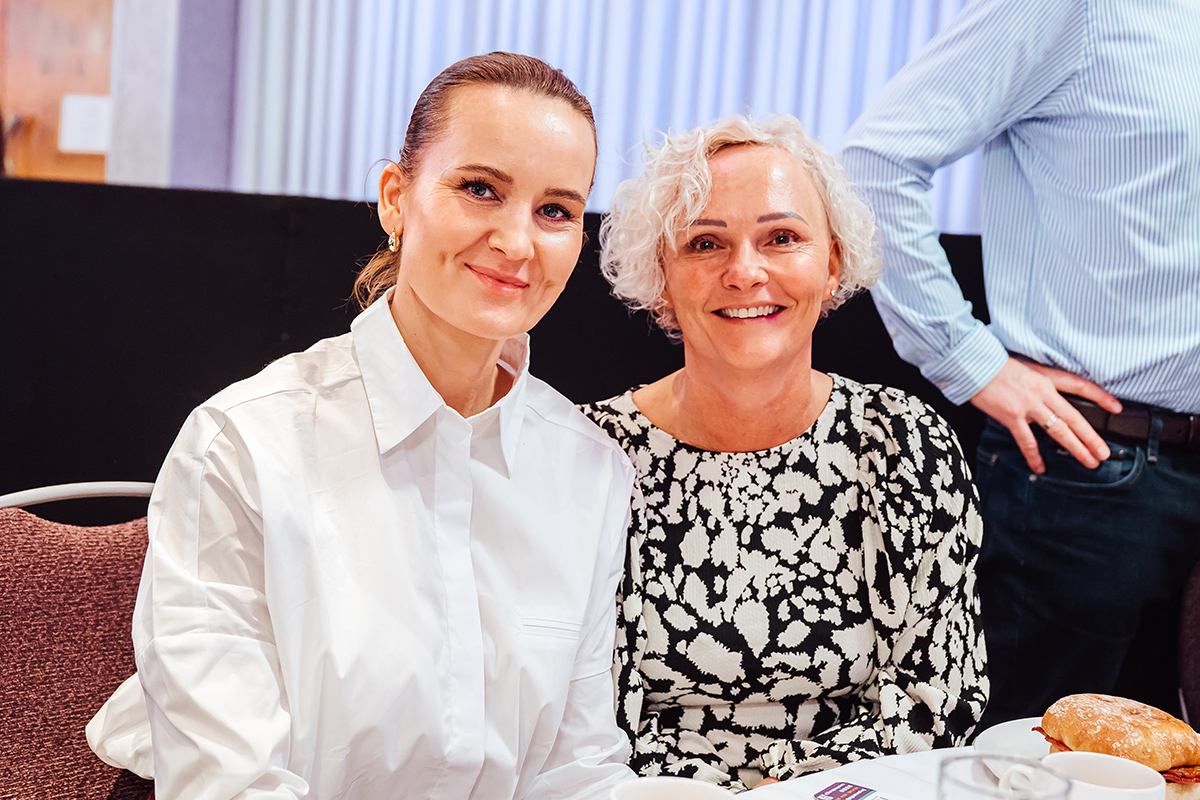
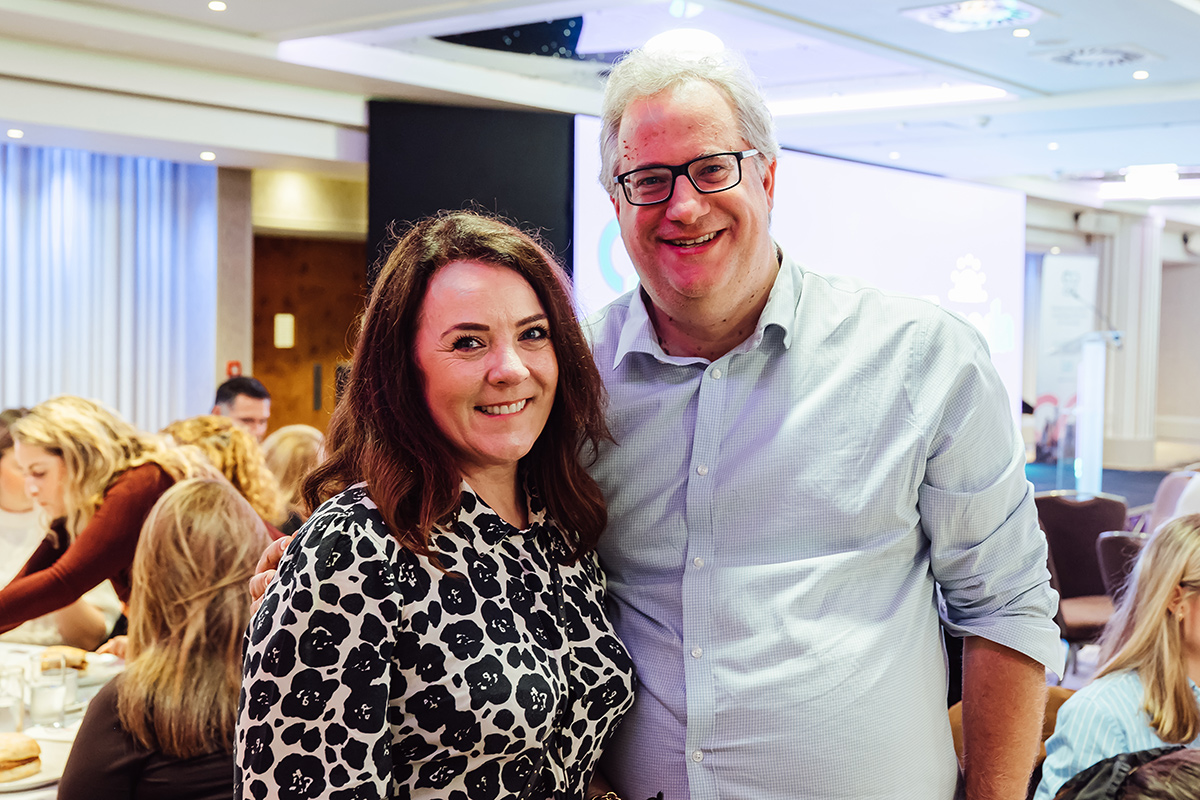
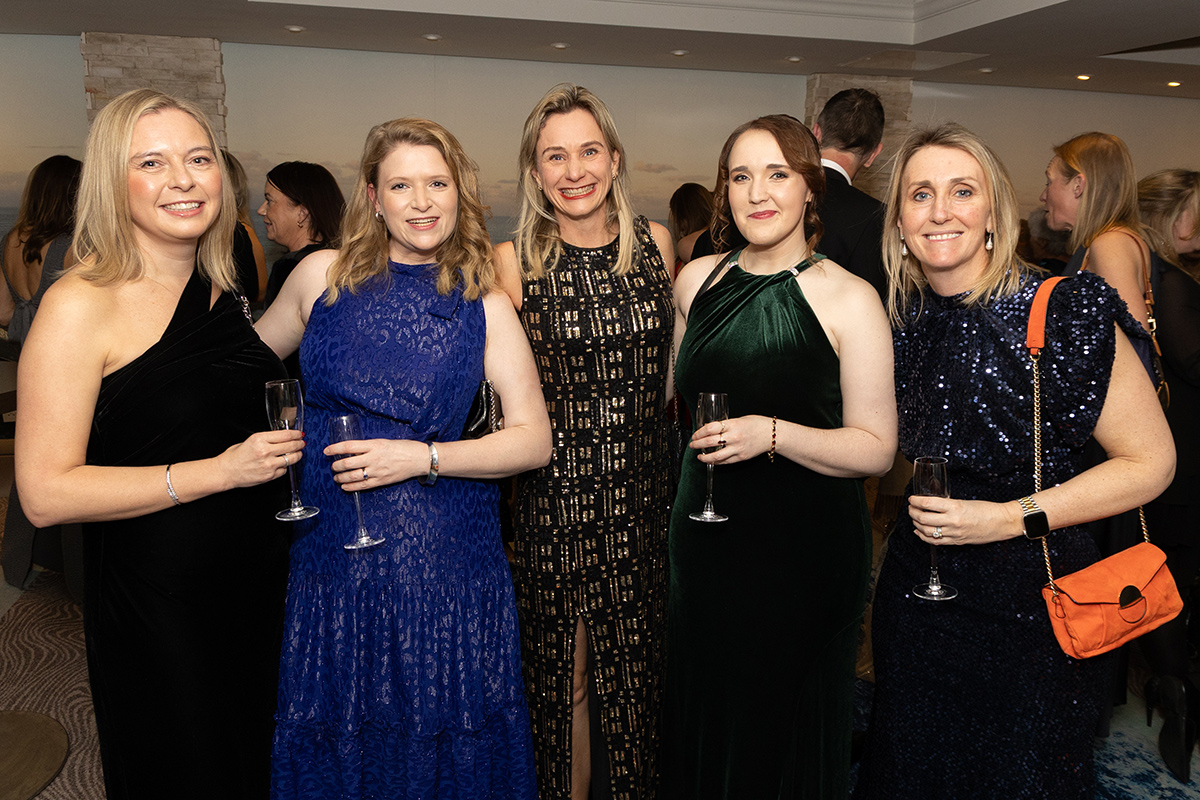
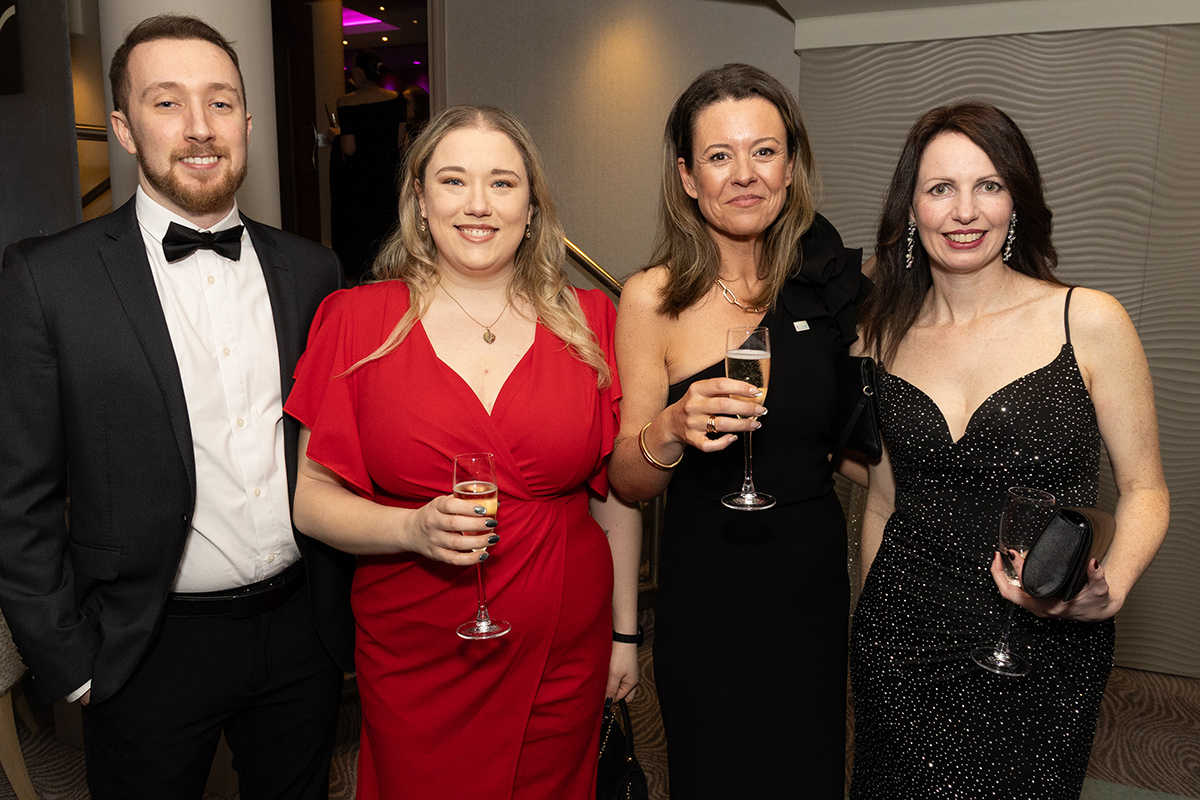
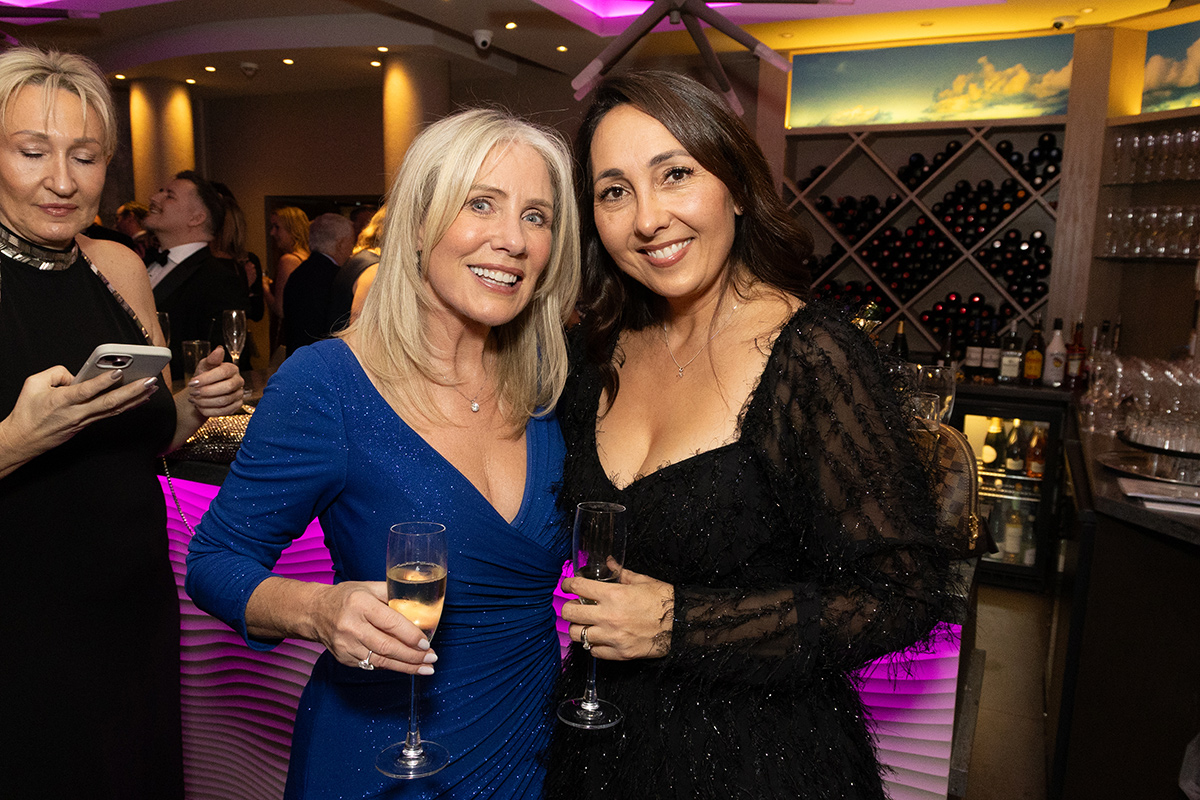
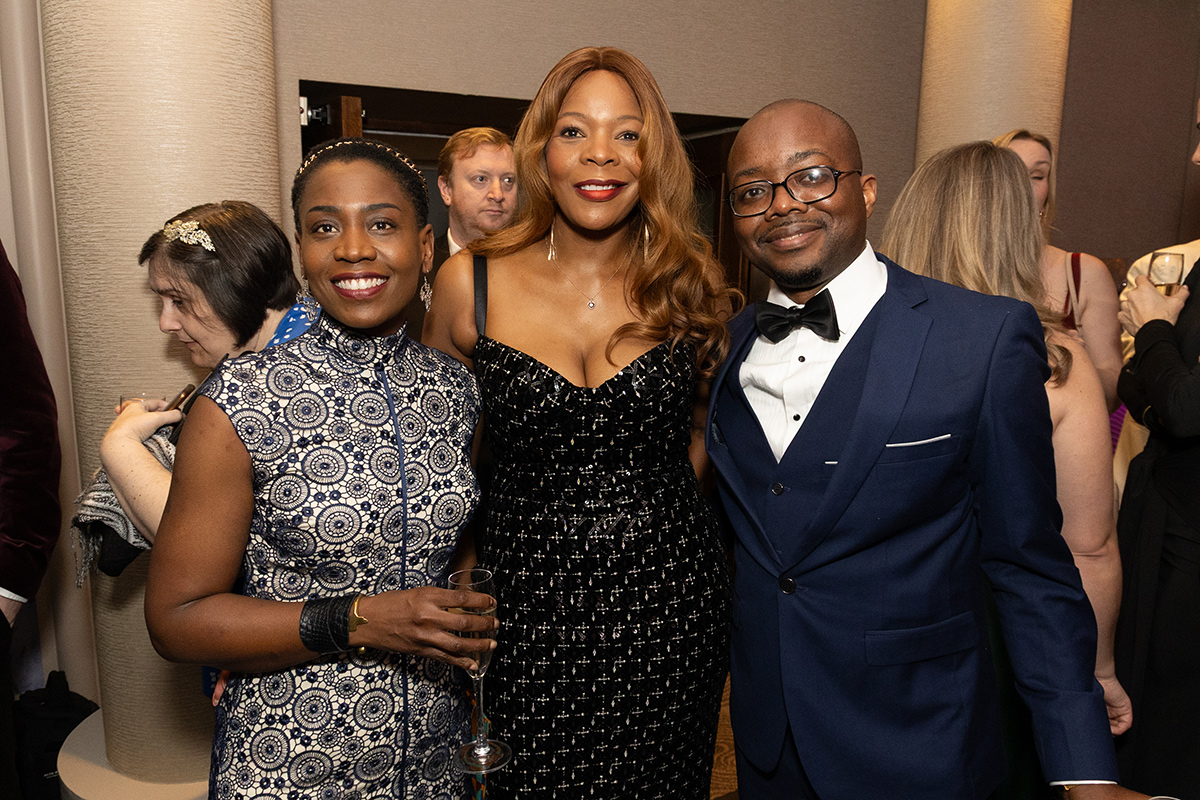
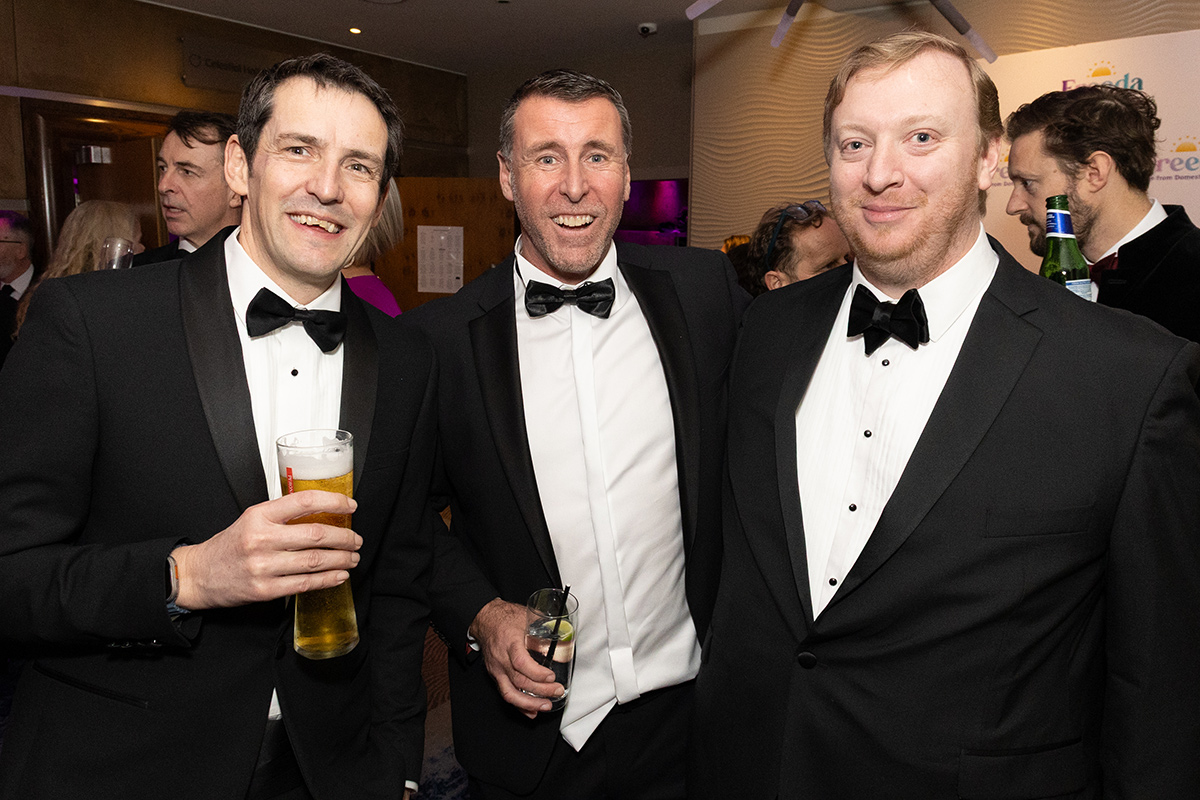
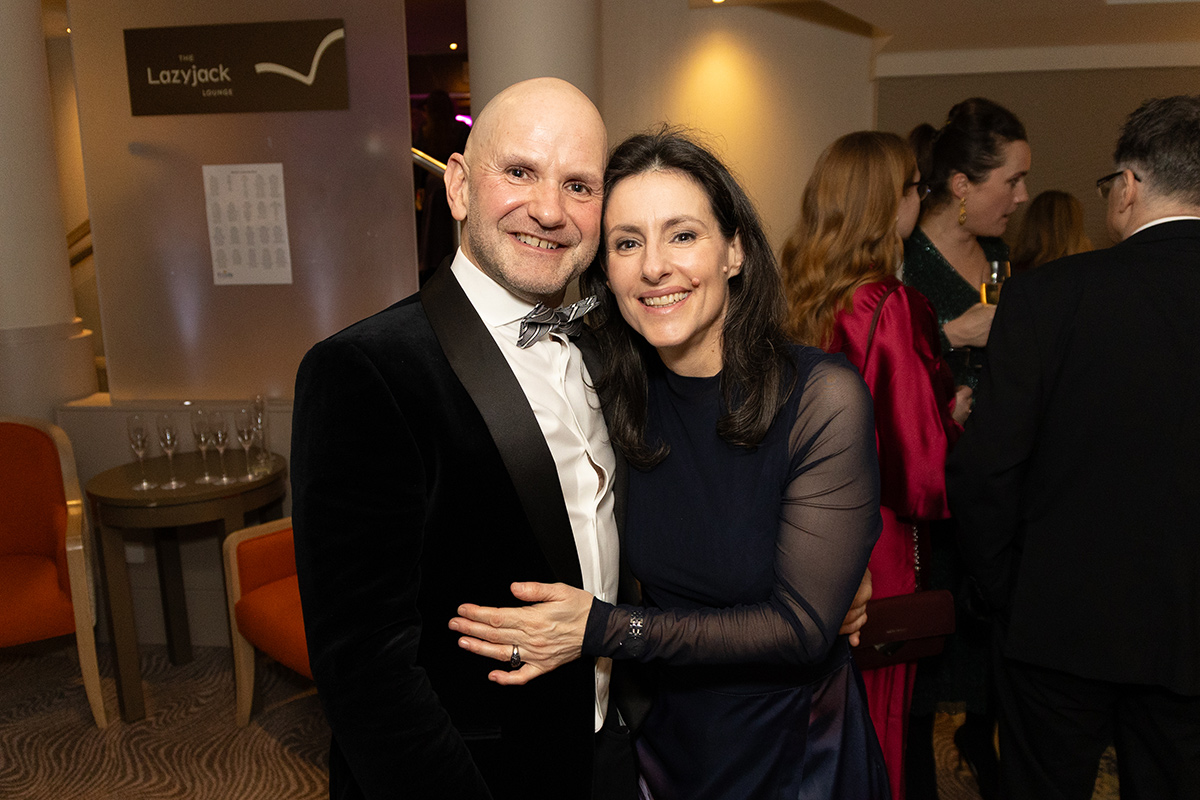
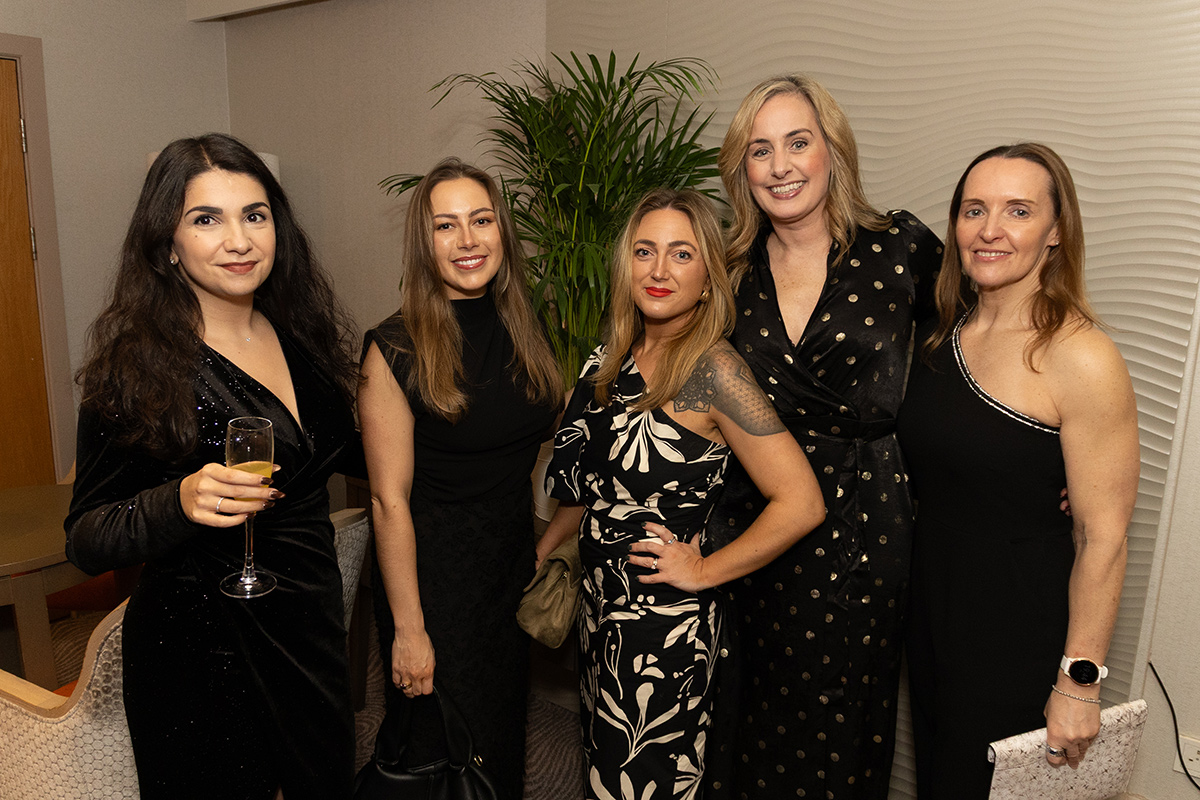
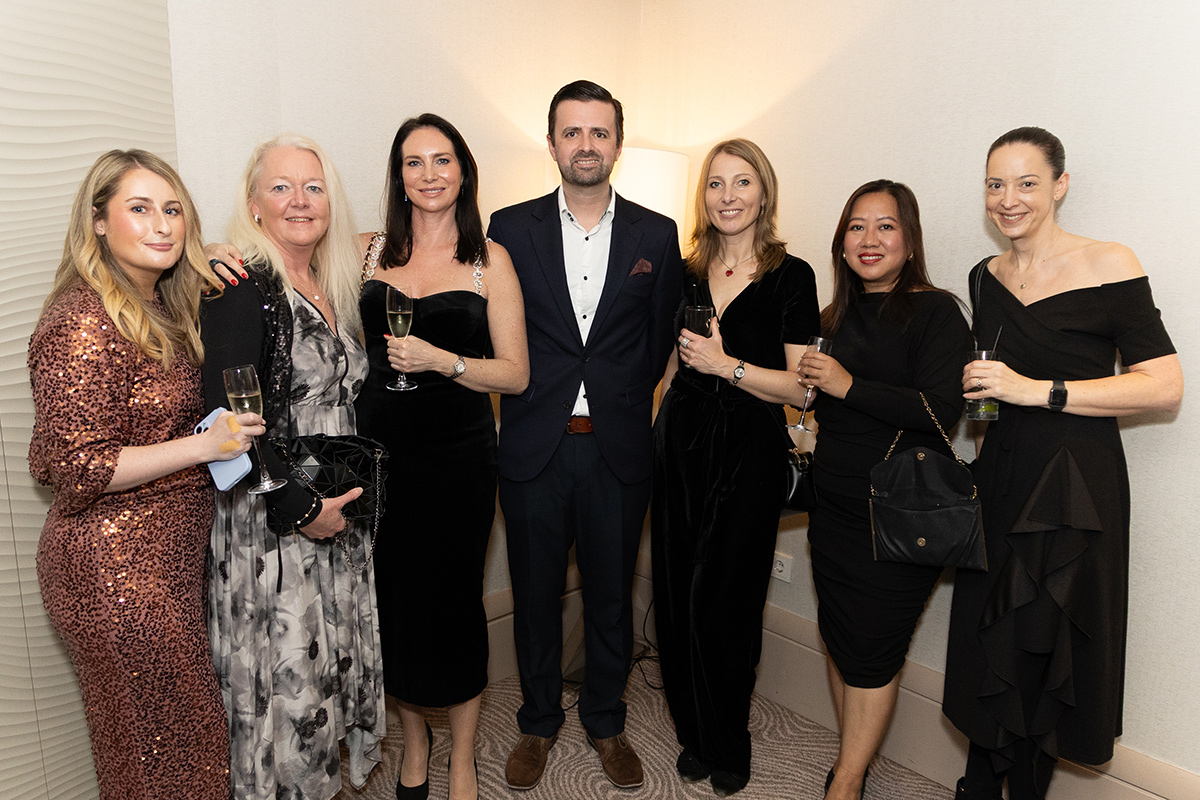
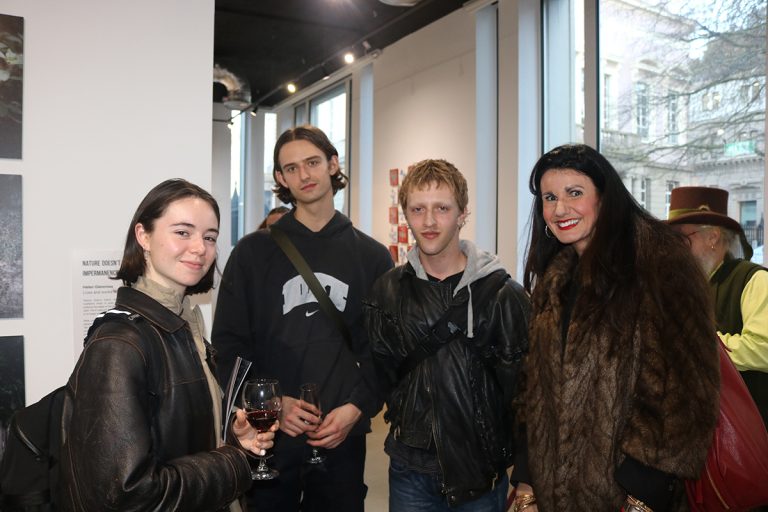
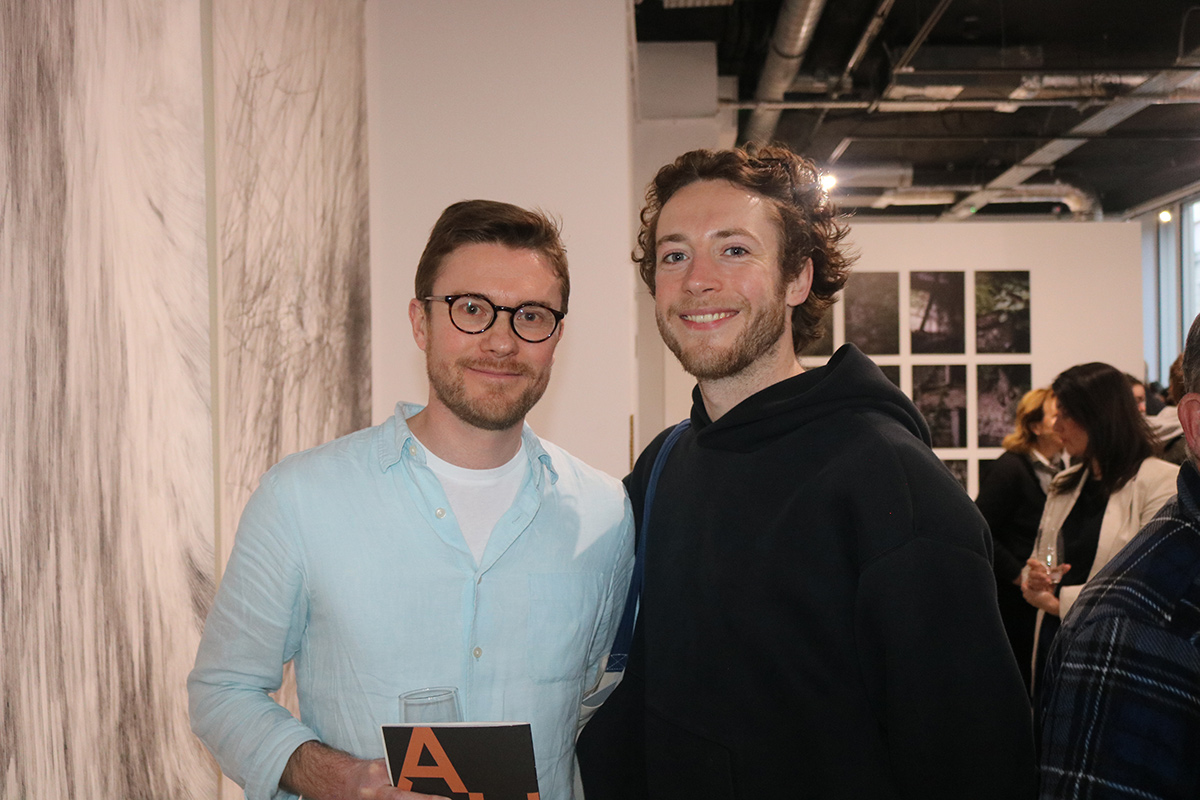
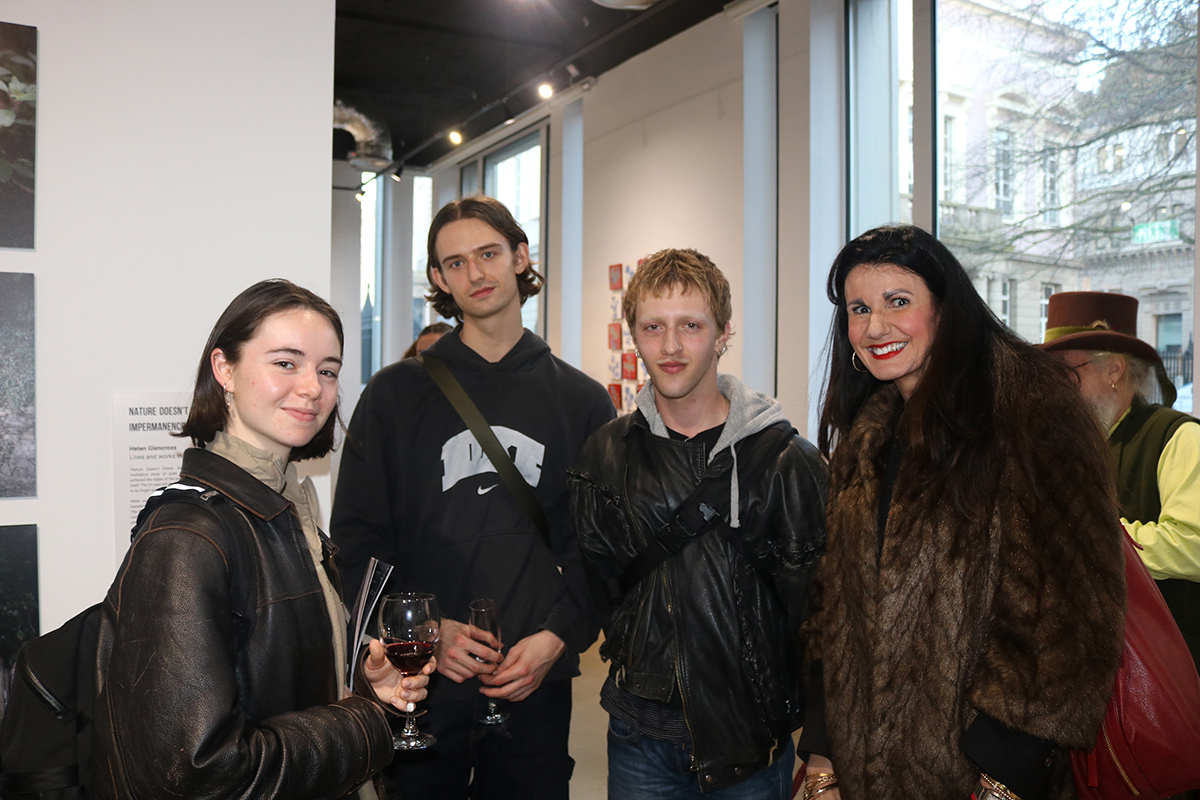
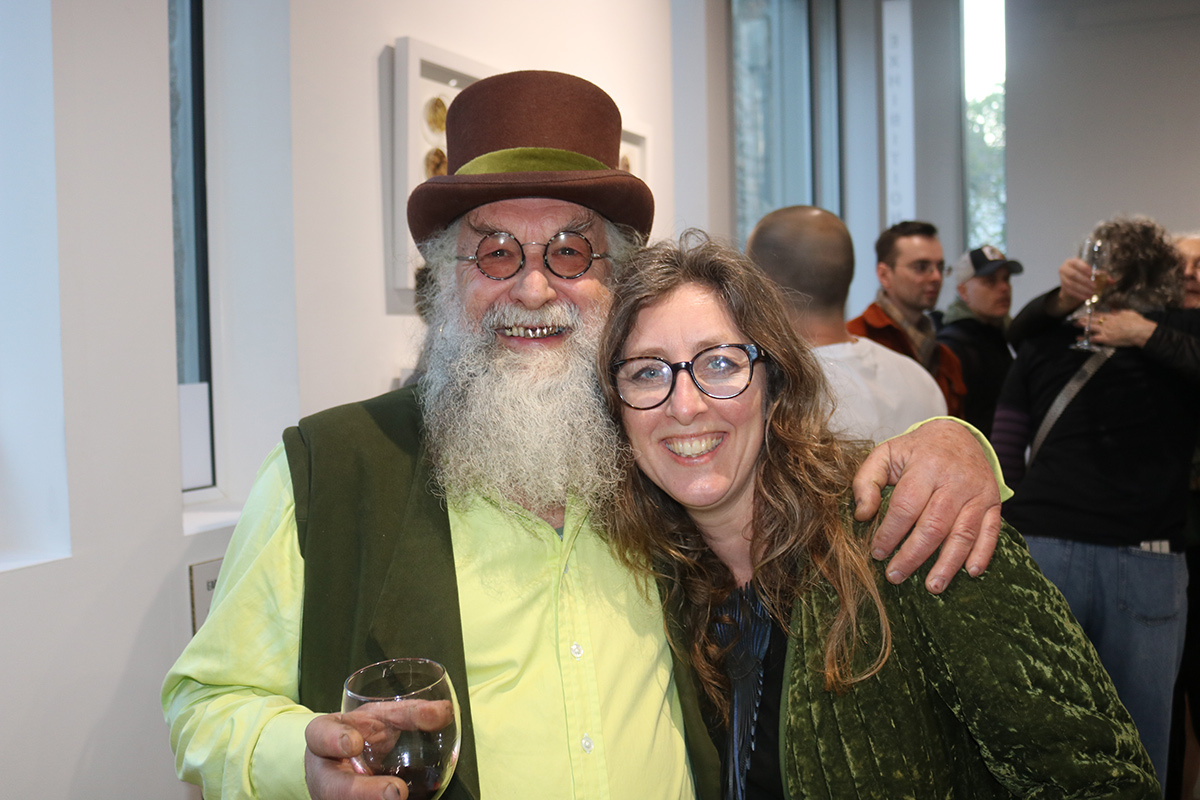
House of Champions opened its doors in St Helier, welcoming over 40 local professionals, creatives and entrepreneurs for a first look at Jersey’s newest collaborative workspace. Founded by Brand Champions CEO Fiona Wylie, the three-storey venue blends traditional architecture with a bright, modern interior designed by North 49. Guests enjoyed food from Christopher’s restaurant and live entertainment.
Opening this spring, the space will offer desks, meeting rooms and a podcast studio, alongside a curated events programme and a range of flexible memberships. House of Champions has been designed as an environment built for creativity and collaboration, where the culture of the club is just as powerful as the physical space itself.
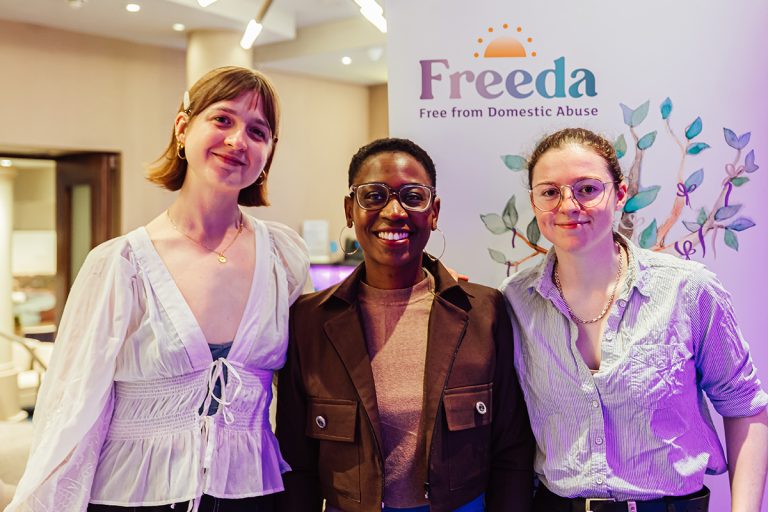
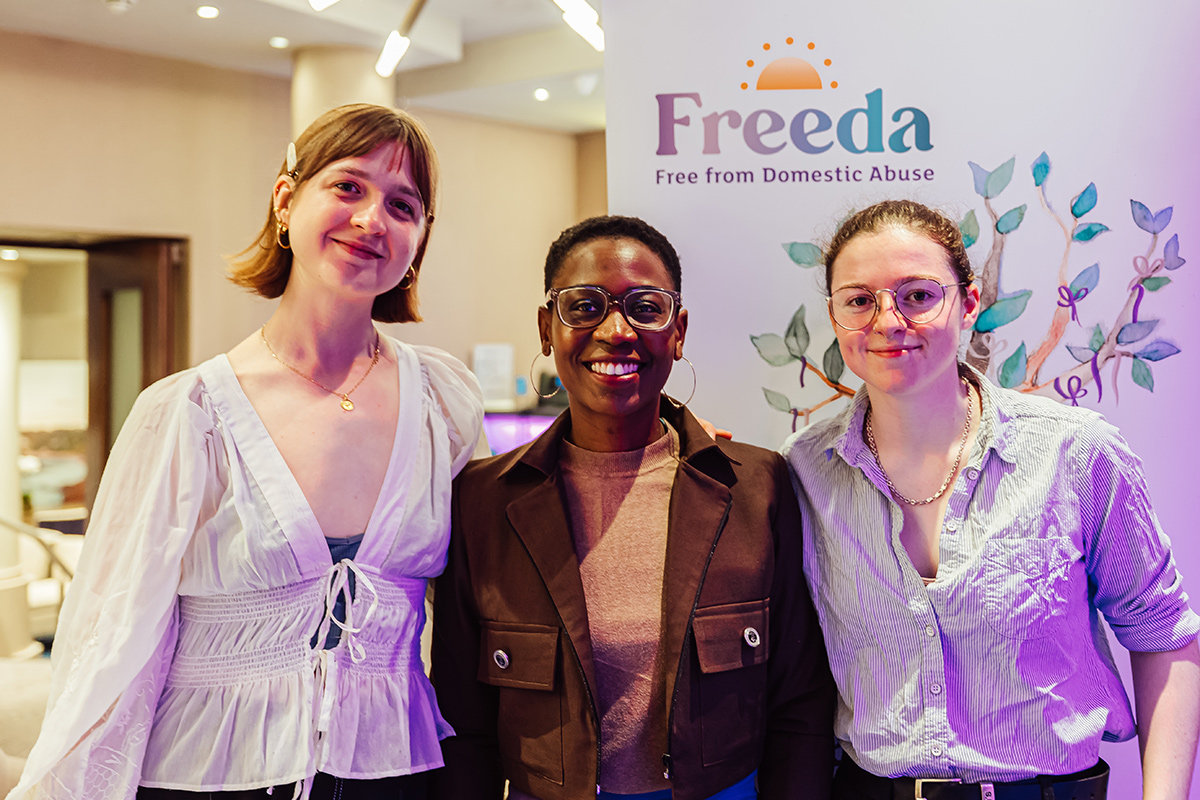
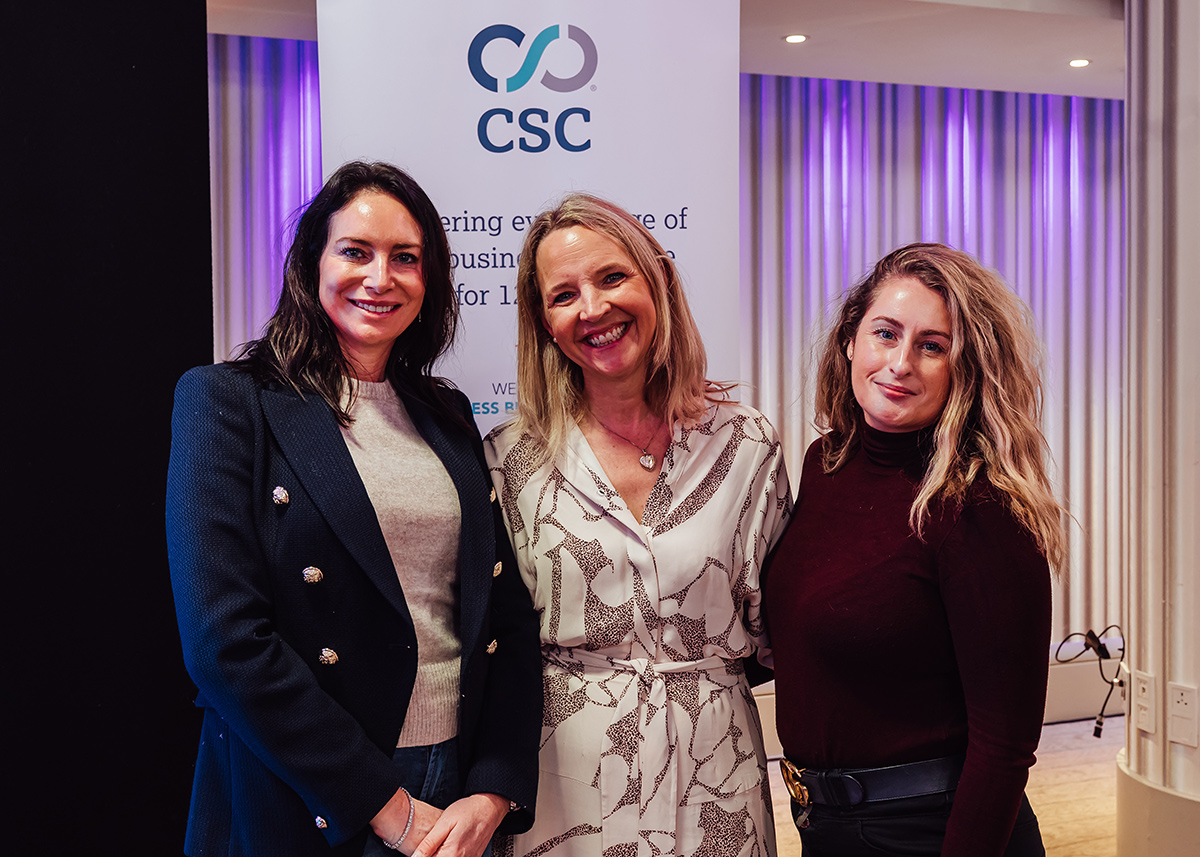
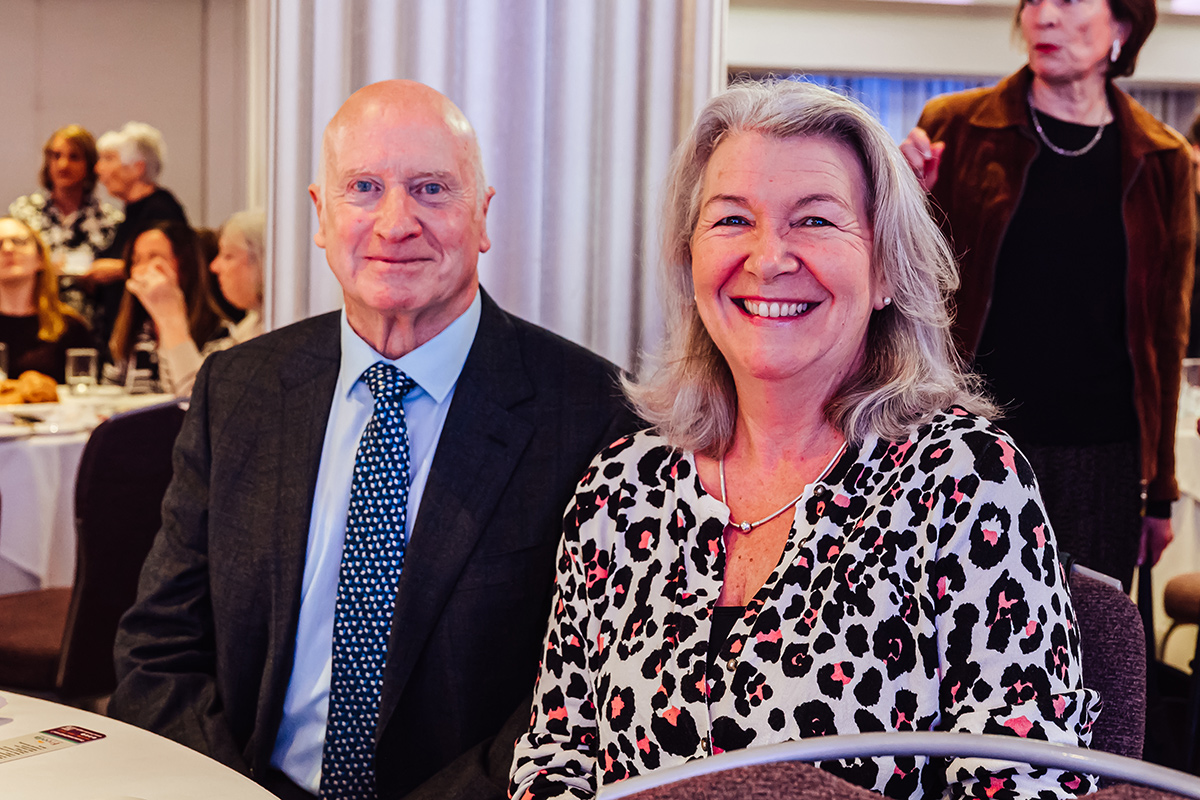
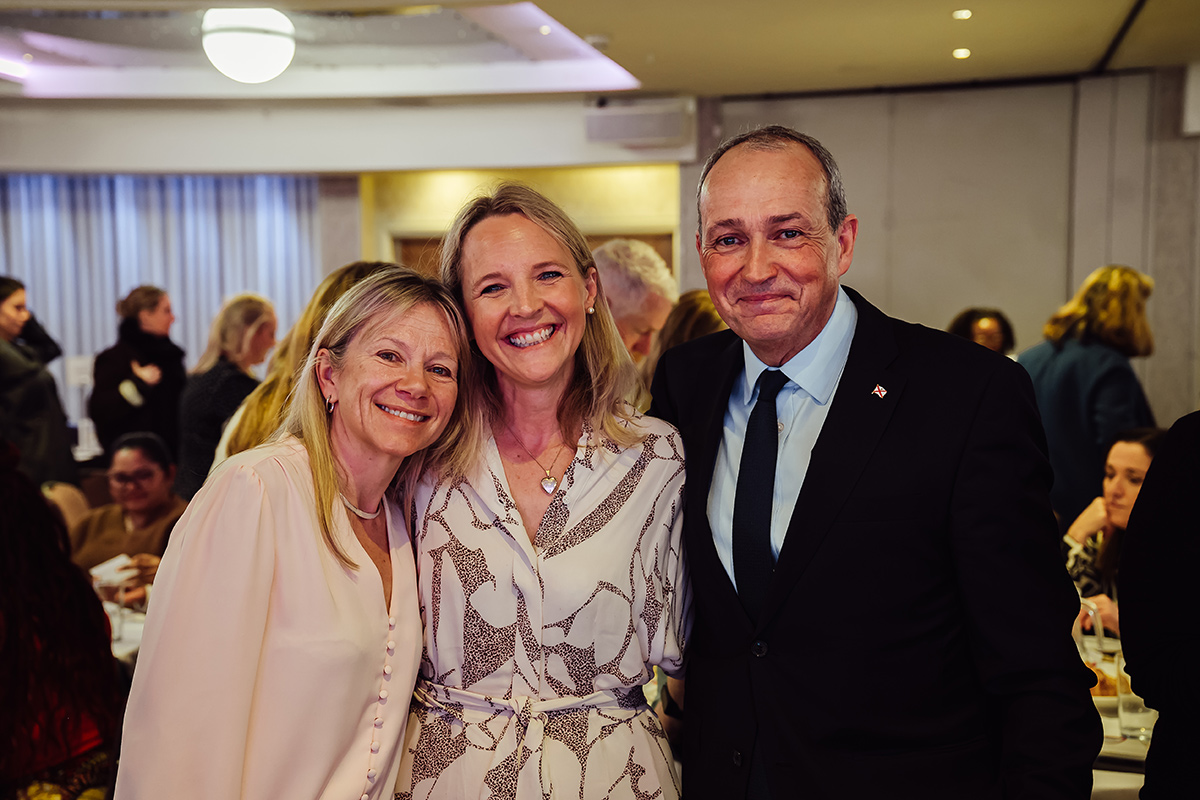
Freeda hosted their much‑anticipated annual breakfast event in celebration of International Women’s Day. The morning was generously sponsored by CSC, ensuring that all funds raised went directly to supporting Freeda’s vital services for women and children affected by domestic abuse. Freeda’s Patron, Dr Kyd, attended and delivered a powerful address, joined by Freeda CEO Kate Wright and Chief Minister Lyndon Farnham, who provided an update on the Government’s progress in implementing the VAWG recommendations. Guest speakers included poet Caitlin O’Ryan, who shared her poignant work and reflections on the realities facing women and girls today, and Georgia Gabriel‑Hooper, an inspiring young woman who bravely told her raw story of tragedy and survival in the hope of helping others.
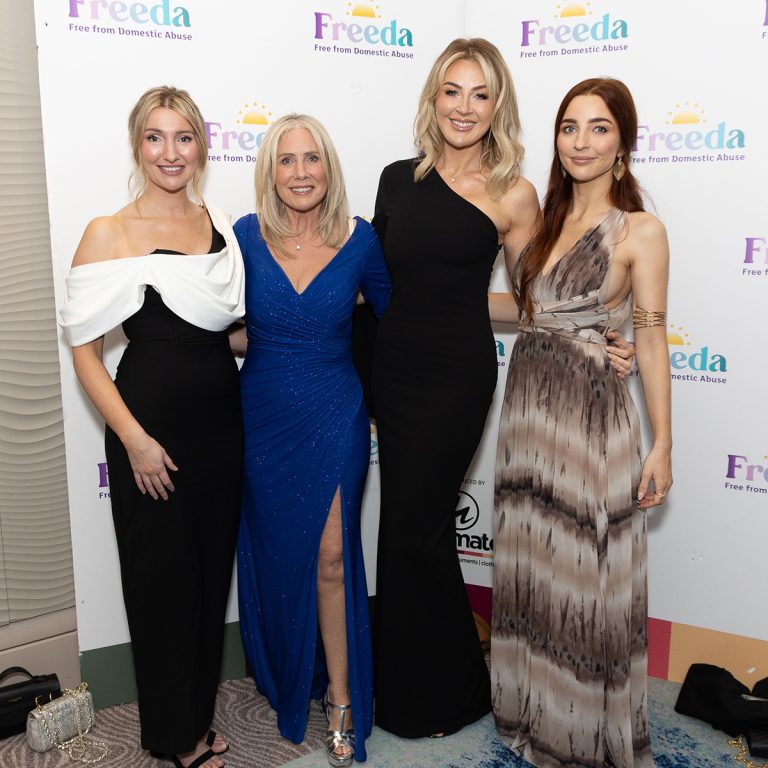
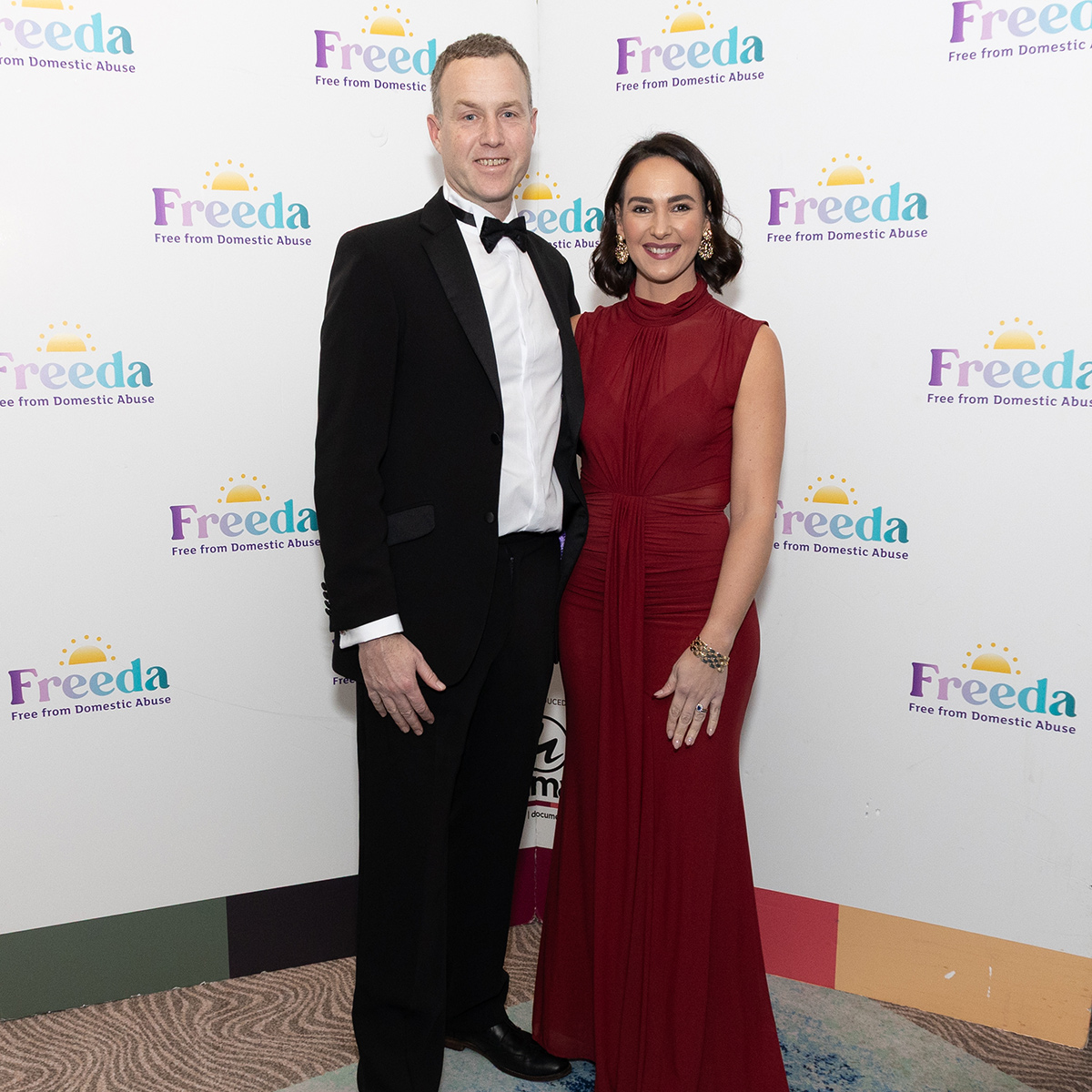
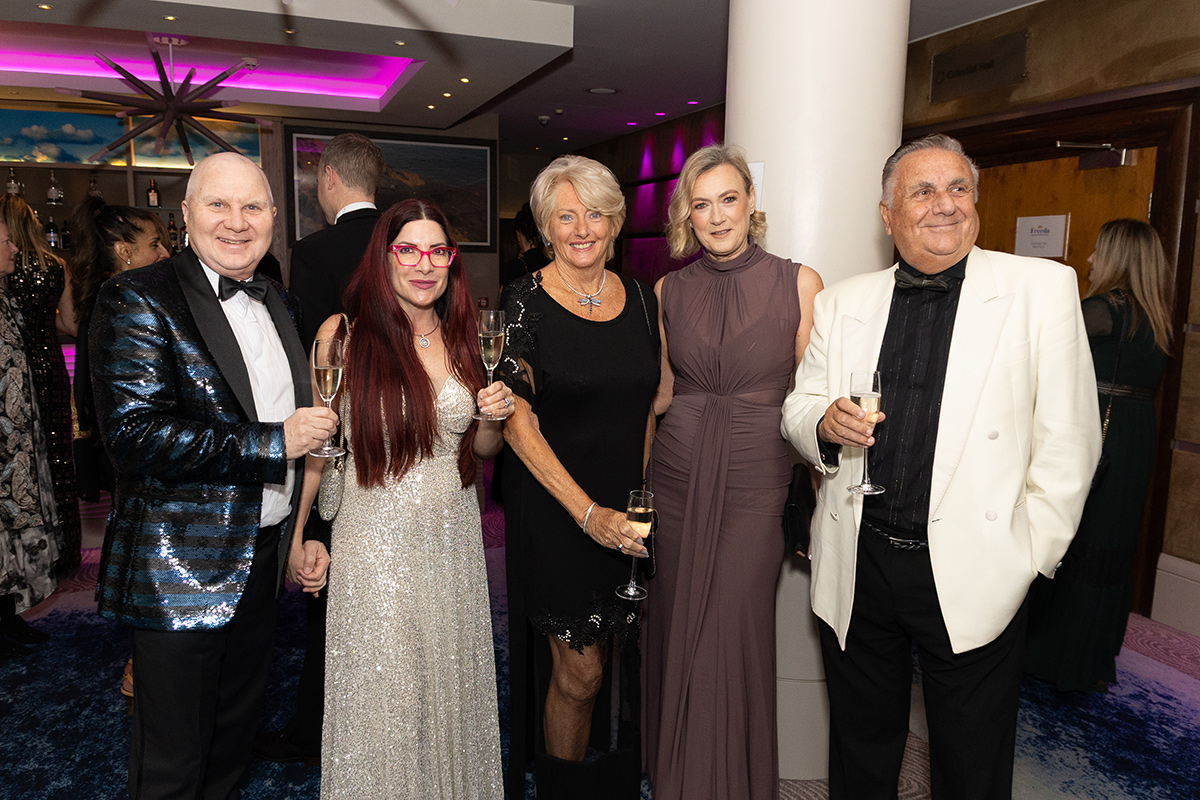
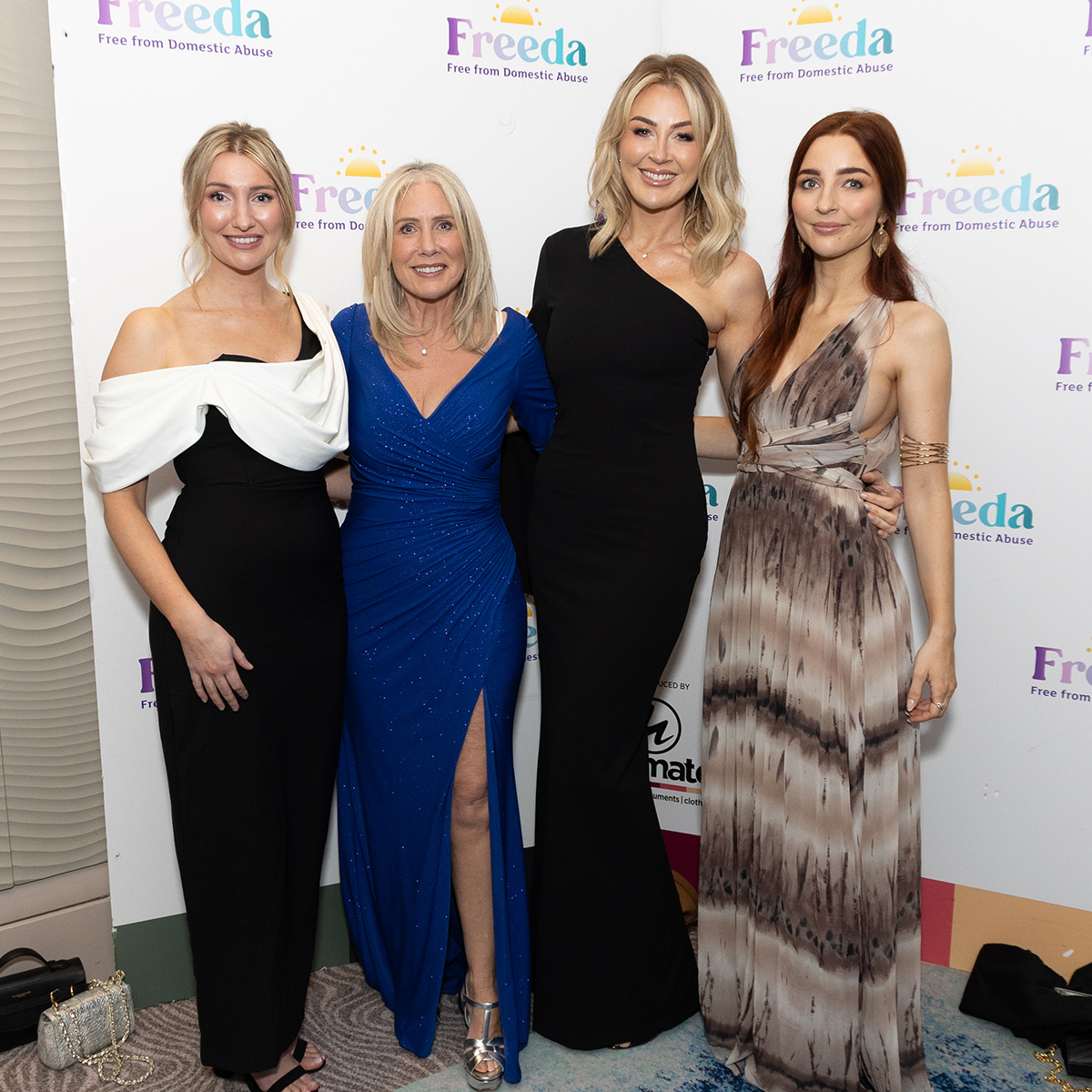
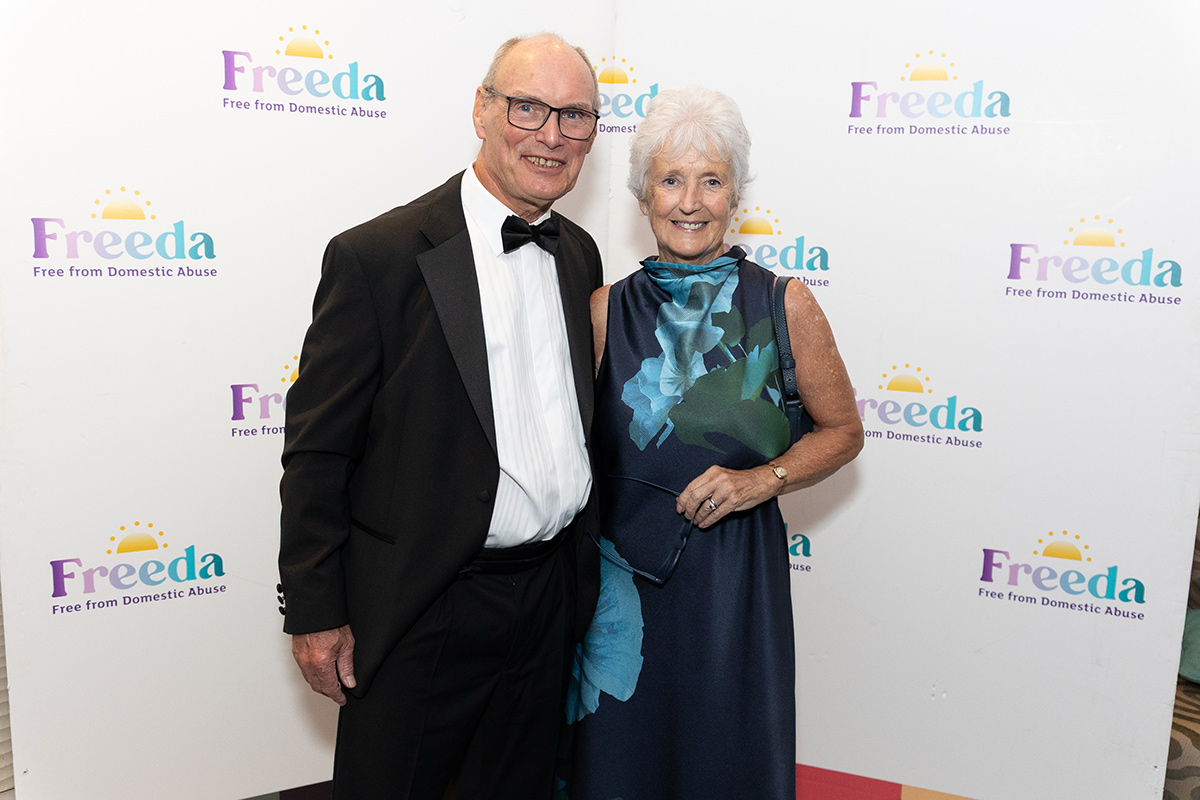
Freeda (Free from Domestic Abuse) held their annual gala evening to raise awareness and much-needed funds for their mission. The evening was kindly sponsored by KPMG, with entertainment provided by Elsie & the Emeralds and Ruby Rouger. Survivor and artist Kelly Eastwood spoke about her journey with Freeda, and guests were able to purchase her artwork on the night, with all proceeds going directly to the charity. The artistic theme continued throughout the evening, with Kiera Melville offering portraits of guests in exchange for donations to Freeda.
This event was a wonderful opportunity to celebrate with supporters both old and new, while raising funds to continue providing 24-hour support to those most in need. Freeda’s mission is to free our island from domestic abuse through awareness and education, which they are only able to do with the support of the community.
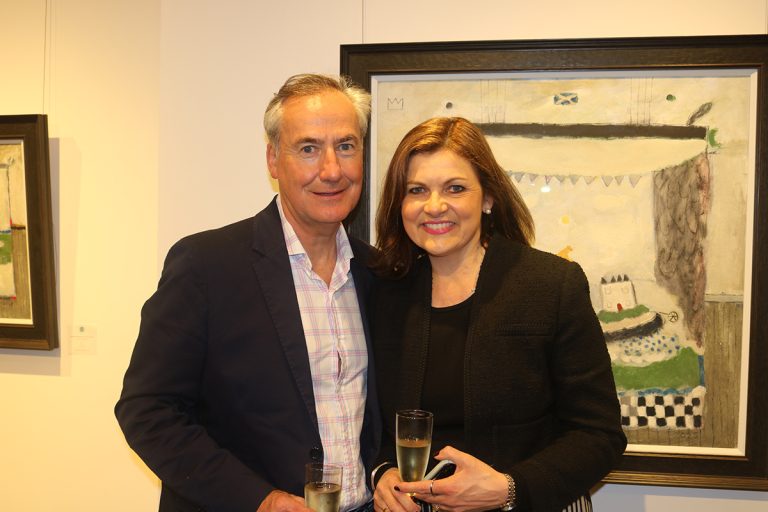
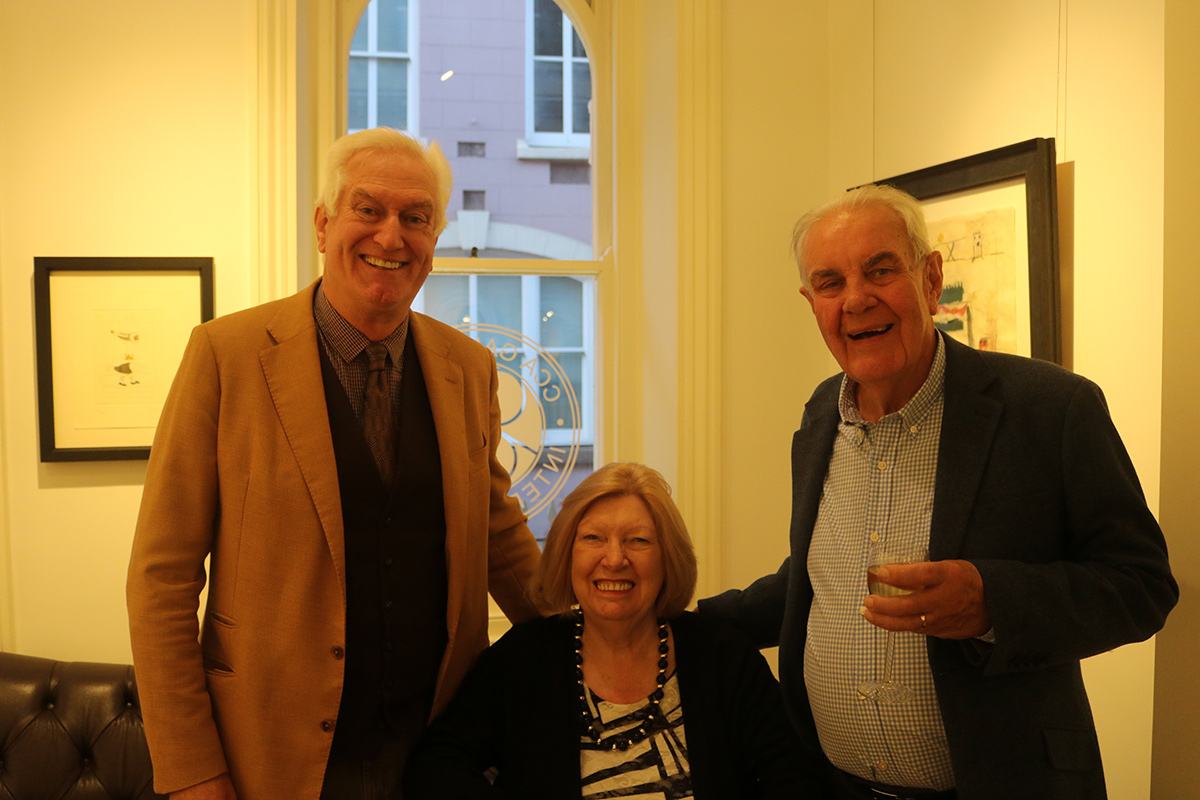
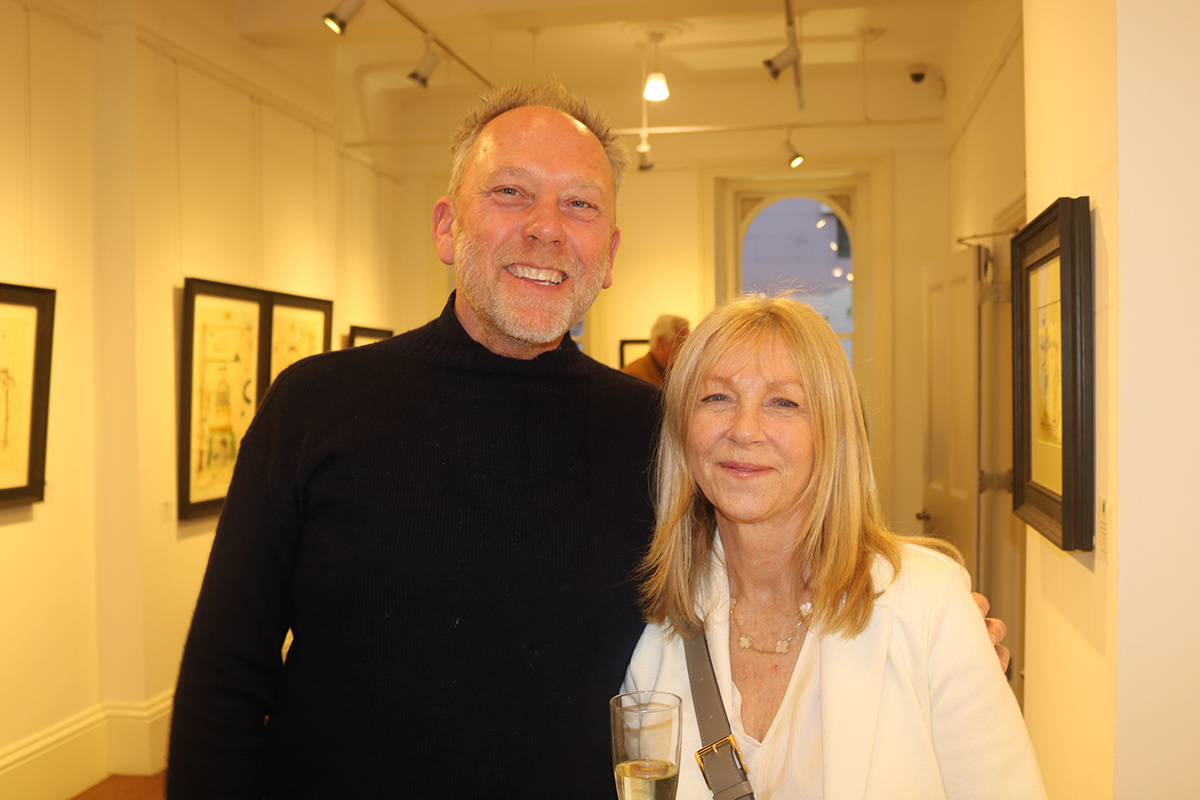
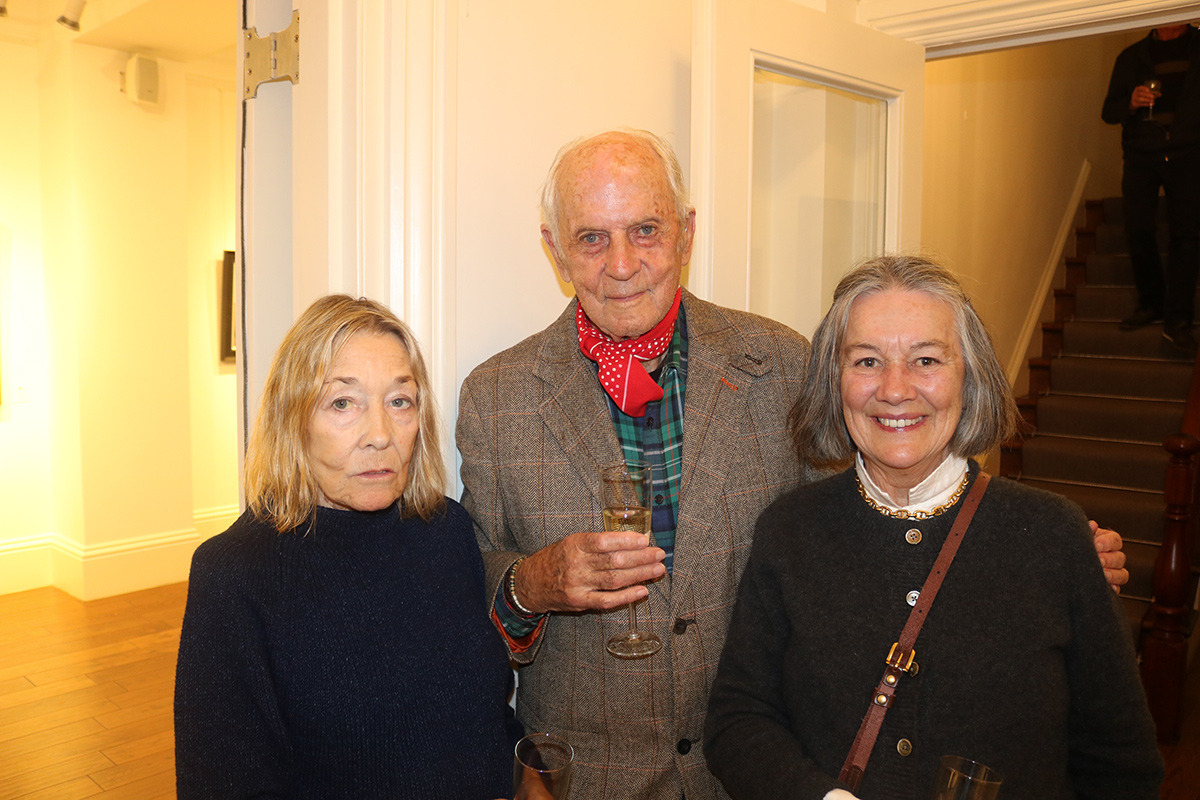
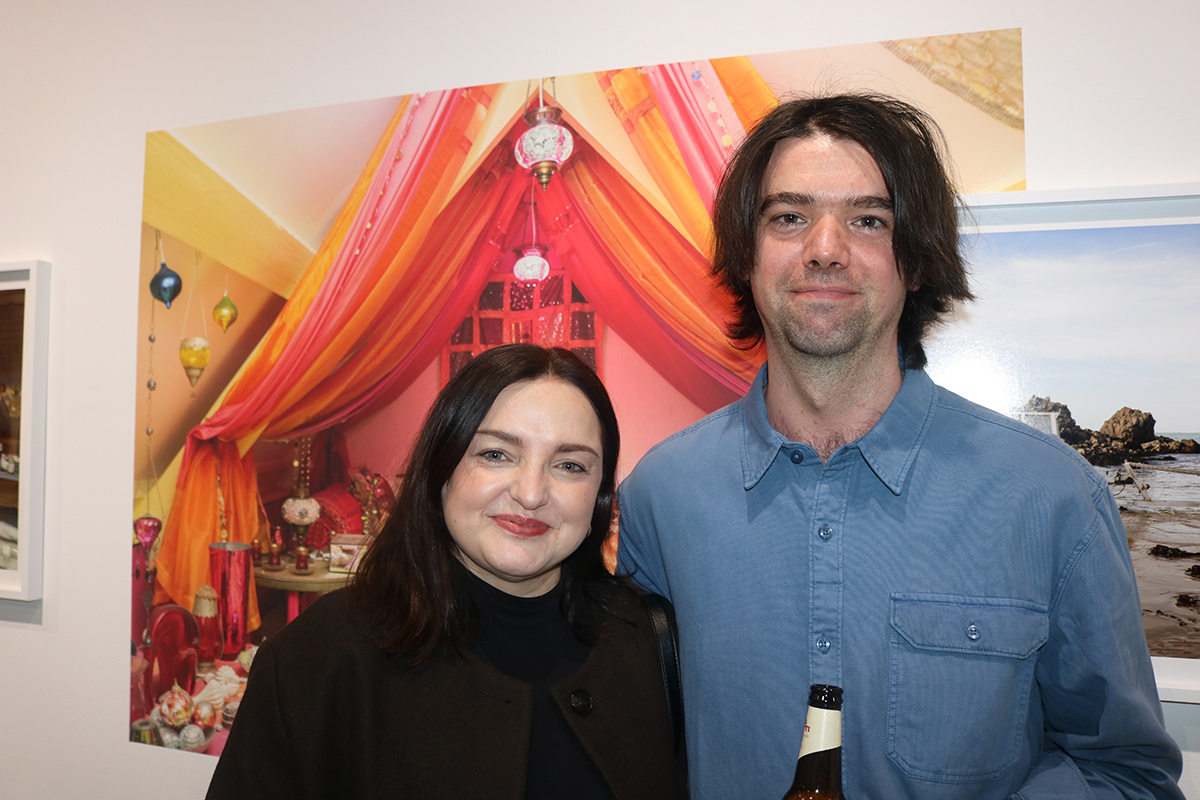
CCA Galleries International opened its doors to Within This World XIV, the first solo exhibition at the gallery by Carol Ann Sutherland, welcoming guests into a surreal, narrative-led body of work spanning decades. The evening unfolded between horses, angels, boats and chessboards, the motifs that form the artist’s allegorical world. Alongside newly created works, guests engaged with a small retrospective of pieces dating back to 1972, as well as a striking stone relief, offering insight into the breadth of Sutherland’s practice. The atmosphere was reflective, as viewers pieced together the connections between works, drawn into a whimsical, otherworldly narrative.
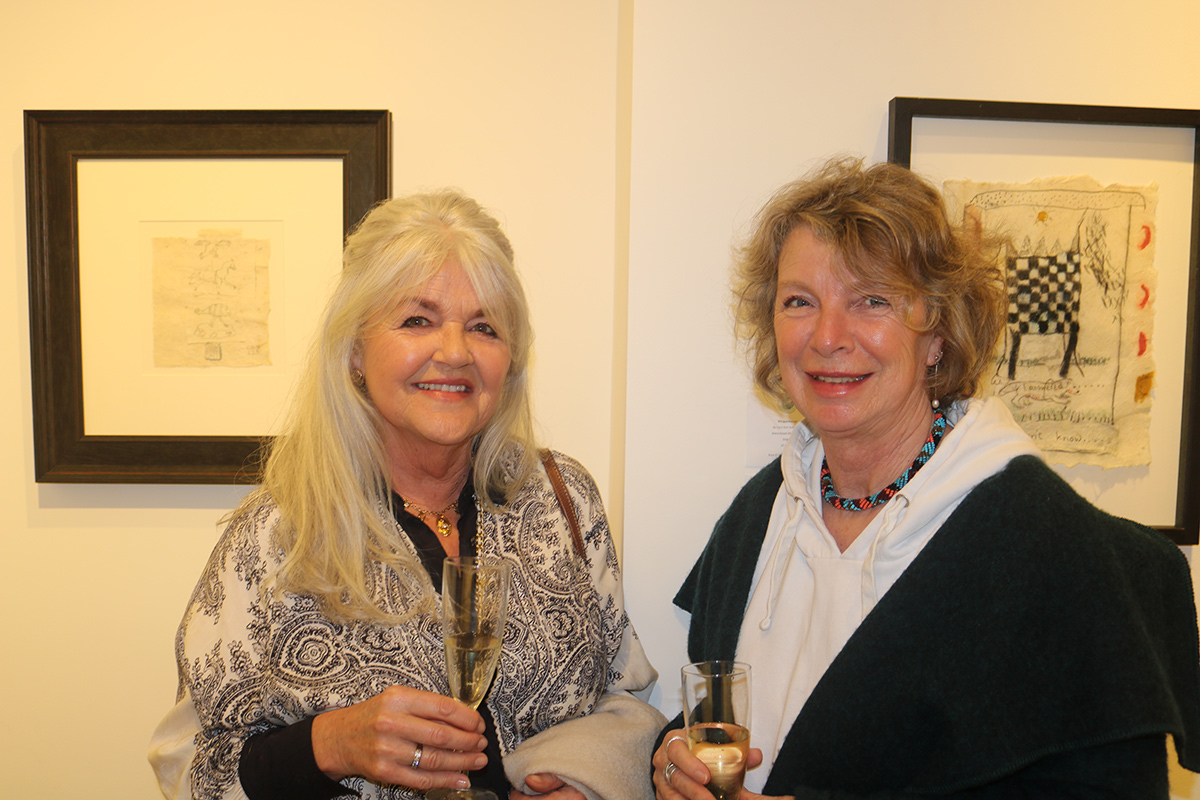
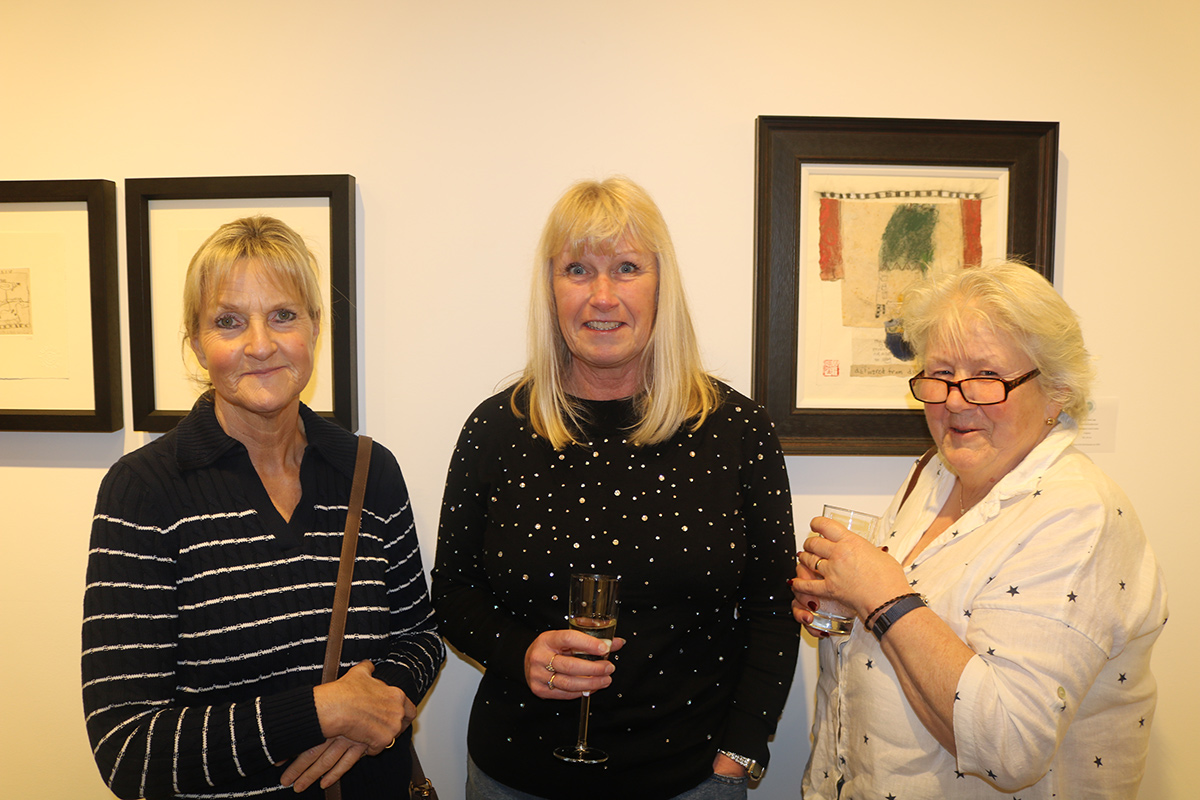
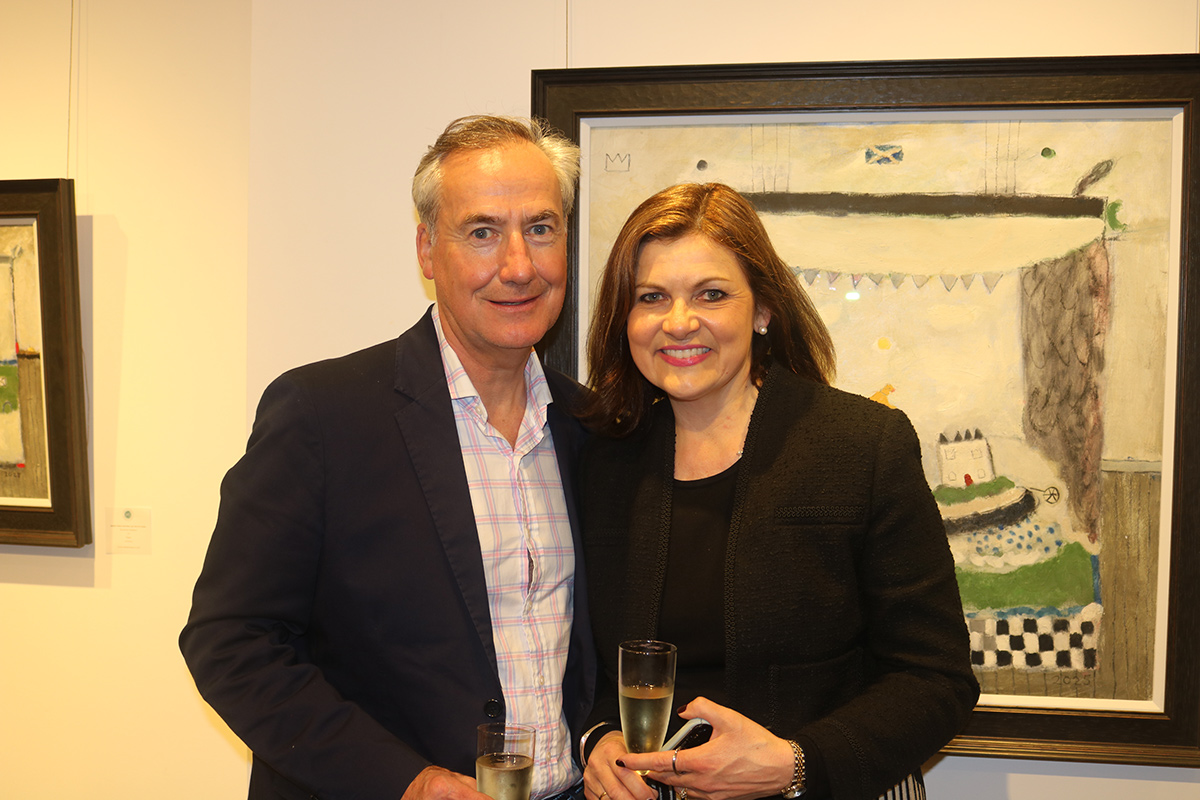
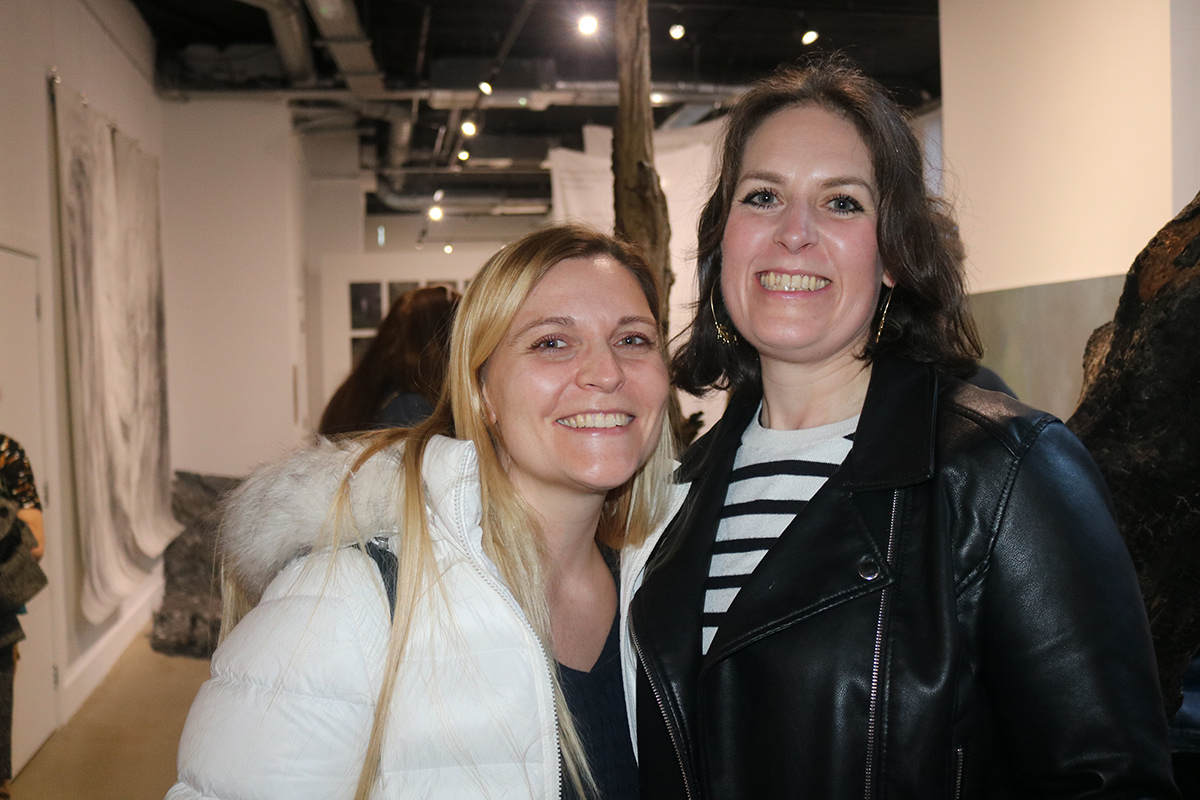
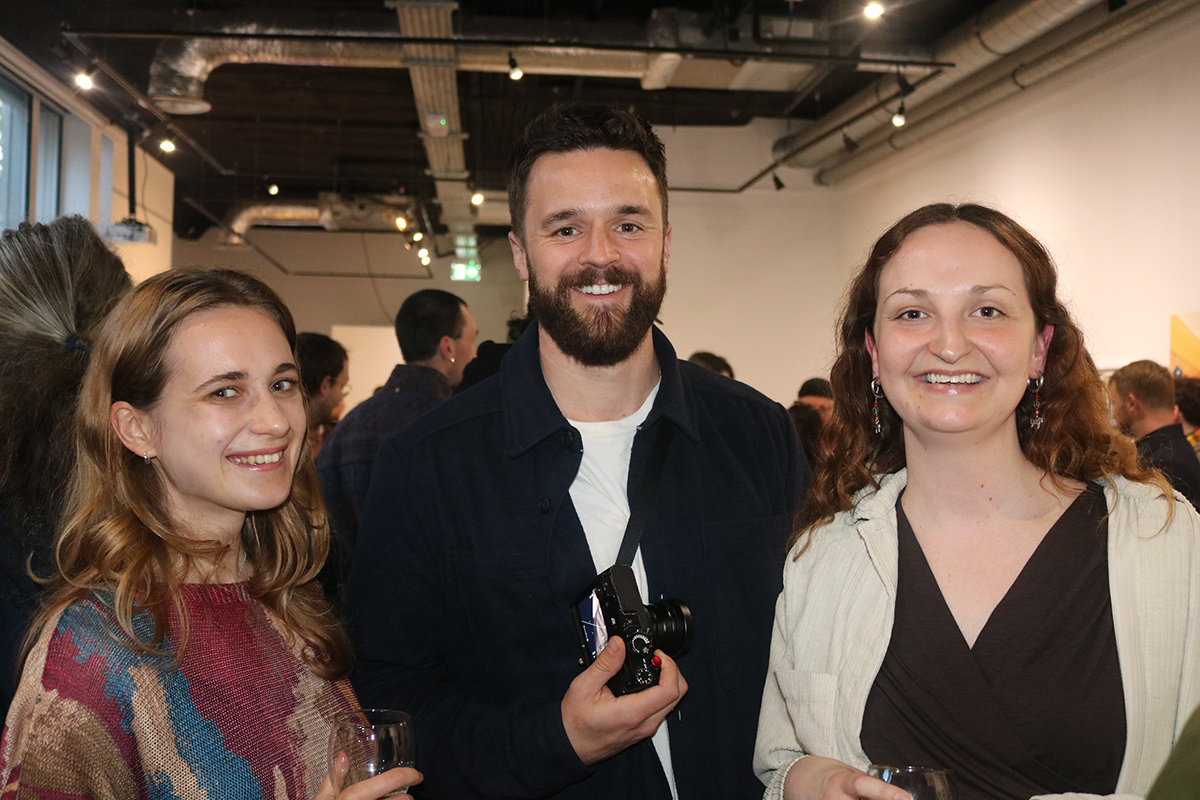
The second edition of The Channel Islands Contemporary Art Show opened with a lively evening at the gallery, bringing together artists and guests from across Jersey, Guernsey, Brittany and the UK. Visitors moved between sculpture, painting, photography and digital works, with drinks in hand as conversations flowed. The atmosphere was distinctly communal, reflecting the spirit of the exhibition itself. A highlight of the evening was a speech by Kirsten Morel, who spoke about the importance of fostering connections between neighbouring regions, noting the inclusion of artists from Brittany and Guernsey as a meaningful extension of the islands’ cultural dialogue. He also emphasised his commitment to supporting the arts through sustained funding, underlining its value within the island’s future. The event set the tone for an exhibition rooted in collaboration and a shared creative landscape.
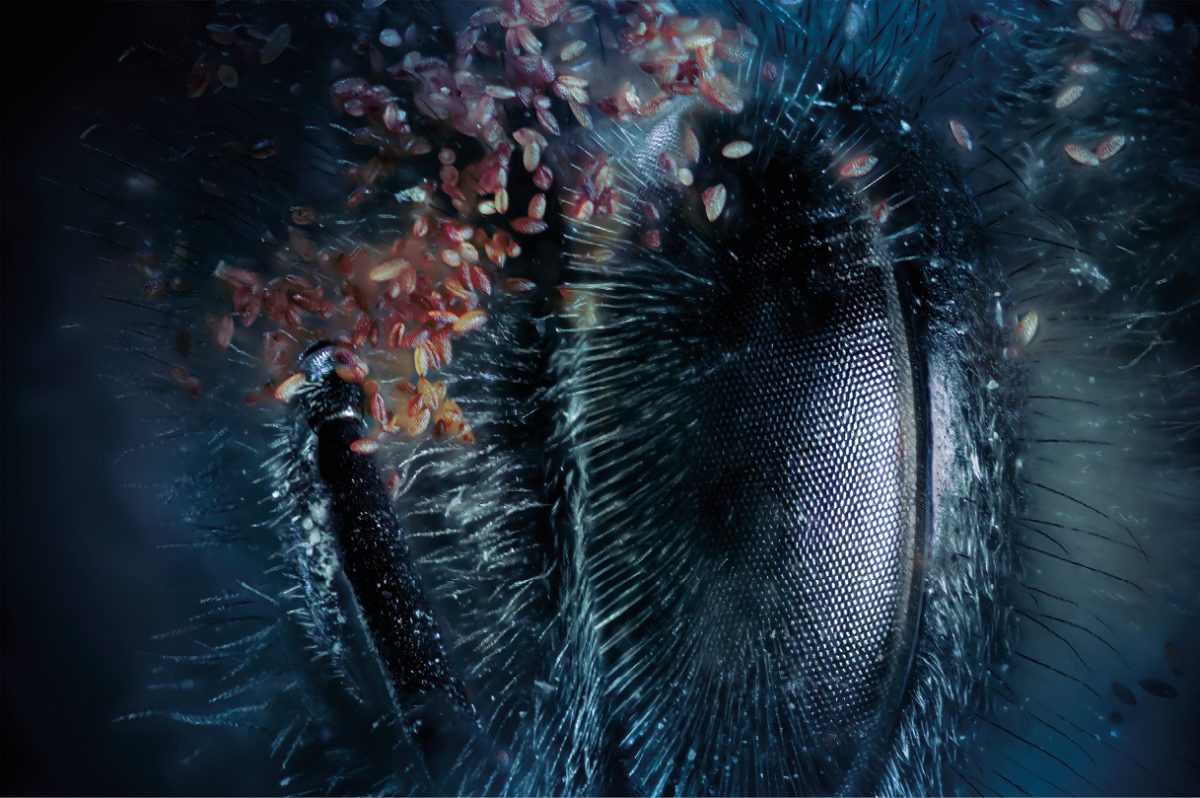
Under extreme magnification, a bee’s eye resembles the honeycomb structure that defines the landscape of its hive. Its surface fractures into a hexagonal lattice formed by thousands of tiny lenses, sometimes more than 5000 in a single eye, each capturing a fragment of the world before the bee’s brain assembles them into a single composite view. From a human perspective, the structure is deeply strange.
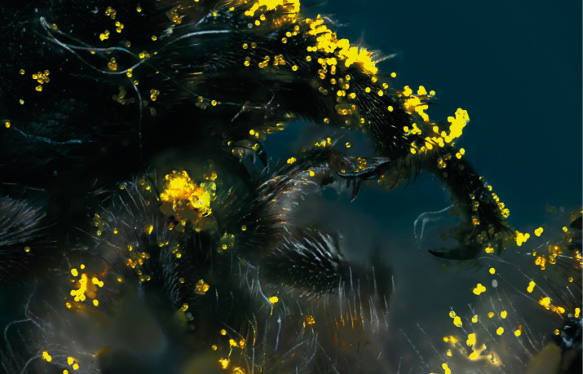
What the world actually looks like remains a matter of scientific debate. Bees can perceive shorter wavelengths beyond human vision such as ultraviolet light, due to the presence of specific photoreceptors in their eyes. This evolved ability reveals hidden ‘nectar guides’ on flowers, which act like glowing runway lights to locate food efficiently, as well as aid in navigation. In this spectrum, pollen glows like flecks of gold against an environment washed in blues and purples invisible to us.
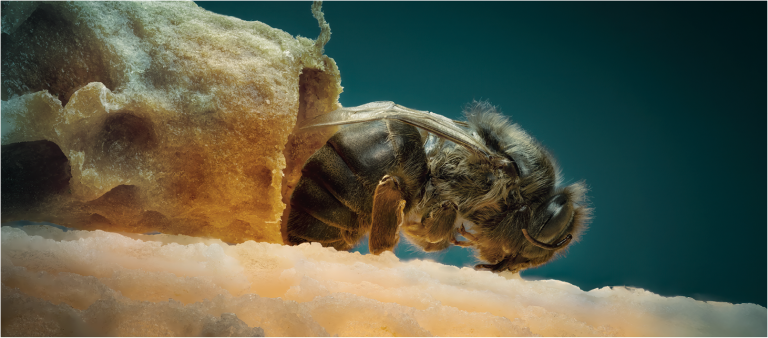
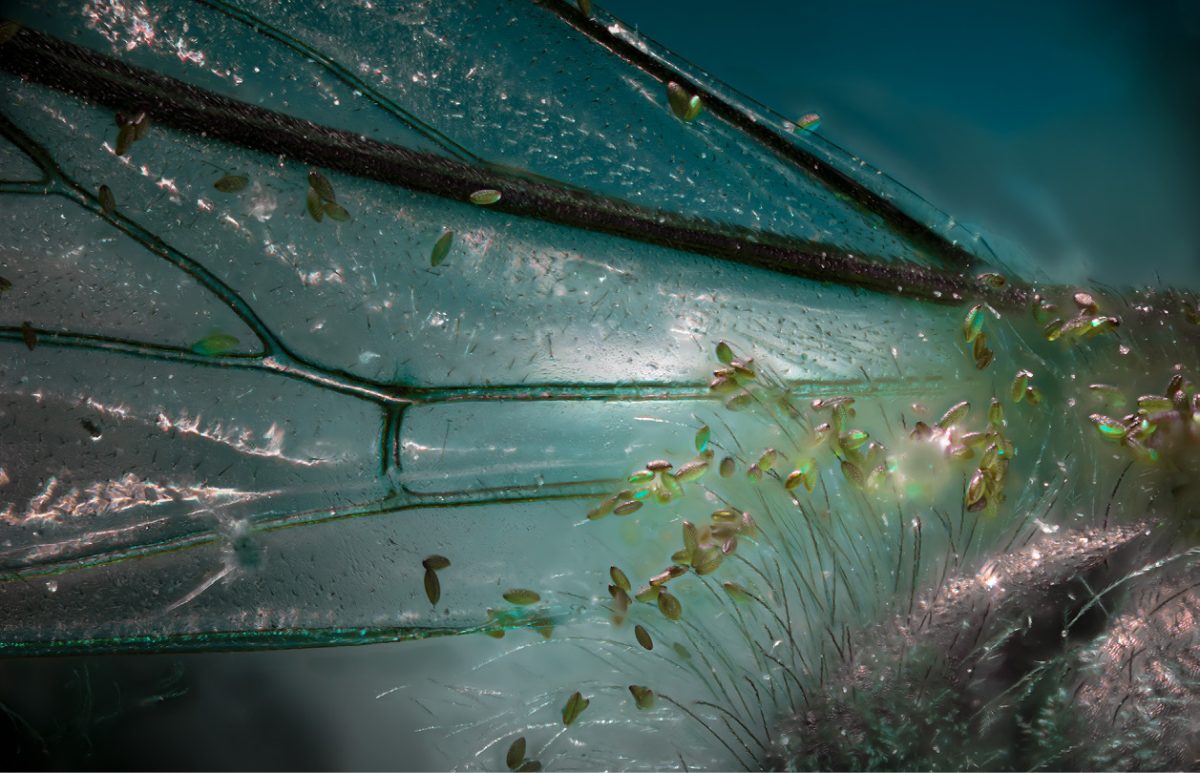
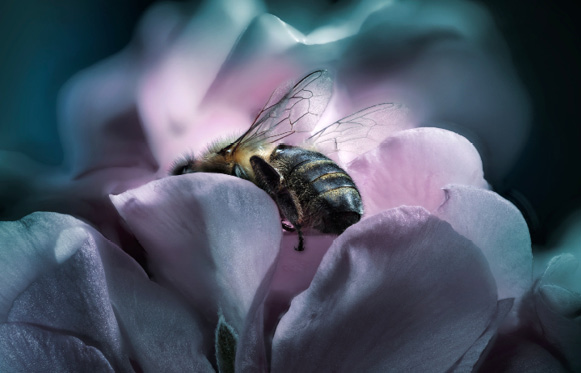
The colours that appear in the photographs across these pages hint at that hidden dimension. The saturated blues, greens, purples and luminous yellows are not intended as strict scientific reconstructions, but rather a hint at what a bee’s world might look like. Glen Perotte, the local photographer behind the image on this issue’s cover, chose to treat the bee’s world interpretively. His aim was to produce a body of work in what he calls a “false colour”, to make a gesture towards a perceived reality we cannot see.
Perotte has spent years exploring extreme macro photography, collaborating with Hettich Jewellers for their ‘Secret Worlds’ project back in 2022. The purpose of the project was to photograph the intricate and hidden inner beauty of precious gemstones, revealing whole landscapes of micro-crystals that can’t be seen by the naked eye. Out of this fascination to look deeply into things that remain largely unnoticed, he was drawn to the idea of a project featuring high-resolution images revealing the intricate anatomical details of everyday critters that most would not give a second glance.
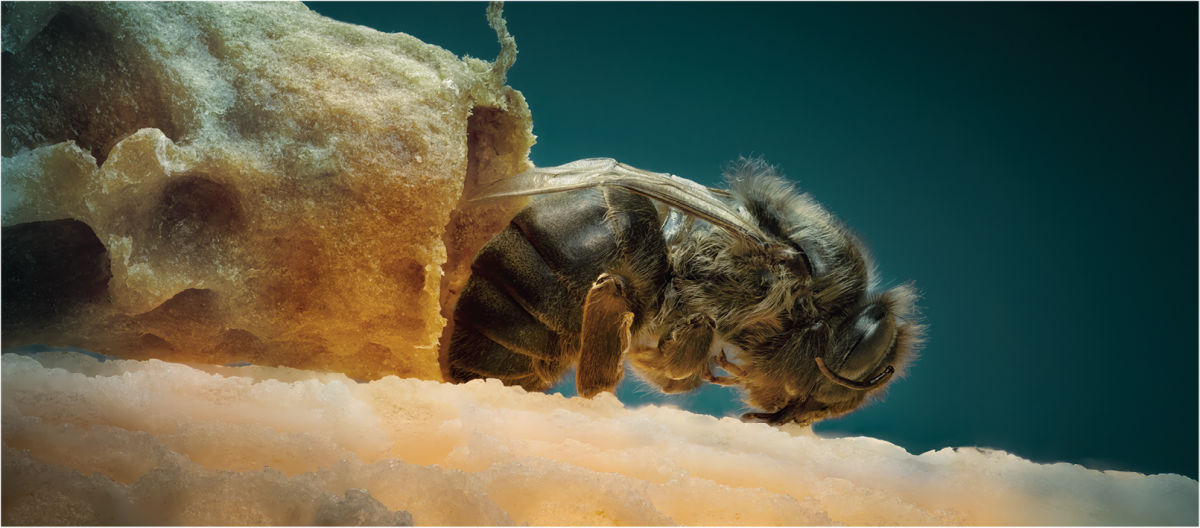
Drawn by a similar curiosity, Perotte turned towards bees as a subject for his most recent project. “If you really look at them, they’re the most amazing animals,” he explained. He turned to Jersey Honey as a collaborator on the project, gaining access to working hives and the knowledge of local beekeepers. Having known Perotte for a number of years and understanding the calibre of his work, Shaun Gell, the founder and owner of Jersey Honey, eagerly pursued the project. “I’ve seen the way Glen is so particular about his work,” he said, “so when he approached me and asked about taking photographs of the bees, I knew what he produced was going to be fantastic, and it would be a win for everybody involved.”
Rather than photographing the insect in the traditional style of natural history, Perotte focused on the fragments of the body itself, to “focus on the incredible parts of a bee’s anatomy.” The abstract forms feature an eye that fills the frame in one photo, like a faceted landscape, or a leg covered in pollen dust becomes a spiny architectural structure, resembling branches holding glowing gold blossoms. On this issue’s cover, if it weren’t for the single giveaway antenna, the close-up could easily be mistaken for an extraterrestrial terrain rather than the anatomy of an insect.
The body of work sits somewhere between documentation and abstraction, an intersection where art meets anatomy. Whilst the forms remain recognisably biological, they’re so strange that the viewer double-takes, unsure for a moment what they are actually looking at. Extreme macro photography has long been used in scientific imaging, revealing structures in insects, minerals and plant cells that are invisible to the naked eye. However, in Perotte’s work, the technique moves away from strict documentation towards interpretative expression. It’s taxonomy with a fresh twist.
The logistics behind the photographs were as meticulous as the insects proved to be. At this level of magnification, cameras encounter the limits of optics, and the plane of focus becomes increasingly narrow. “Only a sliver of the image will be in focus at this range,” Perotte explained, and to overcome this limitation, he leant on his previous expertise in focus stacking. Instead of capturing a single image, the camera records hundreds of photographs at slightly different focal depths. These layers are then digitally combined to produce one fully sharp image.
Knowing the unique challenges that accompany this kind of work from his previous project with Hettich, Perotte mounted his camera onto a microscopic objective lens normally used in laboratory work, capable of magnifying anatomical details between ten and twenty times. He then held his breath whilst shooting three to four hundred frames with different focal points, which would be stitched together in the editing process to produce one final image. Even the smallest of disturbances, such as a lorry driving past the building, footsteps across the floor or someone opening a door downstairs create small vibrations which entirely ruin the attempt. “It’s a painstaking process,” Perotte admitted, recalling pressing the capture button with a ninety-minute YouTube video already set up, which he’d watch whilst trying not to make the slightest movement. “But once you get through the challenges, the end result is pretty incredible.”
Whilst he is well established on the island as a commercial photographer, Perotte’s personal projects are driven by an insatiable curiosity. Whether it’s venturing to the top of Mount Kenya to shoot high-altitude flora, exploring the inner landscapes of gemstones or shooting one hundred ultra high-resolution portraits of individuals to reflect the collective consciousness of our island during the pandemic, they allow him an opportunity to immerse himself in a subject beyond the constraints of commercial photography. “I love learning,” he explained, “and these personal projects are always such a time of discovery for me.”
It’s a sentiment echoed by Gell, who found himself rediscovering the complexity of the species through fresh eyes, as Perotte asked more and more questions about the intricacies of the insects. “We found out just how much we knew when Glen came down to speak to us,” Gell recalled. “Usually, you talk amongst yourself and collect knowledge, but it isn’t until you have a newcomer on the scene asking you why everything happens, and drawing connections between how similar the species are to humans and our communities, that you remember how much knowledge you’ve collected over the years.” He spoke about the sense of fascination that never quite fades either, despite years working in the industry. Even the life cycle of a bee, and understanding that the honeybees we see foraging for nectar are in their last two weeks of life, is captivating.
Despite the anatomical nature of the project, and his curiosity about the species, Perotte holds that he never meant the photos to act as lessons in entomology. “I’m not interested in being a beekeeper,” he explained. “I just really enjoy the journey and experience of photographing the anatomy of bees.” Seen at this magnification, the bees resemble something foreign, architectural landscapes of lenses, pollen and intricate hairs. Bringing these bees under a lens reveals just how much of the natural world exists on a hidden scale, for those willing to root it out. If we step back from the magnification, the specimens return to their usual place in our worldview, fading into the background noise as they drift unnoticed between flowers.
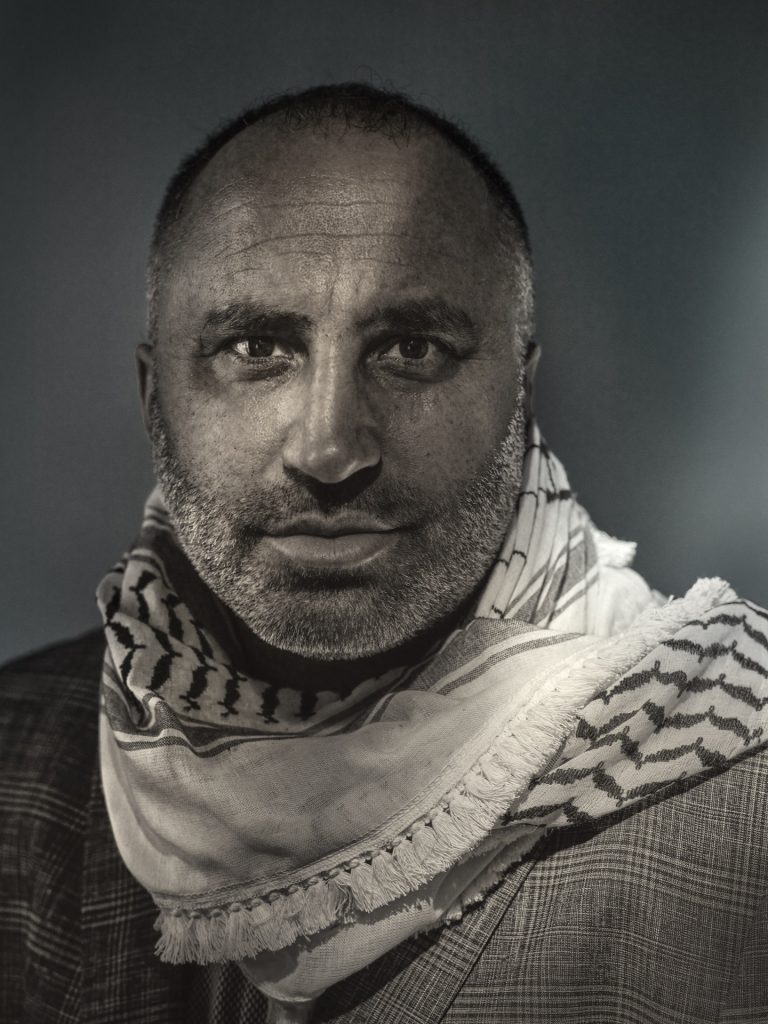
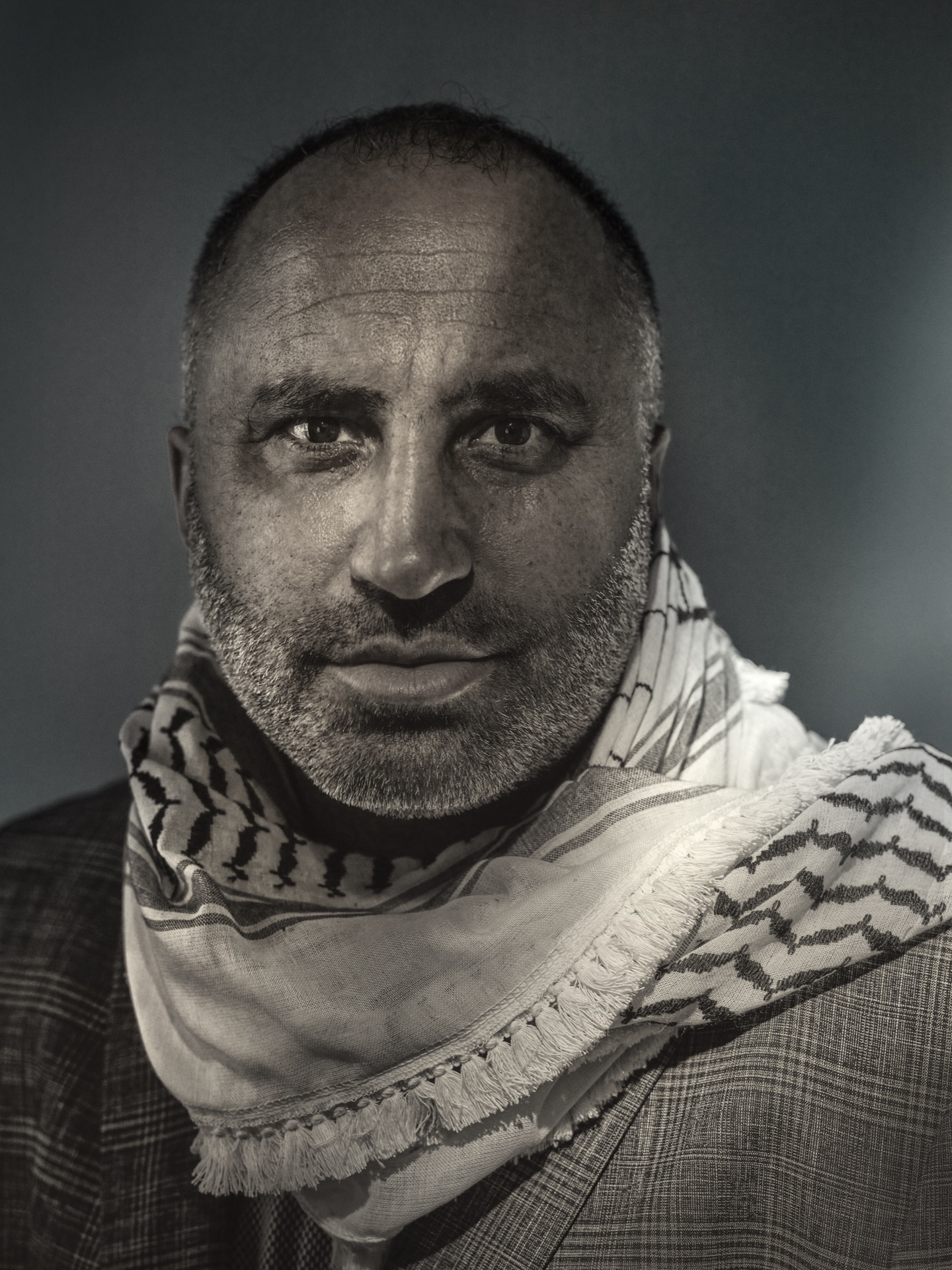
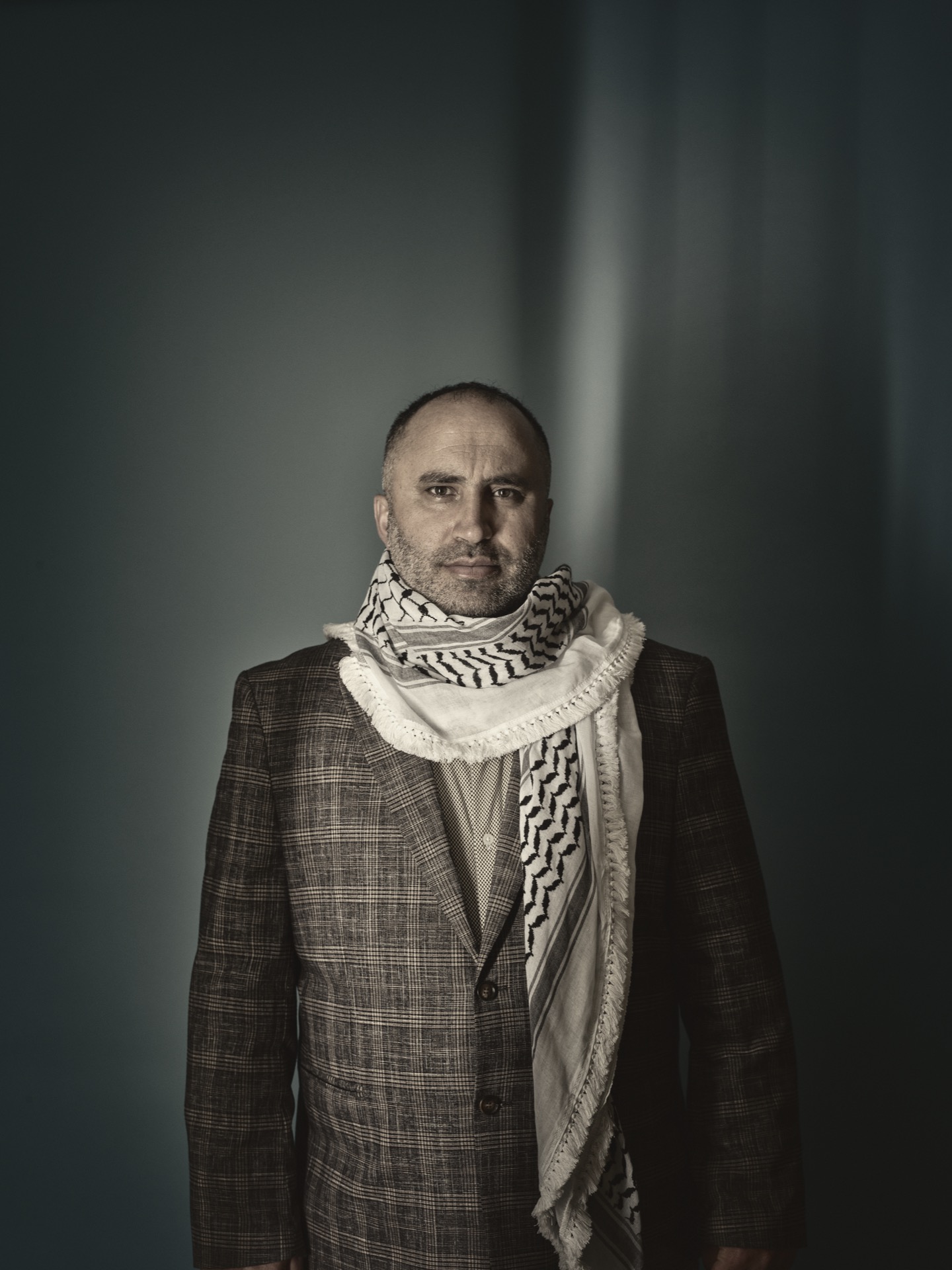
The rain had started outside by the time Issa Amro settled onto the stool in Glen Perotte’s studio. Behind him was a roll of light cyan-blue backing paper, in front were lamps and stands. Soft clicking and recalibrating underscored the scene as we waited for the final portrait to emerge from a sequence of stills. He wore a checked blazer in washed brown-grey tones, dark trousers, black trainers, and, most strikingly, a keffiyeh, a traditional Palestinian scarf, which he remarked earlier was the first time he had been photographed wearing. He sat very still.
Amro, a human-rights activist from Hebron and founder of the grassroots group Youth Against Settlements, has spent years advocating non-violent civic resistance. In 2024, he and the organisation were awarded the Right Livelihood Award, and in 2025 he was named to TIME100 Next, TIME’s annual list recognising rising global figures shaping the future. He also appeared in Louis Theroux’s 2025 BBC documentary The Settlers, which brought his work, and the pressures surrounding it, to a wider audience.
Amro was not a sitter who arrived in the studio ready to put on a front. Between test shots, he looked out of the window or down at the floor, moving his thumbs absently, nodding now and then at something said across the room. When he positioned himself for the photograph, nothing about his expression altered dramatically when the camera lens settled on him. Both in front of or in the absence of a camera, his dual character of uncompromising firmness and a softer kindness was unmistakably there.
The evening before the shoot, Amro had spoken in Jersey about non-violence, daily action and the role ordinary people can play in resisting dehumanisation. Asked what he most wanted audiences to take away, he put it plainly. “I want the people to understand that without concrete action to end the occupation and apartheid, they will not change. And I want the people to know that they can make a change, it’s not impossible, but they have to work very hard to make it happen.”
The insistence on action ran through everything he said. Amro is not only an activist, but an engineer, and when he spoke about using his own skills his whole expression seemed to brighten. The conversation moved from politics in the broadest sense to practice in the most local one, beginning with what your hands already know. “I have a license as an engineer,” he explained, “so I decided to use my engineering skills to help Palestinian families get renewable energy, to get electricity.”
“As a journalist,” he continued, “or as a photographer,” he said, with a gesture towards Perotte, “you can do a lot. Levelling up the victims and bringing down the oppressors. It’s something you like to do and can be part of your daily work. If you want to make a change, this is how you do it.”
Perotte, a Jersey photographer known for portraiture, had been drawn to the project for reasons both artistic and moral. He had heard about Amro through The Jersey Palestine Solidarity Campaign, who brought him to the island, and was struck by the fact that Amro’s work centres on peace. “What really inspired me is the fact that he is a passive resistance human rights activist,” he recalled, explaining the connection he felt to figures such as Martin Luther King Jr. For Perotte, the challenge was capturing the perfect portrait, making sure that what he created prioritised truth, not spectacle.
“I felt it was really important to capture the state of his being at this present time,” he said. A part of that was capturing his sensitivity as well as his passive resistance stance, but another part was about capturing the cost of resolve. When asked what role he sees photography playing in helping people understand lives far from their own, he pointed towards the idea that people are given a direct avenue into another’s experience when they view things visually. “That’s where photography and film has its role in helping humanity to move forward in a peaceful, harmonic way,” he said.
Amro, meanwhile, returned again and again to the idea that people do not need to wait to become someone else before they act. They can begin where they are, with what they already have. Engineers can build. Journalists can write. Photographers can portray. Cafe owners can choose what they stock. Teachers can teach differently. His point clearly drove people away from the idea of performance, and towards that of utility.
Before the sitting, he had imagined a more technical set-up. After hearing Amro speak, he changed his mind. “It really hit me that I was trying to overthink it,” he noted. “But this has to be very natural, you know?… I wanted to make it very, very direct. Let him talk. It’s his narrative.” That restraint shaped the room and the project that unfolded. There were multiple rounds of photographs, seated, standing, without backdrop, all with the keffiyeh. Perotte adjusted the lights, stepped in, stepped back, and watched. Taking frame after frame until he felt he had something that held Amro’s presence, where sensitivity mingled with resistance. It feels literary to say, but you could quite literally see it in his eyes.
Amro did not project hardness so much as steadiness. When he spoke, he was firm, but not theatrical; grounded, but not cold. He could shift, in the span of a minute, from discussing systems of surveillance and international complacency to joking warmly about age, health and diet. Whatever else the portrait may show, it was clear that Perotte was keen to capture that duality too. Most portrait photographers know the old cliché that the camera never lies barely stands up to scrutiny. In fact, a camera can lie quite easily. It can flatter, simplify and aestheticise, turning a person into a symbol masquerading as honesty. What Perotte understood from a lifetime in the craft is that portraiture can also refuse that temptation, to serve as a witness rather than a decorator.
By the end of the sitting, one remark lingered above all the others, partly because it seemed to explain why a portrait like this matters at all. I was curious as to why Amro took part in projects that, at a distance, can appear almost like niceties against the backdrop of what he’s experienced at home. “Whoever wins the art wins the war,” Amro had replied. In another context it would sound like rhetoric, but in this setting it felt grounded. Art, in this circumstance, was not a way to escape reality, but a way that reality is carried from one person to another, until indifference becomes harder to maintain. A photograph cannot itself alter history, neither can an article, but both can move something and make comfort feel less complete. Both can ask, softly but with resolve, what exactly we plan to do with the work that is ours to make.
/sə(ʊ)ˈmatɪk/ adjective relating to the body, especially as distinct from the mind. Words: Nyah Schiessel | Photography: Danny Evans
Creativity is innate in every one of us, although so many people view it as a gift only reserved for certain remarkable people, or a mysterious quality of childhood that we inevitably grow out of. As grown-ups we must resist the trap of believing that being imaginative is a privilege of those with time on their hands. Everyone has the capacity for innovation; it is a trait that has been evolving in humans for millennia.
Even if you are somebody who considers themselves not to have a creative bone in their body, the journey of introspection to discover new parts of yourself will always pay off.
We can reflect on our own childhood to understand what is worth unearthing in adulthood. The places we found enjoyment before self criticism crept in. The things we weren’t afraid to spend time on before responsibilities begged for our focus. We can learn which stones are best turned over by remembering the activities we loved, the posters we stuck on our childhood bedroom walls and the way we connected with our curiosity through play. Children are an example of self expression and true humanity before social conditioning held any weight on our consciousness.
Nurturing our individual self expression and creativity as an adult means paying attention to the interests you might have buried and making contact with your innermost thoughts and experiences. Honouring your authentic experience and your inner world is crucial to live a life that feels inspiring and promotes wellbeing.
Becoming familiar with your self expression as an adult might seem hopeless, especially if you find yourself nestled in a life that rarely challenges you to think outside the box, or try new things. That is why one of the greatest things you can do is expose yourself to new environments. Whether you follow the call of childhood interests or simply take a gamble on a new class that tickles your fancy, actively choosing to reconnect with your creativity is something to be celebrated. There is a strong pulse of expression in our Jersey community that warmly welcomes anyone who is curious. Many opportunities for self discovery can be found in classes, experiences and workshops on our island.
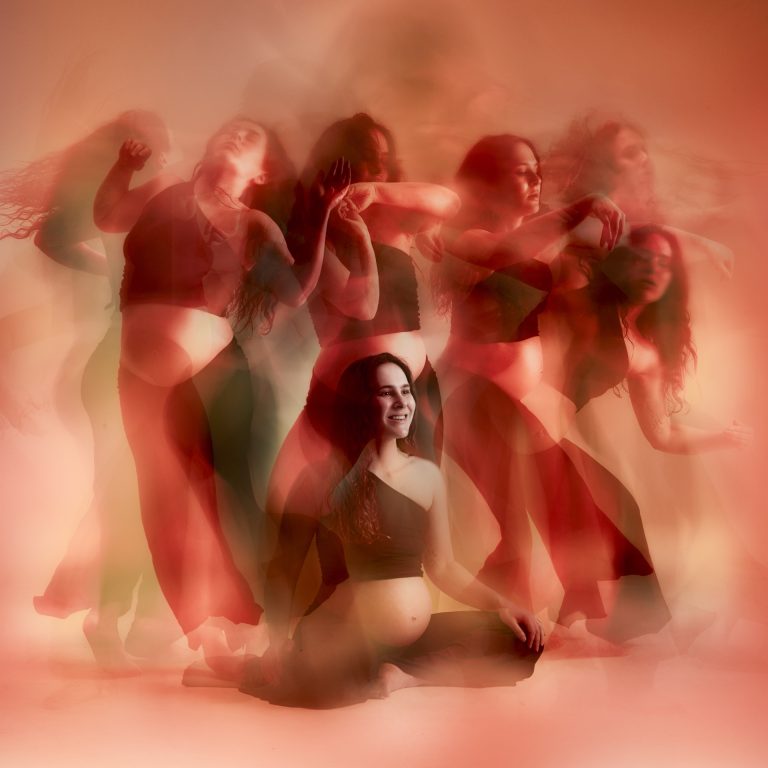
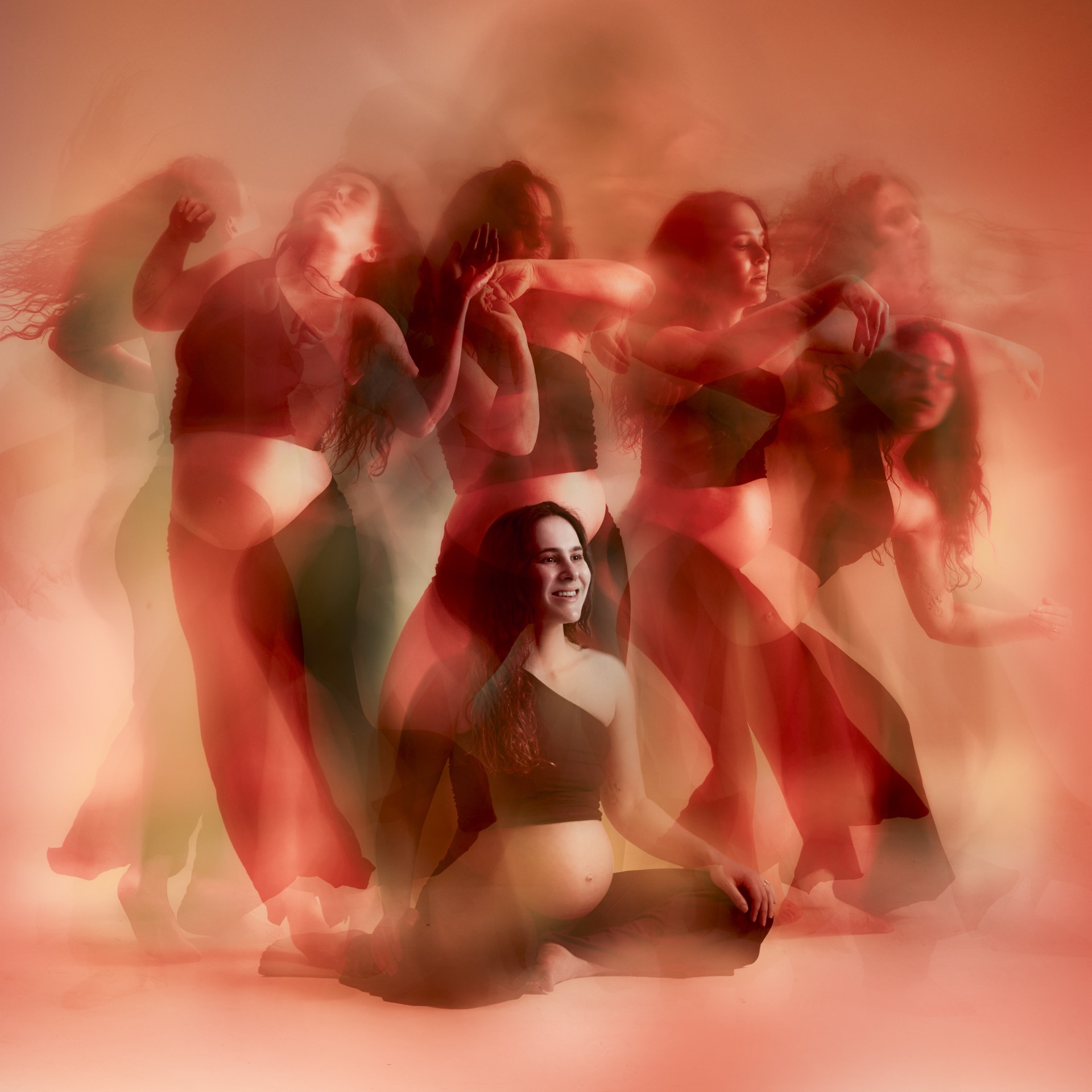
One such space is Somatic Dance Jersey, facilitated by Mia Bourne. Her sessions craft a space for conscious movement practice, fostering body awareness and inviting those who join to listen inwardly and let the body speak its own language. Perhaps you have been searching for a way to tap into your creativity without picking up a paintbrush or digging clay from under your nails, but something intuitive and free that brings you home to your body and connects you with your inner child. Curious to learn more about the practice and what it offers, I spoke with Mia about her journey with movement and the role dance can play in bringing people home to themselves.
“In a world that asks us to be perfect and perform, this is a space to feel and respond.”
A sober practice, free from alcohol, substances and even mobile phones… Not the dance scene many are accustomed to in Jersey, but no mask is necessary at Somatic Dance Jersey, where the dancefloor does not discriminate but welcomes people of all backgrounds to find and honour their individuality without pressure or distraction.
Most of her life was spent dancing in structured environments, following choreography and finding little self expression in dance, and it was during a challenging chapter of her life in which Mia found hope and softness in free movement practice at 5Rhythms, founded by Gabrielle Roth in London. The natural high and feeling of aliveness that came after a class soon led Mia to explore a more personal practice. She began to attend ecstatic dance classes in Hackney while also finding her own movement in the park, dancing with nature and noticing a strong connection between dancing with the trees and plants, and the relief of no longer suffering from stuck emotions that were searching for a way to pass through.
Watching others move their bodies and dance with no rules; shaking, crawling and jumping, gave Mia permission to let go. “Watching people move together with unfiltered honesty softened something in me,” and so, after 5 years of journeying with movement and experiencing the healing medicine of dance, finding connection with others, but most profoundly herself, Mia became a qualified facilitator with Somatic Dance International and brought Somatic Dance Jersey to the island.
Q: What is an unexpected benefit you have gained from expressing yourself through dance? A teacher once told me “How you move on the dancefloor is how you move through life.” That insight stayed with me. As I allowed myself to be more creative and responsive in dance, I noticed that same shift happening beyond it. I began to meet life’s challenges more creatively. Instead of experiencing obstacles as blocks, I started asking ‘How can I respond to this creatively?’ ‘How can this become part of the dance instead of something in the way?’
Q: What is one small thing people can do every day to tap into somatic movement? Put on your favourite song and find a way to embody your 10 year old self! We often as adults neglect playfulness and expression in our daily routines. By allowing yourself to dance freely you provide your nervous system with joy. I think children are our biggest teachers, they have no fear of judgement, they are the embodiment of pure joy and play, they are unapologetic for their unique expression and I think as we grow older we become more conditioned by social norms, and less able to connect with what we truly feel and want to express.
Q: Do you need any dancing experience to join your classes? Absolutely not! My classes are open to all. We often have an age range of men and women from 18 – 65+.
Q: What would you say to someone who was skeptical about starting? Trying something new can feel uncomfortable, I certainly felt that way when I first went to my first free movement practice. This practice is not about being “good” at dancing, it’s about feeling joy in our bodies, connecting with the present moment, with each other and also having fun whilst moving. We are all living this messy human life, we experience anger, joy, rage, grief, sadness, love and everything in between. We all have our own stories, our own experiences of life “lifeing” us. On the dance floor everything can exist together, everything is invited to be expressed and to be moved, it’s a celebration of life and all the beauty and challenges we experience as humans. My hope for this community is that things can begin to be expressed together and not in isolation.
Whether through art, music, or moments of reflection, reconnecting with our creative expression allows us to remember parts of ourselves that have been submerged beneath the demands of adulthood. Maybe the real invitation is not to pressure ourselves into being more creative, but to return to something that has always been there- patiently waiting for us to listen.
Professional dancer Stephanie Mourant reimagined her passion through fitness.
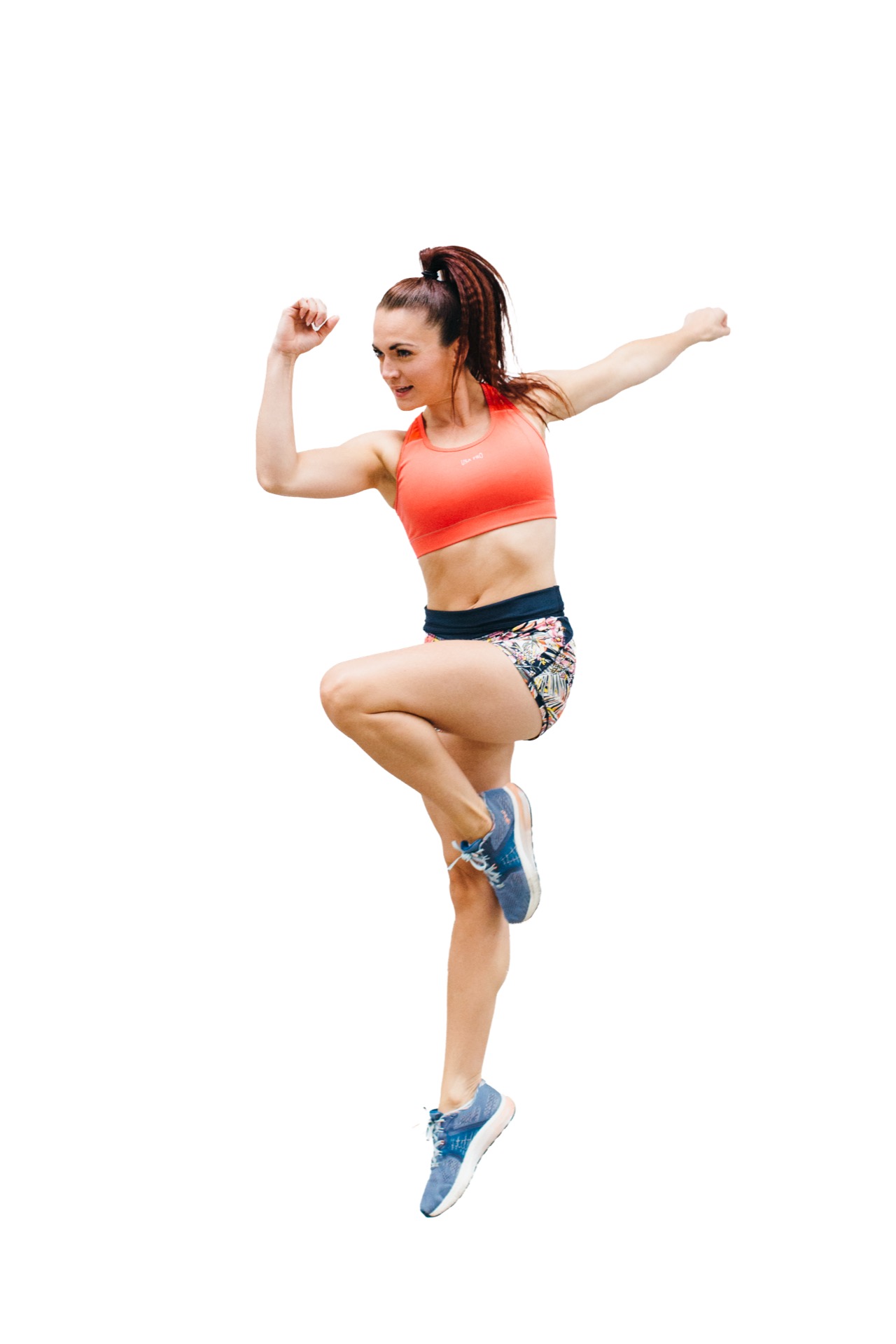
Steph is a personal trainer, fitness instructor and Pilates teacher at Funktion Fitness, but what you might not know is that she is a professionally trained ballerina who spent over a decade travelling the world as a dancer. She has taken her love of movement and created something really special at Funktion, where she runs dance fitness classes for people of all ages and abilities.
Let’s start by going right to the origin story of where this love of dance and fitness began. Steph was just three years old when she first became enthralled watching her older sister dance. She would wait eagerly at the door, waiting for her sister to get home from her dance class and teach her everything she had learnt. As the years went on, Steph began taking more and more classes after school, and it quickly became clear that dance was her passion.
At the age of 12, she left home to study at the prestigious Hammond School in Chester. This is where things really intensified. Six years of academic study alongside hours of daily dance training pushed both her body and mind. There were moments where she was worked to exhaustion, with her body almost giving in, yet she was expected to continue training. It was tough, but Steph wouldn’t change a thing. “It ultimately shaped me into the strongest dancer and performer I could become.”
After graduating, Steph performed in several shows across the UK, including The King and I at Curve Theatre. She then went on to have a successful career performing with Cunard Line and Holland America Line. After performing on several world cruises and travelling the globe, Covid hit and Steph returned to Jersey. During that time she gained her personal training qualifications and began working at Funktion. It was here that she introduced dance fitness to the gym, bringing together her two passions. Steph’s mantra for her classes is simple. “It’s not about getting every step right. That will come with time. Dance class is really about moving your body to music and, most importantly, having fun and releasing those feel-good endorphins.”
Steph’s love for performing is infectious. It’s fascinating to see someone who has chosen such a different way of life – one full of travel, energy and challenge. We spoke about the highs and the lows: the discipline of boarding at a high-level dance school from a young age, being pushed to exhaustion, and even figuring out technical partner lifts on a boat in the middle of the Atlantic.
Music, of course, is a huge part of dance. Steph tends to choose songs that connect with her personally. This process influences her choreography and helps maintain the high level of energy she brings to each session. Physically, the classes are a great cardiovascular workout (something I can personally attest to after trying one myself). Drum beats and greatest showman playing, you don’t even realise you’re working out! Steph explains that “The high-energy nature of dance helps strengthen the heart, improve circulation and increase lung capacity, while also burning a significant number of calories.”
“Dance involves moving the body in different directions and planes of motion, it also helps improve balance, coordination and agility, which supports better posture and body awareness.” Alongside the physical benefits, dancing also has powerful mental benefits. It can help reduce stress and anxiety, lower the chances of dementia and create a sense of connection through community.
Steph sees this transformation regularly in her classes. “Over time, I see people’s confidence growing, not just in the class but in themselves. People start to feel part of the community and begin to bring their personalities to class. They also realise how good it feels to move their bodies, let go of stress and have fun. For most people, dance class becomes something they genuinely look forward to each week.”
Overall, it’s clear that dance goes far beyond what we might first expect. It’s rooted in community, energy and connection. It’s inspiring to see how Steph has taken her love of performing and found a way to share that passion with the island.
See Steph at 5.30pm on Tuesdays and 12.15pm on Thursdays. www.funktion.je
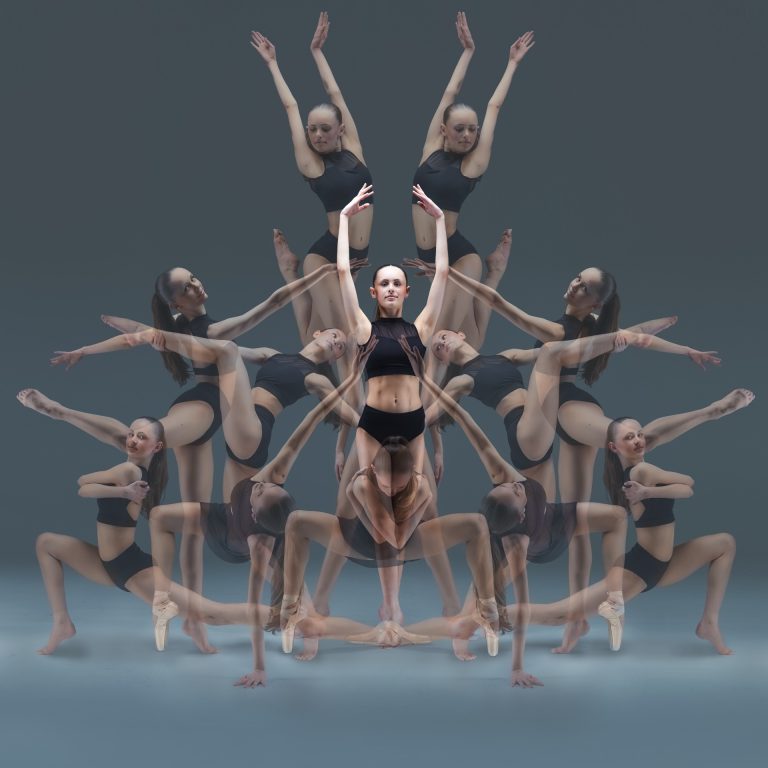
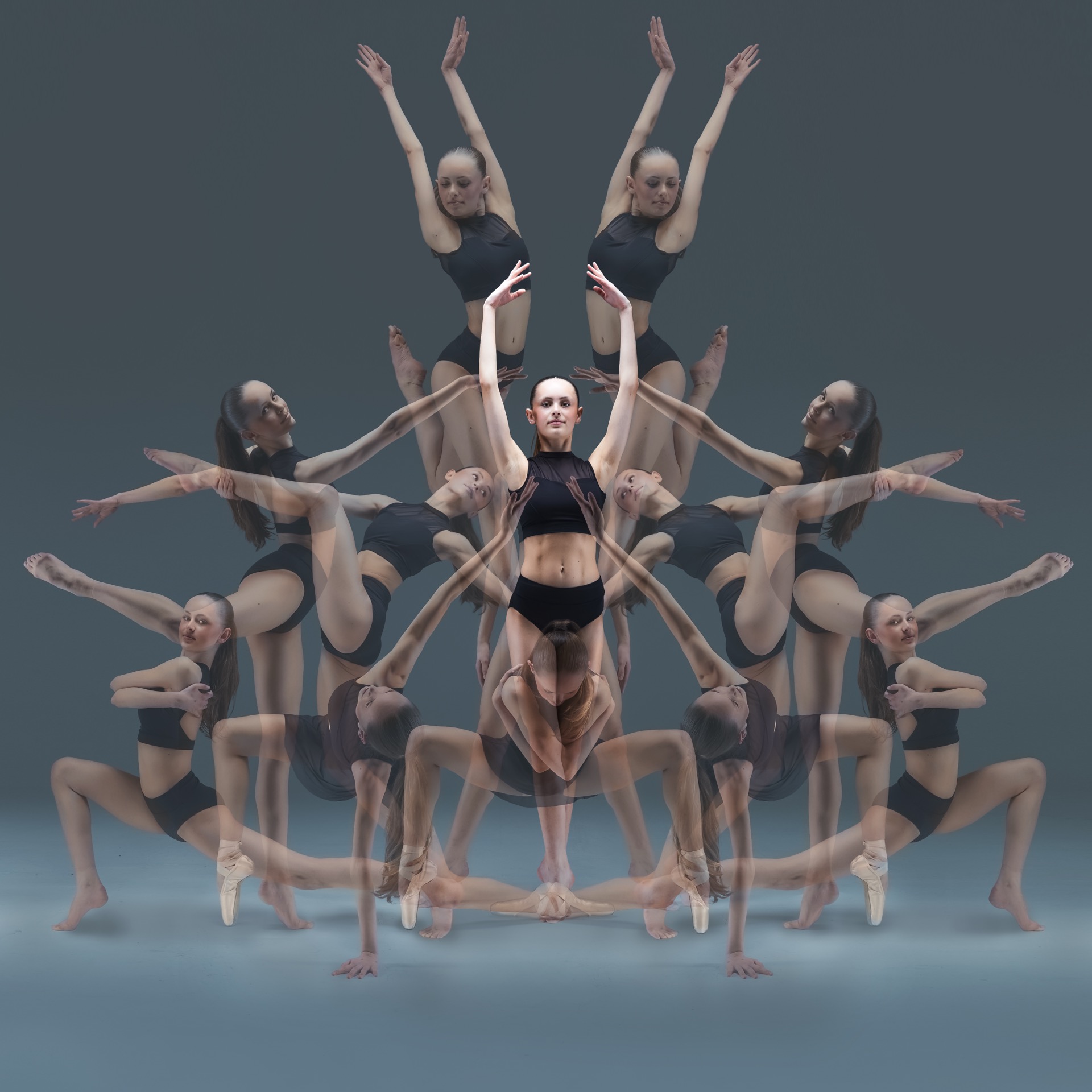
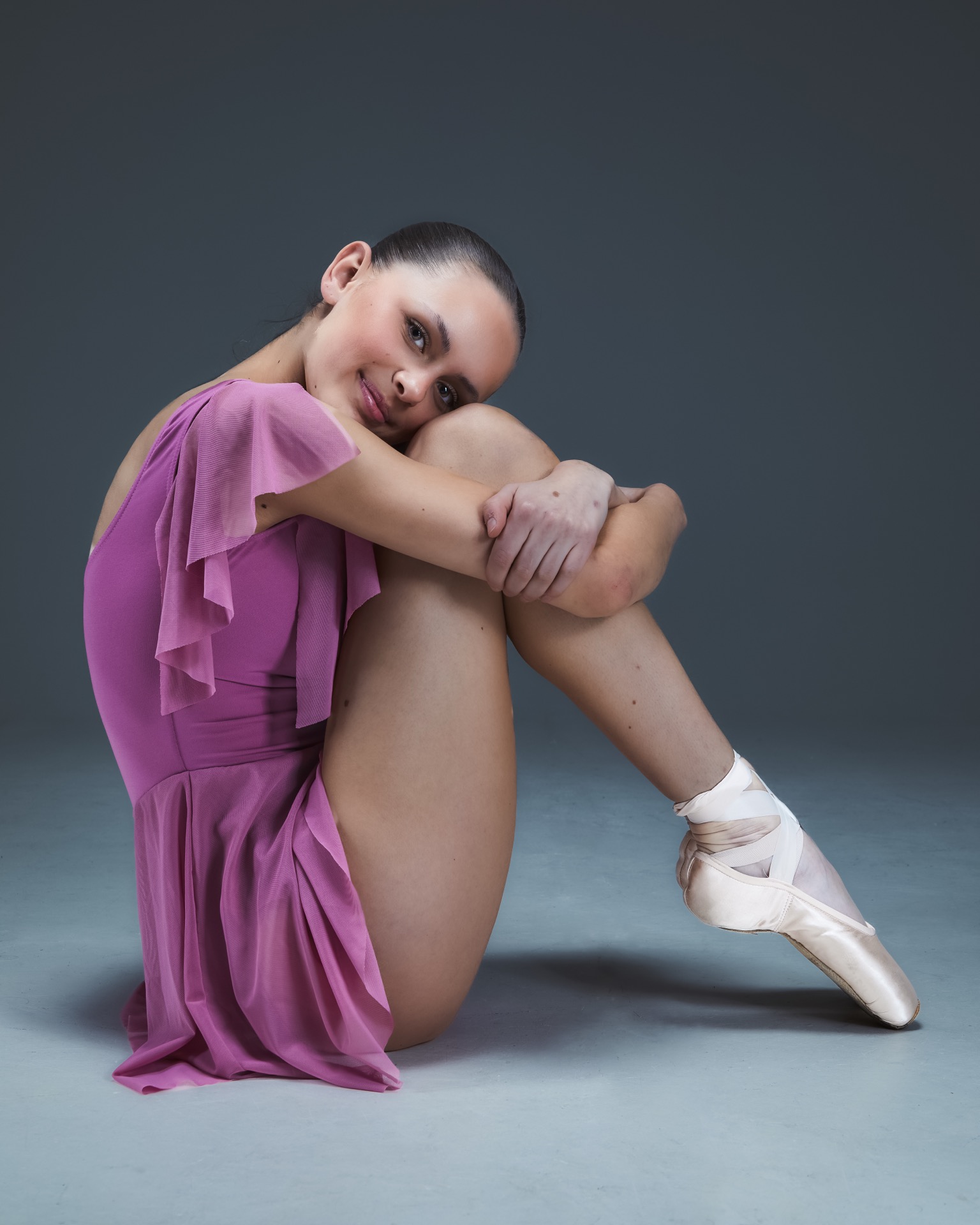
No performing arts supplement would be complete without championing some of our island’s outstanding talent on the dance scene. I had a chance meeting with Carolyn Rose Ramsay from Ballet d’Jerri while searching for some of Jersey’s most promising performers, and she pointed me in the direction of Darcey Cronin, an eighteen-year-old dancer who decided a few years ago to pursue dance professionally and has been working towards that goal ever since.
Having established a reputation both on and off island through competitions and performances, Darcey is accustomed to a rhythm that leaves little room for idleness. Training every day for around three hours, often more, she embodies the kind of commitment that builds quietly over time, her discipline so ingrained it feels instinctive.
Darcey began dancing at the age of three at what was then First Tower School of Dancing, now Silhouette Studios of Performance. Ballet came first, laying the technical foundation on which everything else would build. Under the early guidance of Mary Walledge, she developed what those around her describe as a strong grounding in classical technique. Over time, that base expanded. Today, she has reached advanced levels across ballet, modern, tap and highland, and moves comfortably between styles that demand very different things of the body and mind.
With a broad range of styles under her belt, including ballet, jazz, highland and contemporary, Darcey is well equipped for whatever a performance demands. Nevertheless, she is clear on her preferences. “My favourite styles are probably ballet and contemporary because they suit me the most,” she explained. “But then I also love doing tap and jazz as well.”
That range has been shaped in part by her training with Narelle O’Connor, under whom she has developed both technical ability and stylistic fluency. It is a combination that has served her well on the competitive circuit. Darcey has taken part in UK competitions and local Eisteddfods, steadily building a record of achievement that culminated this year in winning the Angela Burnett-Craigie Cup for ballet. At the Channel Island Dance World Cup qualifiers, she was awarded Most Outstanding Dancer, a distinction given at the judges’ discretion to performers who stand out across an entire weekend. Reflecting on the moment in a characteristically understated way, she said, “it’s nice to know that all the hard work pays off.”
The turning point in her story came not as a single moment, but as a gradual shift in belief. Having trained her whole life, it was not until she was around fifteen that she began to take the idea of dancing professionally seriously. “Learning more about it made me realise I really wanted to go into it,” she explained. Even then, her ambition came with some hesitation. “I think the turning point was believing that I could do it,” she reflected. “I decided I’d rather try it and fail than look back and think what if.”
That growing confidence can be traced in part to her introduction to Ballet d’Jerri. After being noticed at a competition by Carolyn Rose-Ramsay, she was invited to take part in a workshop. What followed was a sustained period of informal training with the company, attending classes and, when possible, performing. “The dance classes are built to make you feel like you’re in the company, and it really helped me with my confidence,” she said.
For a dancer based on a small island such as Jersey, proximity to a professional company like Ballet d’Jerri is significant. “If you want to watch professional ballerinas, you usually have to go to the UK to see them,” she said. “So being able to watch them perform here is… it’s really inspiring. It gives you a sense of security, seeing that it’s actually possible.”
What emerges most clearly is a dedication to a particular mindset. “I think it’s more so your own mental strength,” she says, when asked about the challenges of developing as a dancer. “You really have to believe in yourself. I’d say that’s probably the hardest part of it.” When asked what advice she would give to younger dancers, she said, “Don’t compare yourself to other people… just focus on yourself.”
That sense of possibility now extends beyond the island. Darcey has been offered a place at London Studio Centre to study ballet and dance performance from September, with the potential of an Exceptional Talent scholarship. She is also in the process of auditioning for the Royal Conservatoire of Scotland. Alongside this, she is preparing to sit her A-level in dance, for which she is predicted an A*. Balancing academic work with an intensive training schedule is, by her own admission, demanding, though not unfamiliar. “I’m kind of used to it,” she says. “I’m a very organised person.”
In Darcey’s answers, there is a noticeable absence of grand narrative. Her achievements are acknowledged lightly, her ambition tempered with a clear understanding of the industry’s demands. For now, the focus is on the next step, further training and the transition from a promising student into a professional dancer. Asked about her dream stage, she mentions Sadler’s Wells, the London theatre where The Royal Ballet began its life. The answer feels less like a distant ambition and more like a natural destination along a path she is already following. If the trajectory holds, it is not difficult to imagine her there.