Home Blog Page 167

The Channel Islands rich list.

0

People love a rich list. I hope it’s as an aspiration to working hard and achieving in the same way that people and families that appear in the ranks have done over the years. The fact that the Sunday Times press release the information below as an entre, encouraging you to go and buy the paper this week and gorge on the main course of those further down the list, is evidence that there’s a clear meal in it for us as the other 99%. Here’s how it goes down for the top 20 Channel Islanders this year;

CI rank Name Island 2016 wealth Wealth increase/

decrease

National rank
1 Sir David and Sir Frederick Barclay Brecqhou £7bn Up £500m 12
2 Sir Philip and Lady Green Jersey £3.22bn Down £280m 29
3 Douglas and Dame Mary Perkins and family Guernsey £1.55bn Up £100m 66
4 Steve Lansdown Guernsey £1.4bn Up £107m 75=
5 Simon Nixon Jersey £1.026bn Up £81m 113
6 Douw Steyn and family Guernsey £700m No change 164=
7 The Clarke family Jersey £500m No change 228=
8 Tony Buckingham Jersey £425m Down £50m 268=
9 Graham Tuckwell Jersey £273m Up £20m 387
10 Guy and Julia Hands Guernsey £260m Down £5m 403=
11 James Vernon Jersey £250m No change 418=
12 David Crossland and family Jersey £200m No change 515=
13 Derek Coates Guernsey £190m No change 557=
14 Ronnie Frost Guernsey £160m Down £41m 640=
15 Gordon Crawford Jersey £122m No change 825=
16= Brian de Zille and family Jersey £120m No change 831=
16= Con Folkes and family Jersey £120m Up £18m 831=
18= Roger Baines and family Guernsey £110m No change 885=
18= Nigel Jagger and family Jersey £110m No change 885=

Some on the list are old, some are new. Some are soooo Money Supermarket. Largely the big hitters are familiar by name to us in the Channel Islands. What’s most galling is that those twins in Brecqhou clearly outstrip our Jersey crowd. Sir David and Sir Frederick Barclay of Telegraph, Ritz and Sark news fame remain heads of the Channel Island wealth league, according to The Sunday Times Rich List 2016, published on Sunday. Valued at £7bn, they have seen their fortune rise by £500m in the past year. 

The 81-year-old brothers last year sold their stake in the Maybourne Group of luxury hotels – comprising Claridge’s, the Berkeley and the Connaught in central London – in a deal that cost the Qatari purchasers £2.4bn. Based in Monaco, they own the island of Brecqhou and retain hotel interests in London through ownership of the Ritz. They also own the Telegraph Media Group, which made £54m profit last year.

 In second place, Sir Philip and Lady Green are included in the Channel Island Rich List for the first time because their Taveta business, which owns Arcadia, is based in Jersey. Arcadia owns high street chains including Topshop, Topman, Dorothy Perkins, Burton and Miss Selfridge. Green sold the struggling BHS chain for £1 last year and has offered £80m to top up its £571m pension deficit. Overall, the couple’s wealth is down £280m in the year at £3.22bn.

 There are three other billionaires based on the Channel Islands, each seeing substantial gains in their fortunes in the past 12 months. Douglas and Dame Mary Perkins rank third on the islands with a fortune of £1.55bn, up £100m in the past year. The couple met at Cardiff University and later founded Specsavers. Sales exceeded £2bn for the first time in 2014-15, with earnings from Europe, Australia and New Zealand accounting for almost half the business. They live on Guernsey and their Specsavers Optical Group is based there.

 Steve Lansdown’s wealth is up £107m on the year to £1.4bn. Guernsey-based Lansdown has stepped down as a non-executive director of the Bristol-based financial adviser Hargreaves Lansdown, which he co-founded, but he retains a £973m stake in the business.

Simon Nixon, who co-founded Moneysupermarket.com in 1999, sold the last of his shares in the business last month. He has earned £551m from share sales since the business was floated. With properties valued at £310m and stock market investments worth £490m, Nixon has achieved billionaire status for the first time this year, valued at £1.026bn, an increase of £81m on last year. One of our newest 11k/21e’s, or whatever codeword you give those that move to Jersey having done well elsewhere, Simon runs a luxury holiday homes business called Simon Escapes and can be seen about the island being, well, pretty normal really. Having this list of folks residing in Jersey and our sister isles is great for the island and its economy. Long may they want to come and live here…

Out of Africa

0

Often, in the early hours of the African sun, the savannah is brushed with silver and the air for a brief moment is cool and tolerable. We’re driving south in a wanderlust mood. On endless roads – mimicking our thoughts – I harp back, to that very first encounter.

I was young with the family on safari in the Masai Mara. After a mystical sunrise viewed from a hot air balloon, which cemented our fondness for the African plains, we enjoyed a bush breakfast near a river filled with grunting hippopotamus. Here, we met the Masai people. I remember being shocked by their diet – entirely consisting of blood and milk. My memory, though fragmentary, still consists of a sea of red and blue, an echo from their dance and their song.

I’m brought back to reality by the crash of metal; our Toyota Hilux is being slowly disassembled, piece by piece; a severe consequence of infuriating corrugated roads. We’re speedily travelling through the Ngorongoro Conservation Area, home to the famed Oldupai Gorge and the gargantuan Ngorongoro Crater. The crater itself is vast and alien, an enormous vista – once inhospitable and fierce – now luscious and green, sustaining a unique, flourishing, oasis of wildlife. We briefly gazed in awe then proceeded to head further down into more lowland areas, and into Masai territory.

“They had that attitude that makes brothers, that unexpressed but instant and complete acceptance that you must be Masai where it is you come from… the thing that used to be the most clear distinction of nobility when there was nobility.” Ernest Hemingway, Green Hills of Africa.

Our visit, like my first to the Masai, was unforgettable. The colours are just as deep, the cattle just as precious and the way of life nomadic and noble. It felt like time had only changed for myself. We’re shackled by the concept of time standardised by the western man, using it to atone, to forgive, because ultimately, we fear time. There’s no fear here, death is as noble as life. Not that I’m condoning death, but here there’s a perennial youth. You witness an attitude of an unbound life – no shadowy definiteness – time, like a river is “here and now,” it may never make dawn, but it flows, so go fishing.

Three weeks later you’d find us stuck in Africa; a result of those corrugations a few weeks prior shattering our shock absorbers and differential. We drove confidently through rural mud tracks blissfully unaware, then, just off the shore of Lake Malawi, we inevitably got stuck. Our escape took a total of 20 men, some helpful children and a congregation of criticising women who through visual acknowledgments were humorously commenting, along the lines of: “There seems to be an awful lot of noise and not much happening.” In the end it took three hours for our Toyota to emerge triumphant from the ochre ooze.

Later on we visited Matewere Village. I was on the hunt for a grand baobab tree. I found underneath my chosen tree two guys, Loyd and Paul, sitting weaving cane for their business – Mulambe Cane Furniture. Regrettably, throughout Africa we’ve found an abundance of cheap plastic furniture: it’s everywhere. Of course, your choices in life are often a consequence of available funds, but here we found a traditional process, affordable, natural and revered amongst the community, which was a relieving change of pace.

“We must respect the atmosphere which surrounds the human being, and integrate into the portrait the individuals’ habitat – for man, no less than animals, has his habitat.” Henri Cartier-Bresson, The Mind’s Eye.

Theorising portraiture before and during this journey has been a challenge to say the least. No amount of preparation can ready you for the unexpected – in Africa, always expect the unexpected. One thing has always been clear, I’d never pay for a portrait. Ethically and personally it destroys the integrity of the photograph, and thankfully, most people never ask – Loyd was one of these genuine people.

I gestured to an area, Loyd sat down and relaxed into a natural position. I leant forward – repositioned – pulled focus slightly – light emerged from behind a distant cloud, illuminated the skin on his face – I breathed in – breathed out – fire – no click. I’d run out of film – always learning the hard way. Luckily the scene materialised again after I’d reloaded. There, just as Cartier-Bresson had discovered in Africa at the age of 23, I too truly understood the careful combination between environment and sitter. You have to strive to be faithful to reality, controlling is uninteresting, it diminishes the complexity of the individual – it’s rather insulting.

In the distance, about 1km away, from the dark forest came a hyena’s laugh. To put this into context, we were camping in Mana Pools National Park, Zimbabwe. The hyenas’ cackling and conversations carried swiftly in the night air, igniting an anxiety within me, cutting me. I’d learnt to be on the edge, to be teetering on a precipice, to be torn out of comfort and challenged; to live. The hyenas did more; secretly they made me fear death. Up until then I’d been rising above earthly worries, but there, in that instant, I was reminded of my own mortality; the cackle was a breath of fresh air so crisp and sharp it woke me, from my banal safety net of existence. My body grew warmer, my ears twitched and reacted to any noise, vicious scenarios played through my head like a scratched repeating tape – I felt alive.

Later, that very same evening, I received a childhood wish. I’d always wanted to see a firefly field. I’d seen pictures but the real experience is like anything – unrivalled. The fireflies appeared just after dark. One at first, lightly explored our camp, landing and glowing like a tiny fluorescent bulb. Their numbers began to build. More and more, further and further out into the river marshland by the camp. By 8pm they were glorious, deadly silent, pacing their individual path back and forth.

“It is impossible then not to imagine that a whole crowd of children of six or seven years are running through the dark forest carrying candles, little stocks dipped in a magic fire, joyously jumping up and down, and gambolling as they run, and swinging their small pale torches merrily. The woods are filled with a wild frolicsome life, and it is all perfectly silent.” Karen Blixen, Out of Africa.

That’s what Africa does. It teaches you about life and death in its coeternal state – never one without the other – God and the devil, light and dark, not in battle, but in a perpetual state of being.

Now, leaving Africa, I’m hungry for more; for more smells and starry nights, for places of unpredictability; I’ve caught the rhythm, learnt the game, though there’s so much more waiting to be explored, out there, along the west coast. But sometimes, there’s no reason to search for anything. The mind travels.

“…any number is a limit, and perfection doesn’t have limits. Perfect speed, my son, is being there.” Robert Bach, Jonathan Livingston Seagull.

Reference: Shakespeare, William. Henry IV, Part 2. Oxford: Clarendon Press, 1998. Print / Hemingway, Ernest. Green Hills Of Africa. New York: Scribner, 1935. Print / Cartier-Bresson, Henri, and Michael L Sand. The Mind’s Eye. New York, N.Y.: Aperture, 1999. Print / Blixen, Karen. Out of Africa. Penguin Classics; New Ed edition 27 Sept, 2001. Print / Bach, Robert. Jonathan Livingston Seagull. Scribner Book Company; Reissue edition, 21 Oct. 2014. Print.

Ocean Culture Life

0

My heart lies in the Eastern Cape, in South Africa. It is my birthplace, my spiritual and community home. How apt that Leasa Marie and I should begin our journey in this drought-ravaged, parched landscape tended by the most caring, committed and resilient folk I have ever encountered.

Here we met with loved ones, moving along the coastal towns and villages, to celebrate the festive season, to commiserate with the loss of their livestock and to re- kindle precious bonds. Our route culminating in Morgan Bay. To leave its vast swathes of white sand, unpredictable ocean currents and rip tides, pounding at the bases of dramatic cliffs where my forefathers’ ashes are strewn, is more difficult than I can ever express. Days later, our quest to push up into the unspoilt beauty of Sodwana, and to stick to our itinerary, gave us the incentive to move on. 

The views of Sodwana Bay are quite literally, breath taking. I had never been to Sodwana before and I can honestly say, that it’s one of the most beautiful places I have visited. We were in the heart of iSimangaliso, an independent kingdom, free of South Africa’s rules and regulations and in Sodwana Bay, one of the top dive sites in the world! Such a privilege and a thrill.

Hanging out with Pedro, Janu, Valentina and Sirreal in The Pizza Place in Sodwana on the first night, and on subsequent nights, was both comforting and liberating, as we became woven into the fabric of this barefoot, wild coast culture and its welcoming local community. The whole vibe of this place was relaxed, friendly and unpretentious. Phenomenal pizzas, cold beers and a spontaneous jamming session were the perfect backdrop to the first rains that had fallen since we had been in South Africa. 

Our senses were zinging as we processed the earthy scents, the celestial pattering of raindrops, heavy with promise and the responsive call of the insects.

We silently gave thanks for the relief these blessed rains would bring to all those we had left behind in the Eastern Cape – each drop representing kindness, life and love. Our hearts had been heavy with the weight of drought and death as we had travelled through the Transkei, on our journey up here. Nature was now in metamorphosis, soaking the life giving rain, transforming itself into green shoots of grass, waterholes and silvery river beds. 

Our first impression of Sirreal, an 11 year old, local boy, was of a smiling, confident, and friendly kitchen porter, at work as an equal in The Pizza Place. Yet, like so much else in this place, his appearance belied the truth of his situation. At the age of 9, Sirreal came to ask Janu and Pedro for a job, so that he could support his family. Within a year, this enterprising young boy had saved enough money to hire out the Pizza Place and to pay for all his friends and family to have a party. At 11, his passion for conservation, his community and the ocean is amazing. His diving skills have been fostered by Pedro and he invests his savings into his family, diving equipment and continues his own education by exploring the coast. The wonder and courage of the human spirit continued to inspire us. 

On another occasion, Simon, owner and front of house, welcomed us into Sunrise Tavern on the outskirts of Sodwana. This little shebeen, had all the characteristics of a Western out-post saloon: roughly hewn benches and tables, candles, iron grilles and a clientele of sober, even-tempered men who soon became drunk and belligerent as evenings became long nights. We saw symbolism round every corner, here no less than in the capricious, volatile nature of man and the sea. 

Word amongst the locals was that there had been a dearth of game fishing in the area. So, we took to the air! A microlight flight along the coast to track the game fish seemed the most effective way forward. From that height, the reefs were awesome, giant scribbles on the ocean floor. The colours of the sea, a moving counterpane of azure, aquamarine and sapphire. Our hearts were hammering, our spirits high, filled with reverence for this astounding beauty. Nothing could stop us from venturing further along the coast.

Who better to go exploring this amazing coastline with than my old school-friend, Darren. For seven days, we travelled in his jeep North toward Mozambique, hunting out the choicest bases to trek, swim and dive from. Travelling this far North into unmanned reserve does not come without its security concerns, both while on the road and camping. Having tactical strategies in place for possible eventualities and a constant awareness of your immediate environment is a necessity and a price paid for accessing this untouched coastline. iSimangaliso Wetland Park gave us the opportunity to get in and under some of the roughest, tumbling, dumping waves that we had encountered. Darren, a seasoned master diver and all round ocean child, revelled in this amphitheatre of danger and drama. We sought refuge in the natural coves and holes, hiding away from the washing machine effect of the waves. They bounced off the colossal reefs and climbed out of the depths of the massive drop-offs, threatening to scoop us out and toss us around like playthings. Such exhilaration! 

In contrast, on one of our calmer dives, spotting a solitary manta ray was awe-inspiring and the first that Darren had seen in all the years he had been diving along this coast. The sea and its deception…a different mask for every occasion and never more enigmatic than in these powerful, forceful, loving waves of the Southern African shoreline. We fell in turbulent love with the place, daily. 

Further down the KwaZulu Natal coast to the magnificent beaches of Balito just North of Durban, we met extraordinary fishing cultures with a love and zest for the ocean, the source of their livelihood and joy. One such character, Tarreck, did not seem to have the expected fear of creatures lurking below his small, fishing kayak. He only seemed a little phased when a 3m Bull Shark, also known as a Zambezi Shark, launched itself at a friends fragile vessel and tried to take him out, sideways! He was only too happy to return to the same spot of the attack, on the same day, to lead me to the pugnacious predator. His sound navigational skills dropped me pin point above the boat wreck 400m beyond the shore break, where they had encountered the bull shark hours before, and to so generously, send me into the depths, armed only with a camera, we unfortunately didn’t see or butt heads with the maniac. 

As all itineraries tend to do, ours swung back on itself, pointing us, in the direction of The Pilansberg Game Reserve, a geological phenomenon. As an ancient, volcanic complex, it features as one of the largest and most important in the world. We were drawn not only to its spectacular scenery but to experience an area that was brought back to life through Operation Genesis; re-stocked with wildlife and reclaimed from human settlement in 1979. The question was how to gain an overview of such a magnificent, vast area in a very short space of time. The answer – by hot air balloon. 

At 4.00, the air is particularly fresh, unsullied by neither heat nor dust. Our view from the basket…perfect! What struck us most, was the disinterest of the animals as we floated above them, parallel and therefore, unthreatening. Moving without force, resistance or control, we noticed the zigzag patterns of the crocodiles’ prehistoric spines as they lazed in the waters below. In fact, there were patterns everywhere. The systems, order and constellations of nature had never before been so distinct and evident. The rains had transformed this landscape into a tapestry of rich hues and textures. 

Leasa loved the close contact with the white and Bengal tigers in the Wild Predators’ Sanctuary, located in the Pilansberg National Park. Hand-reared, they were comfortable with her caresses and attention and these vulnerable, charismatic and fickle bundles of fur, entranced us. 

We were at the end of our journey, and it left us with profound, emotional and stirring memories; flickering and flying through our hearts and minds daily. They continue to do so. 

-Googsi.

Time for Tea

0

Lillie’s Tea Lounge at the Radisson Blu Waterfront hotel takes its name from actress Lillie Langtry, the renowned ‘Jersey Lilly’, one of Jersey’s best known historical characters.

Lillie’s tea lounge has a great menu that offers a variety of light dining options throughout the day, including breakfast and lunch items.  But it was the three tiered delights we were there to sample.  We opted to try both the classic afternoon tea and the alternative afternoon tea, which offered us something a little different from the norm, in the form of two hot savoury elements, of which we could choose ourselves from a small menu.

From the classic menu we could choose two mini open sandwiches with a choice of toppings which included prawns and salmon, poached chicken and pancetta, ham, mayo and gherkin or simply cheddar cheese.  These were a lovely savoury option and the bread and toppings were brilliantly balanced, setting the scene well for the sweet treats to follow. The Chef’s choice of two mini desserts included a toffee profiterole filled with cream, which will be hard to match, light and airy with the perfect balance of toping and filling and gone faster than you could blink.  Alongside this there was a slice of toffee cheesecake, which was far lighter than you expected and also delightful.  Of course you can’t have afternoon tea without scones, at Lillie’s you can choose between plain or fruit, served with plenty of clotted cream, jam and Jersey butter.

Next we move on to the alternative afternoon tea, where this time we could choose between a variety of fillings in our miniature bridge rolls, which included smoked salmon and cream cheese honey roast ham, mustard mayo and gherkins, egg mayonnaise and watercress, Tuna, crème fraiche and cucumber.  Added to this were the hot options, where we opted for the Tandoori chicken drumstick, but could easily have enjoyed the honey and lemon chicken skewer or a courgette, pepper and halloumi skewer.  Finally we had the choice of a duck or vegetable spring roll, served with sweet chilli dipping sauce.  We opted for one of each, so we could try them both of course.  The alternative afternoon tea is further accompanied by a fabulous chocolate cappuccino mousse, topped with cream and served with a chocolate flake. A freshly baked fruit scone, served with Jersey strawberries, more of that jam and clotted cream and a slice of light and luxurious lemon cake, which finishes it off perfectly.

The hot options see you waiting a little longer, thanks to the individual components being made to order by the chef and his team.  This just means you have plenty of time to choose which pot of tea you want to accompany your feast. I’m not sure I’ve ever been faced with such an impressive menu of teas, at Lillie’s you can choose from a variety of different Ronnefeldt loose leaf teas, all served in individual pots and their very own timer, which you turn to ensure you’re enjoying your tea at it’s very best. Thankfully we had a very help lady on hand to help guide us through the menu, meaning we all got exactly what we wanted to drink and none of us were disappointed.

The service at Lillie’s was excellent and both of the afternoon tea options were superb, nothing was left on any of our plates other than crumbs. The one piece of advice we would give you before booking your table at Lillie’s, make sure you leave yourself plenty of time to sit back and really enjoy yourselves, this is not an experience to be rushed, oh and skip lunch as you’ll want to leave plenty of room for the generous portions.

The tea Lounge is open Tuesday to Sunday from 9:00 – 6:00pm and you can contact them on 01534 671100 or email tealounge.jersey@radissonblu.com

The Blind Pig

0

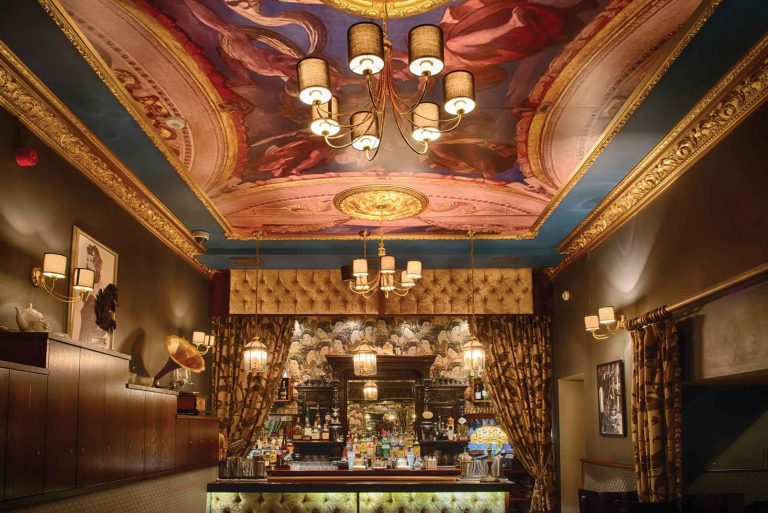
The Blind Pig is a real piece of drinking history, carrying on the traditions of the prohibition era, the Pig is the island’s first and only speakeasy, hidden from public view, she is a real treasure, once found. Sitting in a secret location in St Helier there are two ways to enter, one slightly more obvious than the other, but once you’ve found the Pig, you’ll never want to forget it.

The brainchild of Brian Smith, The Blind Pig opened their doors four years ago, although this year saw them celebrate their first birthday… Yes that’s right, in typically confusing fashion the curator took full advantage of the extra day in every four years and opened on leap year back in 2012. With a seasonally changing cocktail menu you’ll never fail to find something that will delight you and all of the team behind the bar are on hand to help you decide, if you can’t.

Brian’s crack team are headed up by new addition Dominik Smajda. He hails from Slovakia, where Brian found him working behind the bar at Zahir in Nitra.  It took Brian just 30 seconds to see he’s a man with talent and he offered him a job straight away, well after he’d made him the perfect Old Fashioned first.  

“I started working in hospitality when I was 16 years old as a waiter. Whilst studying and learning about the hotel industry, I worked in lots of restaurants and hotels and spent a year perfecting my skills in Cyprus…but realised early on that my true passion lay within coffee and the world of cocktails!

The opportunity to fulfill my passion came shortly after I finished school and I began working at Zahir…a beautiful American cocktail bar by night and cafe by day! Here I learnt to fine tune my skills as both a cocktail bartender and Barista.

Dominik Smajda
I was ready for a new journey, and had a ticket booked to head to London, but I was fortunate enough to meet Brian and be introduced to The Blind Pig and the beautiful island of Jersey that I had no idea existed!

After a few short months, I am loving my beautiful new island, appreciating the freedom and creative license I have to grow with The Blind Pig…and now I am ready to see it in the lovely summer months!

Favourite drink…
(As I sit on the fence…) I don’t have a favourite, I enjoy all cocktails prepared truly and honestly…”

Tom Allen (aka Bambi)
Bartending used to be a chore. A laborious task taken only for extra cash at the end of a week. That was until I met the likes of Brian, Denise and the rest of The Blind Pig team and was taken on as a trainee cocktail bartender… Any good bartender is happy to start at the bottom and trust me all of us started as a bar back washing glasses!  From this opportunity, I found a passion for cocktail bartending and have been mad for it ever since. I’ve been a bartender at The Blind Pig for four years now and love every minute of it!

Favourite drink?
Depends on the occasion, I prefer a bitter style drink. At the moment my favourite is a Manhattan made with Hudson maple cask rye whiskey…I can drink that all day long…

Denise Barham
Without giving away my age, I have about 17 years clocked up within the industry, Like most I got into it to earn extra pennies. The game changed a few years after I arrived in Jersey and met Brian and initially worked for him at the Alfresco events, but I was over the moon when he approached me with an offer I couldn’t refuse a few short weeks before The Blind Pig opened….I still remember the very first cocktail I made to practice (Apple and Eve for the die hard patrons of the early days); and of course, opening night 29 February 2012.

Favourite drink?
I love my rum and keep it simple for anytime and mix it up to a fabulous daiquiri when the sun goes down!

Flow Aranda
I got into bartending completely by chance after reading a list of jobs and seeing “bartender” which clicked in my head, I then went on to study at hospitality school in Toulouse and then moved to Jersey. I guess the thing I love most about bartending is the creative process behind a drink, mixing flavours, innovations and always pushing the boundaries.

Favourite drink?
The Hot Tub! I like the fact that it’s served hot, with the flavoured smoke complementing all the flavours already present in the drink itself.

You can hire out the Blind Pig for parties up to 35. The perfect place to start your special celebrations. Or how about booking a team building session, where Brian and his team will take you through a cocktail masterclass, teaching you everything you need to know about your favourite drinks, or perhaps you’re just looking for some inspiration to help you use up the remnants of an aging drinks cabinet…

E: madamefifi@cesoirjersey.com / T: 01534 610 433

Culinary Creativity

0

Jenna Johnson Rayner is the creative mastermind behind Pat-a-Cakes Jersey. A self taught maker of edible art, she tells us all about the work that goes in behind the scenes when making one of her incredible masterpieces.

Tell us a bit about your business?
It’s all about celebrating the special events in people’s lives with the most amazing cakes. I make bespoke cakes for weddings, christenings and birthdays, using as many fresh local ingredients as I can, raspberry jam made using produce grown in my mum’s garden, local eggs and of course Jersey’s amazing dairy produce.

How did you learn the skill of cake decoration?
I’m mainly self taught. I use lots of books, magazines and the internet but primarily I’ve learnt most through trial and error. You learn very quickly what works for you and what doesn’t. I was originally lucky enough to do a days class in the UK with a lady called Rachel who gave me the confidence to believe I could create beautiful sugar craft flowers, and since then I’ve practiced lots and things have gone from there. However there is always more to learn and new techniques to try out and I hope to be able to go and do some more classes with other cake makers in the near future.

Are you artistic in any other way?

I’m not at all artistic on paper. I was awful at drawing and painting in school – but even then I loved to cook. Art can come in so many different guises and for me edible art just works.

What’s the most intricate decoration you do?

Sugar craft flowers. Trying to capture the beauty of a flower in an edible form is time consuming, sometimes infuriating and for me a real labour of love. Each stage of the flower takes time and it’s not something that can be rushed, as it all tends to go wrong if you do. Some flowers can have fifty petals of different sizes and each needs work to help the whole flower come to life.

On average how long does it take to produce each cake?
It’s a question I get asked a lot, and to be honest the length of time it takes to create a cake varies greatly. If you include the time taken to research, design and sketch the cake, then the baking, the washing up, the icing, any figure modelling or sugar craft flower work and then finally the decoration, then it can take almost thirty hours in total. Some cakes take less time than that – but others have been known to take even longer!

What’s your favourite type of decoration to produce, and why?
I love making edible sugar flowers and making sugar craft models. I know they test my skills and my patience but both are incredibly satisfying when they come together, however when my children look at one of my figures and point out a tiny flaw then I realise I still have plenty more work to do.

The sequins that we can see on your cakes, are these made by you?
I make 99% of the decorations I use and the sequins are part of that. They are made using gelatine, water and edible shimmer dust. This is allowed to dry as a sheet and then each sequin is individually cut out using a sterile hole punch. Because of the way in which it dries each side has a slightly different shimmer and colour so that when they are applied to the cake the light can catch on them and make them sparkle.

Almorah than meets the eye

0

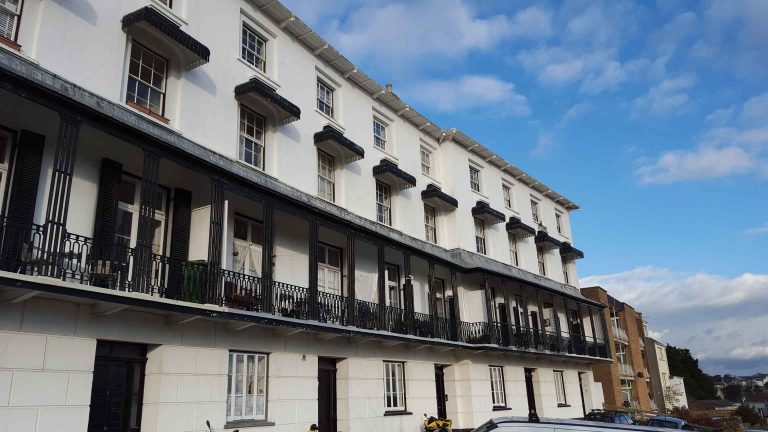
Number 9 Almorah Crescent is more than a little bit special, least of all because it’s the last remaining townhouse in this historical development. This spacious and versatile property offers unrivalled accommodation for the growing family, within close proximity to the centre of town and is presented in walk in condition. Almorah Crescent is probably the most distinguished piece of Regency architecture in the Channel Islands and dates back to when Queen Victoria was on the throne. Houses in the Crescent were originally for sale in 1845, when they had very basic amenities, a far cry from the house you’ll see today.  

With every step you take on the six minute walk out of town to Almorah Crescent you get a little further away from the hustle and bustle of St Helier, despite its short distance from your front door.  The gentle incline up to this imposing property sees you standing on high ground commanding wonderful views.

Upon entering the property you get a real sense of its history, it’s a little like taking a step back in time, but with all of the securities of a modern house.  All of the rooms are well proportioned and benefit from being light and spacious, with beautiful high ceilings. The ground floor is home to a good sized dining room, featuring one of the properties six original fireplaces, which leads on to the well equipped kitchen.  This room makes the very best use of the original cupboards and Welsh dresser, whilst being complemented by all of the modern amenities you’d want, a large range style gas cooker, marble worktops and a large double sink, to name but a few.  Double doors in here open out on to the rear patio area, ideal for BBQ’s in the summer.  Off this room there is also access to a flagstoned scullery (honestly, it really is the original scullery) and plenty of storage areas too.  There is also a further door which leads you down to the basement, which has been cleverly converted into a home gym, but could just as well be made into a cinema, man den, or yoga room, the choices really are endless.
With all of that on the ground floor, it’s hard to imagine you’ll need much more space, but onwards we go to the first floor.  Here there is a cloakroom and room which would easily be used as a guest bedroom or snug.  There is also a large lounge which leads on to a south west facing balcony which spans the full length of this room and is accessed by large double doors.  This suntrap balcony is the perfect place to sit back and sip Pimms whilst watching the sun disappear over the horizon.  There is also a second room off the lounge, which is currently used as a games room and hosts a large full sized snooker table and shelves filled with books, making this the perfect space for entertaining.  Both of these rooms also have working fireplaces and lovely high ceilings, complete with their original ceiling roses and coving.

On to the next level and you find the large house bathroom and also there is a surprisingly, but sensibly placed laundry room, which is like no other. Massive in size it’s large enough to accommodate a football team’s laundry, complete with large airing cupboards too, this space will be invaluable to any family. You can also access this room from the back courtyard, making it the perfect place to store any wet weather, or perhaps wetsuits your family may have too.

Moving up to the master bedroom, which runs the full length of the front of the house and as such has views over St Helier’s rooftops to the sea at both La Collette on the south coast or to the right with Fort Regent and St. Aubins Bay in the distance. With enough room for a lounge area too, you’d be forgiven for wondering where you’ll be keeping your clothes, that is until you open the door which leads on to the incredible dressing room and luxurious en suite that has to be seen to be believed.  This really is an exceptional space, which has been decorated and finished beautifully, like every other room in the house.

Last, but by no means least you reach the final floor, which houses three of the five bedrooms.  Each room is spacious and light and has the benefits of beautifully sanded original floorboards, work that was completed by the current owners.  There is also access to a large loft here, which has been approved for conversion for further accommodation, if you should need it.

Whilst this house comprises 3,200 square feet of accommodation it doesn’t feel overwhelming.  Each room is well proportioned and has been beautifully renovated by the current owners, meaning there really is little for anyone considering purchasing the property to do, other than move in their furniture and perhaps making their own stamp on the interior.  Number 9 Almorah Crescent is a total gem which really does need to be seen to be fully appreciated, once you step through the front door you will be spellbound by its grandeur, it is a house that is just waiting to be filled with people and memories.

How to eat a balanced diet

0

For the last couple of years, nutrition writing has been dominated by unrealistic, faddish ideas like raw food, paleo diets and “eating clean”. An army of glassy-eyed skeleton people had the colour photoshopped back in their cheeks to appear in magazines, clutching bowls of buckwheat gruel and promising that we’d live to be 150 if only we could bring ourselves to restrict our diets to kale and chia seeds.
Shamefully we believed them, even as these charlatans went on to spend their riches on blue cheese and filet mignon like every other rich person. The result was misery for many true believers, because there is a limit to how much you can enjoy life when you spend your days posting images of your post-gym soy smoothie on Instagram.

Well, throw those goji berries in the bin, because, scientists from the prestigious Findus Institute have published new research that indicates that, far from being as unhealthy as previously believed, heavily processed food should in fact be an essential component of our daily nutrition. Their new proposals call for all adults to consume artificial flavours and food colourings as part of a balanced diet – i.e. a side order of salad and chips. They even reassessed the benefits of many vintage snacks from the recent past. We suggest you print out the following guide, stick it up in your kitchen and run as fast as you can if you see Jamie Oliver coming for you holding a parsnip.

Key food group: crisps and corn snacks
Rich in essential salts, grease and monosodium glutamate, adults are recommended to consume at least one portion of crunchy snacks daily, more if expending extra calories by watching something stressful on telly. Just as other nutritionists recommended returning to historic grains such as bulgar wheat and quinoa, scientists are urgently calling for Smith’s Crispy Tubes, Flavour & Shake and Tangy Toms to be returned to production. Until that time, it is recommended to help growing children with regular servings of Space Raiders and Monster Munch. Remember: it is dangerous to become deficient in pickled onion flavour, Scampi Fries are practically a serving of fish, and Twiglets contain fibre.

Key food group: fizzy liquids
Once thought to rot your teeth and promote hyperactivity, new studies conducted under the aegis of the PepsiCo fellowship show that carbonated drinks are actually delicious and refreshing. This is equally true whether they are “premium” brands like Coca Cola and Irn Bru, or value equivalents such as Panda Pops and the eastern European cherryade sold in pound shops. Although still drinks like Tip Top and Um Bongo do contain essential sugars, parents are suggested to opt for those that are most luridly coloured, and if in doubt ensure that children consume at least one Coke float a week, more if they’ve been good. 

Key food group: grains and cereals
Breakfast is both the most important meal of the day, and the cornerstone of any diet. Sadly, our hectic lifestyles mean that too many of us skip the opportunity to consume puffed rice and strawberry marshmallows, and make up for this deficiency later in the day with extra coffee. There’s really no excuse – experts from Kellogg’s say that if we just took two minutes to heat up a Pop Tart, our day would be off to a much better start. Many parents mistakenly believe that a cereal is only healthy if it contains multigrains – if this worries you a good solution is to serve children a fun, yet nutritious, combination of Frosties (corn) and Sugar Puffs (wheat). 

Key food group: frozen items (sweet)

It has long been understood that warm weather carries with it the risk that humans can become sad and uncomfortable if not administered with frozen dairy produce, or at the very least a combination of vegetable fats and refined sugar. What was less widely known is the role that frozen treats play in year-round mood maintenance. In order to stave off attacks of the blues, doctors now say that families should stock up on Arctic Roll, Mr Freeze ice pops and Cornettos. If frozen goodness is needed on an emergency basis, administration of a Slush Puppy is recommended – this is the nutritional equal of a raw food protein shake in that it provides the body with servings of sugar, artificial food colouring and the all-important refreshing, slurpy coldness.

Key food group: frozen items (salty)
Remember that the freezer is not just for ice-cream, this essential family friend can also serve as a healthy storehouse containing curry, pizza, batter-coated potato products and a variety of breaded chicken shapes. The important thing to bear in mind about freezer-based nutrition is the “three colour rule” – your frozen meal is only nutritionally complete if brown items are offset with other colours, such as red sauce, mushy peas and yellow mayonnaise. Pizza is already one of your two recommended portions of vegetables a day, so why not go for a hole in one by topping your Margherita with some baked beans or a couple of potato waffles?

Key food group: sweet shop items
The traditional British sweet shop has never fully recovered from the targeted propaganda campaign conducted by dentists and broccoli farmers, but in today’s more enlightened age this institution is showing the first lurid green shoots of recovery. Of course, sweeties remain something that should only be enjoyed as part of a balanced diet – no nutrition expert would recommend that anybody survive more than a day or two solely on Wham Bars and Liquorice Allsorts. This is because the goodness in sweeties is so concentrated, you are much better off spacing your daily consumption of Fireball Gobstoppers, Tootie Frooties and Nerds in-between meals that are less fun. Otherwise you might get too much energy in you and realise that brown bread is an EU plot – shh, keep it secret!

Key food group items: tinned meat products and preserved foods
Not every family is lucky enough to own a freezer full of wholesome doner kebab pizzas, Wall’s Neapolitan Ice Cream and Turkey Twizzlers, but this doesn’t mean that their children will go to school miserable because they had to eat courgettes for breakfast. Tinned foods helped Britain win two world wars, and if Spam is good enough to feed a nation who stood up to Hitler then it’s good enough to include in every hot meal served in your household. Remember that old doctor’s advice – “pink things are healthy” – and if you need a bit of variety on the plate then there are other lovely foods that come in tins, such as corned beef, preserved peas, and hot dogs. If you fancy something a bit exotic on a Friday night then why not take a trip to the mysterious, mouth-watering orient via the Pot Noodle express? All aboard!

The Regional Foods of Jersey

0

Our baguette-wielding cousins in France are universally, and justifiably, proud of their wonderful national cuisine. Except for the guillotine and Daft Punk’s second album it represents their greatest gift to the world, and does a lot to make up for their frightening public toilets and comic inability to pronounce the word “squirrel”.

Although they are patriotically united as one nation behind the macaron, they also manage to muster an intense and specific pride in their regional cooking. It seems like every part of la France has evolved its own unique way to seduce your liver with specific blends of fermented grape and smooch your arteries with fresh combinations of sausage, butter and cheese. What fewer people realise is that this Gallic passion for regional tastes has also left its mark upon the Channel Islands, and even extends to the different regions of our fair island. It’s true – we are so much more than a colony of Britain, knee-deep in burger wrappers, chips and frozen meals with horse in them. We are a little bit French, like the road signs none of us can pronounce. Anybody who has failed to persuade friends from the west to journey to the east can tell you that Jersey is at least four separate countries, and each has its own distinct cooking tradition. If you find this hard to believe then just hop onboard my reinforced mobility scooter – for I will be your gout-ridden guide to the delicious world of regional Jersey food.

Jersey’s west coast – rustic food at its finest 
Gastronomically, Jersey likes to promote itself as a destination for sophisticated diners who flock like butterflies to the sweet meadow of our numerous Michelin-starred eateries. This is certainly true – if you wear expensive loafers and wish to treat yourself to many different varieties of jus and foam, then Jersey is an unmissable destination offering VAT-free truffle mash. However, there is another tradition, an older tradition, which predates fancy culinary concepts like sous-vide, home-made pasta, and refrigeration. It is the cooking of the western parishes – if the Michelin-starred restaurants are Leonardo DiCaprio dressed for the Oscars, then authentic western food is Leonardo DiCaprio crawling through the snow after being attacked by a bear. St Ouen is about more than fried breakfasts that cost £13 – we were eating raw fish before anybody could spell sushi, and the cooks of St Peter were sneaking minced horse into your lasagne long before it became fashionable for big supermarket chains to do so. As for the rosy, protein-fed cheeks and bulging muscles on display in St Mary, let’s just say they’ve long enjoyed the benefits of a “one in, one out” approach that marries sound nutrition to the civic challenge of population control.

St Helier – vibrant melting pot of culinary traditions
St Helier, our frequently unloved dumping ground for the corporate world’s most depressing office buildings, is the next stop on our tour of Jersey’s regional flavours. This is probably because my metaphorical scooter hit a huge slick of grease and pitched us headfirst into a pile of chips – despite a long list of great restaurants our town is often described as a place where you can get chips with everything. Like many foodie cities, St Helier draws on the diverse ethnic heritage of its residents to produce a true fusion cuisine – as long as your definition of “fusion” is the idea of ordering an espetada at a Chinese restaurant, served by a Lithuanian waiter, with good old British chips. What more could you possibly want? I hope the answer to that question is “Thai curry, coffee or sandwiches”, because if St Helier is ever put under siege by zombies that’s the only thing the residents will be eating until the honoraries roll in with both of their tasers and sort the situation out.

St Aubin – a foodie paradise for the hearing impaired
If St Helier is a battered sausage (the salty, greasy, guilty pleasure on the menu) then St Aubin is the chicken burger with salad. It looks a bit more like a proper meal, costs a bit more and has fewer obvious knuckles. It’s a romantic date rather than a quick knee-trembler in the back alley. St Aubin is the picturesque, cosy harbour that we like to convince foreigners is our real city centre, and is characterised by an impressive variety of eateries of all types. French, Italian, modern, traditional – the only thing they have in common is a strange commitment to having terrible acoustics. Meals at St Aubin are always a lovely occasion, but you might end up needing to shout at your dining companions after a couple of hours. It may be due to sketchy interior design, or it might be that this is an essential part of St Aubin’s historic identity – as a brawling destination for drunken, rum swilling pirates who are upset at never finding anywhere to park.

The East – the bastion of tradition
A vital part of any culinary tradition is the local spin that talented chefs will put on the dishes that newcomers bring with them. I hope I’ve gone some way to acknowledging the debt Jersey cuisine owes to immigrants from Portugal, Thailand and Poland, but there is a corner of the island that retains a deep love for a more neglected cooking tradition: that of England in the 1960s. A journey to certain hotels in the east of the island can allow you to step back into time, back to a time before kale, a time before pulled pork – a time before vegetarians. Heston Blumenthal might be doing his best to make postwar grub fashionable again, but there are chefs in parts of Jersey who still think that modern cuisine equals the Borsalino Roque, and will serve you chicken kiev and black forest gateau with a tender care that is absent in any part of the mainland modern enough to have a Nando’s.

The North coast – rugged tastes and secret treats

Jersey’s blasted north coast is more than just a place you go when you’re travelling from St Mary to Grouville, it is a distinct region with hidden treasures for the intrepid diner. It must be said that few of these are found in its restaurants, which offer a solid if unremarkable selection of pub grub and family dining establishments. The true taste of the north can only be found if you venture alone onto the cliff paths, or through darkened lanes, and befriend strange, monosyllabic fisherman or shifty leather-skinned farmers. Earn their trust, curious traveller, and you will feast upon a cuisine that draws its inspiration from the crashing waves, the briny depths, and people who are genetically close to their merman cousins in the “less developed” Channel Isles. I hope you like conger eel pie, bean crock with fingers in it, and bread seasoned with Devil’s Hole mushrooms and ferns. Eat in the north and you will never go back, in many cases literally as you run the risk of waking up with a hangover, bound and gagged in a granite pigsty. On the bright side, being kidnapped in St John is the cheapest way to arrange a weekend in Sark.

Alex Farnham’s Soapbox

0

Get ready everyone; I’m about to change your life. I learned from a colleague of mine who happens to possess Italian blood (as in his mum’s Italian, I don’t mean he’s some sort of blood-collecting ‘assassino’), that when making lasagne, there’s a secret trick… a life hack if you will, that makes it taste roughly 100 times better.

We all know the drill: meat, pasta, sauce, repeat – incidentally, this would be much more ‘my jam’ than that song that came out a few years ago ‘Eat, Sleep, Rave, Repeat’. What irresponsible advice! Surely if you were indeed planning to ‘rave’, you’d want to have a decent meal beforehand so you’re not drinking on an empty stomach, and all that dancing could make you sick, so perhaps a better name would have been ‘Eat, Wait an hour or so, Rave, Sleep, then Repeat – but not before a sensible drink of water’, but I guess that wouldn’t be as catchy. Anyway, I’m getting distracted.

Where was I? Ah yes, lasagne! So, we all know the recipe. However, what if I told you that after the beef and veg and stuff, we added something new and wonderful: a layer of prosciutto. Crazy right!? Trust me, I took his advice last week and by gum it worked. It was absolutely delicious. That’s all you need – a layer of cured ham between the beef and the pasta, and you’re in meat heaven dot com (don’t look that up). Seriously, try it and thank me later – fun fact: the guy who taught me this is also called Alex, but that’s a story for another day… Actually, that’s pretty much it: we’re both called Alex.

I’ve been dealing with some delicious food recently, and whilst we’re on the subject of appetites I may as well keep going – eating is one of the few things I’m good at. A few weeks ago Charlie and I went on a long weekend to Paris. She had never been before, so we undertook a tourist-tastic romp around all the sights the beautiful capital had to offer. From the Eiffel Tower and Le Louvre, to Les Invalides and a Seine river tour, we saw it all. Except for The Catacombs. For some reason they’re closed on a Monday. Maybe the skeletons need a day off from all the Americans with selfie-sticks and un-solicited opinions about how different Europe is to the US? We later learned from our Uber driver (who, by the way, claimed he’d had Rihanna in the back of his car – not in that way… grow up) that most things in France are closed on Mondays. I didn’t know that was a thing, but I have to say I like it. Down with Mondays! Let’s go on strike! It seems to work for the French after all? Anyway, exploring Paris for two and a half days was fantastic, and we really enjoyed it – especially our second night there. Before seeing Cats Le Musicale, we ate at this delicious wine and cheese place that was a sort of deli/restaurant run by a young couple. The husband sold cheese at the counter, and the wife ran the restaurant side of things. It was the cutest and most French thing I’ve ever seen. We had broccoli and Parmesan soup to start, and then shared a huge cheese board for our main, complemented by a red wine recommended by the lady. If you’re ever in Paris, go there – it was a lovely change from the tourist-trap, plastic menu establishments on every street corner. It’s called l’Affineur Affiné, and it was perhaps the most appetising meal I’ve ever experienced.

We may as well move onto something slightly less appetising, and talk about where we stayed. Now the AirBnB (I know: AirBnB, Uber – we’re such a digital duo!) was great, it was a short walk from the metro, and right in the centre of Paris. However, unlike Kim Kardashian, it had a small but – it was literally next door to Le Bataclan. If that name sounds familiar it’s because it’s where the tragic Paris shootings occurred last year. When the lady whose apartment we stayed in told us this, the sociopath in me decided it was a good idea to shout ‘cool!’, which may have come across as a little insensitive – but what I meant was this: it’s where history happened, where one of the most tragic events of our generation took place, and we get to see it.

Obviously it was awful, but one more person saying how awful it was isn’t going to matter, I just thought it was going to be interesting to see what it was like, and haunting to imagine what the people would have thought, and how scared they would have been. And it was interesting…

However, when we saw it, the place was still boarded up, and there were a few bunches of flowers laid by it… but that’s about it. Everything was just sort of normal, no memorial, nothing. I remember thinking to myself that this is the way to handle it. Paris is always referred to as The City of Love, but maybe it should be more aptly named the City of Not Hate? Ok, not quite as catchy, but we all heard about that poor man who lost his wife, whose young boy lost his mother, remember? He wrote an open letter to the terrorists saying that they do not have his hatred, if you didn’t read it you definitely should. His name is Antoine Leiris and the letter is entitled ‘You Shall Not Have My Hatred’. It’s very moving. Hatred is a passionate emotion – why waste it on people who want it? The impression I got is that French hatred is exclusively reserved for Mondays, rush hour traffic, that sort of thing… not cocks who go round shooting people. Sod the terrorists, you don’t even deserve to be considered. Someone get me a café noisette and a croissant. That’s not clumsy racial stereotyping by the way, they’re seriously all about noisettes and croissants over there…