If you are, or have met, someone searching to hone their creativity, chances are they’ve encountered or are aware of The Artist’s Way by Julia Cameron (or at least its most famous by-product: ‘Morning Pages’). The practice – writing three pages of unfiltered thought at the start of each day – is designed to bypass the adult, judgemental part of the brain that insists creative work must be immediately good, useful or finished. Cameron views it as a spiritual exercise where one allows themselves to channel creativity from a higher source; others see it as psychological. Nevertheless, regardless of interpretation the logic remains the same: quietening the critic allows you to get something down on the blank page.
The idea of creativity as something channelled, that moves through the body as much as the mind, is embedded in the practice of onggi. The craft is a traditional South Korean ceramics method, producing earthenware jars crucial for fermenting and storing foods like kimchi, soy sauce and soybean paste. Their porous, breathable clay has been used for centuries to aid natural air circulation and allow excess salt to migrate through the walls, crystallising on the exterior as the moisture evaporates. These affordable, earth-friendly “breathing pots” provide ideal humidity control and also serve as general household storage, and were engineered long before modern food science existed. Depictions appear as early as the fourth century on the walls of ancient Korean tombs, and the craft of onggi-making is recognised as a key aspect of Korean cultural heritage.
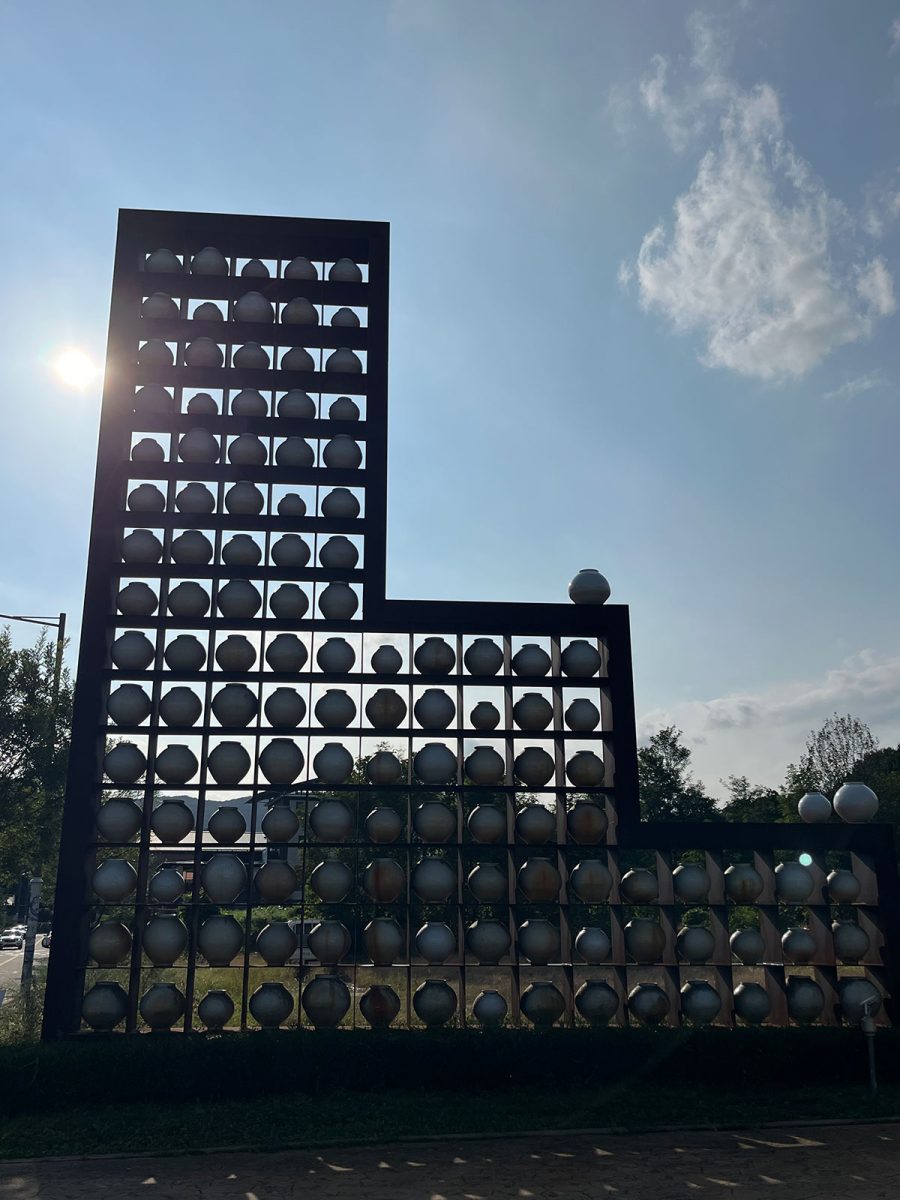
Despite this, onggi has historically been viewed within South Korea as a humble, utilitarian craft. Around the mid-20th century, onggi became associated with rural poverty, domestic labour and an older generation, coinciding with the country’s rapid industrialisation and urbanisation following the Korean War. Formal ceramics education moved towards more privileged forms of porcelain, studio pottery and decorative forms, with younger ceramicists uninspired by onggi’s essential, unglamorous nature. After the turn of the millennium, however, onggi re-emerged as a cultural marker of Korean history, identity and labour, particularly as Korea’s global cultural presence grew. This coincided with a renewed interest in fermentation culture, both in South Korea and across the world, where onggi’s breathability was reappraised, as well as a generational shift among artists and designers towards process, labour and slowness. These factors came together to reframe onggi not as primitive, but sophisticated, ecological and the product of generational collective knowledge. Onggi jars are now celebrated in galleries, museums and private collections, and their artistry is widespread across social media channels via viral content that makes the scale of the vessels hard to ignore.
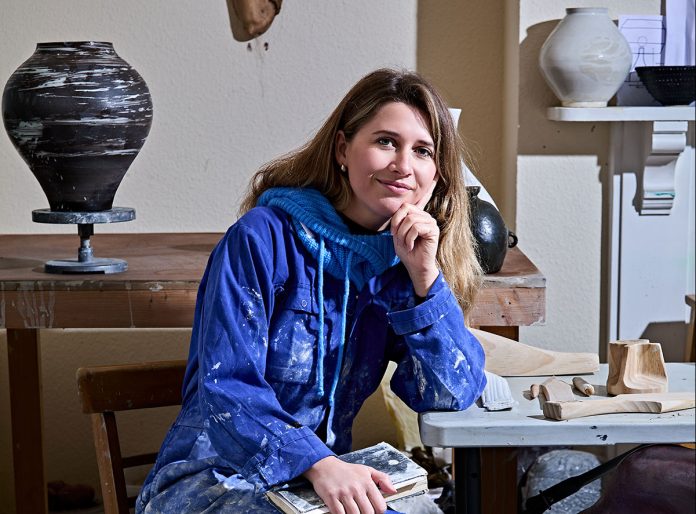
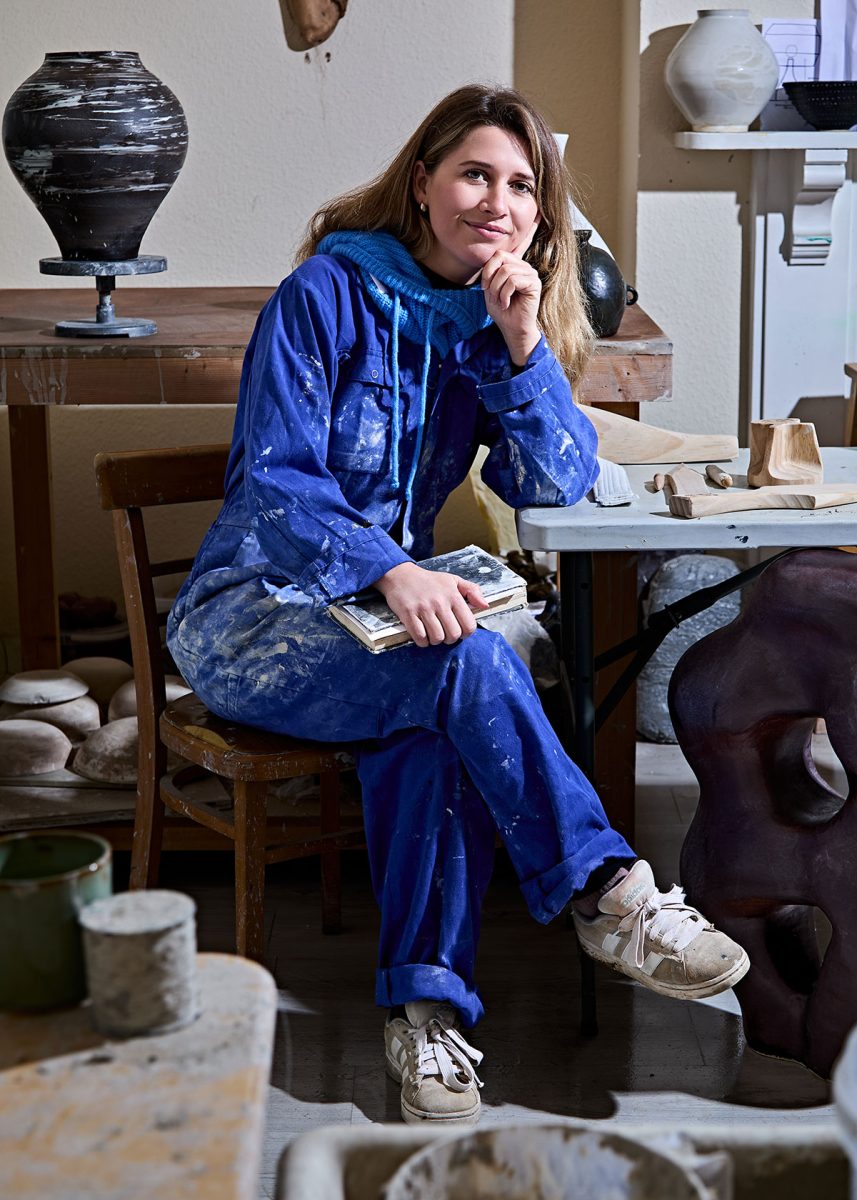
It was on Instagram that Heather Barette first encountered the craft. She had already long admired South Korean pottery for its unique character and style, but onggi stood apart. She was enticed by the size, movement and tools involved in the process, and how different the techniques were from pottery-making in the Western world.
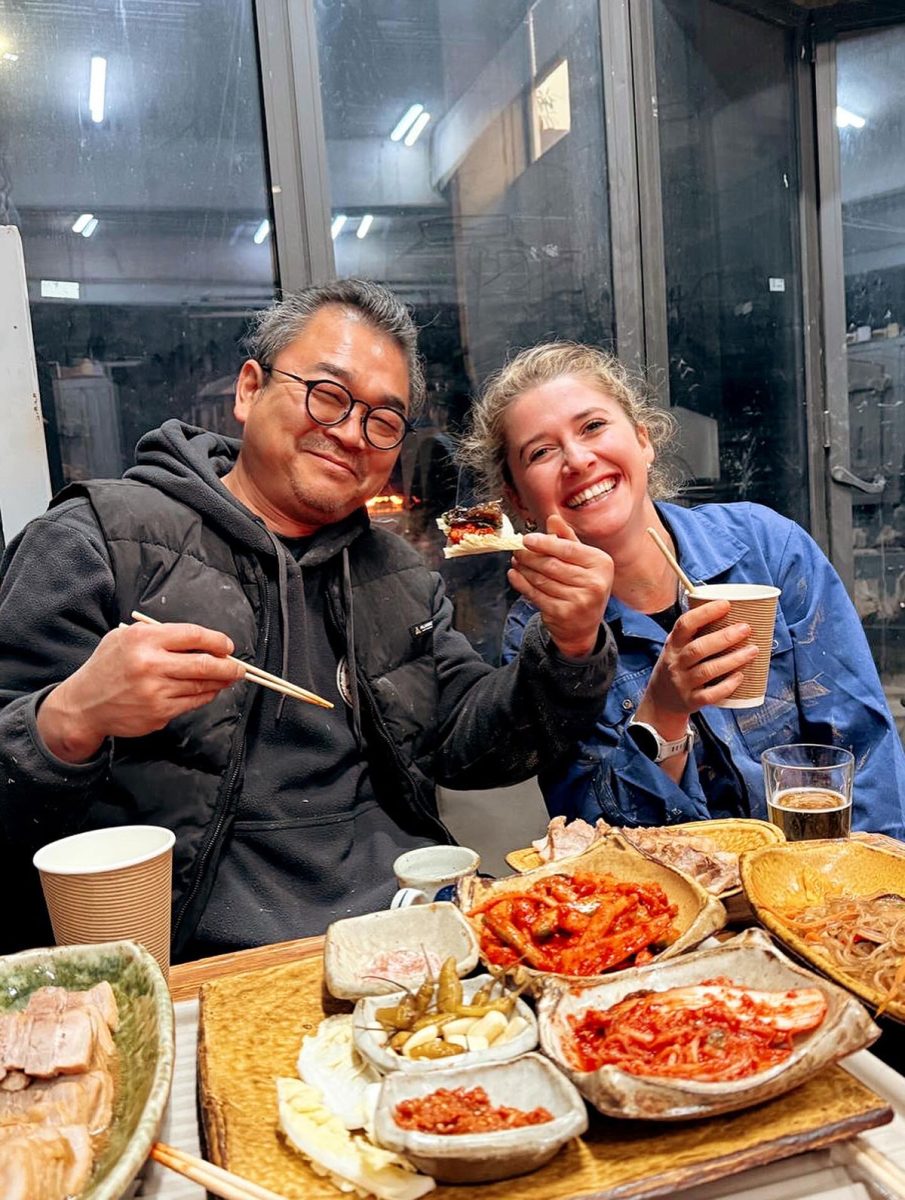
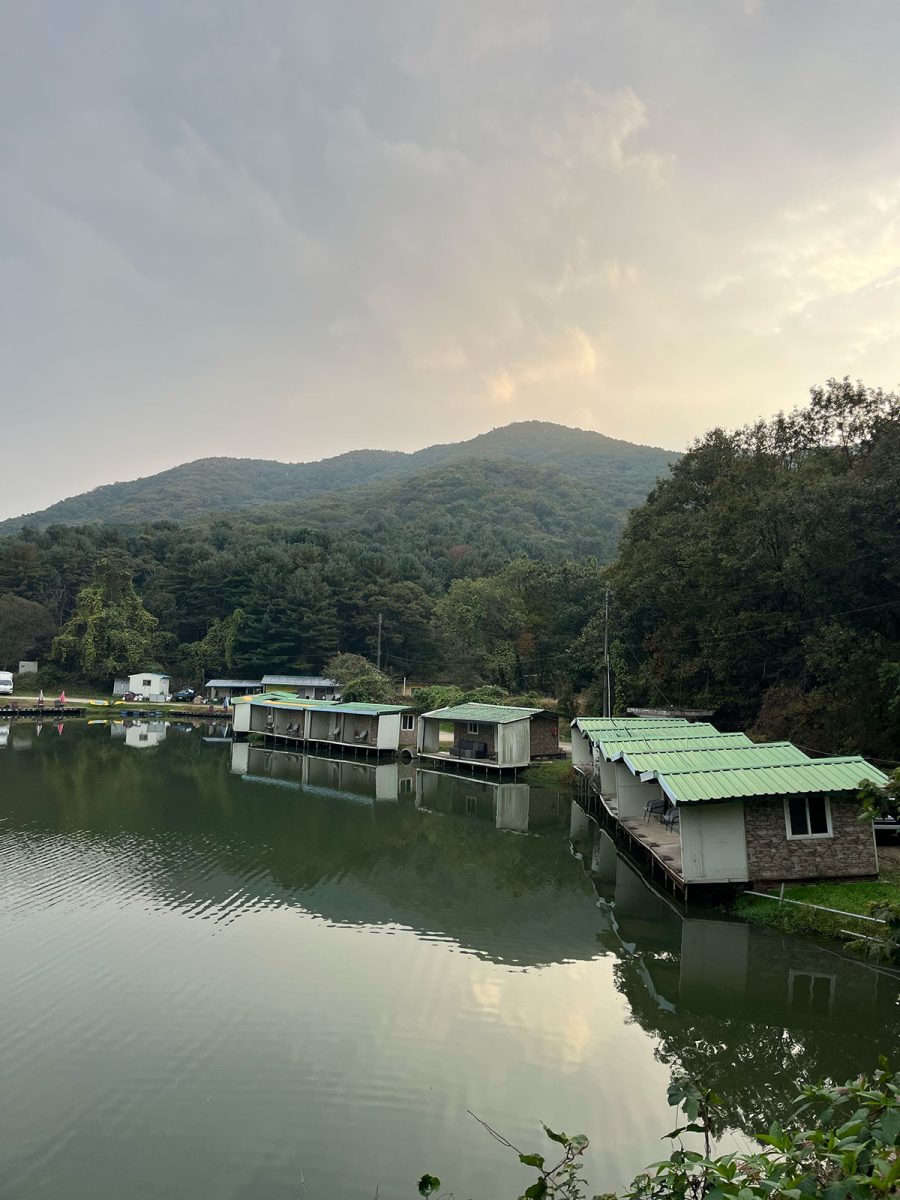
It was onggi master Kwak Kyung Tae who finally pulled her to the small Korean village of Icheon, naturally rich in the type of clay needed to produce onggi jars. Renowned as a master of the craft, she’d watched him build vast vessels for years, and when she realised he offered residencies, she decided to take the jump and delve deep into the craft at Toroo Studio. The studio is set within Ye’s Park, a purpose-built pottery village completed in 2017 after the original site became too small. It sits inland from Seoul, surrounded by mountains and rivers that have supplied workable clay for centuries. Seeing photos of the area didn’t prepare her for how stunning the village is in person.
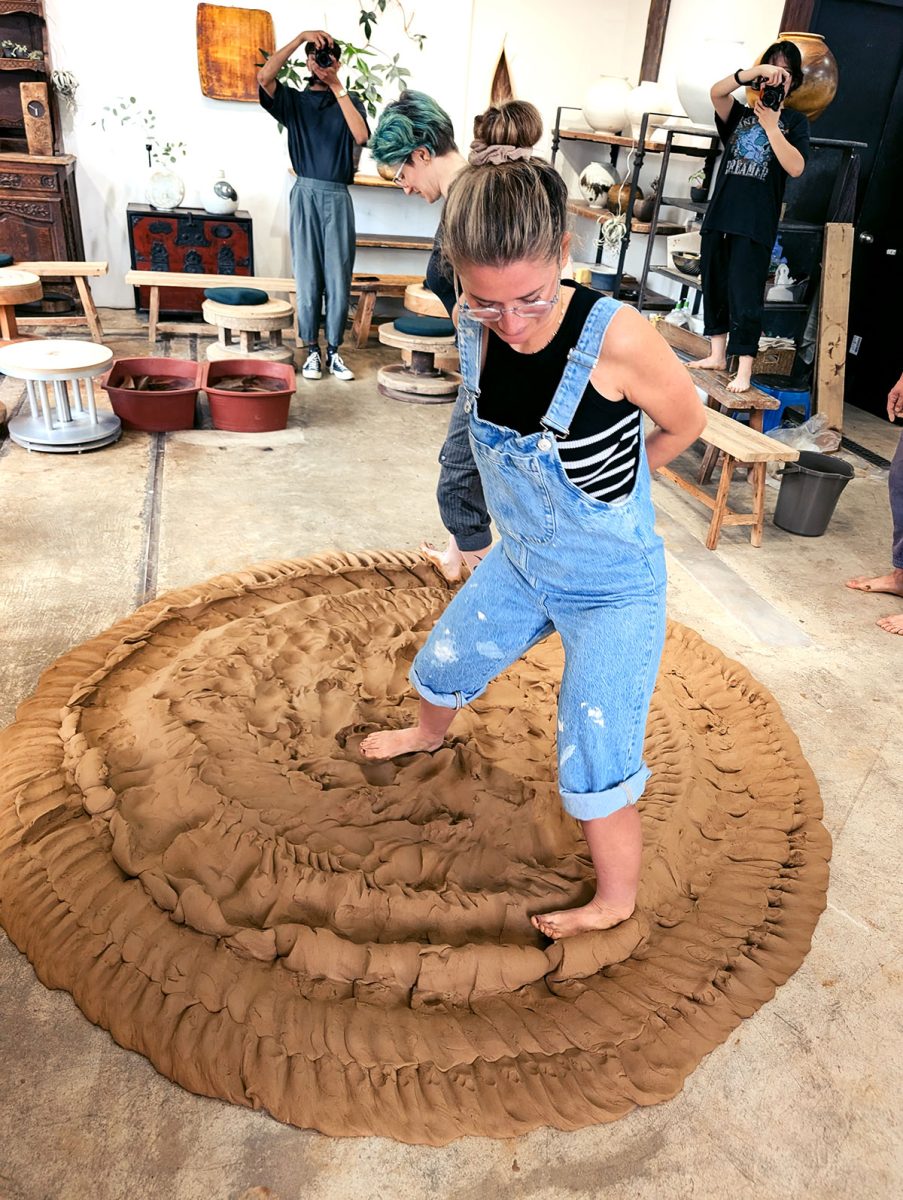
The early days of the residency were deliberately repetitive, and for the first two or three days, nobody made a pot. Instead, they made coils – long, rope-like rolls of clay used to build vessels slowly by hand – before re-wedging them, and making them again. “Our bodies hurt so much,” Heather explained. “It was the same motion over and over again. I constantly had heat pads on my aching forearms.” In traditional onggi factories, each worker performs a single task all day, whether that be coil-making, base-making or paddling. The process begins with preparing the clay using the feet, rather than the hands. Large quantities are spiral-wedged on the floor, a technique that requires body weight and balance. “It looks easy, but it’s so physical,” Heather recalled. Only afterwards could coils be created, attached and thinned simultaneously to the base in layers, through a twisting, squeezing motion. The action requires the potter to coordinate pressure, rotation and posture at the same time. “It’s like patting your head and rubbing your belly at the same time, but on an extreme level,” Heather wrote, on Day 11 of her journal documenting the workshop. One wrong movement, an elbow drifting slightly from the two o’clock position, or small variations in pressure can create thin spots that later cause cracking or collapse.
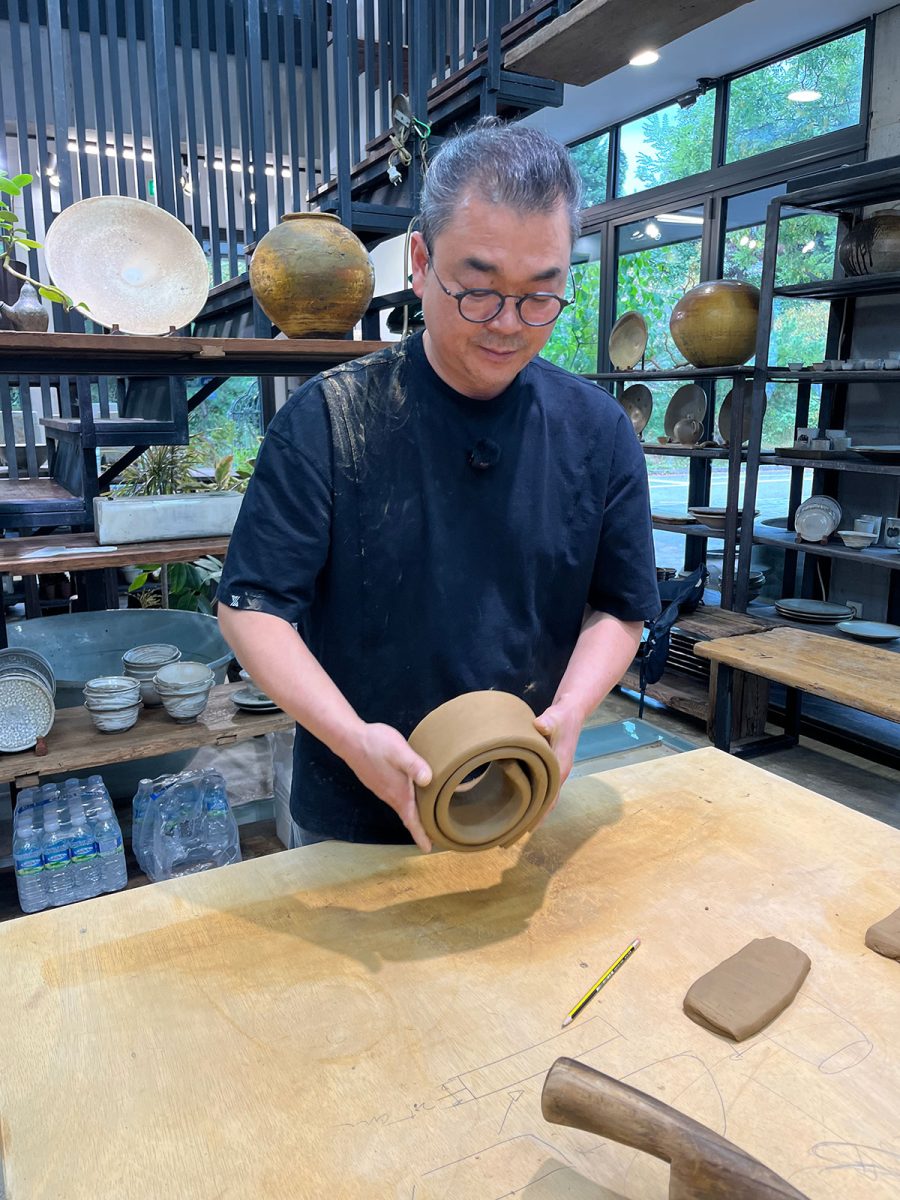
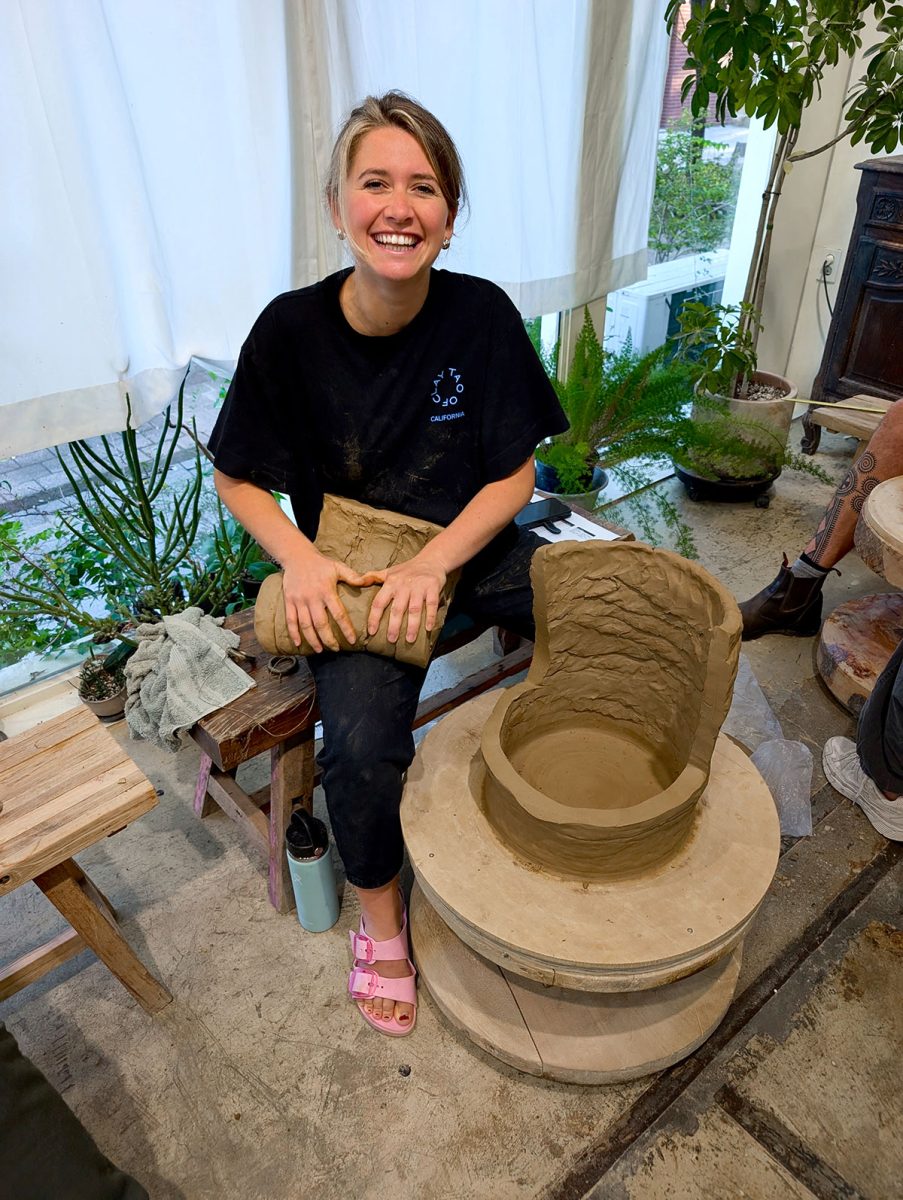
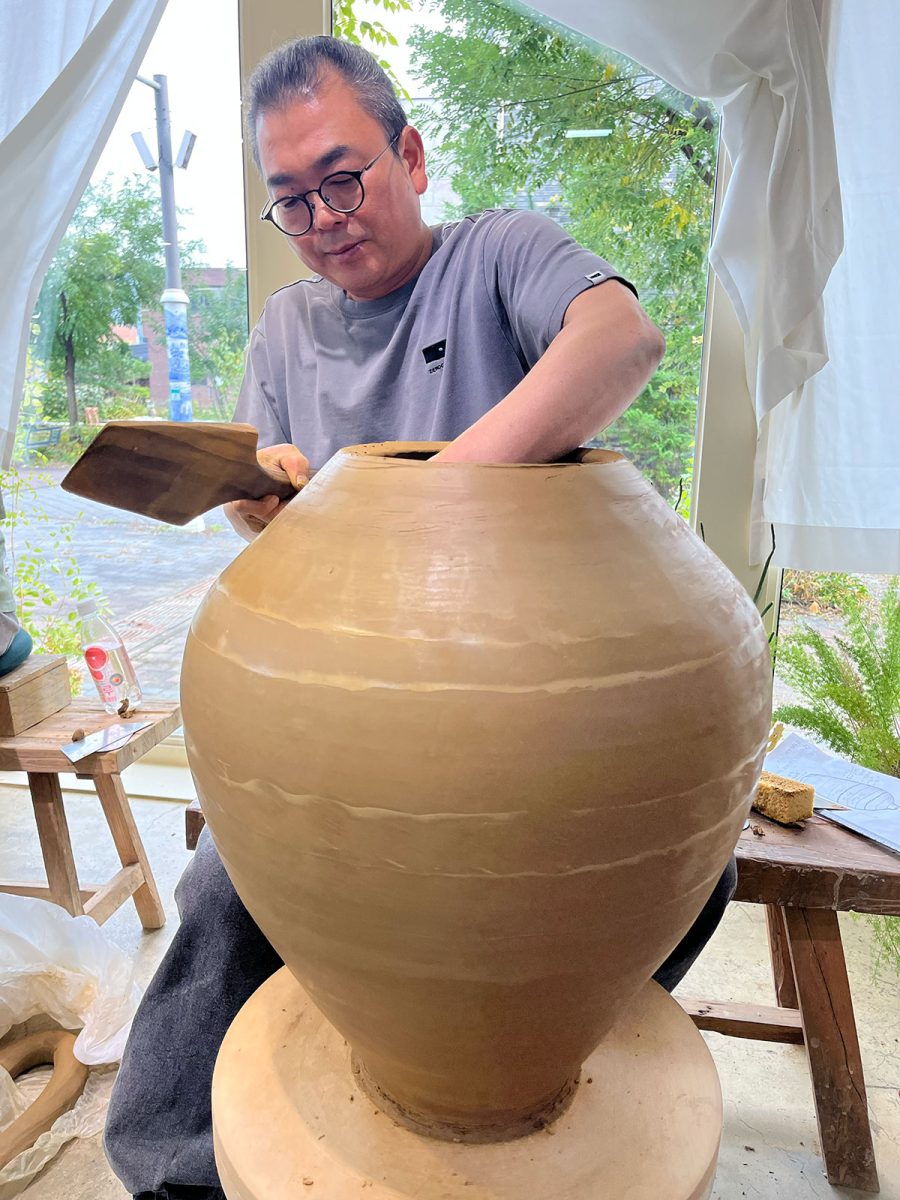
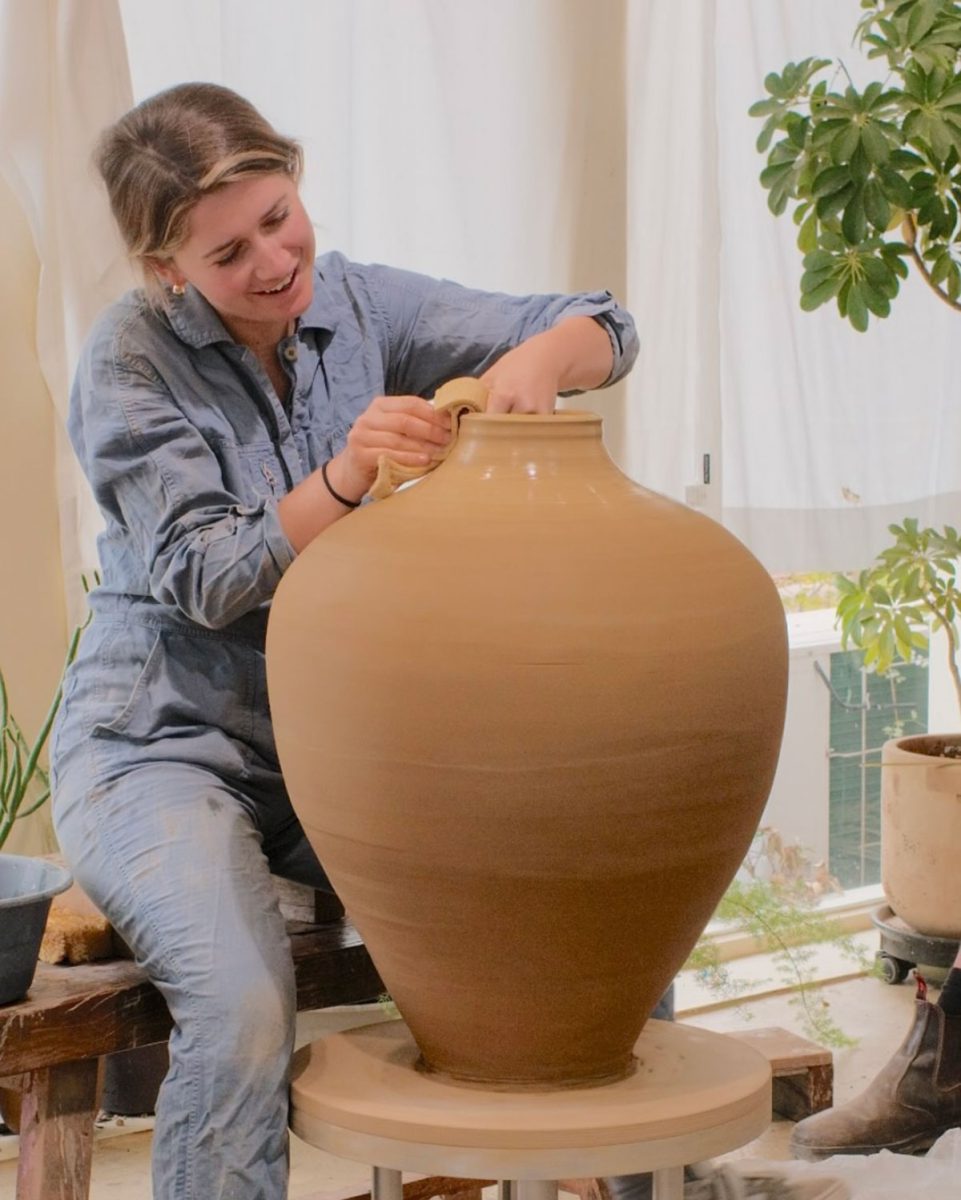
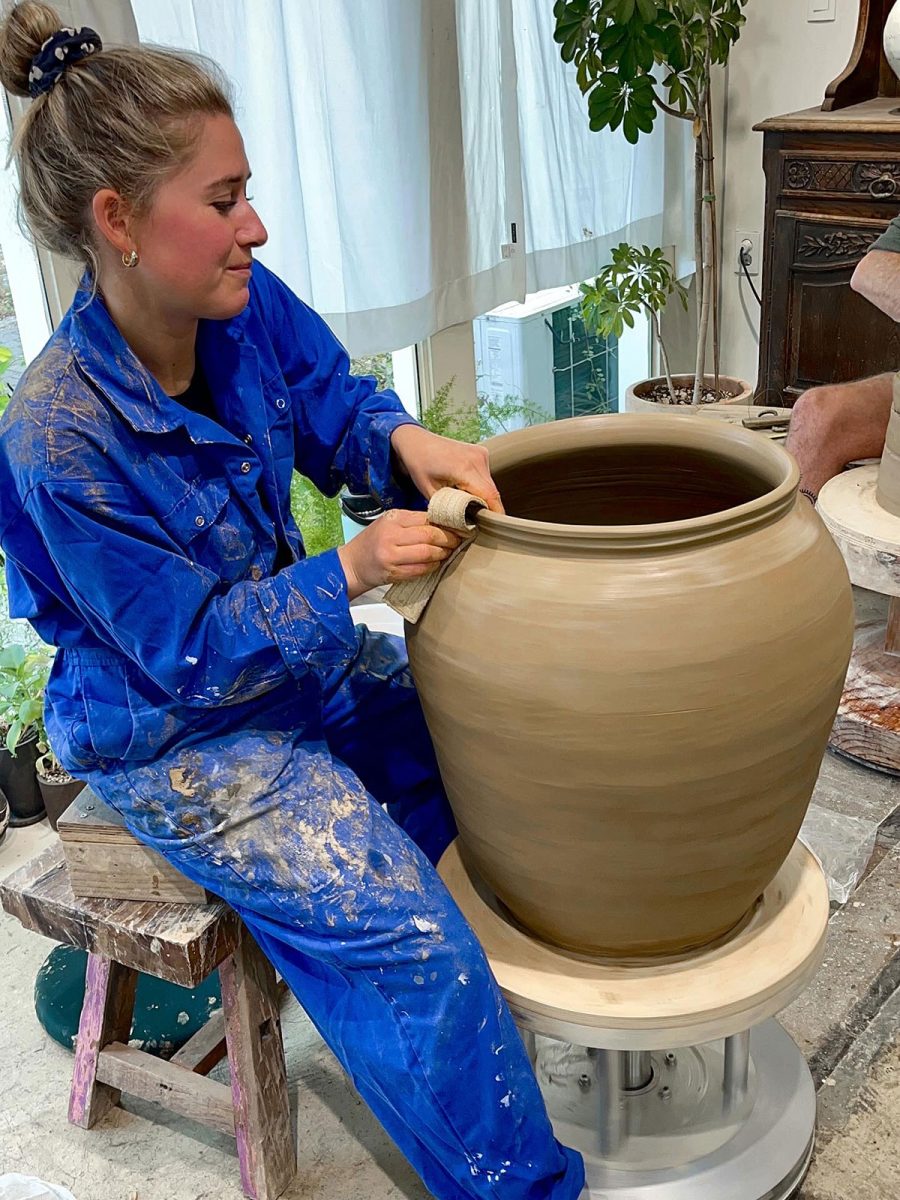
Tools are specific and largely handmade: the su-rae (a slow, broad, rotating wheel) and do-ge (hand-building method) for shaping, paddles for compression and thick fabrics instead of sponges for finishing rims. The pots created are tall, with the large clay coil draped over the potter’s shoulder as it’s applied. Heather’s jars stood around three feet tall, and Kwak’s reached seven. One collaborative vessel built by the whole class was big enough for them each to fit inside, with each participant adding their own coil to the vessel.
In onggi culture, pots aren’t fired unless they are structurally flawless. Apprentices may spend years without firing a single piece. “One of the apprentices could only fire something in the kiln a year after he’d been throwing every day,” Heather explained. Any finished pieces that aren’t structurally perfect are routinely sliced in half to inspect wall thickness, then recycled. Attachment to imperfect pots is discouraged.
This philosophy challenged Heather’s training. “In the West, everyone wants to keep things, they become so attached to what they make,” she reflected. In Korea, clay is treated as borrowed material. “You have to remember that clay is the earth, and we’re taking from the earth, so it’s better to reuse it and recycle it until we know we’re really happy with it,” she added.
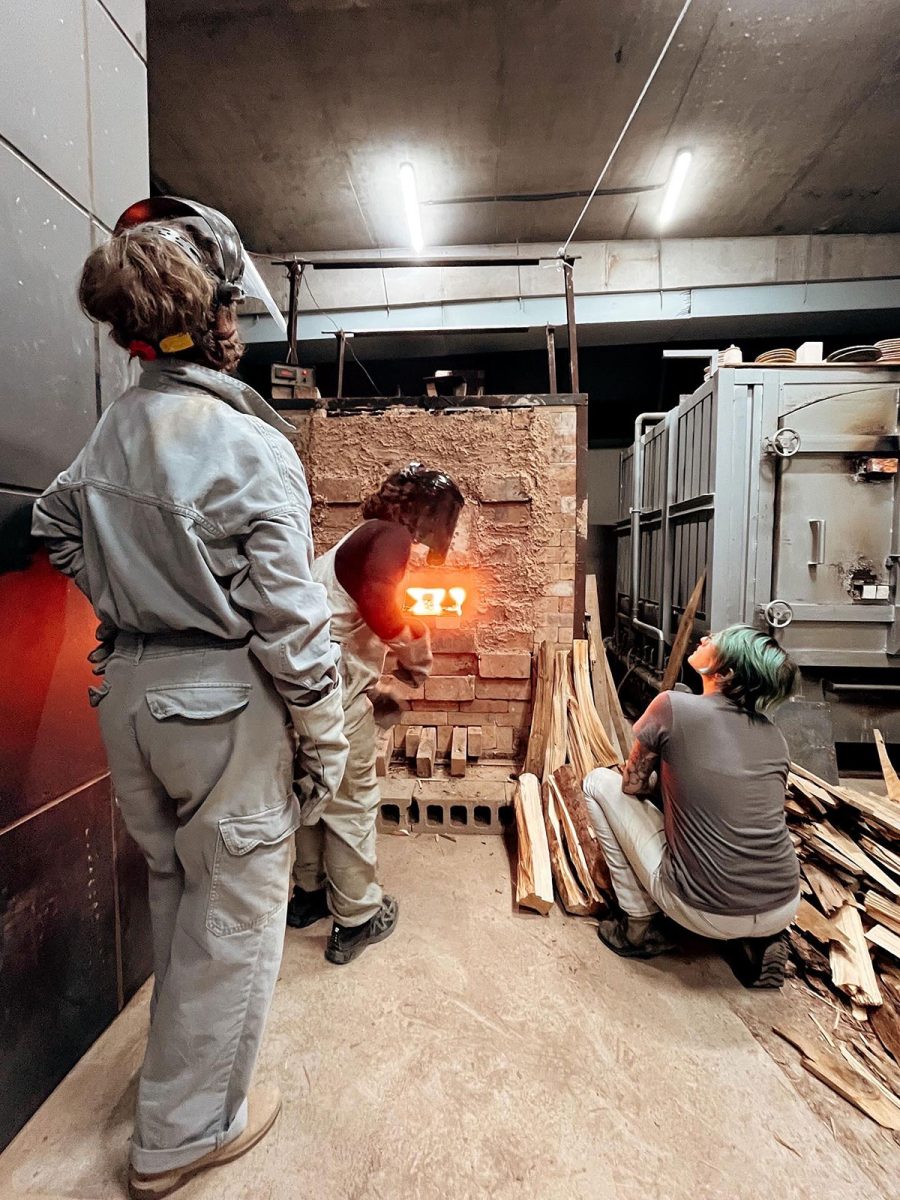
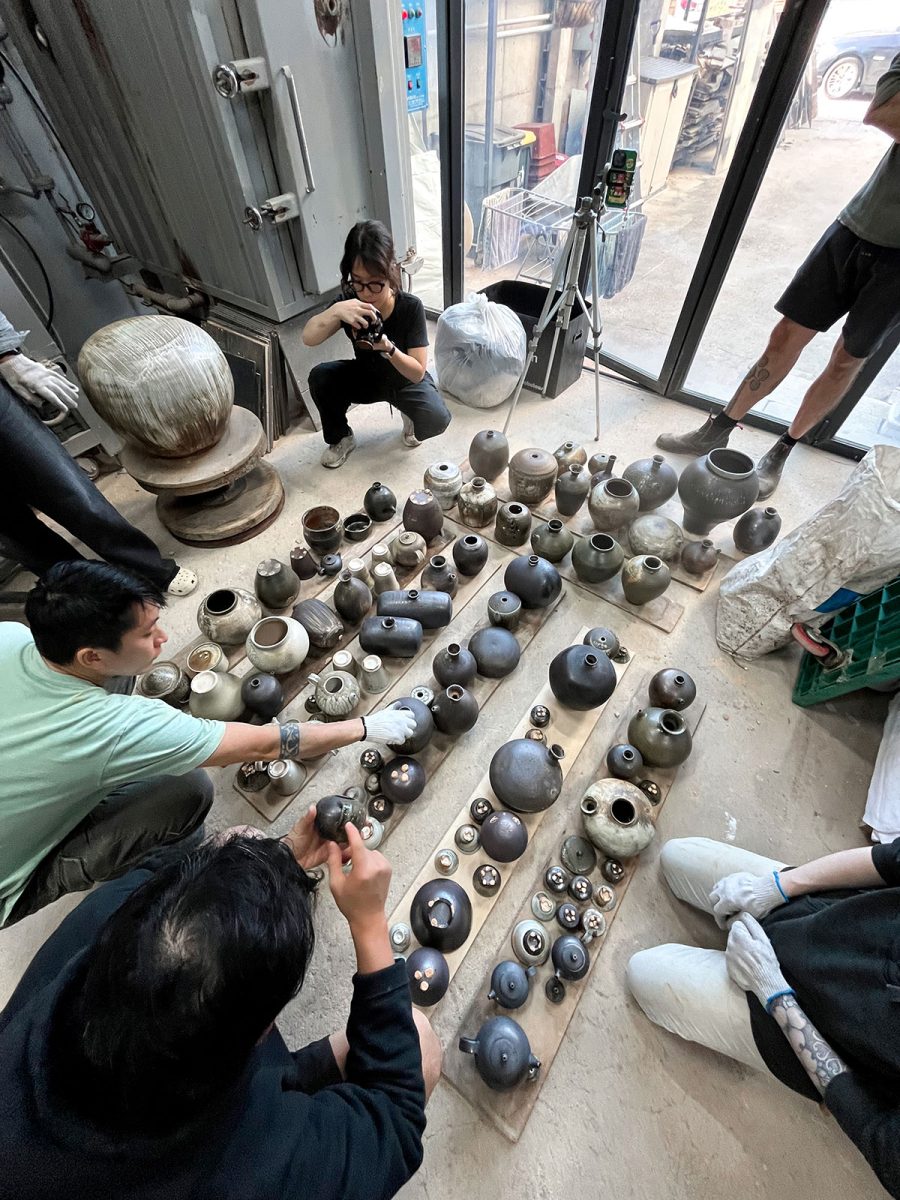
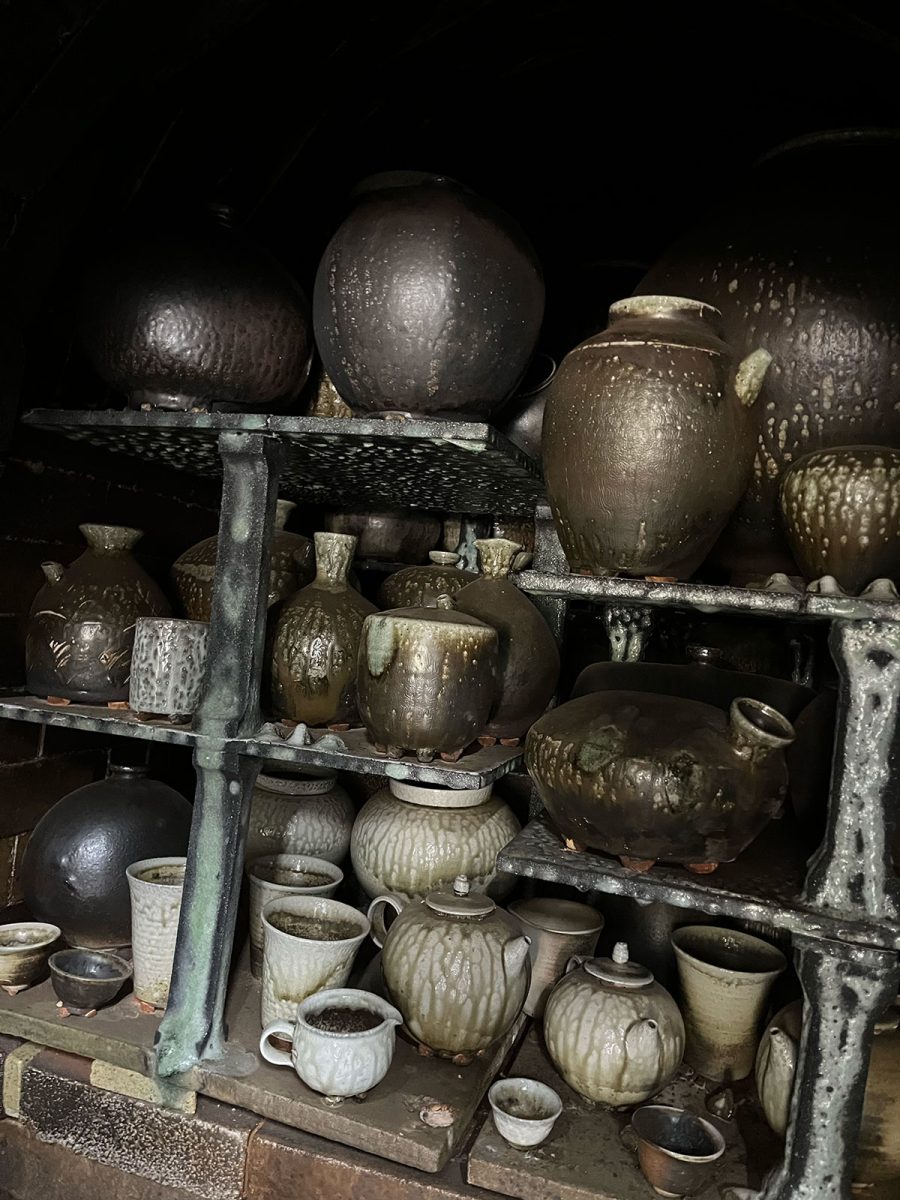
By the end of the residency, Heather had completed multiple onggi forms and participated in a traditional wood firing – a forty-hour process requiring constant supervision. “You’re stoking the kiln at crazy hours in the morning and putting all your love and care into the firing,” she explained. Having previously done wood firing, she’d learned to avoid preconceived ideas of what the final pieces will look like. Compared with an electric kiln, this method makes it harder to predict how pieces will turn out, and previously she had hated all of her pieces at first. However, in her journal this time round she wrote, “right now, I love and hate my pieces, but I’m excited to set them aside for a month and come back to them… my main motivation for creating these pieces was to have a little souvenir of my time here – to look at them and remember this entire experience.”
Ultimately, the most significant shift was conceptual. Heather arrived thinking she might return home and teach onggi techniques, but left knowing that it would take years. “Even after 21 days, I felt like an absolute beginner,” she said. “To actually teach it well I’d need five, ten years at least. Anything less and I think it would be disrespectful to my teacher in Korea.” No doubt the techniques and inspirations will influence her work, but it will be years of discipline, patience and training before the student becomes the master.