

No performing arts supplement would be complete without championing some of our island’s outstanding talent on the dance scene. I had a chance meeting with Carolyn Rose Ramsay from Ballet d’Jerri while searching for some of Jersey’s most promising performers, and she pointed me in the direction of Darcey Cronin, an eighteen-year-old dancer who decided a few years ago to pursue dance professionally and has been working towards that goal ever since.
Having established a reputation both on and off island through competitions and performances, Darcey is accustomed to a rhythm that leaves little room for idleness. Training every day for around three hours, often more, she embodies the kind of commitment that builds quietly over time, her discipline so ingrained it feels instinctive.
Darcey began dancing at the age of three at what was then First Tower School of Dancing, now Silhouette Studios of Performance. Ballet came first, laying the technical foundation on which everything else would build. Under the early guidance of Mary Walledge, she developed what those around her describe as a strong grounding in classical technique. Over time, that base expanded. Today, she has reached advanced levels across ballet, modern, tap and highland, and moves comfortably between styles that demand very different things of the body and mind.
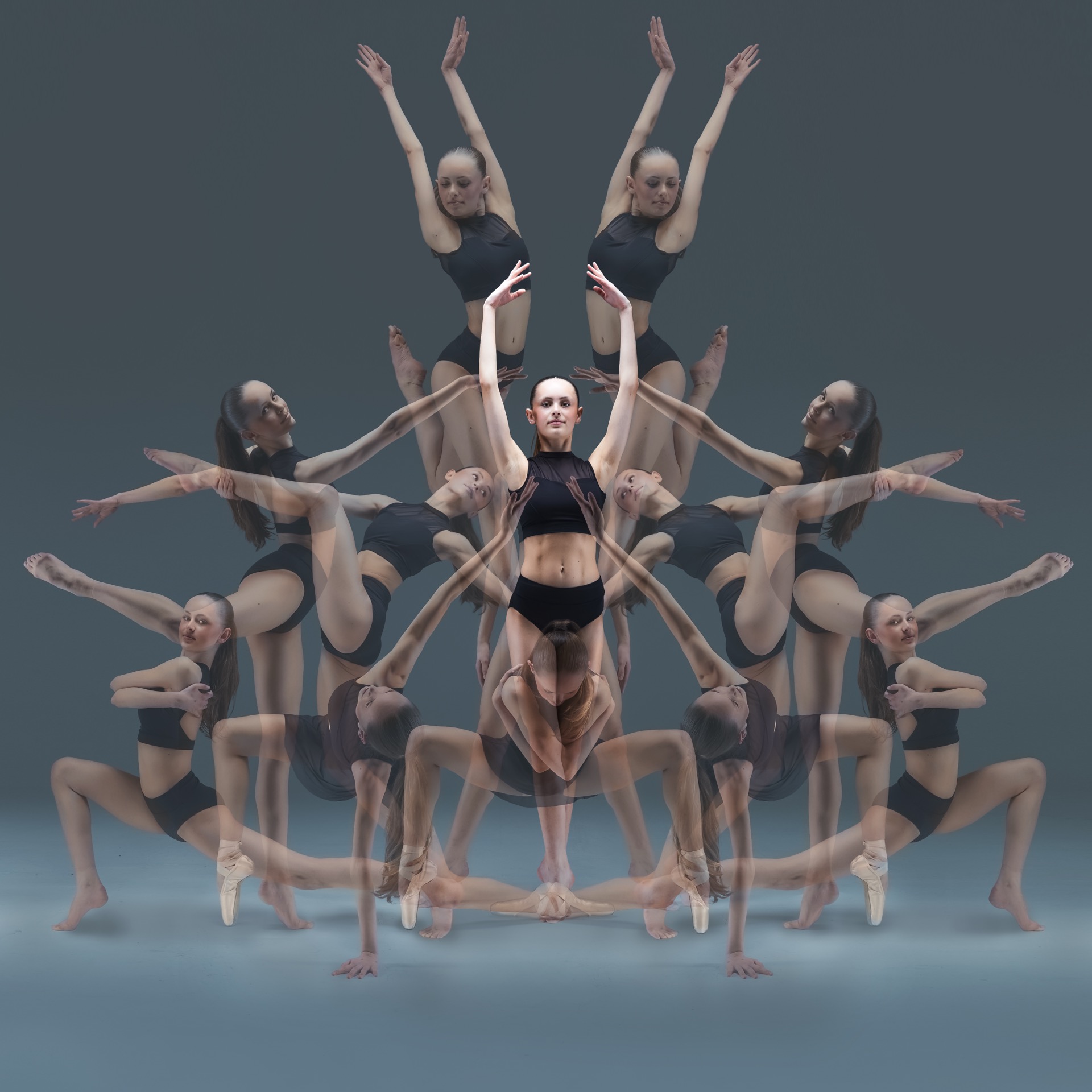
With a broad range of styles under her belt, including ballet, jazz, highland and contemporary, Darcey is well equipped for whatever a performance demands. Nevertheless, she is clear on her preferences. “My favourite styles are probably ballet and contemporary because they suit me the most,” she explained. “But then I also love doing tap and jazz as well.”
That range has been shaped in part by her training with Narelle O’Connor, under whom she has developed both technical ability and stylistic fluency. It is a combination that has served her well on the competitive circuit. Darcey has taken part in UK competitions and local Eisteddfods, steadily building a record of achievement that culminated this year in winning the Angela Burnett-Craigie Cup for ballet. At the Channel Island Dance World Cup qualifiers, she was awarded Most Outstanding Dancer, a distinction given at the judges’ discretion to performers who stand out across an entire weekend. Reflecting on the moment in a characteristically understated way, she said, “it’s nice to know that all the hard work pays off.”
The turning point in her story came not as a single moment, but as a gradual shift in belief. Having trained her whole life, it was not until she was around fifteen that she began to take the idea of dancing professionally seriously. “Learning more about it made me realise I really wanted to go into it,” she explained. Even then, her ambition came with some hesitation. “I think the turning point was believing that I could do it,” she reflected. “I decided I’d rather try it and fail than look back and think what if.”
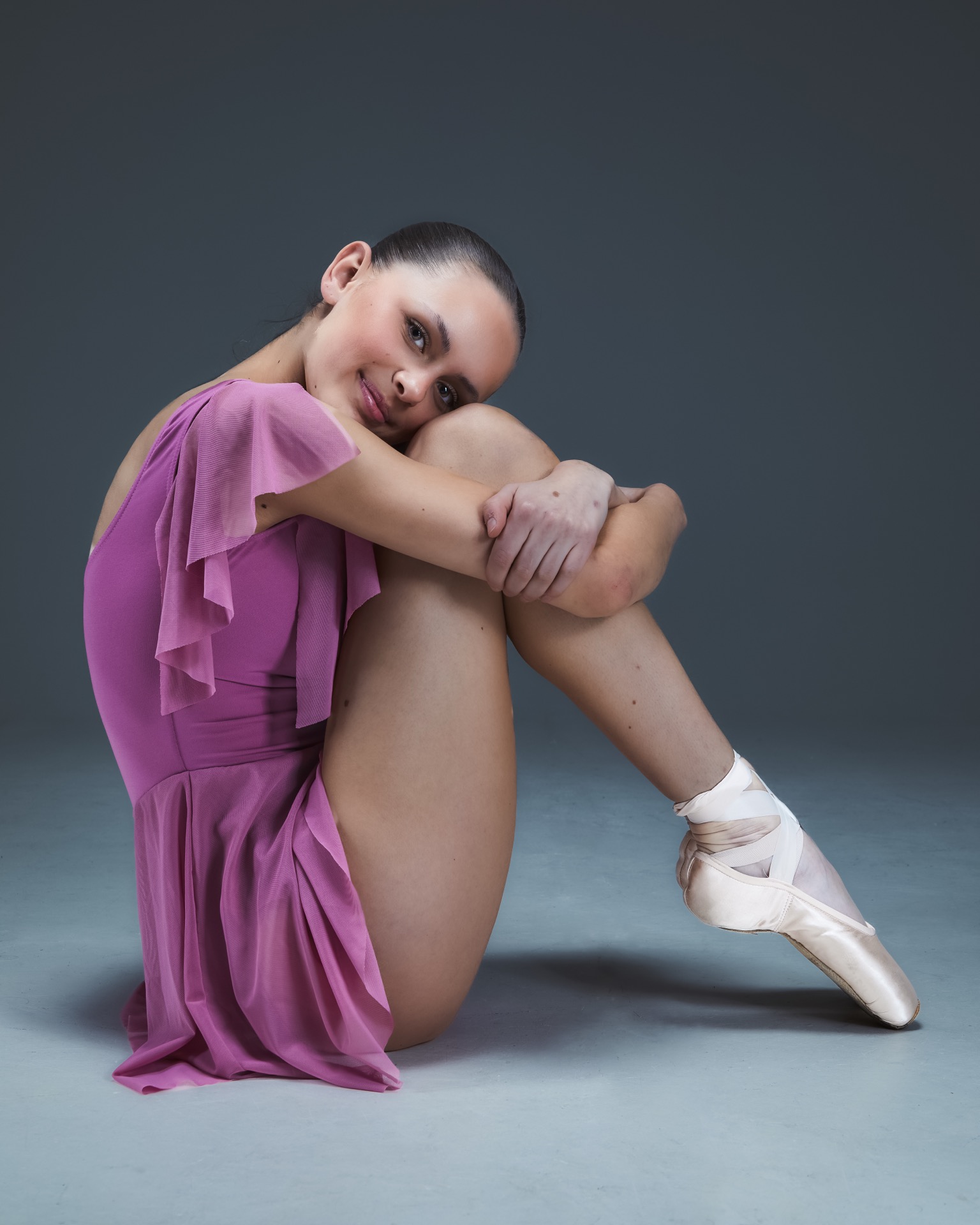
That growing confidence can be traced in part to her introduction to Ballet d’Jerri. After being noticed at a competition by Carolyn Rose-Ramsay, she was invited to take part in a workshop. What followed was a sustained period of informal training with the company, attending classes and, when possible, performing. “The dance classes are built to make you feel like you’re in the company, and it really helped me with my confidence,” she said.
For a dancer based on a small island such as Jersey, proximity to a professional company like Ballet d’Jerri is significant. “If you want to watch professional ballerinas, you usually have to go to the UK to see them,” she said. “So being able to watch them perform here is… it’s really inspiring. It gives you a sense of security, seeing that it’s actually possible.”
What emerges most clearly is a dedication to a particular mindset. “I think it’s more so your own mental strength,” she says, when asked about the challenges of developing as a dancer. “You really have to believe in yourself. I’d say that’s probably the hardest part of it.” When asked what advice she would give to younger dancers, she said, “Don’t compare yourself to other people… just focus on yourself.”
That sense of possibility now extends beyond the island. Darcey has been offered a place at London Studio Centre to study ballet and dance performance from September, with the potential of an Exceptional Talent scholarship. She is also in the process of auditioning for the Royal Conservatoire of Scotland. Alongside this, she is preparing to sit her A-level in dance, for which she is predicted an A*. Balancing academic work with an intensive training schedule is, by her own admission, demanding, though not unfamiliar. “I’m kind of used to it,” she says. “I’m a very organised person.”
In Darcey’s answers, there is a noticeable absence of grand narrative. Her achievements are acknowledged lightly, her ambition tempered with a clear understanding of the industry’s demands. For now, the focus is on the next step, further training and the transition from a promising student into a professional dancer. Asked about her dream stage, she mentions Sadler’s Wells, the London theatre where The Royal Ballet began its life. The answer feels less like a distant ambition and more like a natural destination along a path she is already following. If the trajectory holds, it is not difficult to imagine her there.
